• Following Us

  • Categories

  • Check out the Archives


  • Awards & Nominations

Non-Review Review: The Man From U.N.C.L.E.

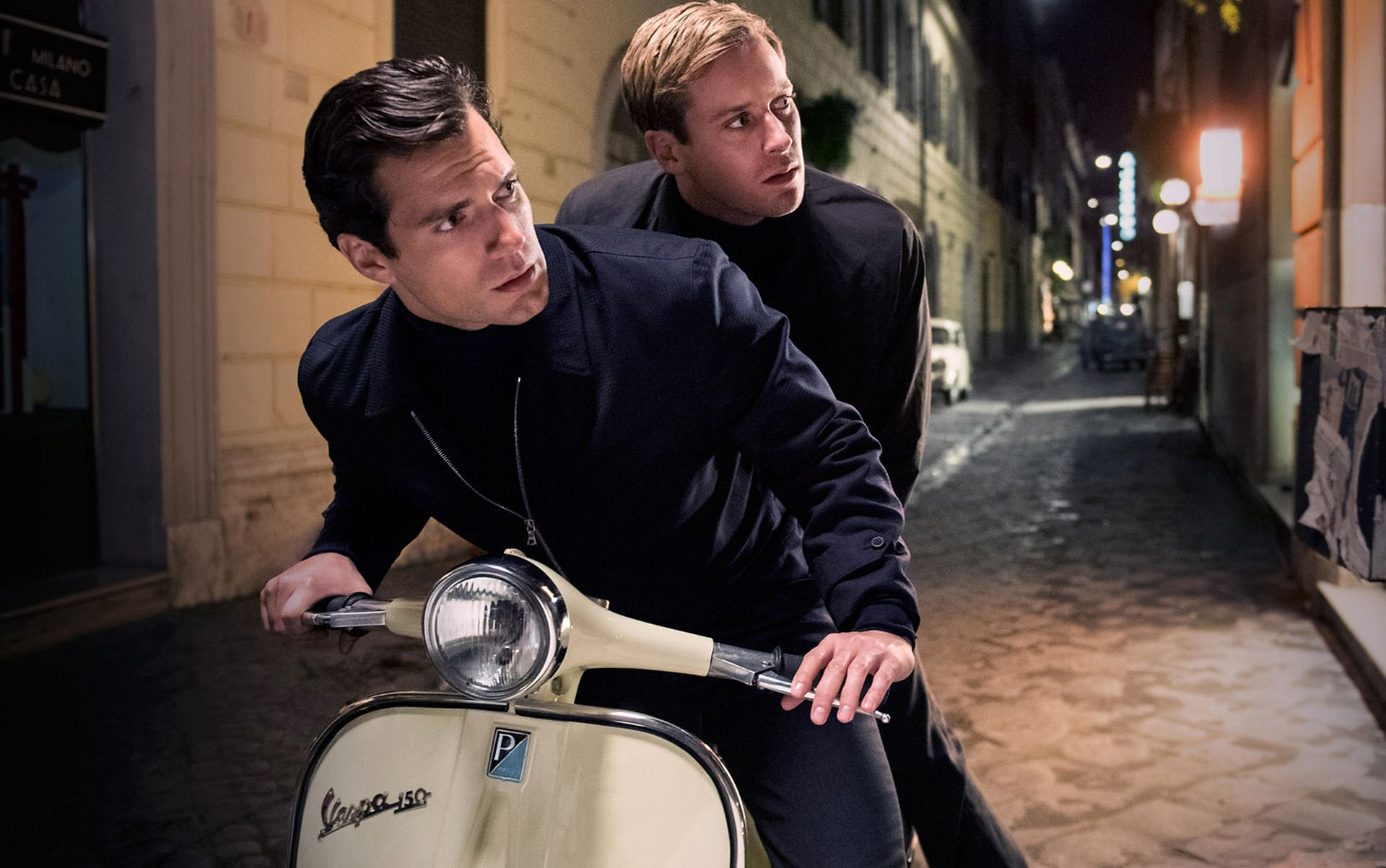
The Man From U.N.C.L.E. has style and charm. It doesn’t have much more than that, but never underestimate how far style and charm can get you. Guy Ritchie has always had a nice a sense of movement, and The Man From U.N.C.L.E. always moves at a nice pace, even when it’s not entirely sure where it is going. A film so light that it threatens to get caught in the gust as it breezes by, it is also important never to overestimate how far style and charm can get you either.

Ride along...

Ride along…

Continue reading

Star Trek: Enterprise – Dead Stop (Review)

Next year, Star Trek is fifty years old. We have some special stuff planned for that, but – in the meantime – we’re reviewing all of Star Trek: Enterprise this year as something of a prequel to that anniversary. This April, we’re doing the second season. Check back daily for the latest review.

Dead Stop is an interesting beast.

One of the stronger episodes from the second season of Star Trek: Enterprise, Dead Stop follows on directly from the events of the previous episode without serving as a direct continuation. It is very rare to see this approach taken on Star Trek, and it’s the perfect example of the sort of episode-to-episode connections that were lacking during the show’s first two seasons. Dead Stop is not a direct follow-on to Minefield, but it is fascinated with the fallout from that episode.

A model ship...

A model ship…

And yet, despite this, Dead Stop is also based around one of the most generic premises imaginable – a sentient space station with a sinister agenda. With a few choice edits, the premise could easily be adapted for Star Trek: The Next Generation or Star Trek: Voyager. Indeed, it’s not too difficult to imagine Kirk and Spock dealing with the rogue space station at some point during their five year mission. It is a story that could – in broad strokes – even work for a television anthology series.

The beauty of Dead Stop is the way that it blends these two conflicting elements together, to construct a show that feels like it showcases the best parts of Enterprise while working from a core story that could be told across the franchise.

Piecing it together...

Piecing it together…

Continue reading

The X-Files – Musings of a Cigarette-Smoking Man (Review)

This February and March, we’re taking a trip back in time to review the fourth season of The X-Files and the first season of Millennium.

“No great man lives in vain. The history of the world is but the biography of great men.”

– Thomas Carlyle, On Heroes, Hero-Worship, and the Heroic in History

Light 'em up...

Light ’em up…

Continue reading

Non-Review Review: Inherent Vice

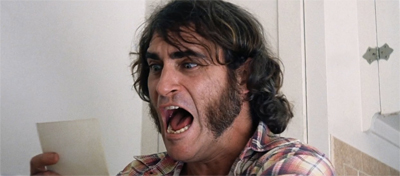
In many ways, Inherent Vice resembles its central character – former-hippie-turned-private-investigator Larry “Doc” Sportello.

Inherent Vice is prone to ramble and meander, stumbling across its central conspiracies as much by fate as by actual investigation. The logic is fuzzy, but the genius is clear. Navigating a complex web of seventies paranoia, it often seems as if Inherent Vice is playing a game of free association between its themes, stumbling upon some higher meta-physical plane where all the evils of the world (or, at least, Los Angeles) are connected by threads almost imperceptible.

Bad trip...

Bad trip…

Both Inherent Vice and Doc are hooked on their own particular drugs. Over the course of Inherent Vice, Doc makes it quite clear that heroine is just about the only dope he won’t take into his body. Inherent Vice itself is drawn the delightfully trippy far-out prose of Thomas Pynchon, with Paul Thomas Anderson’s script pausing intermittently to dump large quantities of existential musing on to the market. If Pynchon’s prose didn’t flow eloquently from actresses like Katherine Waterston and Jeannie Berlin, the audience might complain.

Running almost two-and-a-half hours, Inherent Vice is more than a little indulgent. Luckily, it is more than a little brilliant as well.

Lawyer up...

Lawyer up…

Continue reading

Star Trek – Assignment: Earth (Review)

The first Star Trek pilot, The Cage, was produced in 1964. To celebrate its fiftieth anniversary, this December we are reviewing the second season of the original Star Trek show. You can check out our first season reviews here. Check back daily for the latest review.

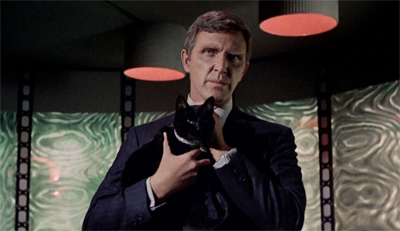
Assignment: Earth was almost the last episode of Star Trek ever produced.

It was also possibly (although nowhere near “almost”) the pilot for a spin-off television show.

Seventh heaven?

Seventh heaven?

At the last minute, following a very high-profile fan campaign, Star Trek was renewed for a third season.

Fans would have to wait decades to see an actual Star Trek finalé that reduced the main cast to guest stars.

"Wait, who just hijacked my show?"

“Wait, who just hijacked my show?”

Continue reading

Star Trek – The Ultimate Computer (Review)

The first Star Trek pilot, The Cage, was produced in 1964. To celebrate its fiftieth anniversary, this December we are reviewing the second season of the original Star Trek show. You can check out our first season reviews here. Check back daily for the latest review.

The Ultimate Computer is the second classic produced by John Meredyth Lucas, following on from The Immunity Syndrome. (Although it is credited to him, Journey to Babel was actually overseen by Gene L. Coon.) Like The Immunity Syndrome before it, The Ultimate Computer is a bottle show, filmed on the show’s standing set. It features a relatively small guest cast, even trimming the number of extras appearing on the Enterprise sets.

It seems that these sorts of constraints and pressures brought out the best in Lucas. Lucas steps behind the camera on The Ultimate Computer, and helps to bring the show to life. Although he is using familiar sets, he often figures out ways to shoot them that feel original and fresh – no mean accomplishment two years into the show’s run. The guest cast that Lucas has assembled is superb – with William Marshall turning in one of the best one-shot guest appearances in the history of Star Trek.

Does not compute...

Does not compute…

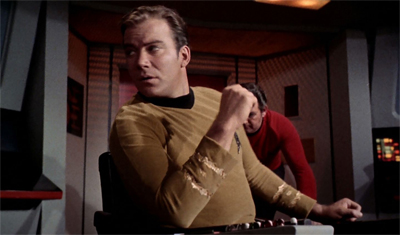
However, what is most notable about The Ultimate Computer is the funereal atmosphere that haunts the episode. There is a solemn and reflective tone to the episode, particularly during the early tests of the M-5 computer. The Enterprise is dark, abandoned, empty. Kirk is reflective. As with Bread and Circuses at the end of Gene L. Coon’ tenure, Spock offers McCoy an olive branch. In many respects, The Ultimate Computer seems to hark forward to the film series, with Kirk wondering how he might define himself if he is not a starship captain.

Appropriately enough for a series staring down the barrel at cancellation, The Ultimate Computer would have made for a pretty great finalé.

"Dammit, I told you we should have used a surge protector..."

“Dammit, I told you we should have used a surge protector…”

Continue reading

Star Trek – Patterns of Force (Review)

The first Star Trek pilot, The Cage, was produced in 1964. To celebrate its fiftieth anniversary, this December we are reviewing the second season of the original Star Trek show. You can check out our first season reviews here. Check back daily for the latest review.

Patterns of Force is a rather strange little episode, the type of weird and iconic adventure that Star Trek tended to do quite well. It’s very much an off-the-wall adventure, of the kind that none of the spin-off shows would attempt. “Planet of the Nazis” is a concept that belongs alongside other second-season episodes like “Planet of the Romans” or “Planet of the Gangsters.” It’s a very goofy premise, one that requires considerable suspension of disbelief before the episode even starts.

And, yet, despite the many serious problems with Patterns of Force, this is an episode that very clearly and very forcefully has something to say. Reflecting the world in which it aired, Star Trek is a show that is largely defined by the Second World War. In The City on the Edge of Forever, it was revealed that the Second World War had to happen to beckon the bright and optimistic future of Star Trek. Almost forty years later, the final televised season of the franchise would return to that idea in its opening episode.

"Computer, query. What is Godwin's Law?"

“Computer, query. What is Godwin’s Law?”

Kirk’s “final frontier” was Kennedy’s “new frontier” extrapolated centuries into the future, an optimistic and very American vision of what the twenty-third century might hold. Given that the show aired two decades following the end of the Second World War, the conflict that made America the most powerful global superpower, it makes sense that the conflict should cast a shadow over Star Trek. Various members of the production had served in the conflict, and it remained part of the national consciousness.

So an episode pitting Kirk and Spock against honest-to-goodness space Nazis seemed inevitable.

"Well, there goes syndication in Germany..."

“Well, there goes syndication in Germany…”

Continue reading

Star Trek – The Immunity Syndrome (Review)

The first Star Trek pilot, The Cage, was produced in 1964. To celebrate its fiftieth anniversary, this December we are reviewing the second season of the original Star Trek show. You can check out our first season reviews here. Check back daily for the latest review.

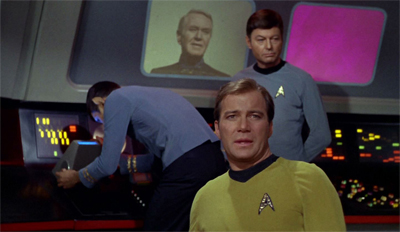
The Immunity Syndrome is an underrated masterpiece, the first genuine classic overseen by producer John Meredyth Lucas.

It is bold, brilliant and more than a little bit weird. This is Star Trek as pure sixties science-fiction. It is a psychedelic ecological tale focused on mankind’s place in the larger universe. It doesn’t just pit the Enterprise against a giant space amoeba, it suggests that the universe itself is a singular gigantic organism, a complex system in which the Enterprise is just one part. The Immunity Syndrome is weird and wonderful, eerie and beautiful in equal measure. It is one of Star Trek‘s most effective encapsulations of the sixties.

Freak out!

Freak out!

Continue reading

Star Trek – A Private Little War (Review)

The first Star Trek pilot, The Cage, was produced in 1964. To celebrate its fiftieth anniversary, this December we are reviewing the second season of the original Star Trek show. You can check out our first season reviews here. Check back daily for the latest review.

Star Trek is a pop culture relic of the sixties. It’s possible to see the decade reflected in just about every facet of the production. The show’s costume and set design speak to the decade, as do the series’ sexual politics. The Cold War colours a significant portion of the series, reflected in the Klingons and elsewhere. The Second World War is treated as the beginning of the future, while much emphasis is put on mankind’s expansion to the stars.

Even outside of these general parallels, there are episodes that speak to particular facets of the sixties. The Naked Time, This Side of Paradise and The Way to Eden all play with the idea of social liberation. The Ultimate Computer, Return of the Archons, The Apple and The Changeling all speak to concerns and insecurities about the rapid advance of technology and the people left behind. Journey to Babel touches on the gap felt between conservative parents and liberal children ready to embrace life’s possibilities.
Make war, not love...

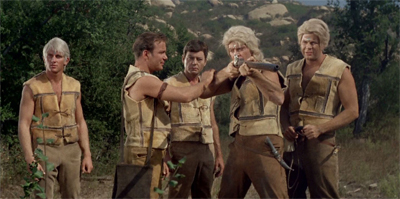
Make war, not love…

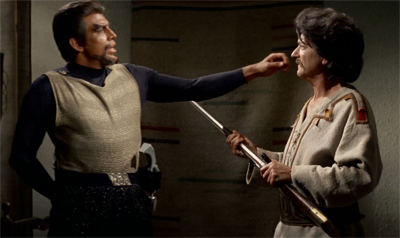
And then there’s the Vietnam episodes. Shows like Errand of Mercy and A Taste of Armageddon reflect the conflict in a number of ways that were not possible in the scripted dramas of the time. However, A Private Little War is perhaps the definitive Vietnam episode. Part of this is due to the script and the production, which makes explicit reference to “the twentieth century brush wars on the Asian continent.” With the Klingons and the Federation meddling directly in the conflict on a small backwater planet, comparisons invite themselves.

However, there were factors at play outside the control of the production team. A Private Little War was produced in late 1967. It aired on February 2, 1968. However, North Vietnamese forces had launched the Tet Offensive only a few days earlier – the campaign would land through the end of March. The Tet Offensive would end with the North Vietnamese suffering heavier losses than the American or South Vietnamese forces, but the attacks would have a devastating affect on public opinion.
"Got your nose! And, soon, your planet!"

“Got your nose! And, soon, your planet!”

A Private Little War is placed terribly. It is a reluctant justification of the Vietnam War, presenting interference in a foreign war as a terrible (but necessary) burden weighing on Kirk’s conscience. The episode closes with Kirk committing to arm the natives, even if the show doesn’t have the courage of its conviction to follow the idea to its logical consequences. For all that Star Trek is described as a liberal and pacifistic vision of the future, A Private Little War endorses American interference in Vietnam.

The broadcast of A Private Little War only a couple of days following the turning point of the public perception of the war is an absolutely fascinating pop cultural synergy – a demonstration of how Star Trek was inevitably and inexorably of its time in a way that even a few months delay between filming and broadcast could change the context of the episode so dramatically.

I wouldn't look so happy with myself...

I wouldn’t look so happy with myself…

Continue reading

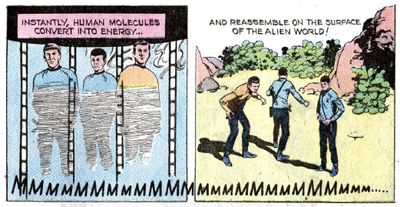
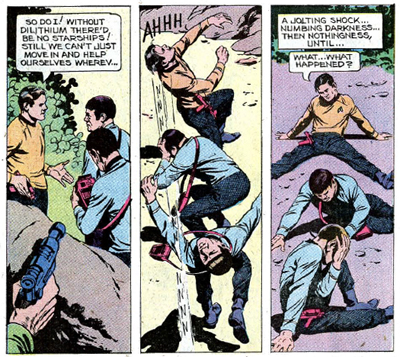
Star Trek (Gold Key) #61 – Operation Con Game (Review)

The first Star Trek pilot, The Cage, was produced in 1964. To celebrate its fiftieth anniversary, this December we are reviewing the second season of the original Star Trek show. You can check out our first season reviews here. Check back daily for the latest review.

The Gold Key comics came a long way, in the end.

The early issues were full of errors and contradictions – feeling like Star Trek as described across a crowded bar, the broad strokes present but the details never synching up. Those early comics – much like James Blish’s novelisations – suggest a missing link between Star Trek and fifties science-fiction. The earliest issues offered a glimpse of Star Trek through a prism. However, the comics grew more professional (and more familiar with their source material) as they went along.

Beam me down, Scotty...

Beam me down, Scotty…

Indeed, the series attracted a number of notable writers and artists, including Len Wein. Wein would go on to write for the franchise when DC procured the license in the mid-eighties. More than that, it was clear that the writers and artists had begun to watch the show. There were none of the early mistakes that come from working with publicity materials and without context. Although the earliest issue of the comics achieved infamy among Star Trek fans, the book ran for over a decade – stumbling a bit close to traditional Star Trek values as it went along, even if it never quite abandoned its more absurd tendencies.

Operation Con Game is the last issue of Star Trek published by Gold Key, and serves as an example of how far the comics have come.

Disrupting that thought...

Disrupting that thought…

Continue reading