• Following Us

  • Categories

  • Check out the Archives


  • Awards & Nominations

Non-Review Review: Inside Out

Inside Out represents a glorious return to form for Pixar.

After several years of sequels and middling films, Inside Out feels like a breath of fresh air. Films like Cars 2 and Monsters University were very much safe bets for the company, a way to leverage return from existing (and well-loved) properties. Inside Out is something altogether stranger and more high-concept. It feels like the studio is getting back in touch with its original aesthetic. It is a concept that initially seems quite complex and esoteric, but quickly reveals itself to be a simple emotional fairytale.

Memories are made of this...

Memories are made of this…

Wall-E might have been a half-silent science-fiction film, but it was also a very effective love story. Up might have been a wacky adventure about a flying house, but it was also an insightful meditation on grief and loss. Finding Nemo was populated with colourful fish, but it was also about the experience of watching a child venture into the world. Pixar established and developed a reputation as a studio that could produce films that were accessible and exciting to children, but also packed a more weighty and substantial punch for the parents in the audience.

Inside Out is perhaps the most high of Pixar’s concepts, but it ultimately boils down a very organic and instinctive story meditating on the studio’s core themes of emotional development and family metaphors.
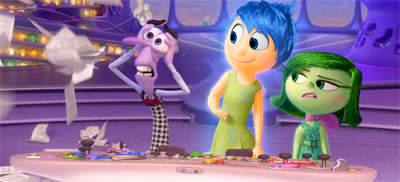
An emotional journey...

An emotional journey…

Continue reading

Non-Review Review: Ted 2

Ted 2 is a Seth McFarlane movie that ends with an extended sequence set at New York Comic Con, that hub of nerd culture populated by people dressed like any number of iconic pop culture characters.

As such, it seems perfectly reasonable to describe Ted 2 as the quintessential McFarlane movie, for better or for worse.

Unbearable?

Unbearable?

Continue reading

Non-Review Review: Ant Man

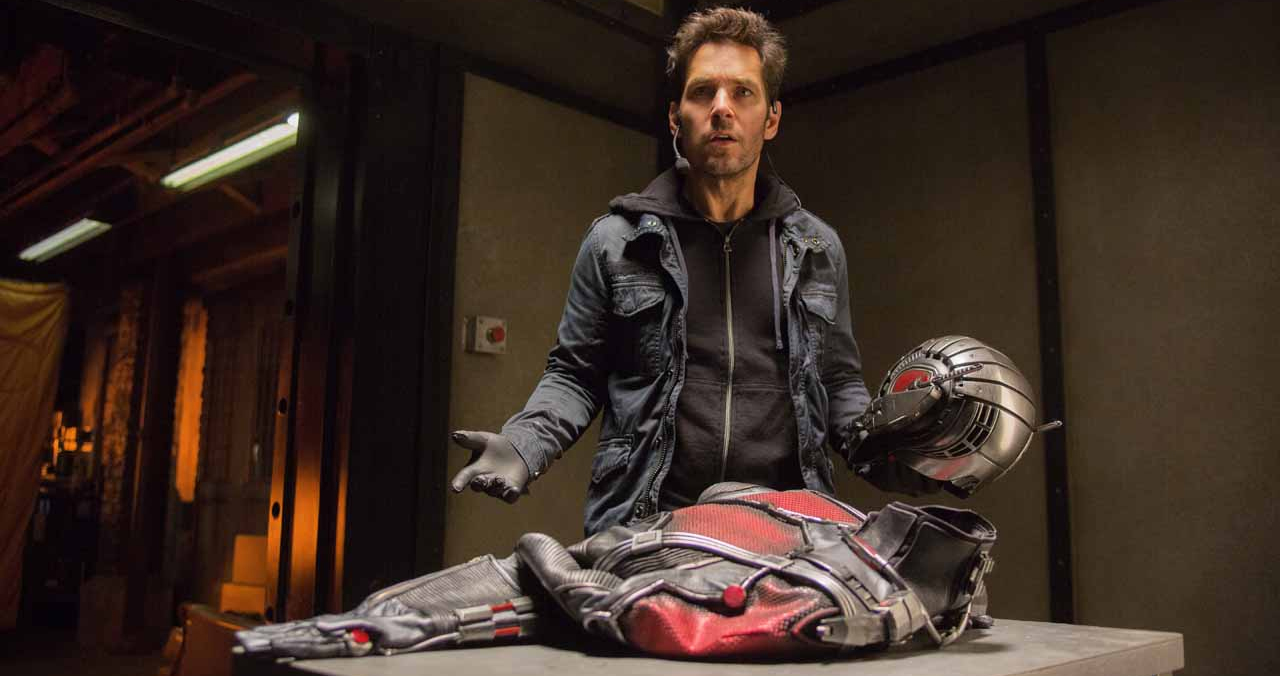
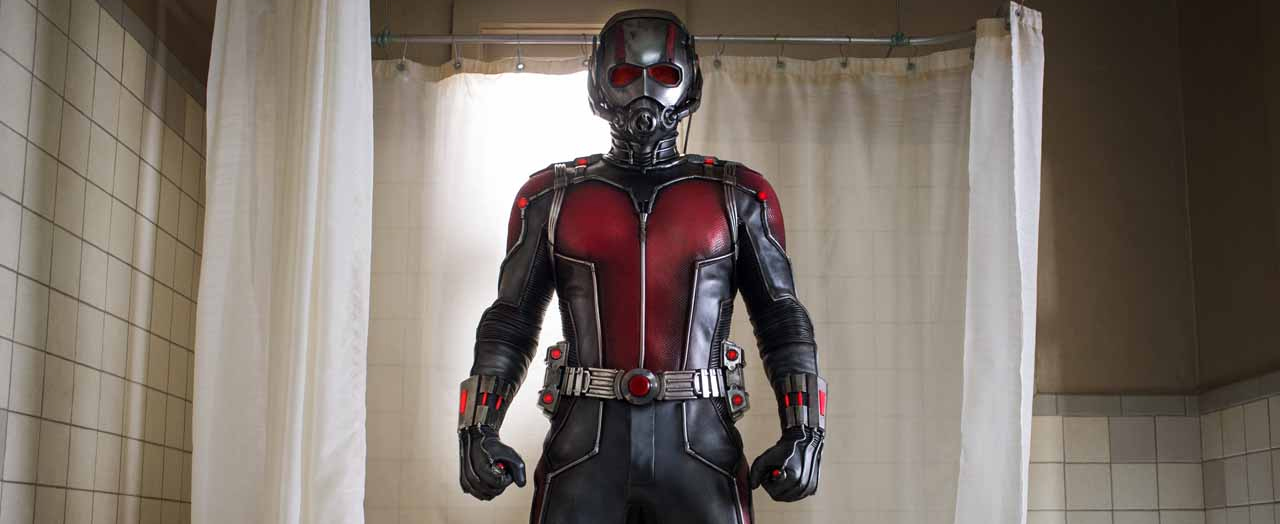
Ant Man was always going to be a tough one to crack.

There are obvious reasons. Some of them involve the unique production history of the film, which arguably serves as an example of the downside of the tight managerial style operated by Disney and Marvel. Some of them are more fundamental, tied into the legacy and impact of the source material that make adapting Hank Pym and Janet Van Dyne to screen a particularly dicey proposal for a family-friendly blockbuster movie studio. There’s a lot of pressure on the film, and a lot that could go wrong.

"You couldn't have called him 'Giant Man'?"

“You couldn’t have called him ‘Giant Man’?”

As such, director Peyton Reed does a pretty good job bringing the character to screen. Adam McKay and Paul Rudd adapted the original story written by Edgar Wright and Joe Cornish, providing a movie that sits more comfortably within the framework of the ever-expanding shared universe. Ant Man is a little clumsy in places, suffering from some of the stock weaknesses of the Marvel film franchises, but it is also clever and fun. All involved shrewdly play to the Marvel house style, offering a light run around populated by likable characters with clear-cut conflicts.

However, Ant Man‘s real strengths become obvious when the film deviates (even slightly) from the standard formula. After seven years of watching superhero films grow bigger and bigger, it’s nice to have a smaller story.

"One size fits all, eh?"

“One size fits all, eh?”

Continue reading

Non-Review Review: Magic Mike XXL

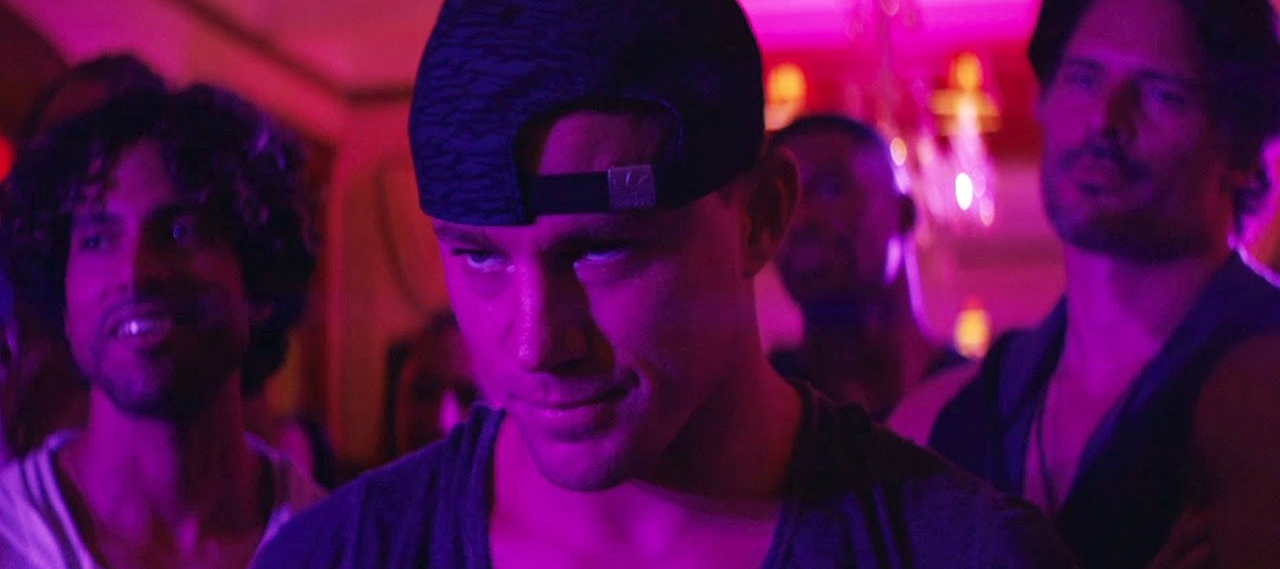
Well, if you’re going to do a sequel, it’s not a bad bet to go bigger.

Magic Mike XXL is a film that knows exactly what its audience wants, making a point to emphasise that this same attribute is what makes the “male entertainers” at the heart of the film so special. At one point, young heart throb Ken serenades his audience with a D’Angelo’s Untitled (How Does It Feel?), perfectly setting for the tone. Magic Mike XXL knows what its viewers are demanding, and dedicates itself to shamelessly satisfying their needs. The audience wants more, and they get more.

The problem with Magic Mike XXL is that it goes just a little bit too big. Bigger is not always better, as “male entertainer” (“Big”) Dick Richie discovers, spending the entire movie searching for the metaphorical “glass slipper.” The original Magic Mike ran a little bit too long at ten minutes short of two hours. Magic Mike XXL extends that runtime by twenty minutes. The result is a film that feels rather bloated. The pacing could be tighter. Some trimming and cutting might have served the film well.

Nevertheless, Magic Mike XXL maintains a lot of the charm and positive energy that made the original such a surprise hit. There is nothing wrong with trying to please your audience, even if there is such a thing as too much teasing.

Is the magic back?

Is the magic back?

Continue reading

Non-Review Review: Love and Mercy

The music biography is a surprisingly familiar genre.

For all that there are thousands upon thousands of musicians with their own life stories and histories, the plotting of these sorts of stories always seems to hit on the same beats. The rhythm and tempo might change, but the notes feel the same. This was rather strongly pronounced a decade ago, when Walk the Line and Ray were released in quick succession and Walk Hard: The Dewey Cox story provided a delightfully surreal skewering of the conventions associated with these sorts of films.

Where there's a Wilson, there's a way, son...

Where there’s a Wilson, there’s a way, son…

There is always a childhood trauma at the root of the story; whether it is a dead relative or parental abuse, there is always a suitable motivator for artistic expression. Similarly, fame is always something of a mixed blessing, with material success only serving to exaggerate a larger spiritual emptiness. Dependencies come rather naturally, whether on drugs or on other people. Eventually, it seems like true love allows our protagonist to find themselves before they find their happy ending. Having a ready-made (and thematically appropriate) soundtrack probably helps.

In most cases, the material is elevated by the skill with which the story is put together. If the film must hit all those familiar notes, then the moving parts make all the difference. Walk the Line and Ray were buoyed by mesmerising central performances from actors at the peak of their game. Love and Mercy hits a lot of these common plot beats as it maps out the troubled life of Brian Wilson. Even a viewer unfamiliar with the arc of Wilson’s life will have a pretty good idea of what to expect from the film.

That sinking feeling...

That sinking feeling…

At the same time, Love and Mercy benefits from a collection of strong performances. Paul Dano and John Cusack play the musician at various stages of his life, jumping back and forth between his controversy-creating career highs and subsequent lows. The bulk of the supporting cast is teamed up with Cusack, creating an interesting circle of characters around Wilson in the late eighties and into the nineties. Elizabeth Banks is Melinda Ledbetter, a Cadillac saleswoman who gets caught up with Wilson. Paul Giammatti is controversial psychotherapist Dr. Eugene Landy.

Love & Mercy is at its best when it feels playful and accessible, and is at its worst when it feels familiar and well-trodden. It is a fascinating sketch at the life and times of Brian Wilson, with a recognisable structure elevated by a great ensemble.

Pet sounds...

Pet sounds…

Continue reading

Non-Review Review: Terminator Genisys

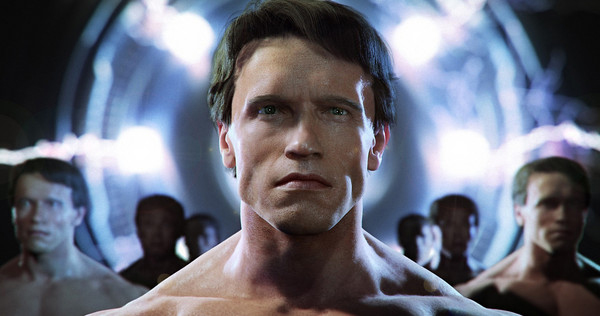
“I am inevitable,” the villain boasts towards the climax of Terminator Genisys, just as things look their darkest for our heroes. He is a fully 3D digital image sourced from wall-mounted projectors, reflecting the way that the film itself has been marketed.

He might as well be talking on behalf of the film itself. The Terminator franchise has evolved into an unlikely juggernaut, spanning over three decades and evolving from a low-budget science-fiction film into a blockbuster series. Critical (and popular) reception to Terminator III: Rise of the Machines and Terminator: Salvation has been somewhat muted, but the film franchise just keeps coming. In a way, it feels like Skynet making itself manifest. Or, more appropriately, the eponymous robot killing machine.

Fresh off the factory line...

Fresh off the factory line…

There are points where Terminator Genisys seems incredibly self-aware, posing the sort of existential and philosophical questions that are confronting the audience. In The Terminator and Terminator II: Judgement Day, James Cameron positioned time travel as a metaphor for the strings of fate and destiny that seemed to bind free will. In Terminator Genisys, time travel becomes a powerful metaphor for the process of film- (or franchise-) making itself.

Both a sequel and a prequel, a reboot and a remake, the time travel plot element of Terminator Genisys turns the franchise into a gigantic mix tape. Screenwriters Laeta Kalogridis and Patrick Lussier collaborate to turn Terminator Genisys into a live-action version of a Jive Bunny and the Mix Masters track, a sample filled with familiar beats played at the wrong tempo. There are moments when the wrongness seems the point, when Terminator Genisys wanders into the uncanny valley. There are points where it almost achieves consciousness.

Prick me, do I not leak?

Prick me, do I not leak?

Continue reading

Non-Review Review: Aonrú

Aonrú offers a fascinating insight into life on Cape Clear Island off the west coast of Cork. The small community had subsisted for years on farming and fishing – as the documentary notes, “the farmers were fishermen and the fishermen were farmers.” Now, due to a number of intersecting and overlapping hurdles – both natural and man-made – the community finds itself struggling to provide a future for itself. The thirty minute documentary examines what it must be like to live on Cape Clear.

Skilfully constructed from a myriad of first-person accounts, archive footage and beautiful images of the region, Aonrú explores the pace of life in one of the most remote parts of the country.

aonru1

Continue reading

Non-Review Review: Slow West

There is a reason that the western has fallen from popularity after its cinematic heyday.

For decades, it seemed like Hollywood punctuated its release of western films with sampling for other genre, returning time and again to the story of the men who shaped America from the ground up. Over the years, the familiar tropes have been deconstructed and reconstructed and deconstructed again. They have been mashed up and knocked down and spun around. They have been torn apart and thrown back together with reckless abandon. With all of that going on, it often seems like anything that the genre has to say has been said and repeated time and again.

Life is peaceful there...

Life is peaceful there…

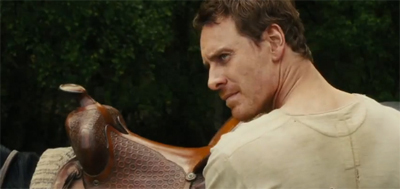
There are probably still things to be said about the myth of the Old West, even if the genre seems as explored and catalogued as the American continent itself. There are little hidden pockets and eccentric spaces that might hold a surprise or several. Slow West doesn’t necessarily have anything new or revelatory to say about the western. It seems unlikely to shatter any illusions or break any preconceptions. A lot of the ground covered by Jay Cavendish and Silas Selleck on their trek westward will be familiar to anybody with a passing knowledge of the genre.

At the same time, there is a lyrical beauty to Slow West. The film is a haunting and evocative trip through a landscape that most viewers know better than their own locality. Slow West might not say anything particularly earth-shattering, but it does articulate itself clearly and elegantly. It is a meticulously crafted film, finely constructed and sumptuously filmed. It might be a tourist trip over well-travelled group, but it takes the most scenic route imaginable.

Saddle up!

Saddle up!

Continue reading

Non-Review Review: Entourage

Entourage is surprisingly inoffensive.

It has been four years since HBO’s showbiz comedy went off the air. In many respects, Entourage feels like a class reunion – even to somebody unfamiliar with the source material. There is a lot of affection here, no real sense of tension or stress. Everybody is perfectly comfortable, and the entire film has the feeling of something that everybody involved has been doing for quite some time. Anything that looks like a rough edge has been smoothed off, so the film glides along without any meaningful obstruction.

All at sea...

All at sea…

Entourage is not a great film on its own terms. However, it is not trying to be. Instead, it feels like an affectionate slice of nostalgia. It is telling that most of the cameos in the film tend to nod towards older actors and audiences. At one point, Johnny “Drama” Chase reflects that he was cast in the table read of The West Wing and he finds himself competing for roles against David Faustino of Married With Children. Faustino is just one cast member of Married With Children to cameo. Entourage feels familiar and safe, and entirely comfortable with those attributes.

The result is a functional cinematic adaptation for a show that probably did not need one. The stakes in Entourage never feel particularly high, the characters never seem particularly worried. It seems like Entourage was produced in the same way that it was intended to be enjoyed – in a rather relaxed and cordial fashion, without any real verve or energy.

Going for Gold...

Going for Gold…

Continue reading

Non-Review Review: Jurassic World

Jurassic World is very self-aware.

Introducing visitors to the eponymous theme park, an audio recording assures them that the elevated train is passing through the original gates of the park. One of the techies working in the operations centre wears a “vintage” t-shirt from the original park – conceding that it might be “in poor taste.” Nostalgia is the name of the game, and the theme park basks in it. There are landmarks built to the amber that held the mosquito from the original film, and a giant bronze statue of Richard Hammond.

"Mommy's being blatantly emulated..."

“Mommy’s being blatantly emulated…”

So does the film. No opportunity for shout-out or homage is missed. When John Williams returned to work on Jurassic Park: The Lost World, he only broken out the powerful theme for very special moments – crafting a largely original score for the sequel. Not Jurassic World. It seems like every time a character does something, the theme blares. Open the gates? Theme blares! Drive through herd of dinosaurs? Theme blares! Open doors to balcony in resort room? Theme blares!

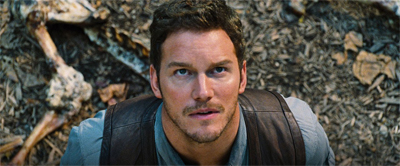
There is something relentlessly cynical about Jurassic World. The film is based around attempts at Ingen to build a designer dinosaur, one assembled from random bits of other dinosaurs. Nobody except the geneticists seem to know exactly what’s in it, but it doesn’t matter. It’s bits and pieces of what everybody’s seen before, and they’ll love it, right? The fact that Jurassic World basks in this meta-commentary hints at a sly subversive streak, but they film seems more smug than sophisticated.

Feeding time...

Feeding time…

Continue reading