• Following Us

  • Categories

  • Check out the Archives


  • Awards & Nominations

Non-Review Review: IT

IT works best as a fusion of weird fiction with a classic coming of age story.

IT is arguably one of Stephen King’s most iconic and influential works. Pennywise the Dancing Clown is perhaps King’s most instantly recognisable creation. King’s work seems to recognise this. The monster clown haunts his fiction, making various appearances in other works, suggesting that the creature is an infection spreading across the author’s vast tableau. There are lots of reasons for IT‘s success and status, but a lot of it comes down to the fact that IT is an encapsulation of many of King’s pet themes and plays to many of King’s strengths.
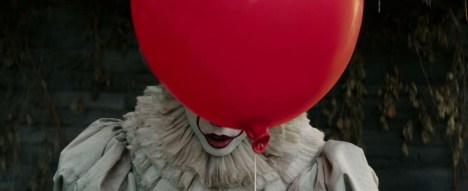
Bill Skarsgård used his other 98 red balloons on Atomic Blonde.

Director Andrés Muschietti seems to understand this. In fact, IT serves as a smorgasbord of cinematic King adaptations, drawing upon and even quoting from various other successful adaptations of the author’s work. Most notably, IT owes a surprisingly large debt to Stand By Me. The decision to exorcise the “present day” sequences of the novel from this film, leaving them to a potential sequel, means that IT is even more overtly and consciously a coming of age narrative.

However, IT is very much a coming of age horror story, a grotesque and unsettling expression of the nightmares lurking just behind familiar childish fears.

There’s something in water.

Continue reading

Non-Review Review: The Black Prince

The Black Prince is a well-intentioned misfire.

Written and directed by Kavi Raz, The Black Prince is a historical epic attempting to explore the life and times of the Maharaja Duleep Singh, who was abducted from India and taken to the United Kingdom where he became Queen Victoria’s “black prince.” The movie is undoubtedly ambitious and a labour of love for Kavi Raz, who is clearly working within any number of severe budget and production restraints. The best thing about The Black Prince might just be its canny use of existing locations that create a fascinating period atmosphere that recalls a vintage BBC drama.

However, the problems with The Black Prince are more fundamental than any issue with budget or ambition. Raz clearly has an abiding sympathy for and interest in the Maharaja Duleep Singh, but the film suffers from a reluctance to take a step back from its subject. Instead of tightening its focus on one aspect of the character’s life, or one key decision, the film attempts to condense the character’s entire history down to a two-hour movie. The result is a movie where a lot of things happen, but none of those things feel grounded in anything particularly important.

The Black Prince is a movie that suffers from its desire to be all things to all audiences, trying to pivot between genres in the spaces between scenes, reducing its central characters to vehicles for plot-driven or historical exposition, and changing its core premise so frequently that it feels like the cliffnotes of a much stronger film.


Continue reading

Non-Review Review: Patti Cake$

Patti Cake$ is intermittently charming, but far too familiar.

Patti Cake$ is a familiar breed of indie movie. It is the story of a young protagonist trapped in a small town and surrounded by eccentric characters who yearns to escape, but finds herself hemmed in by lack of opportunity, by family and by sheer economic pressure. It is a quintessential triumph-over-adversity narrative, albeit approached from the slightly skewed perspective of a young white female rapper in New Jersey.

Let’s get this Patti started in here.

There are some interesting elements of Patti Cake$, especially the performances by actors like Danielle Macdonald and Bridget Everett. There are moments when this familiar template works very well at hitting particular cues, whether the mundanity of Patti’s day-to-day existence, the emotional realism of particular relationships in her life, or even a really good and well-timed joke. However, those moments are largely fleeting. For most of its runtime, Patti Cake$ is a perfectly adequate story of what it feels like to socially strive.

Patti Cake$ doesn’t have any new rhymes, and so settles for some well-worn beats.

She’s got drive.

Continue reading

The Defenders – Ashes, Ashes (Review)

As much as The Defenders is hobbled by the Hand, it is also handicapped by Iron Fist.

It is very clear that the production team heading into The Defenders intended for Iron Fist to be a springboard to the crossover, to move the last pieces into place before the big event miniseries. After all, Iron Fist was heavily marketted as “the Last Defender.” More than that, the series devoted pretty much all of its thirteen-episode runtime to fleshing out the Hand, the secretive ninja cult that would serve as the primary antagonists of The Defenders. There was a clear sense that the production team saw Iron Fist as something of an extended lead-in to The Defenders.

Sorry, Danny. But it’s true.

There was just one problem with all of this. Iron Fist was terrible. By all accounts, the show was the result of a rushed production cycle that explains some of the shoddiness in terms of practical effects and direction, but its biggest problems were more fundamental than that. Finn Jones was the weakest series lead of the Marvel Netflix series by a considerable distance. Scott Buck was the weakest lead writer on a Marvel Netflix series by a considerable distance. The result was a car crash of a television series.

Given that this car crash was intended to serve as the lead-in to The Defenders, this causes significant problems for the sprawling eight-episode crossover.

Luke is a real hero.

Continue reading

Non-Review Review: American Made

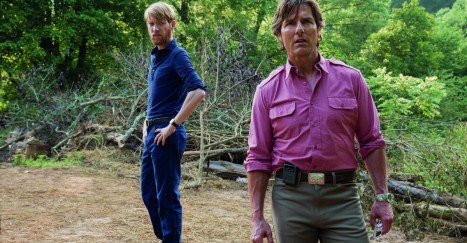
“Sh!t gets really crazy from here,” promises Barry Seal at one point in American Made, as this true story takes another sharp escalation.

Unfortunately, American Made never quite lives up to that promise. Starring Tom Cruise and directed by Doug Liman, American Made is never less than charming and endearing, but it also feels overly familiar. American Made plays like a decidedly old-fashioned crime biography film, one that feels appropriate following the cheekily time-warped production logos that introduce the film. Gary Spinelli’s script feels almost retro in the way that it very neatly and very efficiently fits the life of Barry Seal to the familiar crime movie template.

He can handle the truth.

American Made is a well-made film, one anchored in Tom Cruise’s star power charisma and Doug Liman’s competent direction. It is a film with a clear narrative arc and a very sturdy storytelling structure. American Made hints every beat in a very efficient manner, dividing its time very effectively between charming episodic details and its broader overarching themes. The film never loses track of itself, even if it feels like most of the characters around Barry Seal and his CIA handler “Schaffer” never feel particularly alive.

However, there is a something almost disappointing in this efficiency. American Made is too tightly constructed to ever let itself embrace the absurdity of its central narrative. “Sh!t” is too carefully managed to ever get “really crazy.”

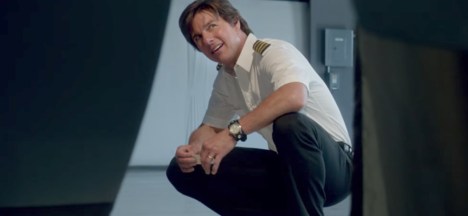
Pilot error.

Continue reading

Non-Review Review: Wind River

Taylor Sheridan’s loose “Frontier trilogy” imagines the frontier as the site of America’s original sin.

Like Sicario and Hell or High WaterWind River is set in what might be considered a modern-day equivalent of the “wild west.” It is a harsh and brutal world, one in which people fight a losing battle to make sense of that violence. Sicario imagined the frontier as Mexico, a tale of lawless retribution set against the backdrop of the already-lost War on Drugs. Hell or High Water imagined that frontier in Texas, a modern tale of bank robberies and land grabs. Wind River pushes that frontier to vast frozen surroundings of Wyoming, putting Native Americans in focus.

In the wild white yonder…

As the trilogy has moved North, it has also shifted tones. Sicario was confused and angry, struggling to explain the horrors that were unfolding. Hell or High Water blended that anger with a sense of wistful nostalgia, reflecting on the tragic irony of manifest destiny eroded by late capitalism. Wind River is just profoundly sad, a meditation on loss that seems more exhausted than angry. It is a tale about those people left behind on what remains of the frontier, about violence that is too easily overlooked and ignored. There is no rage here, no passion. There is just fatigue.

Wind River is a western set in the forgotten part of the west. It is a western set in the snow, on a Native American reservation. It is the story of a frontier that is too readily forgotten.

In cold blood.

Continue reading

Non-Review Review: Annabelle – Creation

The issue with Annabelle: Creation is not one of skill or technique. Annabelle: Creation is a very well-crafted and well-constructed horror film. The issue is that Annabelle: Creation never quite figures out what kind of horror film it wants to be.

Annabelle: Creation struggles with tone. The movie bounces between extremes. At some points, it feels like it wants to be a genuinely dark and unsettling study of trauma and exploitation, a harrowing horror movie metaphor for some of the worst terrors that could be inflicted upon its young cast in their remote location. At other points, it is a much more conventional action horror movie, combining the blockbuster thrills approach of The Conjuring with the almost playful concept-driven self-aware scares of Lights Out.

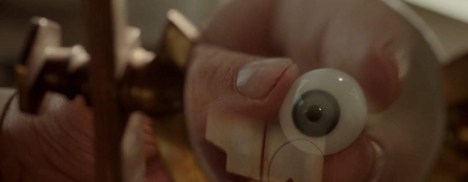
Eye, Creepy Demonic Doll.

The movie often feels caught between these two approaches, repeatedly suggesting something much darker nestled at the core of what is a fairly solid and fairly recognisable horror template. There are moments when Annabelle: Creation is skin-crawlingly effective, and there are moments when the film cleverly punctuates its scares with awkward-laugh-out-loud moments of stress relief. In isolation, David Sandberg balances both approaches quite well.

The problem comes in trying to blend them together.

“Give me a moment, I’ve got to put my face on.”

Continue reading

Non-Review Review: Atomic Blonde

Atomic Blonde is a very pretty mess.

Atomic Blonde is a stylistic showcase for director David Leitch and star Charlize Theron, a bruising and beautiful ballet of brutality with a killer soundtrack. Atomic Blonde is a film set in a funhouse mirror version of Berlin in November 1989, a movie that argues its location is more a state of mind than a physical place. The violence in Atomic Blonde is visceral, the mood tangible, the soundtrack delectable. Atomic Blonde is a feast for the senses.

Seeing red.

However, Atomic Blonde also makes next to no sense. The film is an action movie dressed in the attire of a nihilistic espionage thriller, and a little narrative confusion inevitably comes with the territory. These films are all but obligated to have twists and betrayals, macguffins and revelations, switches and levers. Atomic Blonde embraces that zany approach to plot and structure with relish. However, the problem with Atomic Blonde is more fundamental than all that. It often struggles to remain coherent from one scene to the next, from one set piece to another.

Atomic Blonde is beautiful chaos, an exploding collage that probably didn’t make any sense to begin with.

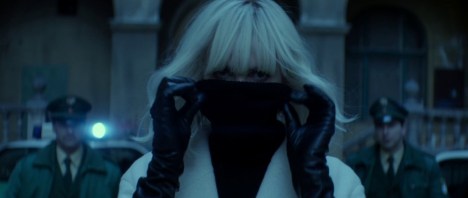
Putting her turtleneck on the line.

Continue reading

Non-Review Review: An Inconvenient Sequel – Truth to Power

An Inconvenient Sequel feels somewhat inconvenienced by factors outside of its control.

Much like An Inconvenient Truth, this documentary is very meticulously and carefully structured. It is built around the same core idea of a climate change lecture provided by Al Gore, but it also has a very linear and clear arc to it. There is a definite narrative running through An Inconvenient Sequel, which occasionally feels like a real-life thinking person’s political thriller, only with fewer shady businessmen and less immediately dramatic stakes. An Inconvenient Sequel has a story that it very clearly wants to tell, centring on Al Gore at the Paris Climate Change Conference.

However, that narrative is repeatedly interrupted. Forces beyond Gore’s reckoning creep in around the edges of the story that he wants to tell. Gore very clearly intended for this narrative to be triumphant in nature, to the point that he opens his big presentation in the middle of the film by promising the audience a happy ending. However, time and again, real life intervenes. Disruptions interrupt the flow of the story that Gore has constructed, to the point that the last ten minutes of the film feel like a bizarre postscript, as if real life were directed by M. Night Shyamalan.

It would be churlish to blame Gore for this. In fact, An Inconvenient Sequel is in many ways more interesting for these outside elements that creep into the story being told. Real life is full of complications that are unforeseen and yet inevitable. However, there is a sense that these sweeping dramatic reversals have caught Gore and the documentary off-balance, that they are struggling to properly respond, that they are not ready to veer “off script” to cope with what the world has thrown at them. The result is uncomfortable, chaotic, and surreal. And oddly compelling.

Continue reading

38. Dunkirk – This Just In (#37)

Hosted by Andrew Quinn and Darren Mooney, and this week with special guests Niall Murphy, Jay Coyle and Phil Bagnell, This Just In is a subset of the fortnightly The 250 podcast, looking at notable new arrivals on the list of the 250 best movies of all-time, as voted for by Internet Movie Database Users.

This time, Christopher Nolan’s Dunkirk.

Continue reading