• Following Us

  • Categories

  • Check out the Archives


  • Awards & Nominations

Non-Review Review: Citizen Lane

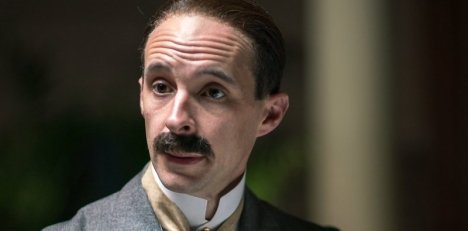
Citizen Lane is the latest documentary from director Thaddeus O’Sullivan, following the life and times of Hugh Lane.

Essentially combining documentary discussion of the central character with dramatic reconstructions of moments both key and incidental, Citizen Lane sketches an intriguing portrait of a fascinating figure. Lane is perhaps best known as an art collector and dealer, whose name adorns one of the more prestigious art galleries in the city centre. However, Lane is something of a mysterious figure to all but the most devoted of Irish cultural historians, lurking at the edge of the frame in stories about artists like Yeats or Synge.

Turn of the Century City.

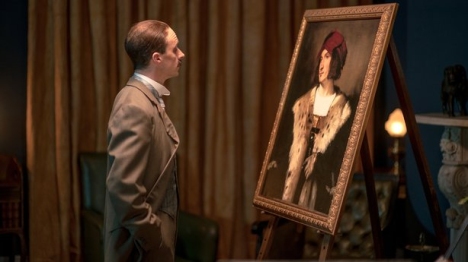
Citizen Lane pulls back the curtain a little bit, illuminating both its subject and the world around him. Citizen Lane closes on an imagined image of Lane wandering through the gallery named in his honour, unassumingly travelling through a series of interlocked rooms, largely unnoticed by those in attendance. This image captures what Citizen Lane suggests is the most compelling facet of its central figure, the manner in which he seems to move through early twentieth-century Dublin intersecting with the grand sweep of Irish (and eventually global) history.

Citizen Lane is an enlightening and entertaining piece of work, and a compelling argument for how works of art (and even those who engage with art) seem to turn a mirror back on the culture around them.

Painting a picture of life in twentieth century Dublin.

Continue reading

Non-Review Review: Solo – A Star Wars Story

Solo: A Star Wars Story is perhaps remarkable in how it is unremarkable.

That is not exactly fair. Most obviously, despite being the tenth theatrical release with a Star Wars brand, Solo: A Star Wars Story is still something relatively novel for a franchise; it is a big-screen outing that consciously and overtly marginalises a lot of what audiences have come to expect from the franchise. There are a host of familiar elements here, but often in minuscule amounts; either token gestures or sly continuity nods. Without confirming any of these elements are present, Solo certainly has fewer Jedi, Death Stars, representatives of the Empire, officially designated rebels, or lightsabers than most Star Wars films.

The Wookie and the Rookie.

More than that, the film’s production was notably troubled, which is striking for a production company as efficient as Disney and Lucasfilm. Original directors Phil Lord and Chris Miller finished shooting their version of the film, and were fired during the editing process. Reportedly, seventy percent of Solowas reshot by Ron Howard. Given the schedule demands of the actors involved, the complicated mechanics of the set pieces, and the budget of the film, this was no small undertaking. On paper, Solo would appear to have more in common with a film like Justice League or Suicide Squad than even the troubled Rogue One.

With all of that in mind, it is a credit to Howard that Solo turns out as well as it did. Howard is an efficient and often underrated director, one with a clean eye and with a clear storytelling style. Howard’s films tend to be unfussy and uncomplicated, a director who never gets in the way of the story being told. This is something of an underappreciated virtue, with Howard’s films often maintaining a firm grasp on the fundamentals of storytelling. Howard’s characters tend to have clear arcs and tangible motivations, with very little getting lost in the shuffle. Howard’s direction is unobtrusive, which likely made him such a good fit for this particular film in these particular circumstances.

On the cards…

Watching the film, there is little sense of competing tones or contrasting visions. There are moments over the course of the film when the cast are noticeably more playful, their banter a little more conversational and the comic rhythms a little more pronounced. However, Solo never misses a beat, never turns to sharply, never transitions too jarringly. There is a strange sense, watching Solo, that absolutely everything has ended up right where it was supposed to be with a minimum amount of fuss. There is absolutely nothing about the finished product screams “troubled production.”

At the same time, nothing about Solo screams anything at all.

Going Solo.

Continue reading

Non-Review Review: Deadpool 2

Like the original, Deadpool 2 is being talked about as a deconstruction or comedy. It’s not really. At least, not primarily.

Deadpool 2 is most effective as a very simple and straightforward superhero narrative with a shade more violence and a dash more awareness. There are laughs in Deadpool 2. And a few truly great jokes. There are even occasionally moments where Deadpool 2 will take a montage or a couple of scenes specifically to set up a later pay-off. However, these are the exception rather than the rule. And it’s no coincidence that this set-up leads to the biggest laugh in the film.

Not basic Cable.

More to the point, Deadpool 2 never opts for a joke over an efficient plot beat. Deadpool 2 never even distorts its plot in order to cram a few more laughs into the runtime. The gags are largely there to decorate the plot, not to direct it. They’re fun, but they aren’t especially brutal or pointed. There’s never a sense that Deadpool 2 exists as a deconstruction or critique of superhero movies, that it has anything especially insightful to say about the genre beyond accepting that modern audiences are genre-literate.

To be clear, this is not an issue with Deadpool 2. In fact, what’s most remarkable about Deadpool 2, particularly in the age of superhero bloat and franchising, is the relative efficiency with which it tells a simple story. For all the jokes about genitalia and all the pop culture references that crowd the narrative, there is more genuine emotion in Deadpool 2 than there is in Avengers: Infinity War. The characters are better defined, their arcs and motivations clearer, their agency repeatedly affirmed. There is an endearing and infectious earnestness beneath the dick jokes.

Just Joshing.

Continue reading

Non-Review Review: On Chesil Beach

On Chesil Beach is a messy and awkward adaptation of Ian McEwan’s story, adapted by the writer from his own work.

McEwan’s source material might be better described as a “novella” than as a “novel”, with the writer describing it as such and the book generating some small controversy when shortlisted for the Booker Prize. Indeed, the film strains when it tries to extend the novella’s core idea out into a feature-length film, often struggling to find focus and to hold its attention. The result is a very uneven piece of work.

Love on the rocks.

However, On Chesil Beach provides an intriguing mess of interesting ideas and solid performances. Saoirse Ronan and Billy Howle cannot hold the film together, but provide a set of interesting characters that provide the closest thing that the film has to a throughline. The film works best when it is willing to focus on these two characters together, when it moves away from its free-association aesthetic towards something more concrete.

On Chesil Beach never quite coheres into a fully-formed film, often feeling more like a televison movie or a stage play than a theatrical release. Still, there is something interesting playing beneath the surface, often lost in heavy-handed writing or awkward segues.

It ain’t no picnic.

Continue reading

Non-Review Review: Entebbe

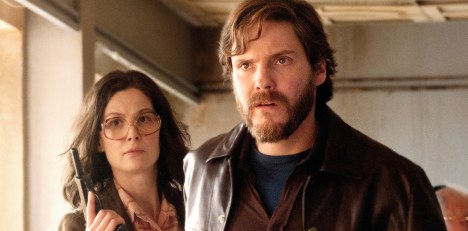
Entebbe is an ambitious, and very messy, hostage drama.

The events that took place in Entebbe Airport in Uganda during June and July 1976 are fascinating. The crisis been adapted for the screen on several occasions already. Anthony Hopkins, Elizabeth Taylor and Richard Dreyfuss starred in Victory at Entebbe later that same year. The following year, Irvin Kershner directed Raid on Entebbe with Charles Bronson and Yaphet Kotto. That same year, Israel produced its own take on the tale in Operation Thunderbolt, which earned an Academy Award nomination for Best Foreign Language Film.

A Brühl-tal experience…

The events leading up to the daring recovery mission are deeply fascinating, with any number of interesting angles on the larger story. It is tempting to look at the events in terms of the tenure of General Idi Amin, who made Uganda a base of operations for these terrorists, much like Last of King of Scotland did. It is possible to look at the Israeli soldiers who trained to mount the rescue mission, knowing the dangers into which they were venturing. It might be reasonable to treat the events as a formative experience for the (then) young state of Israel.

Entebbe attempts to tell the story through all these different prisms at the same time, to offer a holistic perspective on the events that captures the surreal nature of events and the absurd stakes for all of the players caught up in this perilous game. Entebbe bites off a lot more than it can chew, never quite managing to balance the competing demands of the objects of its focus. Entebbe is an intriguing film, but one that feels fractured and unfocused.

Merc task force.

Continue reading

Non-Review Review: I Feel Pretty

I Feel Pretty has a very bold premise for an aspirational comedy.

Renee is a young woman wrestling with her insecurities, who dreams of being more beautiful. Inspired by a late-night viewing of Big, she is inspired to transform that dream into a wish, and pleads with some external power to physically transform her. Following an awkward accident (and a brain injury) at her “Soul Cycle” class, Renee wakes up and does not recognise her own body. The only catch is that the transformation is strictly internal. Renee is delusional. Her physical appearance has not changed, but the way that she sees herself has.

Reflective anxiety.

That is an ambitious premise, but also a loaded one. There are any number of potential misfires and miscalculations that could sabotage that premise, the skillful execution of the movie relying upon a pitch-perfect management of tone, a key understanding what the movie is trying to say at any given moment, and the sense that all of the production team are working from the same template towards the same goal.

Unfortunately, I Feel Pretty lacks that sense of cohesion, resulting in a mismatched tonal disaster, a film never entirely sure whether it is laughing with its protagonist or at her.

A tough premise to stomach.

Continue reading

Non-Review Review: The Delinquent Season

This film was seen as part of the Audi Dublin International Film Festival 2018.

“You’re a f&!king cliché!” one character screams at another during a particularly heated moment in The Delinquent Season.

That’s a dangerous line to put into a screenplay, particularly in what is supposed to be an intimate character-driven drama. The line skirts the boundaries of self-awareness, inviting the audience to consider it as a statement of authorial intent. It takes genuine courage to force the audience to assess whether the character in question really just “a f&!king cliché”? Obviously, the film believes that its central characters are more than just a collection of familiar tropes repackaged and reheated, but it takes confidence to stare the viewer right in the eye and broach the question.

“Look, it’s this or Infinity War.”

The Delinquent Season certainly has lofty goals. It aspires to be provocative and confrontational, to push the audience a little bit out of their comfort zone by asking them to empathise with characters who are abrasive and awkward. The Delinquent Season seems to genuinely hope that the audience might find its central characters to evoke strong emotions; to feel pity or hatred or anger at their decisions and their actions. There are points watching The Delinquent Season where writer and director Mark O’Rowe is goading the audience to hate these characters.

Unfortunately, The Delinquent Season never even considers that the audience might be bored by these four particular characters.

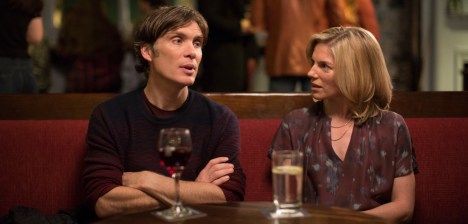
Table this for later.

Continue reading

Non-Review Review: Avengers – Infinity War

There is a solid argument to be made for the Marvel Cinematic Universe as blockbuster television series that only releases three or four films in a given year.

There’s a lot of evidence to support this argument, perhaps most notably the directors chosen for “phase two” of the grand experiment. Joss Whedon might have directed Serenity and Much Ado About Nothing, but he remains known for his game-changing work on television series like Buffy: The Vampire Slayer, Angel, Firefly and Dollhouse. Removing Patty Jenkins from Thor: The Dark World and replacing her with Alan Taylor only reinforced this sense. Drafting in the Russo Brothers from Community to direct Captain America: The Winter Soldier cemented the notion.
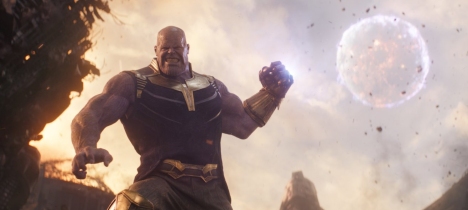
Purple reign.

Indeed, the elevation of the Russo Brothers within the Marvel Studios hierarchy with Captain America: Civil War and with Avengers: Infinity War suggests the obvious similarities between managing the sprawling continuity of the shared cinematic universe and the day-to-day management of a television show, where individual instalments might be credited to individual authors, but it is also important to maintain consistency of tone and vision across the entire line. Infinity War suggests the sort of organisational ability associated with long-form television storytelling more than any single cinematic narrative.

There are moments in which this approach works. Infinity War is full of knowing winks and callbacks, allusions and references. There is a sense of set-up and pay-off to certain threads and arcs seeded across the eighteen previous films within the established brand. Characters get emotional scenes that play upon established relationships and dynamics, which are clearly articulated within the film itself, but building off years of watching (and rewatching) these actors play off one another in these roles. There is an undeniable weight to Infinity War that simply would not be possible without that television storytelling style.
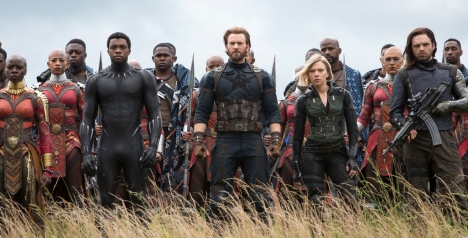
Avengers assembled.

At the same time, there are reminders of the limitations of this approach, of the challenges of balancing individual stories with a larger plan for the narrative universe in which they unfold. This is particularly notable because Marvel Studios recently shifted towards a more director-friendly approach in some of its standalone productions. Guardians of the Galaxy and Guardians of the Galaxy, Vol. 2 are both undeniably James Gunn productions. Black Panther could only have come from Ryan Coogler. Thor: Ragnarok worked as well as it did because of the unique directorial stylings of Taika Waititi.

Watching Infinity War, it becomes clear how far these directors deviated from the established style sheet, and the difference in approach between these directors and the Russo Brothers. It occasionally feels like Infinity War was constructed by people who watched those movies, without understanding why they worked as well. There is a tonal awkwardness when these characters are woven back into the fabric of the shared universe, in a manner that is occasionally unquantifiable but sometimes fundamental.
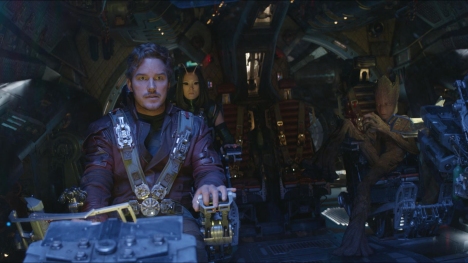
Guardians… Get In There?

Infinity War is good, clean fun. Perhaps too good and too clean. In order put the jigsaw pieces together, all of the rough edges have been sanded off. Anything that might generate friction has been stripped away, creating the impression of a very smooth and very functional storytelling engine. Midway through the film, Thor ruminates upon the existence of fate and how it has led him towards this particular moment and beyond to a greater purpose. Doctor Steven Strange perceives one single happy ending to this crisis.

There is a sense that Thor and Strange perceive the vast narrative machine of Infinity War working around them. It is an impressive machine, if a somewhat inhuman one.
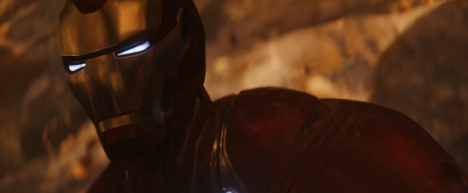
Things look pretty Stark.

Continue reading

Non-Review Review: Strangers – Prey at Night

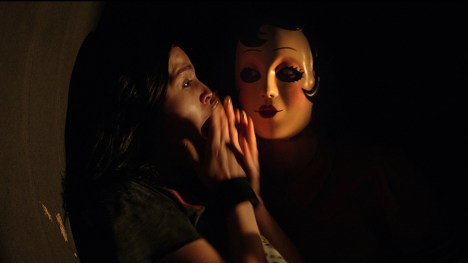
Strangers: Prey At Night is the story of a wholesome family that find themselves menaced by a group of Kim-Wilde-and-Bonnie-Tyler-loving, smiley-face-making, Nirvana-quoting nihilist hipster dirtbags. So, it’s a true horror story.

Strangers: Prey At Night is perhaps the flip side of the nostalgic-for-the-experience-of-horror-cinema movies like A Quiet Place or Lights Out, in that it’s just a straight-up nostalgic ode to all manner of forgettable eighties era slasher movies. It’s a canny example of the horror genre’s ability to cannibalise what works, a film very consciously built on the successful nostalgic retro horror vibe that made The Conjuring and The Conjuring II such massive hits, but applying it to the direct-to-video masked-and-axe-wielding-killer subgenre.

Let us prey.

Being honest, it is a surprise that it took so long to see that approach applied to the reliable low-budget slasher genre. After all, the twenty-first century has seen a host of remakes and reboots of classic hack-and-slash films like The Last House on the Left or The Hills Have Eyes, but those films consciously emphasised applying modern movie-making techniques to older material. Strangers: Prey at Night does the inverse, applying an older aesthetic to a sequel to a newer breed of horror film.

The approach is intriguing, even if the results are unsatisfying.

The horror franchise that burns twice as bright…

Continue reading

Non-Review Review: The Guernsey Literary and Potato Peel Pie Society

Early in the film, a supporting character reveals the ingredients of the eponymous culinary delight, the mysterious “potato peel pie.” Those ingredients are, somewhat predictably, potatoes and potato peels. With some small measure of pride, the character in question boasts that his potato pastry remains conceptually pure. There is no flour, no sugar, no flavouring. There is only potato. Watching The Guernsey Literary and Potato Peel Pie Society, this almost feels like a moment of self-awareness.

The Guernsey Literary and Potato Peel Pie Society could certainly use more flavouring.

Pie in the sky thinking.

Continue reading