• Following Us

  • Categories

  • Check out the Archives


  • Awards & Nominations

Non-Review Review: The House With a Clock in Its Walls

There is something quite charmingly old-fashioned about The House With a Clock In Its Walls, which often feels like a nostalgic paean to the kind of children’s films that they simple do not make any longer.

Director Eli Roth might feel like a strange fit for the film, given his filmography to this point is effectively a whistle-stop tour of twenty-first century exploitation cinema; the director made his name with the Hostel films, but has also worked on movies like Cabin Fever, Knock Knock and the recent Death Wish remake. It seems strange that Eli Roth would be tapped to direct a family-friendly adaptation of a forty-five year old novel.
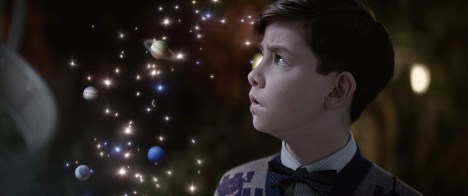
Stars in their eyes.

Then again, there is a long history of niche and exploitation filmmakers serving as unlikely storytellers of child-friendly narratives. Robert Rodriguez is perhaps best known for his work on Desperado or From Dusk ‘Til Dawn, but he is also responsible for the Spy Kids franchise. Older film fans will recognise George Miller for his work on the Mad Max franchise, while younger audience members will forever associate him with Happy Feet. There is a clear precedent here.

More than that, there’s perhaps a logic at play in these sorts of transitions. At its best, and perhaps given the most charitable reading, Roth’s filmography suggests the demented glee of a teenager bringing his feverish imaginings to life. There is a clear sense of nostalgia and yearning in Roth’s work, even beyond straight-up remakes like The Green Inferno. Indeed, that nostalgia seems perfectly suited to The House With a Clock In Its Walls, which is just a shade darker and weirder than a lot of modern children’s films, but in keeping with the tone of the film’s of Roth’s childhood.
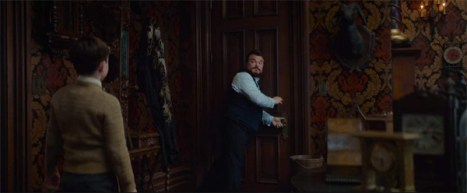
Clocking in.

Continue reading

Non-Review Review: The Little Stranger

The Little Stranger could do with being a little stranger.

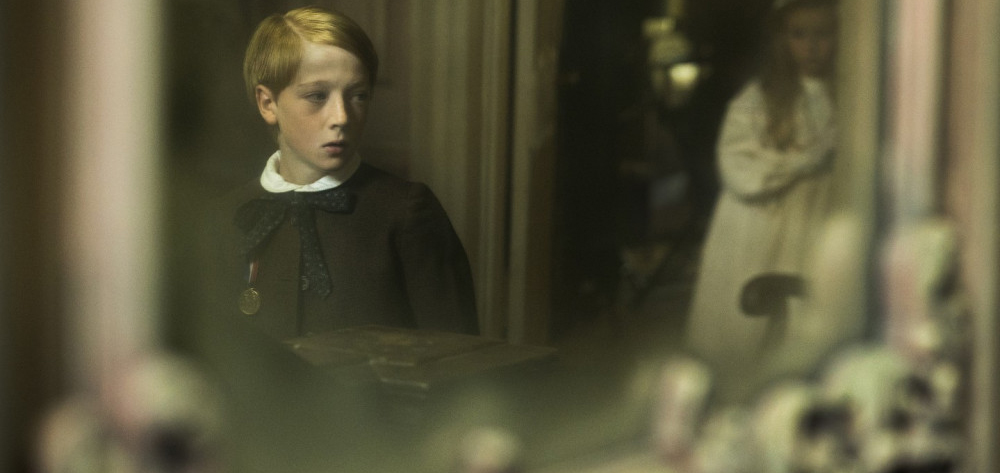
Gothic horror stories about haunted houses are often about more than just the building or the estate itself. They often serve as something at once larger and smaller; a prism through which the storyteller might examine both the society around the haunted house and the family unit trapped within. This is true of most haunted house stories, no matter where or when they are set. The Amityville Horror is about much broader familial anxieties than a mere spectre.

Stranger Things…

At the same time, it feels particularly true when applied to the more traditional and old-fashioned gothic haunted house stories, the kind of tales about old family estates in the middle of nowhere, that had once served to anchor political and economic power in a particular area, but had since watched modernity pass them by. These are the sorts of creepy houses frequently glimpsed in period pieces or older stories, whether in tales set in the England of Wuthering Heights or the New England of Edgar Allan Poe.

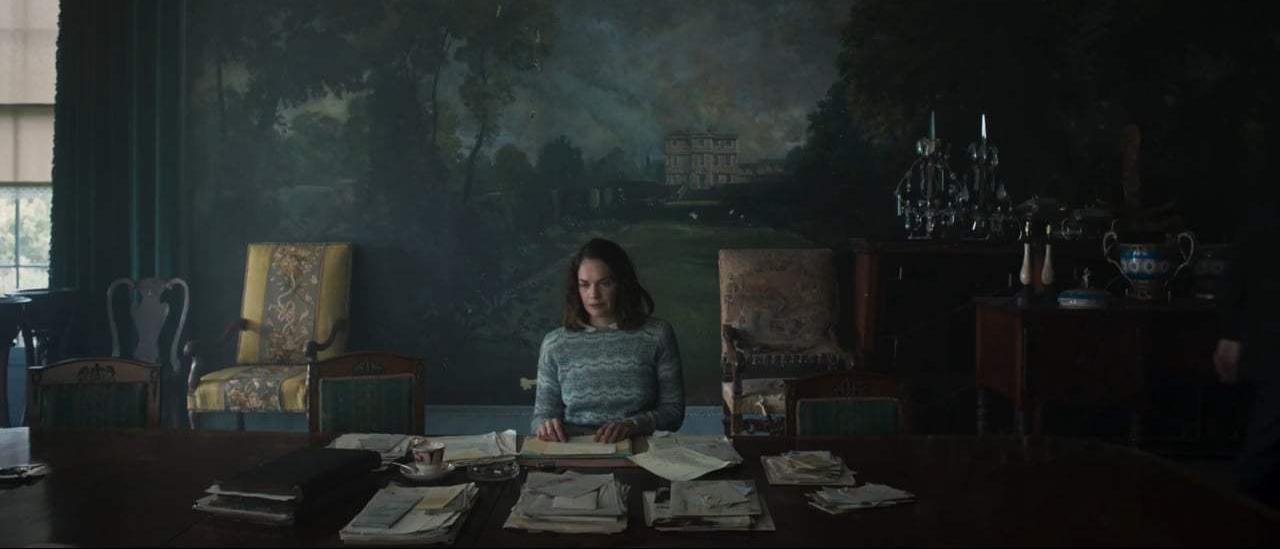
The Little Stranger belongs to this particularly strain of haunted house horror, unfolding on a once grand estate that is slowly surrendering itself to a rapidly-changing world. It is the story of a house in decay and decline, falling apart as it struggles to find its place in a world that might slowly shed the trappings of class hierarchies and where power might no longer be anchored exclusively in those families wealthy enough to own and maintain these grand estates.

A sorry estate of affairs…

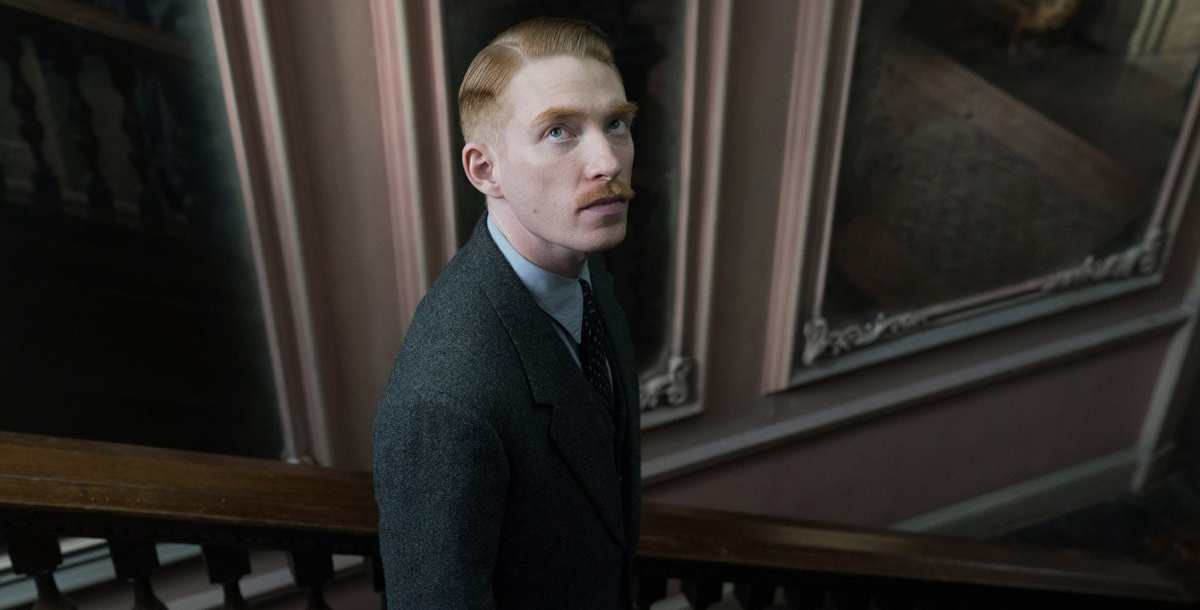
The Little Stranger works better as a mood than as a story, a slowly unravelling portrait of a household coming face-to-face with its own obsolescence, unsure both of whether it can do anything to arrest this collapse or even whether it wants to. The tale maintains a steady sense of unease across its runtime, largely down to a tremendous performance from Domhnall Gleeson as a character who remains ambiguous and unsettling even as he positions himself at the centre of the narrative.

The Little Stranger suffers from a fairly conventional and predictable plot, with little novel or insightful to say, relying on a series of revelations that are quite clear even fifteen minutes into the two-hour runtime. The Little Stranger is a little too familiar for its own good, a little too comfortable and sedate to really pack the necessary punch.

Farraday is far away.
Continue reading

Non-Review Review: Crazy Rich Asians

The romantic comedy is, by its nature, an aspirational genre.

At its core, the romantic comedy is built around the idea that love conquers all, that soul mates exist, that there is one person in a million for every other person and that they are destined to find one another. The romantic comedy is aspirational in its presentation of love: the idea that everybody lives happily ever after, that every obstacle can be navigated if two people love one another. Of course, reality doesn’t always work out like that. This is just one reason why we tell stories; not just to tell us how the world is, but to insist how it should be.

Crazy, stupid, rich love.

This is perhaps why the romantic comedy is so often wedded to other fantasies; consider the ostentatious wealth depicted in most romantic comedies, but especially in Nancy Meyers films like It’s Complicated or Home Again. Romantic comedies present an idealised depiction of family life, where all differences can be reconciled and where practical concerns need never even be articulated. Even romantic comedies that aren’t explicitly about wealthy families luxuriate in a fantasy of wealth; very few families could realistically afford even the starter pack romantic comedy wedding.

There is nothing inherently wrong with aspiration, to be clear. Action movies and superhero films tend to indulge in a similarly idealised fantasy of heroism and strength of will, imagining worlds where many of the complications of everyday life can be shuffled into the background or wrestled into submission. However, the aspirations baked into romantic comedies are more tangible and more immediate, more recognisable even in their outlandishness.

“I mean, I’m rich. But I’m not crazy rich.”

Very few people will find themselves liberating a soccer stadium from terrorism, but most audience members have romantic relationships and many have weddings and even families. Even those audience members who don’t have their own spouses and children would have grown up within something resembling a familial structure. As a result, even the most outlandish romantic comedy offers something that more closely approximates lived experience.

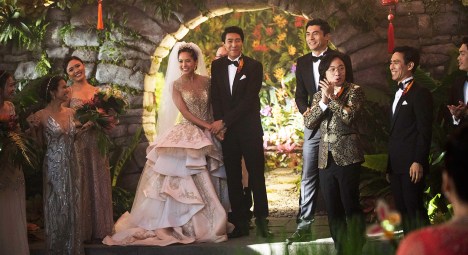
Crazy Rich Asians fundamentally understands this aspirational nature of romantic comedies, and takes a great deal of pleasure in its display (and even celebration) of absurd wealth. The film’s title is a bold statement of purpose. There is something exhilarating in that.

Love don’t rom (com).

Continue reading

Non-Review Review: The Nun

Nobody really talks about how strange The Conjuring is.

James Wan has effectively managed to fashion Hollywood’s second most successful shared universe from a variety of old-fashioned horror tropes stitched together with a more modern blockbuster aesthetic. The films in franchise – which include The Conjuring 2, Annabelle and Annabelle: Creation – are remarkable because they seem like such a strange basis for a twenty-first century blockbuster franchise. They are all period piece jump-scare driven retro jorror movies that are produced with a very slick and modern sensibility.

Bad habits.

The Nun is another worthy (and interesting) addition to that canon. As with the other films in the series, its basic structure wields more modern storytelling and filmmaking techniques to a more classic horror tone. As with the other films, the production team also understand the appeal of a certain level of variety within that familiar template. The Conjuring was a throwback to beloved seventies haunted house films, Annabelle set its horror against the backdrop of the sixties, The Conjuring 2 moved to England and Annabelle: Creation unfolded against the backdrop of rural America.

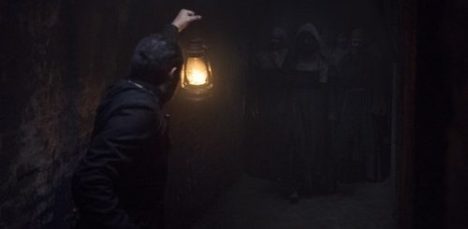
The Nun evokes gothic horror. Set in a creepy abbey in Romania during the fifties, following an investigator dispatched from the Vatican to investigate the suicide of a young nun, The Nun thrives in this environment with this iconography. The Nun falters a little bit in its storytelling, especially its exposition, and it stumbles a little bit when it comes to building a climax that works as both an action film and as a horror. However, the film is canny enough in its choice of setting and imagery that it never completely comes apart.

Who goes stair?

Continue reading

Non-Review Review: Mile 22

Mile 22 is an intriguing and muddled piece of work.

Judged by the standards of contemporary filmmaking, Mile 22 is a deeply frustrating and disjointed piece of cinema. In some ways, it seems strange to describe it as a movie. It is a film with one of the most blatant and transparent sequel hooks in recent memory, cutting to the credits at what feels like the end of the second act. This sense of confusion and bewilderment is only increased by Berg’s direction of action sequences, which are disorienting to the point where they come close to incomprehensibility.

Wahl-to-Wahl action.

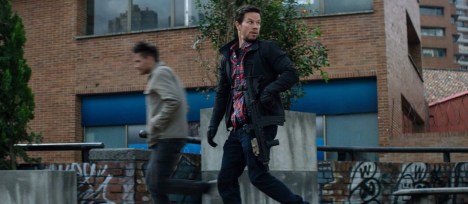
However, while these elements add up to an underwhelming cinematic experience, there is something strangely compelling in the way that Berg stitches together this relatively straightforward narrative. The chaos at the heart of the movie makes it hard to enjoy the action sequences, but offers an endearing frenetic energy that sustains the film. There are moments when Mile 22 borders on the self-aware, particularly as at careens towards a climax that seems to have been reverse-engineered from two separate Mark Wahlberg memes.

The results are baffling, but fun to pick at.

Picking up the pace.

Continue reading

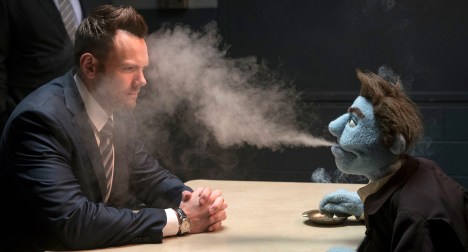
Non-Review Review: The Happytime Murders

The Happytime Murders may be the worst film of the year.

There are any number of issues with The Happytime Murders. The film is only ninety one minutes long, but feels interminable. The film has no idea what it is about in any meaningful sense, beyond assembling a number of familiar tropes in a very familiar way. Beyond that, the film seems to believe that rehashing familiar clichés is amusing of itself, some sort of self-aware postmodern ironic anti-comedy where the reference to the thing is enough of itself to become a joke.

It really blows.

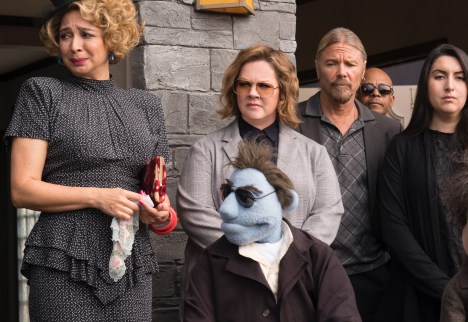
A larger problem is that the film assumes that seeing puppets do “adult” things has greater novelty than it does. The Happytime Murders is a film that is consciously powered by the juvenile thrill of watching beloved children’s characters caught in inappropriate situations – swearing at one another, smoking cigarettes, engaging in vigorous sexual activity. This glosses over the fact that there are plenty of other media that has already covered this ground. The Happytime Murders runs on a joke that has already been repeated and rehashed several times.

However, all of these concerns distract from the biggest issue with The Happytime Murders. It is just not funny.

The boy in blue.

Continue reading

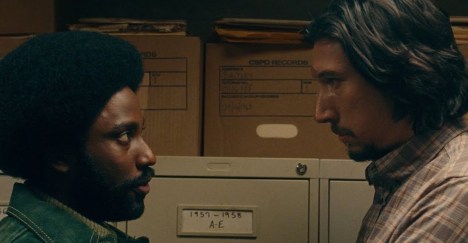
Non-Review Review: BlacKkKlansman

BlacKkKlansman is an American tragicomedy.

The past few years have seen a heightening of reality, a blurring of the boundaries between fact and fiction, an intrusion of the unreal into the real world. The President of the United States is effectively a reality television star, and is running the country as some sort of grotesque reality television show. “Truth is not truth”, to quote one administration figure, while another has peddled in the idea of “alternative facts” while alluding to a horrific terrorist attack that simply never happened while other supporters of the administration insist that other horrific events did not happen.

The two Ronnies.

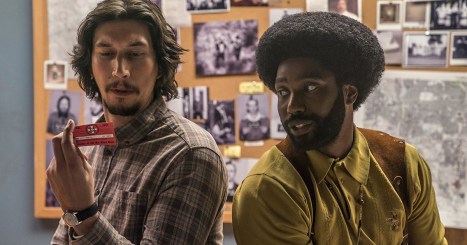
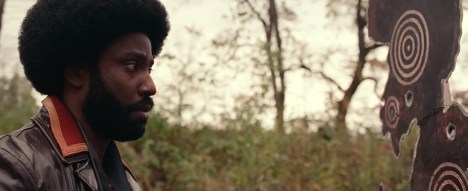
With all of that going on in the background, soaking into the zeitgeist, BlacKkKlansman feels very much like a movie for the moment. It is – to quote the introductory text – “based on some fo’ real, fo’ real sh*t”, taking its inspiration from a memoir written by undercover police officer Ron Stallworth. However, it is also filtered through the hyperstylised cartoonish lens of a blackploitation buddy comedy, with Lee taking every opportunity to remind his audience that they are watching a piece of pop culture.

The premise of the film is so absurd that it’s almost impossible to play it as anything but comedy. The first black police officer in Colorado Springs launches an undercover sting on the KKK, using his own name to infiltrate the organisation through the telephone. Working with a fellow white police officer, this ambitious young go-getter manages to manoeuvre his way to the top of the organisation, fooling even the Grand Wizard himself. It’s a ridiculous story, one that seems inherently unreal. Even the name – “Stallworth” – sounds like something from a dimestore paperback.

Hitting all its marks.

Of course, in this era of unreality, it is entirely real. Indeed, the power of BlacKkKlansman comes crashing down on the audience in the final moments, when Lee brushes aside the heavy-handed references to contemporary politics that play through the narrative for something that is much more tangible and real, serving to throw the entire grim joke of the film into stark relief, suggesting that so much of the awkward squirming and ridiculous twists are all the foundation of the horror show through the audience are living.

BlacKkKlansman laughs in the face of horror and brutality. But only because the alternative is to cry.

The historical record.

Continue reading

Non-Review Review: The Children Act

Perhaps the most striking thing about The Children Act is how it manages to combine so many stock prestige drama beats into such a chaotic cacophony.

The Children Act is a mess from beginning to end, all the more jarring for how familiar and how recognisable the constituent elements might be. The Children Act often feels like a fairly standard IKEA table where all of the pieces have been assembled to create something monstrous. Often during the runtime, the audience might spot a familiar beat or plot point, but often one deployed with little consideration for how these elements normally work or how they might better service this particular story.

Come what May.

The Children Act is a film that very clearly aspires towards a certain style of prestige cinema. It is directed by Richard Eyre, responsible for awards fare like Iris or Notes on a Scandal and even the recent highly successful BBC adaptation of King Lear. It is written by Ian McEwan, adapting his own novel, the writer perhaps still best know to movie-going audiences as the novelist who provided the source material for Atonement. It stars Emma Thompson and Stanley Tucci, two actors who are always highly engaging, and who should bounce off one another.

Unfortunately, almost nothing within the film actually works, with strange decisions contorting the narrative into strange shapes. The Children Act is a curiousity that is more intriguing than it is engaging, more compelling for how completely it refuses to work than for anything that it is actually trying to say.

Just this.

Continue reading

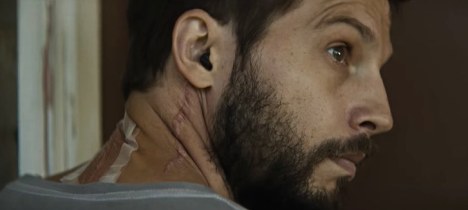
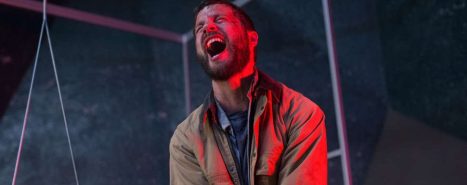
Non-Review Review: Upgrade

On a very fundamental level, Upgrade understands the anxieties that drive body horror.

Body horror is largely rooted in the grotesque realisation that human bodies are little more than machines made of meat. After all, every student who has studied biology understands the mechanics of the human body; the processes that drive it, the structures that hold it together, the logic by which it operates. The nerve endings that relay signals from the furthest region of the body back to the brain, the synapses that fire within the brain. Described in such cold and rational terms, human consciousness becomes a mystery, a piece of the puzzle that doesn’t fit. Software we don’t understand running on wet hardware.

What the neck is going on?

More than that, human bodies are inefficient machines. They are soft and squidgy, held together by tendons and muscles stretched over bones built of calcium and hinges filled with synovial fluid. The human body impressive feats of engineering from an evolutionary perspective, through the mere fact that it exists, albeit more vulnerable than the architecture or the mechanics of the world designed by human beings. Bodies can easily be bent and broken, warped and distorted. They can be attacked in so many ways, and fall into disrepair with such ease. They are unreliable, and very difficult to fix.

Upgrade understands that body horror thrives at the intersection of these twin anxieties; the nightmarish uncertainty of how human consciousness fits within the mechanics of basic biology, and the realisation that the human body would never pass basic health and safety standards for any complex piece of machinery. Upgrade wonders what happens when that machine made of meat receives an update to its operating system.

An impressive body of work.

Continue reading

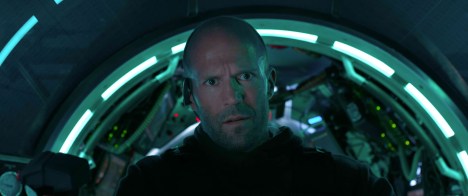
Non-Review Review: The Meg

The Meg is proof that bigger is not always better.

There are moments when The Meg works beautifully, the film embracing its ridiculous concept by going all-in on a couple of absurdly heightened images. There are a number of shots in The Meg, particularly towards the climax, that are gleefully and unapologetically “too much.” It would undercut these moments to discuss them in any great detail in a review of the film, particularly since they are the moments when everything in the film seems to click into place. In these beats, there is a reckless abandon, as if the film understands the appeal of “Jason Statham in Jurassic Shark.”

Lifeboats find a way.

Unfortunately, these moments serve to highlight what is missing from so much of the rest of the film. The Meg is a movie committed to the idea of “more”, but is more invested in promise than in delivery. Everything in The Meg happens at breakneck pace, to the point where the first act of the film might make a compelling blockbuster on its own terms, given room to breath. However, like the sea-faring predator that inspired it, The Meg is eager to get to the next thing and the next thing after that. The result is a movie that feels rushed, but never urgent.

The Meg is so busy trying to heighten its stakes and its scale that it never quite manages to establish them.

Don’t bait him!

Continue reading