• Following Us

  • Categories

  • Check out the Archives


  • Awards & Nominations

The X-Files – Providence (Review)

This December, we’re taking a trip back in time to review the ninth season of The X-Files.

It is frequently argued that 9/11 killed The X-Files.

There are two sides to this argument. The most defensible side suggests that audiences simply lost all appetite for conspiracy and paranoia when confronted with an atrocity on that scale; that viewers wanted to be comforted and reassured about authority in the wake of the attacks. This argument is perhaps supported by the significant drop in viewers between Existence and Nothing Important Happened Today I, suggesting that the audience simply wasn’t interested in finding out what the ninth season had to offer – regardless of quality.

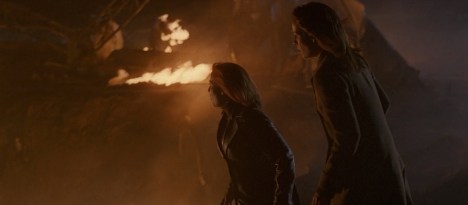
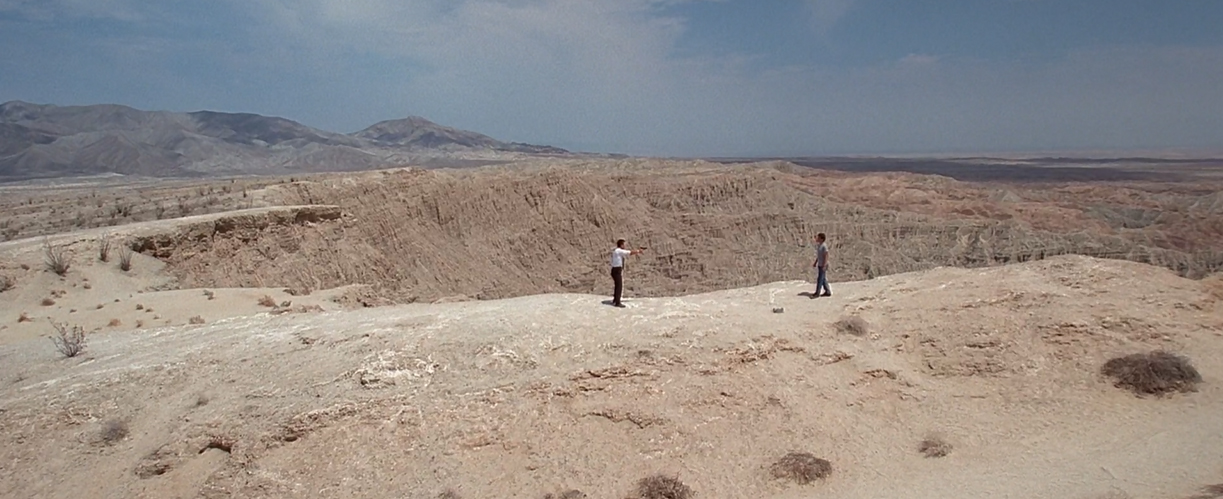
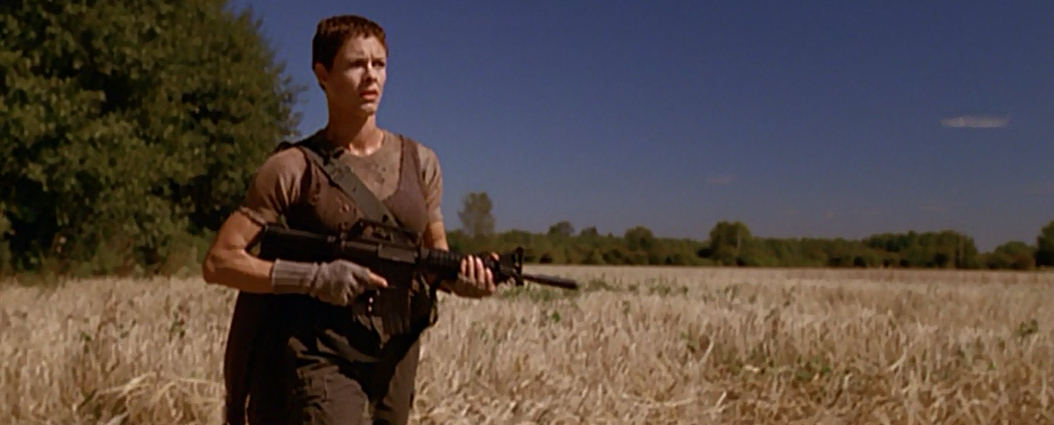
Oh your gods...

Oh your gods…

The other side of the argument suggests that the production team themselves were ill-equipped to deal with post-9/11 reality. The X-Files was a show rooted in the cultural context of the nineties, and had just been asked to adjust to a seismic shift. The world had changed dramatically over the course of a few hours on a morning in Autumn. The eighth season had seen the show drift away from government conspiracies and towards a more conventional alien invasion narrative, one that could play as a reactionary fantasy of the War on Terror.

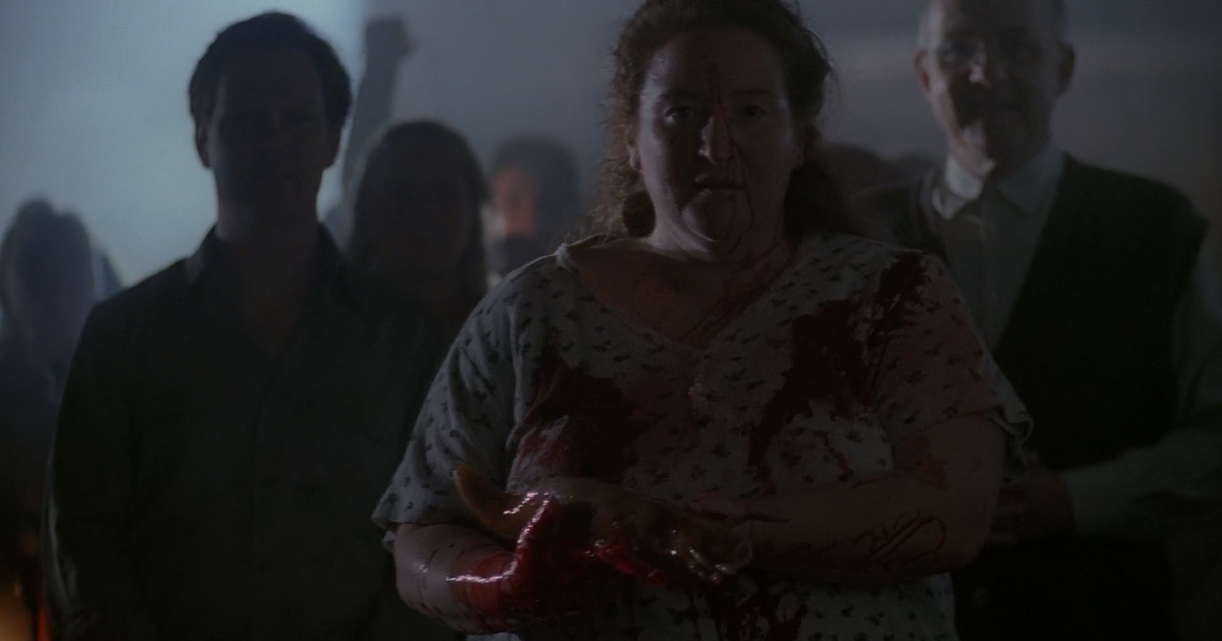
The ninth season aired in the immediate aftermath of 9/11. The season was actually in production when the attacks took place, with the team halting work on Dæmonicus as the reports came in. While the ninth season does not necessarily have a coherent and rational response to those events, it is clear that the production team want to say something. Much of the ninth season mythology seems to struggle with what it wants to say and how best to say it.

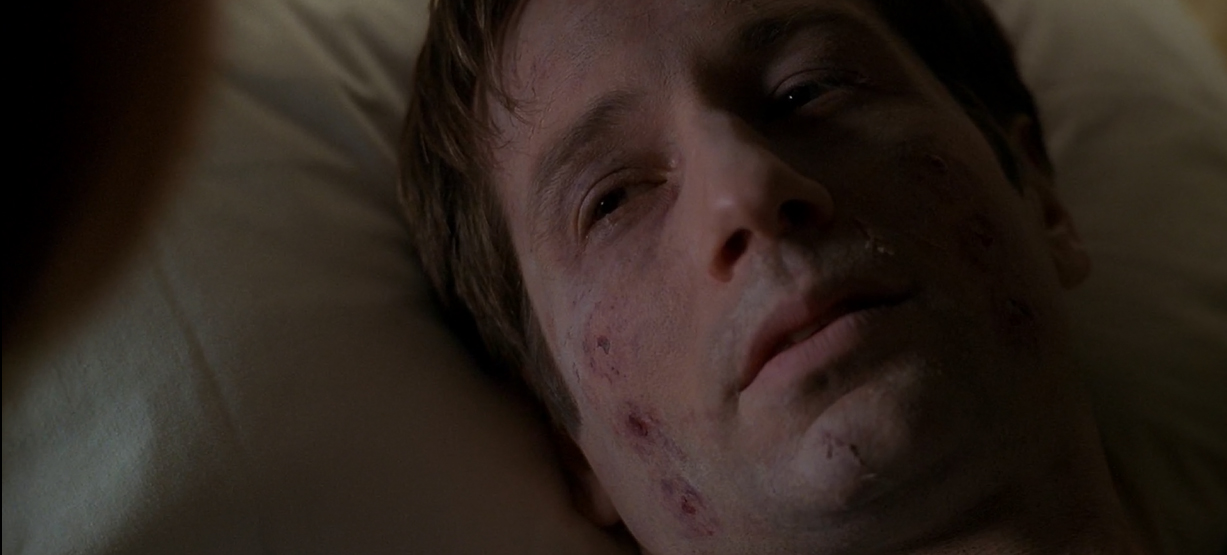
Fire and brimstone...

Fire and brimstone…

Continue reading

The X-Files – Season 8 (Review)

This October/November, we’re taking a trip back in time to review the eighth season of The X-Files and the first (and only) season of The Lone Gunmen.

The eighth season of The X-Files would be the perfect last season of the show, and a pretty solid first season of a new show born from the ashes.

In many ways, television is a conservative medium – more in an artistic sense than a political one. Network television is largely built around churn, a conveyor belt model that is designed to generate product according to tight schedules and oppressive deadlines. Routine and familiarity make the production schedule easier to manage, particularly for shows with large season orders. More than that, if a show has figured out an approach that has worked, it makes no sense to deviate from that pattern.
xfiles-deadalive33a

Why risk changing something that has been proven to work and to which the audience has responded? For all the (deserved) praise The X-Files gets for popularising (or repopularising) serialised storytelling in prime-time television, it was just as conservative as any other show. The production team were working under incredible pressure, so it makes sense they would not want to change a formula that made sense. As such, the really big changes to the show were largely driven by external factors.

The mythology largely developed from Scully’s abduction in Duane Barry and Ascension, an attempt by the writers to work around Scully’s abduction. The decision to film The X-Files: Fight the Future between the fourth and fifth seasons was at the behest of Fox rather than the production team. David Duchovny forces the move to Los Angeles in the sixth season. The eighth season represents the most seismic shift in the creative life of The X-Files, and – as with those other big decisions – it was largely driven by choices outside the production team.

xfiles-thisisnothappening13a

In hindsight, it seems obvious that the show could not continue forever. Duchovny and Anderson were headlining a show that filmed twenty-odd episodes a season. The show had begun diffusing its focus in the fourth and fifth seasons by focusing on members of the supporting cast, but it was still effectively a two-lead show. That is a tremendous strain. Something had to give. It turned out that something was Duchovny. At the end of the seventh season, with everything coming down to the wire, Duchovny made it clear he would not appear in a full eighth season.

This forced the show to change, but in a way that afforded some measure of stability. The idea of doing The X-Files without either Mulder or Scully was horrifying to the production team and horrifying to certain sections of fandom, but Duchovny’s willingness to stick around for half of the eighth season afforded some measure of compromise. The change did not need to be jarring. Easing David Duchovny out of the show would allow for a smoother transition. It would allow the show to say a proper (and extended) farewell to Mulder.

xfiles-empedocles23a

This is perhaps the strongest aspect of the eighth season, the sense that it has a certainty and finality that the seventh season lacked. Even during the post-production of Requiem, the production team had no idea whether the seventh season would be the final season of the show. As a result, the seventh season is decidedly non-committal on the issue of closure. The eighth season is a lot more enthusiastic about the prospect of wrapping things up, once and for all. There is a sense that this is the final season of a version of the show, at the very least.

The eighth season finds itself in the impossible position of having to imagine The X-Files without Mulder. The only real issue is that it succeeds all too well. The biggest problem with the eighth season is that it is followed by a ninth season.

xfiles-without2a Continue reading

The X-Files – DeadAlive (Review)

This October/November, we’re taking a trip back in time to review the eighth season of The X-Files and the first (and only) season of The Lone Gunmen.

The X-Files is dead. Long live The X-Files.

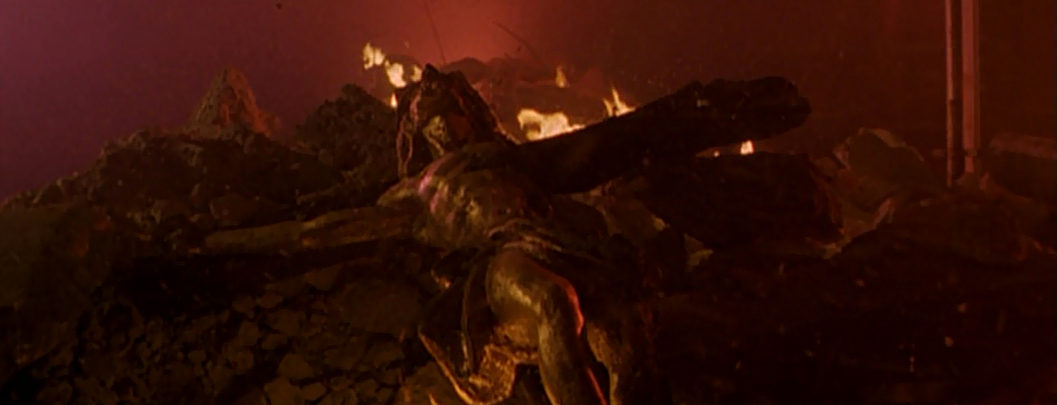
What is dead may never die...

What is dead may never die…

Continue reading

Non-Review Review: Spotlight

Nominally, Spotlight is about the exposé that ran in the Boston Globe identifying dozens of paedophile priests who had been shuffled around Boston parishes and the corrupt institution that sheltered them. Thomas McCarthy’s film never shies away from the horror stories told by the survivors of such institutional abuse, nor does it ignore the systems that were complicit in perpetuating and covering up that abuse. Running just over two hours, McCarthy’s film is meticulous and painstaking as it sorts through all the leads and follows the unravelling thread.

However, Spotlight is also about something bigger. It is a story about institutional structures as they exist, and how those structures are primarily motivated to protect themselves. The big reveal in Spotlight is not that the abuse is taking place, it is just how many people tried in how many different ways to expose that abuse to the cold light of day. The Catholic Church might be the most significant institution involved in the cover-up, but Spotlight suggests that the structures of Boston (and implicitly all over the globe) failed the people who needed them most.

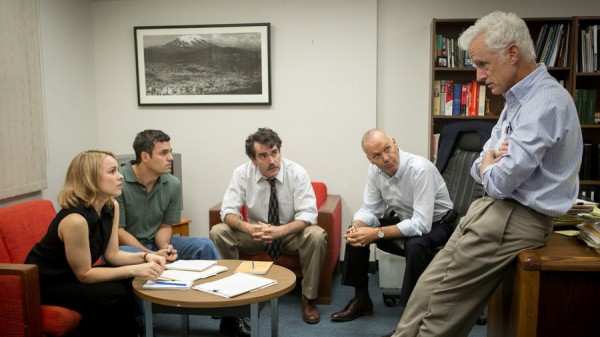
spotlight4

Spotlight is a powerful film. McCarthy is not the most dynamic or exciting of directors, but his matter-of-fact presentation style suits the material perfectly. Towards the end of the film, journalist Matt Carroll jokes that he has started working on a horror novel to distract himself from the particulars of the case. Spotlight is very much a horror story, but a horror story where the discomfort is tied to the sheer inevitability. McCarthy’s camera is always definite and steady; a slow pan or zoom confirms what the audience already suspects, and is all the more effective for it.

McCarthy has assembled a fantastic cast, including John Slattery as Ben Bradley Junior. Bradley is the son of Benjamin Bradley Senior, the executive editor at The Washington Post who oversaw the Watergate coverage and who was played by Jason Robards in All the President’s Men. This creates a nice thread of real-life continuity for Spotlight, cementing its pedigree. McCarthy’s journalism epic is powerful stuff, and perhaps the most compelling endorsement of long-form investigative journalism to appear on screen in quite some time.

spotlight3

Continue reading

The X-Files – Via Negativa (Review)

This October/November, we’re taking a trip back in time to review the eighth season of The X-Files and the first (and only) season of The Lone Gunmen.

Why no! I never thought other than
That God is that great absence
In our lives, the empty silence
Within, the place where we go
Seeking, not in hope to
Arrive or find. He keeps the interstices
In our knowledge, the darkness
Between stars. His are the echoes
We follow, the footprints he has just
Left. We put our hands in
His side hoping to find
It warm. We look at people
And places as though he had looked
At them, too; but miss the reflection.

– R.S. Thomas, Via Negativa

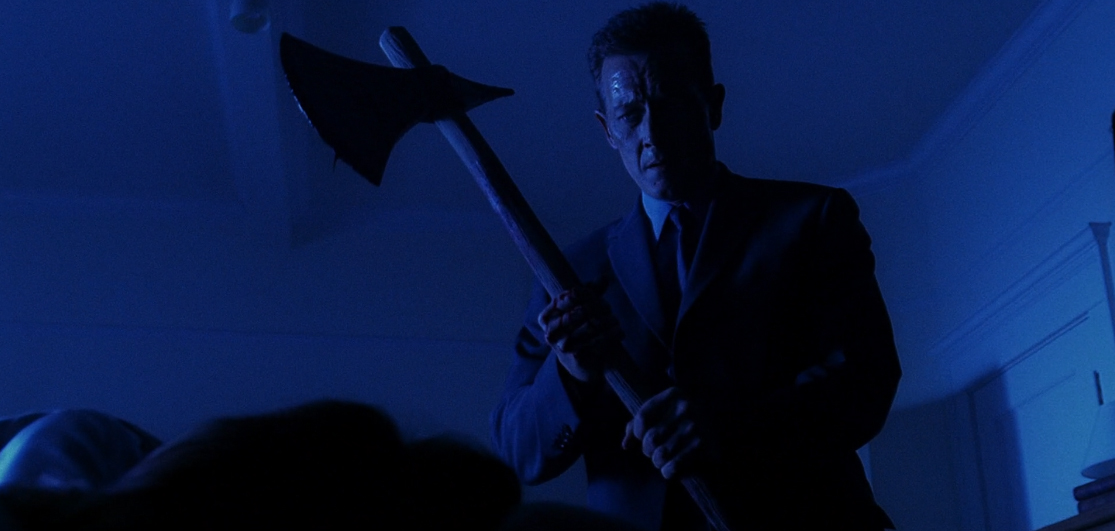
Facing the axe...

Facing the axe…

Continue reading

The X-Files – Roadrunners (Review)

This October/November, we’re taking a trip back in time to review the eighth season of The X-Files and the first (and only) season of The Lone Gunmen.

In case there was any doubt, Roadrunners proves that the eighth season of The X-Files means business.

In some ways, it seems remarkable that Roadrunners did not receive a warning about graphic content. The season would wait until Via Negativa before offering a viewer discretion advisory. Roadrunners is one of the most uncomfortable and unsettling episodes in the show’s nine-season run, one that cements the “back to basics” horror aesthetic of the eighth season as a whole. It was clear from the opening three episodes that the eighth season was intended as a return to the darkness of the first five seasons, but Roadrunners commits to the idea.

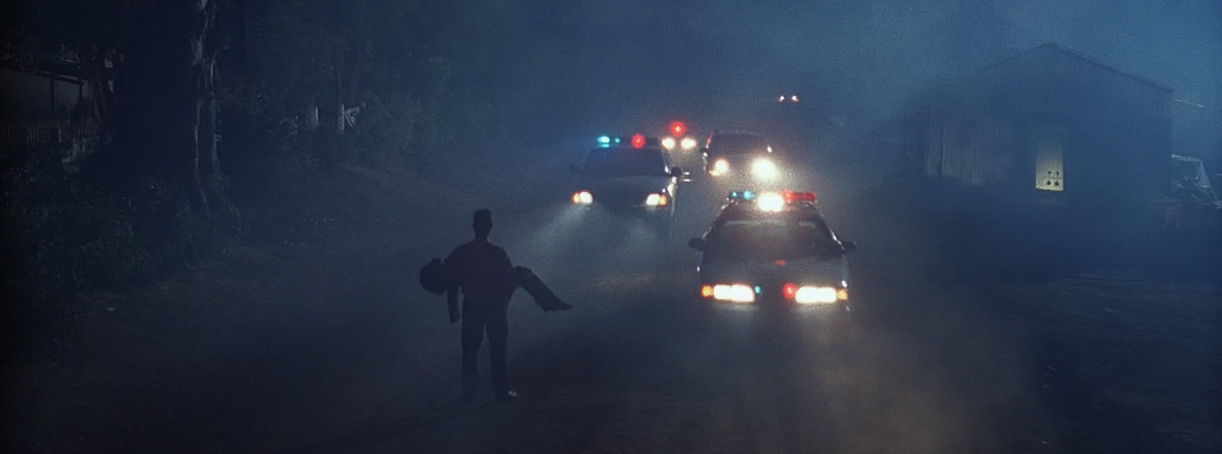
Off-road...

Off-road…

Roadrunners is a “back to basics” script in a number of ways, even beyond its very graphic horror stylings. It is a very good “small town” story, returning to the motif that populated many of the show’s early episodes. It is a story about an eccentric and isolate space in America, a place with its own unique character and its own rich history and traditions. It is a place that stands quite apart from the modern world, that might have looked the same at the turn of the twentieth century as it does at the start of the twenty-first.

Roadrunners could be seen as Vince Gilligan’s answer to Home, a similarly brutal (and unsettling) small-town tale.

"On to new business. Today's mission is for all of you to go to the brain slug planet." "What are we going to do there?" "Just walk around not wearing a helmet."

“On to new business. Today’s mission is for all of you to go to the brain slug planet.”
“What are we going to do there?”
“Just walk around not wearing a helmet.”

Continue reading

Harsh Realm – Camera Obscura (Review)

This November, we’re taking a trip back in time to review the seventh season of The X-Files and the first (and only) season of Harsh Realm.

And so, with Camera Obscura, it seems that Harsh Realm comes to an end

The show had been developed as a television series for the new millennium; all involved had great plans for it. Fox had made no secret of the fact that they planned for Harsh Realm to take pride of place in their schedule going forward. The assumption was that it would replace The X-Files after that juggernaut was retired. There was a lot of hype around the development, a lot of excitement about the new show from producer Chris Carter. Harsh Realm was to be the first of many new shows developed by the producer as part of a highly lucrative contract with Fox.

Burning down the House (of God)...

Burning down the House (of God)…

Sadly, it did not work out that way. Harsh Realm had premiered to low ratings. Fox shuffled it off the schedule after only three episodes, which seemed a knee-jerk response given the talent involved in the show’s production. The six remaining episodes were locked away from the light of day, relegated to premiering on FX at the tail end of that season of television. For all that everybody involved had hoped that Harsh Realm would be a breakout hit, it ended up little more than a footnote.

Here, it dies. After nine episodes aired across two channels over seven months, the curtain comes down on Harsh Realm. It ends not with a bang, but a whimper.

Time for reflection...

Time for reflection…

Continue reading

Harsh Realm – Manus Domini (Review)

This November, we’re taking a trip back in time to review the seventh season of The X-Files and the first (and only) season of Harsh Realm.

Manus Domini continues the influx of assistance from the writing staff on The X-Files, with John Shiban contributing a script to the first season of Harsh Realm.

Manus Domini is a very strange episode. In a way, it feels more keenly aligned with the sensibilities of Chris Carter than those of John Shiban. It is the most overtly religious episode from the short run of Harsh Realm, with characters contemplating faith and spirituality in an otherwise cruel world. It is the logical continuation of themes seeded and developed across the rest of the season, bringing the religious subtext of the show to the fore so that it might be acknowledged and explored.

Florence in the machine...

Florence in the machine…

To be fair, there are elements that fit comfortably within Shiban’s oeuvre. Shiban is very much a fan of classic horror tropes, so it makes sense that his script should feature a monstrous supporting character whose complete moral decay is symbolised through grotesque facial deformities. (The element recurs in Camera Obscura, but is not as pronounced as it in this episode.) There are elements of Manus Domini that feel like they might have been lifted from classic seventies horror.

Nevertheless, Manus Domini is defined by its religious components, making it clear that the show retains the same core moral perspective that runs through Carter’s work; there is a recurring sense that faith and spirituality are essential to survive and endure in an increasingly faithless world.

A literal mine field...

A literal mine field…

Continue reading

The X-Files – Signs and Wonders (Review)

This November, we’re taking a trip back in time to review the seventh season of The X-Files and the first (and only) season of Harsh Realm.

Religion is a major part of The X-Files. After all, what is the show but a meditation on faith?

In a way, this is an aspect that dates the series. While the show’s conspiracy theories and surveillance culture paranoia resonate as effectively in 2015 as they did in 1995, the show’s religious themes seem innocent and naive in the wake of 9/11 and the War on Terror. Signs and Wonders was broadcast towards the end of January 2000. It is hard to imagine the episode being produced even two years later, once the world had been so thoroughly shaken by acts of religious zealotry.

Snaking along...

Snaking along…

The X-Files exists as a product of the nineties, pre-dating what many have termed “the new atheism.” It exists against the backdrop of the Clinton era, in the space between the fall of the Berlin Wall and the start of the War on Terror. There are points when the shew resonates beyond that; The X-Files is often a profound and thoughtful meditation on issues like trust and faith. However, there are also points where The X-Files almost seems fused in time; where it seems like a moment has been captured in celluloid like a mosquito trapped in amber.

Signs and Wonders feels like one of those moments, sitting between the failed impeachment of President Bill Clinton and the triumphant election of President George W. Bush. This is what the last gasp of the nineties looks like.

Snake handling...

Snake handling…

Continue reading

The X-Files – Orison (Review)

This November, we’re taking a trip back in time to review the seventh season of The X-Files and the first (and only) season of Harsh Realm.

The X-Files has generally avoided sequels.

There are exceptions, of course. Eugene Victor Tooms appeared twice in the first season, bookending the show’s first year in Squeeze and Tooms. The character of Robert Patrick Modell resurfaced in Kitsunegari, two years after his debut in Pusher. In a way, the mythology could be read as a series of sequels and inter-related plots, with the show lacking the sort of truly overarching design that would identify it as a single story that had been serialised. Still, The X-Files has been reluctant to resurrect old monsters, perhaps acknowledging the law of diminishing returns.

Here's Donnie!

Here’s Donnie!

So Orison is something of an oddity. It marks the second and final appearance of Donnie Pfaster, the demonic Ted Bundy type who made such an impression in Irresistible. Much like Robert Patick Modell or Eugene Victor Tooms, Donnie Pfaster was popular enough the bringing him back made a certain amount of sense; if the show had to do a “sequel” episode, Donnie was as good a candidate as any. Meanwhile, Flukeman waits by the phone. However, the question remains: why?

What is the point of bringing back Donnie? What didn’t the show do last time that it would do this time? It’s a very basic, very fundamental question. Unfortunately, Orison does not have much of an answer.

Finger food...

Finger food…

Continue reading