• Following Us

  • Categories

  • Check out the Archives


  • Awards & Nominations

Non-Review Review: Avengers – Infinity War

There is a solid argument to be made for the Marvel Cinematic Universe as blockbuster television series that only releases three or four films in a given year.

There’s a lot of evidence to support this argument, perhaps most notably the directors chosen for “phase two” of the grand experiment. Joss Whedon might have directed Serenity and Much Ado About Nothing, but he remains known for his game-changing work on television series like Buffy: The Vampire Slayer, Angel, Firefly and Dollhouse. Removing Patty Jenkins from Thor: The Dark World and replacing her with Alan Taylor only reinforced this sense. Drafting in the Russo Brothers from Community to direct Captain America: The Winter Soldier cemented the notion.
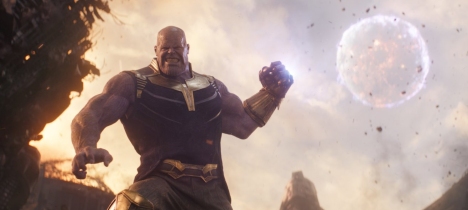
Purple reign.

Indeed, the elevation of the Russo Brothers within the Marvel Studios hierarchy with Captain America: Civil War and with Avengers: Infinity War suggests the obvious similarities between managing the sprawling continuity of the shared cinematic universe and the day-to-day management of a television show, where individual instalments might be credited to individual authors, but it is also important to maintain consistency of tone and vision across the entire line. Infinity War suggests the sort of organisational ability associated with long-form television storytelling more than any single cinematic narrative.

There are moments in which this approach works. Infinity War is full of knowing winks and callbacks, allusions and references. There is a sense of set-up and pay-off to certain threads and arcs seeded across the eighteen previous films within the established brand. Characters get emotional scenes that play upon established relationships and dynamics, which are clearly articulated within the film itself, but building off years of watching (and rewatching) these actors play off one another in these roles. There is an undeniable weight to Infinity War that simply would not be possible without that television storytelling style.
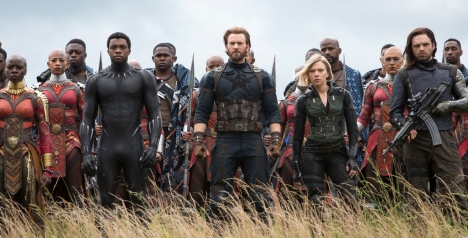
Avengers assembled.

At the same time, there are reminders of the limitations of this approach, of the challenges of balancing individual stories with a larger plan for the narrative universe in which they unfold. This is particularly notable because Marvel Studios recently shifted towards a more director-friendly approach in some of its standalone productions. Guardians of the Galaxy and Guardians of the Galaxy, Vol. 2 are both undeniably James Gunn productions. Black Panther could only have come from Ryan Coogler. Thor: Ragnarok worked as well as it did because of the unique directorial stylings of Taika Waititi.

Watching Infinity War, it becomes clear how far these directors deviated from the established style sheet, and the difference in approach between these directors and the Russo Brothers. It occasionally feels like Infinity War was constructed by people who watched those movies, without understanding why they worked as well. There is a tonal awkwardness when these characters are woven back into the fabric of the shared universe, in a manner that is occasionally unquantifiable but sometimes fundamental.
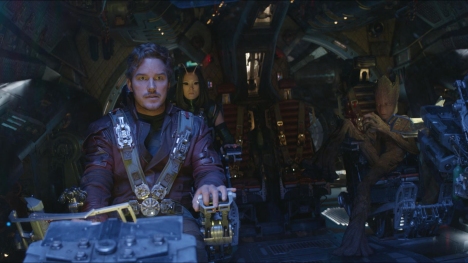
Guardians… Get In There?

Infinity War is good, clean fun. Perhaps too good and too clean. In order put the jigsaw pieces together, all of the rough edges have been sanded off. Anything that might generate friction has been stripped away, creating the impression of a very smooth and very functional storytelling engine. Midway through the film, Thor ruminates upon the existence of fate and how it has led him towards this particular moment and beyond to a greater purpose. Doctor Steven Strange perceives one single happy ending to this crisis.

There is a sense that Thor and Strange perceive the vast narrative machine of Infinity War working around them. It is an impressive machine, if a somewhat inhuman one.
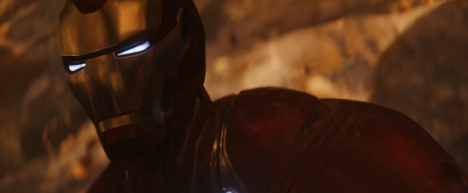
Things look pretty Stark.

Continue reading

Non-Review Review: Ready Player One

Don’t hate the player, hate the game.

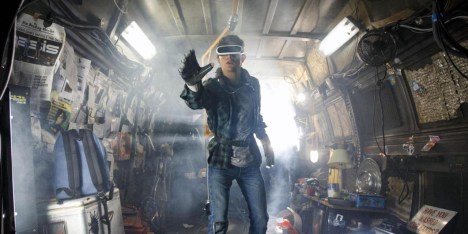
Reader Player One is a very curious piece of cinema. It is an incredibly flawed piece of work, with a lot of its flaws so fundamental that they are threaded into the very architecture of the film. Screenwriter Zak Penn has offered a very thorough and involved reinvention of Ernest Cline’s source novel, a ground-up renovation of Cline’s catalogue of popular culture references and collection of narrative tropes. Indeed, Penn’s screenplay improves a great deal on the novel that inspired it; junking and reworking entire sequences, bulking up supporting characters, trying to find a beating human heart.

Worlds apart.

More than that, Ready Player One provides Spielberg with the opportunity to go “all out.” There is a sense watching Ready Player One that Spielberg has approached the film not as a collection of popular culture references and in-jokes, but instead as an attempt to reconnect with a younger audience. Whether or not Reader Player One is the right source material for such an attempt, there is no denying Spielberg’s energy and vigour. Ready Player One is a dynamic piece of film, Spielberg demonstrating all the technique for which he is known, but with an enthusiasm that puts younger directors to shame.

However, there is no escaping the biggest issue with the film remains its source material. The problem with Ready Player One as a film is that it is an adaptation of Ready Player One as a novel.

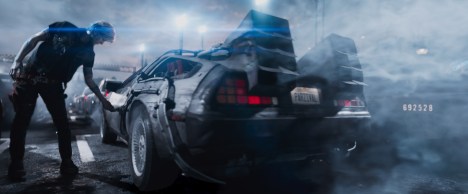
Back to the past.

Continue reading

A Surprise Movie Is Good For the Soul: In Praise of Blind Screenings…

A number of major Irish and British cinema chains have begun offering “Secret” or “Surprise” screenings over the past few years. ODEON have their “Screen Unseen” brand, Omniplex have their “Secret Screenings”, the Irish Film Institute have their “Mystery Matinee”, Cineworld have their “Secret Unlimited Screenings.” This is to say nothing of what might be the biggest example on the cinematic calendar, the Dublin International Film Festival’s long-standing “Surprise Film”, which famously originated when Michael Dwyer discovered that he had accidentally left a gap in the original programme.

The basic premise of a “Surprise Film” is simple. The audience buys a ticket to the screening, often at a discounted rate compared to usual ticket prices. The audience is not told what the film is to be ahead of time, instead trusting the organisers of the screening to produce something interesting and compelling. The audience then gets to experience the movie completely blind, without any lead-in and without any hype. It is something to behold, a rare opportunity to see a movie completely blind in an era of heavy media saturation and social media gossiping.

Of course, the quality of these screenings is highly variable. Over the past year, Irish surprise screenings have included films as diverse as I, Tonya, Lady Bird, Snatched, The Florida Project, Ghost Stories, The Shape of Water, Three Billboards Outside Ebbing, Missouri, Unsane, Battle of the Sexes, The Killing of a Sacred Deer, Mindhorn, Baby Driver, The Big Sick. That is an eclectic list of films, and it is almost certain that there is something for everybody in that list and also something that will repulse everybody on that list. But that is the thrill of such screenings.

There is something to be said for the willingness of a movie goer to open themselves to new experiences, to step outside of their comfort zone and to take a risk on something that they are not anticipating. Even if those films are occasionally terrible, and especially if they were not films that the audience member would choose to see on their own terms.

Continue reading

Non-Review Review: Ghost Stories

Ghost Stories is an existential horror dramedy, and gets that unique cocktail to work much better than it really should.

Ghost Stories is adapted by Jeremy Dyson and Andy Nyman from their stage play of the same name. The play premiered in Liverpool in 2010, to rave reviews. Interestingly, Dyson and Nyman worked hard to preserve the mystery and ambiguity around their production, publicising the show with shots of terrified reactions from the audience and asking those who had seen the film not to discuss its twists and turns with those people who had not. As such, Ghost Stories became something of a cult stage phenomenon.

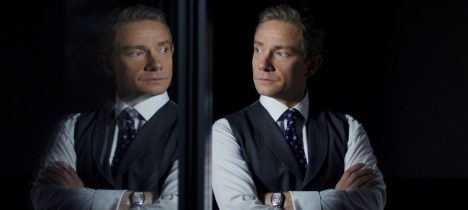
Black mirror.

With this in mind, adapting a play like Ghost Stories to the big screen presents its share of challenges. Not only does a feature film demand more publicity and more conversation than a stage play, having a much higher profile and a much larger distribution mechanism, it also involves a delicate process of translation. Ghost Stories was a concept very firmly anchored in its format, wedded to the conventions of stage shows. Finding a way to preserve the heart of the play within the framework of a motion picture was always going to be tricky.

Ghost Stories works well, although it arguably works better as a psychological meditation on mankind’s relationship with the supernatural than as a horror anthology in its own right. Ghost Stories is a clever and canny piece of work, one undercut slightly by some clumsy narrative choices in the final act. Still, even in its weakest moments, Ghost Stories is a compelling and engaging little film.

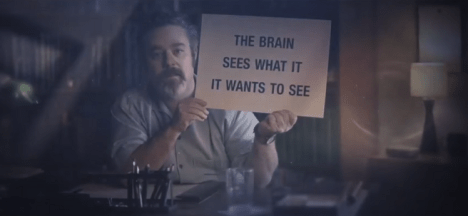
Cue, card.

Continue reading

Form a Square For That Purpose: Kubrick’s “Barry Lyndon” and the Illusion of Civility

In some respects, Barry Lyndon is seen as an outlier in Stanley Kubrick’s filmography.

The film is a lush and extended period drama, adapted from a nineteenth century novel set in the eighteenth century. It arrives in the middle of an acclaimed run of films from director Stanley Kubrick: Doctor Strangelove; Or How I Learned to Stop Worrying and Love the Bomb, 2001: A Space Odyssey, A Clockwork Orange, The Shining and Full Metal Jacket. By all appearances, Barry Lyndon stands apart from these films. “Period piece” is obviously a film genre unto itself, but it is not as heightened as the bigger and bolder films around it.

Arresting imagery.

Barry Lyndon is arguably Kubrick’s only “period film” outside of Spartacus, which the director famously disowned and is arguably seen as a film more overtly influenced by its leading man than its director. Of course, some of Kubrick’s films move backwards and forwards in time; Full Metal Jacket takes place in the late sixties, while the prologue to 2001: A Space Odyssey is set at “the dawn of man.” Nevertheless, for many casual film fans approaching Barry Lyndon, the film’s period trapping stands out from the surrounding films, which are largely set near the present and into the future.

Indeed, it could be argued that this difficulty that casual observers have in positioning Barry Lyndon within the Kubrickian canon accounts for some of the controversy around the film’s place in the director’s larger filmography. Upon release, the film was largely met with confusion and disinterest, critics often struggling with what to make of the finished product. For his part, Kubrick dismissed the idea of critics forming a consensus on a film like Barry Lyndon after just one viewing.

Initial audiences weren’t enamored with the film.

Of course, this is arguably par for the course with Kubrick films, particularly those towards the end of his career. Many Kubrick films opened to a divided critical opinion before slowly solidifying their popular reputations over time; 2001: A Space Odyssey, A Clockwork Orange, The Shining. However, Barry Lyndon seems to be a special case. Debate was still raging over the critical merits of the film after Kubrick’s death, even in letter columns of newspapers like The New York Times. Even the release of remastered editions forty years later find proponents arguing the film is undervalued or underrated.

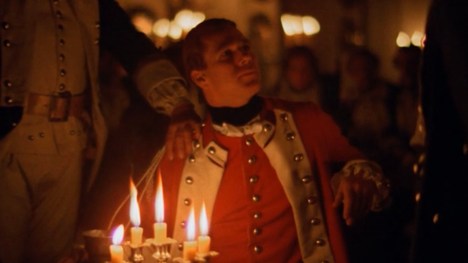
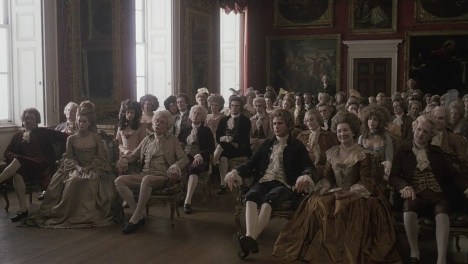
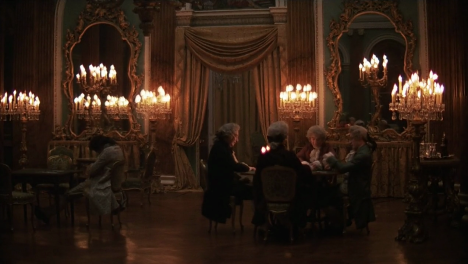
However, watching Barry Lyndon, the film never really feels like an outlier in terms of Kubrick’s filmography. Indeed, in some respects, it feels like a culmination of many of the director’s recurring themes and fascination. Barry Lyndon is perhaps the clearest articulation of some of the key themes within Stanley Kubrick’s larger body of work, in particular through its engagement with the Enlightenment as a window through which he might explore the human concept of “civilisation.”

Drawing to a close.

Repeatedly over the course of his filmography, Kubrick engages with the idea of civilisation and order, the structures that mankind imposes upon the world in order to provide a sense of reason or logic to a chaotic universe. Repeatedly in his movies, Kubrick suggests that “civilisation” is really just a veneer that masks the reality of the human condition, providing a framework for acts of violence and self-destruction that seem hardwired into the human brain. Kubrick suggests that “civilisation” is a fragile construct, and one that occasionally seems hostile to the nature of those who inhabit it.

Unfolding against the rigid social mores of the eighteenth century, Barry Lyndon allows Kubrick to construct the starkest and most literal example of that theme.

Soldiering on.

Continue reading

New Podcast! Scannain Podcast (2018) #8!

A packed week at the Scannain podcast, looking at the week in Irish cinema.

Still recovering from the Audi Dublin International Film Festival and the Oscars, I was delighted to join Niall Murphy and Grace Duffy on the podcast. We discussed all the usual topics: the mountains of films that we had watched during the festival, and while snowed in; the weekly top ten including Game Night, Lady Bird and Black Panther; and the slew of high-quality new releases including The Lodgers and You Were Never Really Here.

Check it out here, or give it a listen below.

Non-Review Review: Dawson City – Frozen Time

This film was seen as part of the Audi Dublin International Film Festival 2018.

In 1978, the city of Dawson was demolishing an old ice rink to make room for a new recreational centre. During the demolition, the construction crews stumbled on something remarkable. Reels and canisters of films buried in the old swimming book, sealed away and forgotten about. This was a treasure trove for cinema historians, the unearthing of a collection that included films that had been presumed lost to history. It represented a tangible and literal connection to the rich history of cinema and – through that – to the history of American popular culture.

Bill Morrison’s Dawson City: Frozen Time is a documentary looking at this archeological discovery, but it is also so much more. Using footage taken from the recovered films, and from other contemporaneous materials, Morrison takes the audience on a trip through the cultural history of the eponymous settlement, from its origins at the end of the nineteenth century through to the unearthing of these nitrate film reels in the late seventies. The result is a beautiful and compelling exhumation of something much more than those invaluable and long-considered lost silent films.

Morrison weaves a fascinating and compelling narrative that seems to tie all of this together into a convincing and expansive social history. The result is a documentary with startling ambition and scope, in some ways reflecting the approach taken by those earliest of settlers panning for gold in the Yukon territory. Dawson City follows both the social evolution of the settlement and occasionally digresses to follow some of its most important inhabitants. Some of these digressions introduce players who will return to the narrative later in the film, both others suggest a broader social context for the film.

Dawson City is occasionally just a little bit too unfocused for its own good, casting its net just a little bit too wide to bring everything back together for an otherwise satisfying finale. Nevertheless, Dawson City is a powerful ode to a community and to cinematic history, one with big ideas and provocative insights.

Continue reading

New Podcast! Scannain Podcast (2018) #6!

Into the mouth of madness…

Discussing the latest in film news here and abroad, the Scannain podcast is a weekly podcast discussion of what we watched, what we watched, what is dominating and the box office, and what is lurking on the horizon film-wise. This week’s episode was recorded right before the premiere of Black ’47 at the launch of the eleven-day-long Audi Dublin Film Festival 2018, and covered everything from Black Panther to Galway cinema.

I’m thrilled to be part of a panel including returning host Niall Murphy and returning guests Ronan Doyle and Alex Towers. Give it a listen below.

New Podcast! Scannain Podcast (2018) #2!

And we’re back to doing it almost weekly!

The new and improved Scannain podcast continues. A one-stop shop to talk about the week that has been in Irish and world cinema, the Scannain podcast features a rotating pool of guests discussing the week in film – what we watched, film news, the top ten and new releases. This week we’re celebrating both the Oscar nominations and the announcement of the line-up for this year’s Audi Dublin Internation Film Festival.

I’m thrilled to be part of a panel including Phil Bagnall, Jay Coyle, Ronan Doyle and Stacy Grouden. Give it a listen below.

59. Heat (#124)

Hosted by Andrew Quinn and Darren Mooney and this week with special guests Phil Bagnall and Joe Griffin, The 250 is a (mostly) weekly trip through some of the best (and worst) movies ever made, as voted for by Internet Movie Database Users. New episodes are released every second Saturday at 6pm GMT, with the occasional bonus episode between them.

This time, Michael Mann’s Heat.

Michael Mann’s Los Angeles crime epic finds lives intersecting and overlapping in the City of Angels. At the heart of the story, career criminal Neil McCauley and driven detective Vincent Hanna find themselves on a collision course that leave countless lives shattered in their wake.

At time of recording, it was ranked the 124th best movie of all time on the Internet Movie Database.

Continue reading