• Following Us

  • Categories

  • Check out the Archives


  • Awards & Nominations

Non-Review Review: Revenge

This film was seen as part of the Audi Dublin International Film Festival 2018.

What if Nicolas Winding Refn directed a Blumhouse film?

Revenge is a neon-drenched and synth-saturated exploitation flick that takes some of the most familiar conventions of the survival horror genre and executes them with incredible style. Revenge puts a beautiful sheen on a very ugly film, constructing an effective revenge narrative full of striking imagery. As realised by director Coralie Fargeat, Revenge is a visceral experience. The film’s violence is almost tangible, the audience feeling every act of brutality inflicted upon the bodies of its cast.

A lot of this is down to the craft of those involved, working under Fargeat’s direction. Jérôme Faurel’s sound design ensures that the audience hears every drip of blood, every splash on every surface. Cinematographer Robrecht Heyvaert and colourist Frédéric Savoir play up the contrast in the compositions, so the blood seems to burst off the screen against the bright yellows and the deep blues. Make-up effects artists Laetitia Quillery ensures that the cast carry every scar with them as the movie puts them through an endurance nightmare.

This attention to pure craft elevates Revenge above so many of its genre contemporaries. Revenge is undoubtedly trashy piece of cinema, but is never ashamed of what it is or apologetic for what it does. Instead, the film commits itself with an engaging and exhilarating enthusiasm. Revenge never views its genre as a limitation to transcend, but instead as a field in which to excel. And it certainly does.

Continue reading

Non-Review Review: Sweet Country

This film was seen as part of the Audi Dublin International Film Festival 2018.

“What chance does this country have?” asks Sam Neill towards the climax of Sweet Country.

In the context of the scene, it isn’t entirely clear to whom the character is speaking. There is one other individual in the scene, but they are preoccupied at that moment and it’s not clear they are even within earshot when Neill’s character makes his grave assessment about the future of this young nation. However, outside the context of the scene, it is very apparent to whom Neill’s character is addressing his concerns. He is speaking directly to the audience through the medium of film.

Sweet Country is not a film that does subtlety or nuance. As Neill’s character offers this pointed question, he stumbles through the Australian wilderness, as if to suggest that he is lost. He stops just short of bluntly stating that he is lost, just like this country, the film demonstrating uncharacteristic faith in the audience’s narrative and thematic comprehension. Nevertheless, just in case the audience still doesn’t get it, Neill’s character asks this very profound question while wandering in the direction of the tail end of a rainbow set against a stormy sky.

“What chance does this country have?” the character wonders. The audience doesn’t feel the need to articulate the obvious response, “Not much, if it produces films like this.”

Continue reading

Non-Review Review: First Reformed

This film was seen as part of the Audi Dublin International Film Festival 2018.

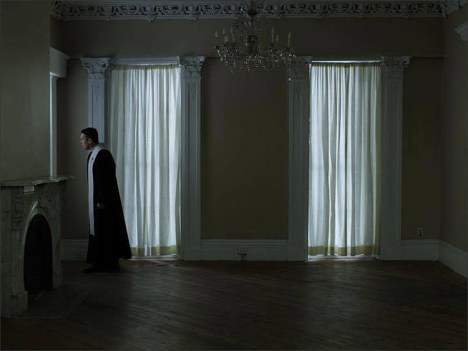
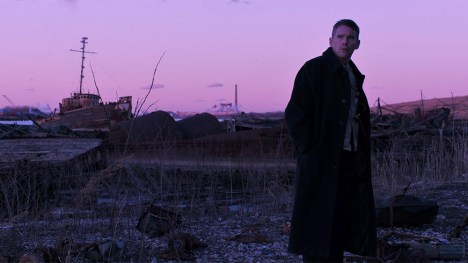
First Reformed is an unholy mess.

On paper, First Reformed has some very interesting ideas. It is a film grappling very consciously with weighty themes and heavy subject matter. It is about the challenge of finding faith in a modern and cynical world, and about reconciling the mundane maintenance of spiritual belief with the euphorically elevation of pure devotion. This is a broad theme that resonates in a world that feels increasingly disconnected and diffused, in a time when people feel increasingly distant from purpose or meaning.

Indeed, the core premise invites comparisons to Taxi Driver, which remains the defining work in Schrader’s filmography. Schrader has been working as a writer for almost forty-five years, and as a director for forty years, but his body of work is still discussed in terms of the second script that he wrote. Although most audiences associate Taxi Driver with the creative partnership of Scorsese and DeNiro, it was a work that was very important to Schrader, articulating themes and ideas to which he would return time and time again.

First Reformed brings Schrader back to that, with Reverend Ernst Toller feeling very much like a spiritual sibling to Travis Bickle, a man who struggles to make sense and to find meaning in a chaotic world and who decides to impose his own order upon the universe. Schrader is very much playing with his own history and iconography here, playing out a familiar story in a new setting with a slightly different emphasis. As with a lot of artists revisiting their earlier and defining, the results are frustrating. First Reformed bends and contorts in the shadow of its predecessor, never coming into its own.

Continue reading

Non-Review Review: The Lodgers

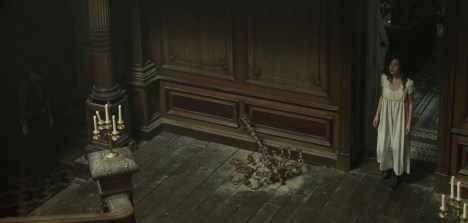
The Lodgers is a beautifully-directed and somewhat muddled gothic horror film.

The Lodgers literally drips with atmosphere, as one might imagine given the combination of writer David Turpin and director Brian O’Malley. Turpin has studied and lectured in English, writing his doctoral thesis on therianthropy. O’Malley directed Let Us Prey, one of the most visually striking and memorable Anglo-Irish horror films of the past couple of years. As such, a gothic horror set against the backdrop of Irish Independence seems very much in keeping with their aesthetics, and it does not disappoint.

The fall of the house of Lodgers.

The Lodgers is a rich piece of work, both in terms of visuals and themes. Like any good horror story, the subtext simmers through the work, O’Malley and Turpin tapping into rich veins of social and political anxiety, often weaving those threads together in a compelling and exciting manner. The Lodgers might be best described as the work of Edgar Allan Poe channeled through a seance with William Butler Yeats. It feels undeniably Irish, rooted in the land and its people.

At the same time, The Lodgers suffers slightly in its own internal mechanics. Like the big house at the centre of the story, the construction is largely sound. However, there is a sense that some upkeep and maintenance might be required. The Lodgers is undercut by a number of key defects including its casting and its dialogue. The Lodgers is visually striking and rich, but it stumbles in some of its more basic elements.

Stairway to heaven.

Continue reading

Non-Review Review: Finding Your Feet

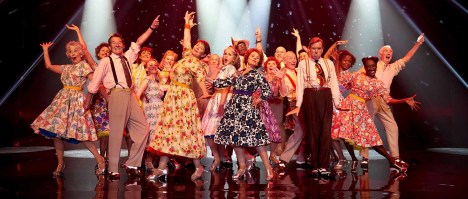
Finding Your Feet is a fairly placid and mostly unobjectionable film that adheres to an increasingly familiar formula, a gentle reminder that life can often begin at sixty.

Finding Your Feet largely coasts off the charm of its cast, who seem to be having an enjoyable time with one another and appreciating the opportunity to find themselves cast as romantic leads in a globe-trotting adventure. In particular, there is something disarming in seeing Timothy Spall cast as a charming romantic lead, a disarmingly sincere lovable rogue who inevitably scrubs up quite nicely. Finding Your Feet offers very few surprises, but that is part of the attraction, perhaps worried that too many surprises might throw off the presumed viewer.

Spall good, baby.

However, Finding Your Feet is too awkward and clumsy to allow the audience to get entirely caught up in the familiar beats and rhythms of the tale. The familiar plotting of Finding Your Feet helps compensate for some strange storytelling decisions, with major character arcs unfolding off-screen and the film trying to fill its run time with things happening rather than focusing on the people to whom these things are happening.

Finding Your Feet is bland and inoffensive, its central cast providing a disarming charm that the movie never quite earns.

The sequel will feature a new addition to the cast and will be titled, ‘So You Think You Can Charles Dance?’

Continue reading

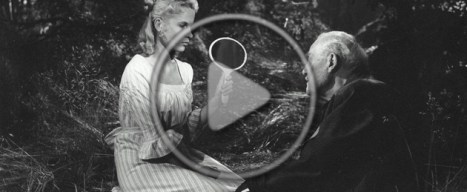
65. Smultronstället (Wild Strawberries) – “Two Guys Die Alone 2018” (#152)

Hosted by Andrew Quinn and Darren Mooney, The 250 is a fortnightly trip through some of the best (and worst) movies ever made, as voted for by Internet Movie Database Users.

This time, a Valentine’s treat. Ingmar Bergman’s Wild Strawberries.

Professor Isak Borg embarks upon a road trip to receive an honourary doctorate from his university, but soon discovers that the fourteen hour car journey represents a trip into his past, reflecting on life lived and love lost as he comes to terms with his decisions and his relationships.

At time of recording, it was ranked the 152nd best movie of all time on the Internet Movie Database.

Continue reading

Non-Review Review: Black Panther

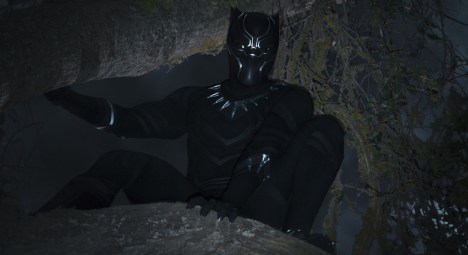
Black Panther is something special.

In a lot of ways, it is a very typical Marvel blockbuster. The familiar formula is in place, and the movie follows the rhythms that audiences have come to expect from these films. There is a certain tempo and structure to the film, the sort of clean efficiency that delineates most of the movies produced under the banner of Marvel Studios. For a film advertised using a remix of The Revolution Will Not Be Televised, it is striking how conservative Black Panther is.

The Panther Strikes!

However, there is a lot to be said for the film’s more understated revolutionary qualities, the depth of understanding that the production team bring to the adaptation. Black Panther is acutely aware of what it means to construct a superhero fantasy epic about an African prince who leads a utopian society in the context of 2017, and there is something reassuring in how confidently and efficiently the film works within that framework. It is not merely that the existence of Black Panther is important, it is that Black Panther‘s assertion of its identity is important.

Black Panther is superior blockbuster by any measure, constructed with a great deal of care and thought about what it means. Much like its title character, there is a sense that the weight of expectation is upon Black Panther, and the most remarkable thing about the film is how seriously it takes that obligation without ever feeling burdened.

Heavy lies the head that wears the cowl.

Continue reading

Non-Review Review: Den of Thieves

Heat was not the first cops and robbers film to parallel the opposite sides playing for control of the board, suggesting lives on a collision course inside a gritty crime epic.

However, Heat did it better than most. Heat inspired an entire generation of film fans, and arguably an entire subgenre of heist movie. Los Angeles had always lent itself to operatic crime sagas, with triumph and tragedy playing off against one another in the City of Angels, but Heat redefined the game. The movie developed a style of storytelling, both in terms of actual technical craft and in terms of storytelling construction.

Mann of Today.

Success breeds imitation, and there have been far too many crime films inspired by Michael Mann’s classic, to the point that many film fans were disappointed to discover that Mann himself had not adhered to the template in making Public Enemies. Almost every year, there seems to be another example of a movie constructed in the image of Heat, from Takers to The Town. The quality varies from film to film, as does the level of innovation and inspiration.

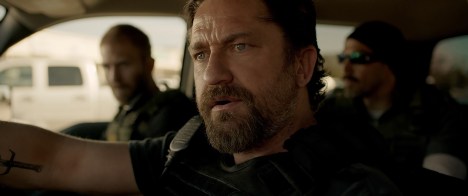
Den of Thieves is rather brazen in how much it takes from Heat, lifting both the crime classic’s cinematic language and even direct scenes. The result is a lukewarm reHeat of an exquisite meal, something to which the movie cheekily alludes towards the end of its climactic heist when one character literally serves up days-old leftovers. It isn’t anywhere near as filling or satisfying as the original meal, but it can satisfy a craving.

You definitely feel the Heat around the corner.

Continue reading

61. Three Billboards Outside Ebbing, Missouri – This Just In (#122)

Hosted by Andrew Quinn and Darren Mooney, and this week with special guest Stacy Grouden, This Just In is a subset of The 250 podcast, looking at notable new arrivals on the list of the 250 best movies of all-time, as voted for by Internet Movie Database Users.

This time, Martin McDonagh’s Three Billboards Outside Ebbing, Missouri.

Continue reading

Non-Review Review: The Commuter

The Commuter is the best Neeson Season movie since The Grey and the best movie about the financial crisis since The Big Short.

On paper, The Commuter is a mildly interesting premise that feels very much of a piece with the typical January awards-fare counter-programming. It is very much a high-concept action film that feels populated from a mad lib. [Liam Neeson/Bruce Willis/Gerard Butler] is a [former cop/current cop/law enforcement official] who finds himself embroiled in a race against time to [protect/rescue/expose/defeat] a [loved one/conspiracy].

McCauley took the instruction not to fire the gun inside the carriage a little… literally.

The Commuter is very much of piece with Liam Neeson’s other collaborations with director Jaume Collet-Serra; Unknown, Non-Stop, Run All Night. It is a movie about a weary protagonist embroiled in a situation beyond his control, the perfect fodder for a midweek movie to be enjoyed with a bucket of pop corn and a soft drink of choice. However, what elevated The Commuter above these earlier collaborations is similar to what elevated Collet-Serra’s The Shallows above so many familiar shark movies.

The Commuter has the look and feel of a big dumb action movie, a film inviting the audience to engage on its own terms rather than theirs. However, there is a very knowing and self-aware quality to The Commuter, an understanding of what the audience expects of the film and what the film can expect from the audience in return. The result is a film that always feels smarter and better than it needs to be, very carefully calibrated; just serious enough to work, just self-aware enough to charm. The result is a delightfully enjoyable action film.

Dial “C” for Commuter.

Continue reading