• Following Us

  • Categories

  • Check out the Archives


  • Awards & Nominations

Millennium – Somehow, Satan Got Behind Me (Review)

This May and June, we’re taking a trip back in time to review the fifth season of The X-Files and the second season of Millennium.

Somehow, Satan Got Behind Me is Darin Morgan’s last script for Millennium.

It is an interesting script. It not as straightforward (and linear) as his scripts for Clyde Bruckman’s Final Repose or Jose Chung’s “Doomday Defense”, but it is not as outwardly complex (and intricate) as Jose Chung’s “From Outer Space.” These descriptors are all relative, of course. Somehow, Satan Got Behind Me is a Darin Morgan script through-and-through. It is clever, well-constructed, and thoughtful. It is one of the most eccentric episodes in a season full of eccentric episodes.
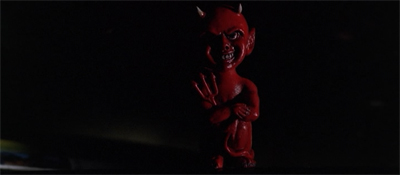
Little devil...

Little devil…

However, Somehow, Satan Got Behind Me remains rather hard to pin down. It doesn’t feel as cohesive or as singular as Morgan’s other scripts. Morgan tends to build his episodes around big thematic tentpoles. There are ideas and themes that reverberate across and throughout Somehow, Satan Got Behind Me, but the nature of the script means that the episode lacks the unity of purpose that viewers have come to expect from Darin Morgan. Somehow, Satan Got Behind Me is a rollercoaster of an episode, which seems to hop from one idea to another.

Of course, that would seem to be the point. Somehow, Satan Got Behind Me is a bold and experimental script in its own way. Morgan has essentially constructed a set of four interlocking (and occasionally thematically overlapping) short stories that are built around his own core themes and ideas. These are small and intimate tales, lying at the intersection between the mundane and the surreal. As such, it seems like the perfect place for Darin Morgan to take his second bow.
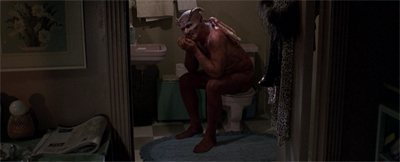
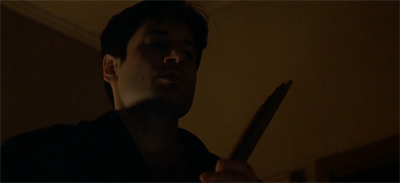
A demon crying on a toilet. What more could you want?

A demon crying on a toilet.
What more could you want?

Continue reading

The X-Files – Bad Blood (Review)

This May and June, we’re taking a trip back in time to review the fifth season of The X-Files and the second season of Millennium.

Despite a notable absence of Darin Morgan, Bad Blood makes a much more convincing case for Vince Gilligan as the heir apparent to Darin Morgan than Small Potatoes did at the end of the fourth season.

Bad Blood finds Gilligan touching on some of the same broad ideas as Small Potatoes – how Mulder is perceived and how he perceives himself, a sly awareness of the show’s tropes and conventions. However, Bad Blood feels a lot more honed and focused than Small Potatoes. It felt like Small Potatoes only got to the meat of the story it wanted to tell in its final third, while Bad Blood is shrewd enough to put its core concepts front-and-centre. While Bad Blood has the same broad humour of Small Potatoes, it feels a lot more convincing when it comes to characters.

The tooth is out there...

The tooth is out there…

It could be argued that Gilligan drew quite heavily on the work of Darin Morgan in some of his scripts. There is no shame in this. After all, Darin Morgan is perhaps the most widely-praised writer to work on The X-Files. In this context, Bad Blood is something of a spiritual successor to Jose Chung’s “From Outer Space.” Gilligan’s script is not quite as structurally or philosophically ambitious as Darin Morgan’s final credited script for the series, but it does hit on the same fundamental idea that truth is an inherently subjective construct.

Bad Blood is essentially an episode that is not only about how Mulder and Scully see each other, but how they see themselves.

Mulder knows what's at stake...

Mulder knows what’s at stake…

Continue reading

The X-Files – Kill Switch (Review)

This May and June, we’re taking a trip back in time to review the fifth season of The X-Files and the second season of Millennium.

On the surface of it, William Gibson seems a strange fit for The X-Files.

He certainly seems like a more eccentric choice than Stephen King. King was a writer famed for his horror stories, with a fascination for small-town life and an interest in guilt as a legacy of American history. On paper, King should have been the perfect “special guest writer” for the show, able to churn out a script that would resonate perfectly with the larger themes of The X-Files while still sitting comfortably within his own oeuvre. While Chinga is not a bad episode, it is not an exceptional episode by any measure. It feels perfectly adequate.

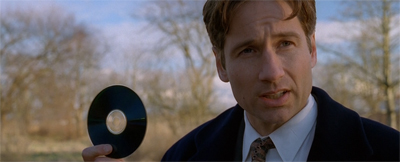
Well, that's going in the DVD menu.

Well, that’s going in the DVD menu.

As such, Kill Switch seems like a story that could go horribly wrong. Gibson is a writer most famous for his work in defining and popularising “cyberpunk”, a science-fiction subgenre that is far removed from the horror trappings generally associated with The X-Files. Gibson was a writer who tended to explore the possible future development of cyberspace and associated issues, while Carter worked very hard to anchor The X-Files in the now. Gibson’s stories seemed to take place in the not-too-distant future; Carter grounded The X-Files in a very particular now.

However, Kill Switch works. It works phenomenally well. It is an episode that feels markedly different from everything else around it, while still feeling like it belongs to The X-Files. The clash of styles is evident in Kill Switch, as writers William Gibson and Thomas Maddox find themselves adapting their themes and ideas to a completely different aesthetic. That is perhaps part of appeal. While Chinga made it look quite easy to construct a solid Stephen King story that was also a solid episode of The X-Files, Kill Switch is nowhere near as smooth. This is a different beast. And it is glorious.

"Woah, woah, woah. What happened to floppies?"

“Woah, woah, woah. What happened to floppies?”

Continue reading

The X-Files (Topps) #25-26 – Be Prepared (Review)

This February and March, we’re taking a trip back in time to review the fourth season of The X-Files and the first season of Millennium.

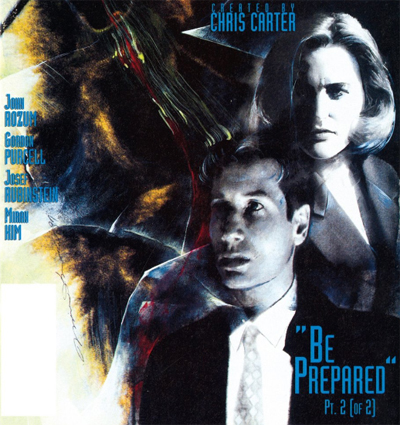
What’s interesting about Be Prepared is how much it feels like an episode of The X-Files.

A lot Rozum’s earlier scripts felt like Mulder and Scully had wandered into old E.C. horror stories, cautionary supernatural tales about vengeful ghosts and poetic justice. In contrast, Be Prepared feels very much in tune with the aesthetic of the show itself. Mulder and Scully investigate a uniquely American piece of folklore, finding themselves in an isolated location dealing with human monstrosity at least as much as any paranormal element.

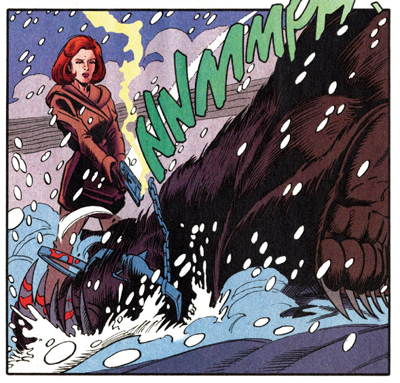
If you go down to the woods today...

If you go down to the woods today…

Indeed, Be Prepared feels very much like an episode from the first two seasons of the show, evoking stories like Ice or Darkness Falls or Firewalker. Indeed, Be Prepared arguably sits comfortably alongside Topps’ range of Season One comics – feeling like a lost episode from the show’s early years. Be Prepared feels like the first time that Rozum is constructing a story specifically from tropes associated with The X-Files, rather than from horror tropes in general.

The result is a fun little adventure that feels more like The X-Files than the comic has in quite a while.

The right to bear arms...

The right to bear arms…

Continue reading

My 12 for ’14: The Babadook and Living With Demons…

With 2014 coming to a close, we’re counting down our top twelve films of the year. Check back daily for the latest featured film.

The Babadook is a delightfully well-executed Australian horror film for most of its run-time, an uncomfortable and occasionally harrowing exploration of guilt, resentment and motherhood. The scares are executed cleanly and efficiently, and director Jennifer Kent does an admirable job of ratcheting up the tension as the movie ticks along. However, the most interesting and clever aspects of The Babadook are found nestled in the movie’s final few minutes, providing a satisfying and thought-provoking conclusion to the allegorical horror film.

thebabadook5

Note: This “best of” entry includes spoilers for The Babadook. You should probably go and see the movie, particularly if you are a horror fan. Don’t worry, we’ll wait for you. Still there? Good. Let’s continue. Continue reading

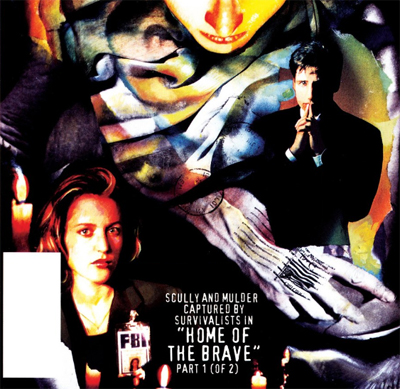
The X-Files (Topps) #15-16 – Home of the Brave (Review)

This November (and a little of December), we’re taking a trip back in time to review the third season of The X-Files and the first (and only) season of Space: Above and Beyond.

And so, we approach the end of an era.

The end of the third season of The X-Files brought down the curtain in a number of different ways. It was the last season of The X-Files to air beginning-to-end on Friday nights, turning it into a truly global phenomenon. It was the last season to air before Chris Carter launched Millennium and the last season broadcast before the show began to focus on The X-Files: Fight the Future; perhaps making it the last season of the show to have Chris Carter’s completely undivided attention for quite some time.

This is the end...

This is the end…

Amid all these changes, the shifting of the creative team on the tie-in comic book is not the biggest change taking place, but it contributes to a larger sense that The X-Files is changing. Writer Stefan Patrucha and artist Charles Adlard had worked on The X-Files since Topps launched the comic. On top of their sixteen issues of the regular series, the duo had worked on an annual, two digests and a variety of short (and special) stories during their tenure.

It is very strange to see the pair departing, because their work on X-Files tie-in comic book ranks as one of the most consistently interesting tie-ins published in mainstream comics.

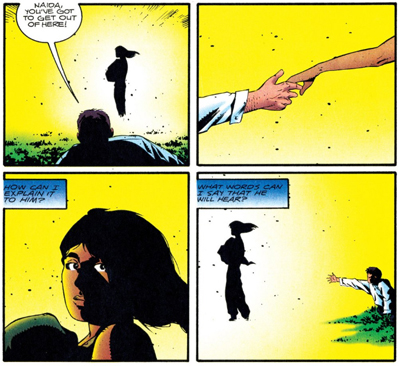
Don't go into the light...

Don’t go into the light…

Continue reading

The X-Files – Quagmire (Review)

This November (and a little of December), we’re taking a trip back in time to review the third season of The X-Files and the first (and only) season of Space: Above and Beyond.

Quagmire is a delightful little episode, one of third season episodes that most effectively embodies what casual fans (or even those who have never seen the show) think of when they hear the words The X-Files.” In Wanting to Believe, author Robert Shearman describes Quagmire as something akin to a “live action Scooby Doo, and he’s not far wrong. This is Mulder and Scully searching together in the darkness, looking for a monster that may or may not be there. You don’t get more archetypical X-Files than that.

One of the defining features of the third season of The X-Files has been a sense of consolidation. It feels like the show experimented a great deal in its first two years, but the third season is very much about cementing and solidifying its identity. It is no wonder, then, that the third season has such a high concentration of archetypal episode – episodes you can show an interested viewer and say this is The X-Files in a forty-five minute nutshell.” In that respect, Quagmire ranks with D.P.O. or Pusher or Clyde Bruckman’s Final Repose as a great introduction to the show.

There's something in the water!

There’s something in the water!

Of course, Quagmire is a very good introduction to The X-Files for new viewers, but it is also something of a farewell. It is Kim Newton’s last script for the show. Newton had joined the writing staff at the start of the third season. Her other major credit was Revelations. Like Revelations, there is a sense that Quagmire was heavily re-written before it made it in front of the cameras. In this case, it is something of an open secret that Quagmire received a fairly significant polish from departing story editor Darin Morgan, whose fingerprints are all over the finished draft.

If Darin Morgan bid farewell to The X-Files with Jose Chung’s “From Outer Space”, then Quagmire serves as something of a coda to his time on the show. If that is the case, it makes for an uncharacteristically upbeat postscript to Morgan’s work on the show.

They really collared the bad guy...

They really collared the bad guy…

Continue reading

The X-Files (Topps) Digest #2 – Dead to the World (Review)

This November (and a little of December), we’re taking a trip back in time to review the third season of The X-Files and the first (and only) season of Space: Above and Beyond.

Stefan Petrucha and Charles Adlard are winding at this point in their curatorship of Topps’ The X-Files comic book. The duo have contributed an absolutely staggering volume of work to the line. On top of monthly issues and short stories, there have been annuals and digests. The volume of the output has been staggering. All of it has been written by Petrucha and the vast majority was illustrated by Adlard. The quality has – generally speaking – been quite impressive.

Dead to the World is the headline story in the second “digest” published by Topps comics. As with Big Foot, Warm Heart before it, the format of the “digest” feels a little strange. There is a single (and rather long) comic written by Petrucha and illustrated by Adlard, following by a collection of shorts taken from Ray Bradbury Comics, a somewhat less popular feature of Topps’ comic book publishing line. There is a sense that the format might have worked better as a collection of short X-Files-themed stories for a variety of creators.

Face to face...

Face to face…

Nevertheless, the result is interesting. In many ways, Big Foot, Warm Heart seemed to point at where Petrucha and Adlard would go when they wrapped up their massive twelve-part “Aquarius” mega-arc. With its reflections on human failings and human abuses, it seemed like Big Foot, Warm Heart set the tone for the stories that would follow – like One Player Only or Falling. It offered a tease of things to come, suggesting the humanity could be more monstrous than any mythological creature.

In contrast, it is very tough to see where Dead to the World might have been pointing. Then again, Petrucha and Adlard would be gone from the comic a month after its publication. So perhaps the story’s funereal atmosphere feels appropriate.

Here there be monsters...

Here there be monsters…

Continue reading

Non-Review Review: The Babadook

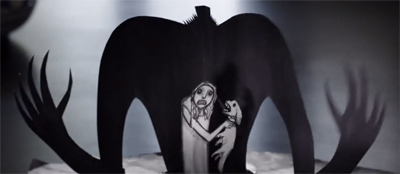
Monsters are real.

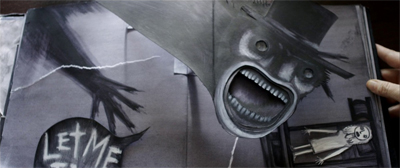
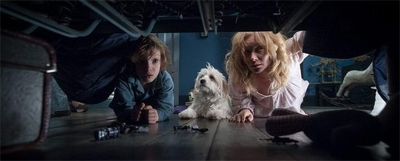
We all have our own monsters that we keep with us over our lives. “You can’t get rid of the Babadook,” a mysterious storybook threatens early in the runtime of The Babadook. Young Samuel tries to warn his mother Amelia about the monster lurking in the dark spaces – under the bed, in the closet, in the corner of his eye. He offers one rather sage bit of advice when it comes to such creatures. “You have to let it in.”

thebabadook1

Writer and director Jennifer Kent has crafted a superlative creature feature with The Babadook, acknowledging the metaphorical nature of monsters. These strange nightmares tend to stand in as expressions of guilt or anxiety. They give expression to thoughts and fear we could never properly articulate. The Babadook teases its audience with questions about the reality of the eponymous creature.

Is the strange “Mr. Babadook” something that truly exists, or is it something Samuel (and maybe Amelia) have created to cope with a horrific trauma?

thebabadook2 Continue reading

Doctor Who: Flatline (Review)

Same time, same place… ish.

…ish? Don’t give me an ish.

These readings are very… ish-y.

In many respects, Flatline can be seen as the flipside of Turn Left.

Turn Left was twinned with Midnight towards the end of David Tennant’s final year in the lead role. If Midnight was a story about the Doctor trapped in an adventure without his faithful companion, Turn Left was very much the story of the companion trapped in an adventure without the Doctor. Both of those stories seem to stress the need for both a Doctor and a companion to form a functioning team, building very consciously towards the merging of the two in the season finalé, Journey’s End.

Eyebrows!

Eyebrows!

While Midnight suggests that the Doctor would have great difficulty without a companion to help ground him, Turn Left is even more pessimistic. It seems to set a ceiling for the role of the companion. Without the Doctor, the best that his companions can do is fight to a depressing stalemate and hope to rescue some alternate universe where the Doctor is still alive. As far as Turn Left is concerned, the companion fills a very important function – but that function is very clearly secondary to the Doctor.

In contrast, Flatline seems to suggest that the companion can step up to fill the vacancy left by the Doctor. Flatline builds off the climax of Kill the Moon in positioning Clara as a character who could step in to the role of the Doctor. It is an interesting idea, arguably one that the show has been teasing from as early as Ace’s character during the final season of the classic show. Here, Clara suggests that it might be possible for a companion to elevate themselves to such a position. However, it remains questionable if such a possibility would be desirable.

Drawn together...

Drawn together…

Continue reading