• Following Us

  • Categories

  • Check out the Archives


  • Awards & Nominations

Millennium – Sense and Antisense (Review)

This May and June, we’re taking a trip back in time to review the fifth season of The X-Files and the second season of Millennium.

Sense and Antisense is a misfire.

It is an episode with far too much going on, and no time to unpack it all. Sense and Antisense moves like a rocket ship, jumping from one crazy idea to the next crazy idea. It opens with the threat of a viral contagion, but quickly escalates into the realm of conspiracy theories and mind control. It is an episode that is almost impossible to summarise without sounding as crazy as some of the characters populating the narrative. It is unsatisfying and disjointed, but not in a way that makes those sentiments seem part of the plan.
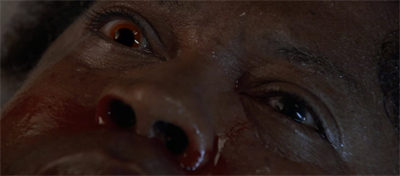
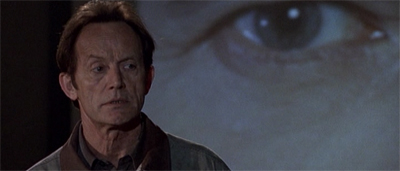
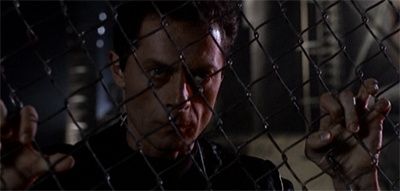
The pupil has become the master...

The pupil has become the master…

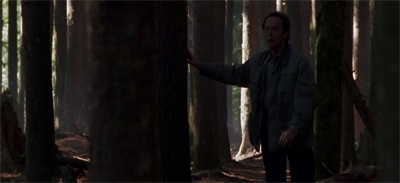
At the same time, it is an incredibly ambitious misfire. The biggest problem with Sense and Antisense is that it tries to cram too much in there. It is constructed almost writer Chip Johannessen tried to condense down contemporary conspiracy theory into a single forty-five minute story that winds up connecting the Department of Energy to the Rwandan Genocide. There is a breathless enthusiasm to all this that would make Fox Mulder blush. As much as Sense and Antisense doesn’t work, it is hard not to admire it’s sheer gumption.

The second season of Millennium might not be the most consistent season in the history of the medium, but even its failures are bold and energetic. Sense and Antisense is not The Curse of Frank Black, Jose Chung’s “Doomsday Defense” or Luminary, but it is a far cry from something like Unrequited, Synchrony or Schizogeny.
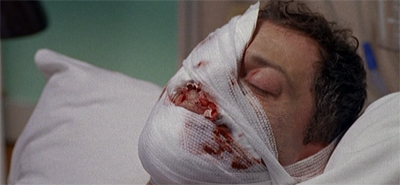
A stain on the record...

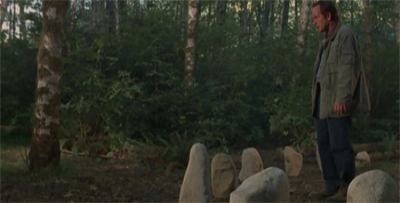
A stain on the record…

Continue reading

Millennium – Beware of the Dog (Review)

This May and June, we’re taking a trip back in time to review the fifth season of The X-Files and the second season of Millennium.

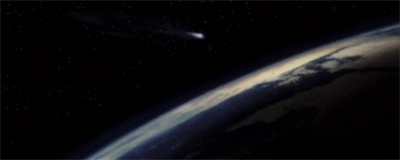
Beware of the Dog opens with the shot of the same comet discussed at the start of The Beginning and the End, just in case viewers thought that The Beginning and the End was somehow a fluke or a deviation. The Beginning and the End was not a freak occurrence, it was not some random divergence from the rest of Millennium. It was very much a new beginning for the series, harking in a bold new direction utterly unlike that marked out by The Pilot. The second season of Millennium was a new breed of animal.

And so a lot of Beware of the Dog is devoted to reinforcing this new direction – convincing the viewers at home that Millennium had reinvented itself from the ground up. Part of what is interesting about Beware of the Dog is the way that the basic structure and beats of the episode hark back to the formula and themes of the first season, but in a way that makes it quite clear that things have changed. Beware of the Dog embraces the pulpy absurdity of a show about millennial fears and anxieties, about the nature of good and evil in the world.

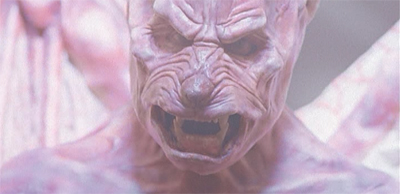
Call of the wild...

Call of the wild…

Beware of the Dog is a very weird piece of television. It is resoundingly and unapologetically odd. It is nowhere near as quirky and eccentric as the second season would become in episodes like The Curse of Frank Black or Jose Chung’s “Doomsday Defense” or The Time is Now, but decidedly more surreal than the first season had allowed itself to be – even in episodes like Force Majeure or Powers, Principalities, Thrones and Dominions. This is an episode which takes the first season’s “serial killer of the week” format, and substitutes in packs of wild dog.

The result is a piece of television that is quite difficult to classify and quantify, but which feels fresh and exciting. As with The Beginning and the End, there is a playfulness and fun to Beware the Dog that was sorely lacking from extended stretches of the first season. Indeed, it seemed unlikely during the first season that Millennium would ever be classed as “playful” or “fun.” That sense of energy and vibrance imbues the second season with life, helping to carry the show across some admittedly rough episodes later in the year.

Circle of trust...

Circle of trust…

Continue reading

Millennium – The Beginning and the End (Review)

This May and June, we’re taking a trip back in time to review the fifth season of The X-Files and the second season of Millennium.

The Beginning and the End manages the impressive and paradoxical feat of both rebooting Millennium and resolving the cliffhanger at the end of Paper Dove. These two contradictory impulses become part of the thematic fabric of The Beginning and the End, an episode fascinated by duality and opposition. Can the polaroid stalker be both a serial killer of the week and the herald of something so much greater? Can Catherine and Frank Black be both united and separated? Can Millennium be the same show it was last year and something completely new?

The Beginning and the End is the start of the show’s polarising and divisive second season. To critics, the second season completely branches off from the first season of the show, replacing a framework that had grown and developed over the course of the year with a bizarre and unwieldy approach that was gonzo and surreal. To fans, the second season was an ambitious and exciting piece of television utterly unlike anything that had been broadcast before or has been broadcast since.

Up in the sky...

Up in the sky…

With Chris Carter back focusing on the development of The X-Files and the looming release of The X-Files: Fight the Future, Fox drafted in Glen Morgan and James Wong to steer the second season of Millennium. The duo had helped to define the identity of The X-Files in its first year, and had produced the failed (but ambitious and prescient) series Space: Above and Beyond for the network. After working on the fourth season of The X-Files and the first season of Millennium, Fox allowed the pair to produce their own pilot – The Notorious Seven.

When Fox opted not to take The Notorious Seven to series, they asked Glen Morgan and James Wong to take charge of Millennium in its sophomore season. As The Beginning and the End demonstrates, Morgan and Wong promptly made the show their own.

Looking up and wondering...

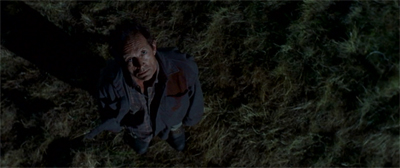
Looking up and wondering…

Continue reading

Millennium – Season 1 (Review)

This February and March, we’re taking a trip back in time to review the fourth season of The X-Files and the first season of Millennium.

Millennium is a strange television show.

It is quite clear that Chris Carter and Fox both had a very different understanding about how best to follow on from the success of The X-Files. Fox clearly wanted another popular hit, a television show that it could plug comfortably into its 9pm Friday slot and grow into a multimedia franchise. The network spent a phenomenal amount of money promoting Millennium, with advertising and screenings and other publicity attempts. This approach paid off; The Pilot broke all sorts of records for Fox.

millennium-lamentation11

However, Millennium could not sustain those viewing figures. Over the first season, it haemorrhaged viewers. Chris Carter was not trying to present an accessible and popular pop hit; instead, Carter was taking advantage of the success of The X-Files to construct something decidedly more esoteric. Millennium is a tough show to watch. It is grim, unrelenting and oppressive. It is a show about darkness in the world that tends to roll up its sleeves and jump right in. Millennium has a clear idea of what it wants to be, but what it wants to be is alienating and uncomfortable.

On just about any level, the first season of Millennium is more accomplished than the first season of The X-Files. The production is more confident, the ideas are much bolder, the themes are much clearer. In fact, the first season of Millennium even holds up well when stacked against the fourth season of The X-Files on an episode-by-episode basis. But that’s not the problem. By definition, “Lance Henriksen fights serial killers and the concept of evil in America” will never be as popular as “David Duchovny and Gillian Anderson fight aliens and monsters and weird stuff!”

millennium-pilot11

The first season of Millennium is a show that offers a distinctive and uncompromising auteur vision which cares little for what the audience might want or expect. For better or worse, that approach would prevent Millennium from ever approaching the critical or popular support that The X-Files had already begun to accrue at the end of its own first season. The result is a television show that was never going to rival The X-Files as a pop culture phenomenon , but which serves as a bold philosophical statement from its creator.

“This is who we are,” the opening credits state, unapologetically. They seem to be speaking for the show as much for society.

millennium-bloodrelatives13 Continue reading

Millennium – Paper Dove (Review)

This February and March, we’re taking a trip back in time to review the fourth season of The X-Files and the first season of Millennium.

Millennium is an odd show in a number of ways.

The most obvious of these oddities is the sense that each of the three seasons feels like a different television show. The first season is markedly distinct from the second, the second is clearly delineated from the third. It is a very strange structure, one explained by the fact that the three seasons were overseen by three different creative teams with three very different visions of the show. One of the results of this approach is that each season finalé becomes a de facto series finalé, an episode bidding farewell to a particular vision of the show.

This is what it feels like... when doves cry...

This is what it feels like… when doves cry…

Paper Dove bids farewell to the “serial-killer-of-the-week” mechanics of the first season. Of course, there would be later episodes that would feature serial killers. In fact, The Mikado is possibly the best serial killer the show ever did. The Beginning and the End seems explicitly about killing off the “serial-killer-of-the-week” so that the show can invest its time and energy in other pursuits. However, stripped down to its core, Paper Dove takes the show’s approach to serial killers to its logic conclusion.

Although the show has featured serial killers with motivations that might be easily understood and perhaps even pitiable, Henry Dion is the show’s first serial killer to becomes almost sympathetic; it is one of the rare times that the show manages to capture the banality of evil, as opposed to the show’s traditional approach – one that brushes up against (and occasionally crosses over into) a sensationalist or gratuitous approach to serial killer pathology.

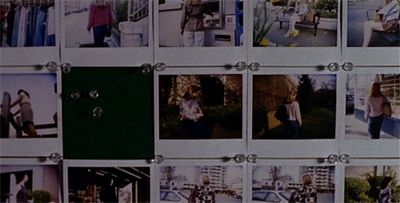
Picture this...

Picture this…

Continue reading

Millennium – Maranatha (Review)

This February and March, we’re taking a trip back in time to review the fourth season of The X-Files and the first season of Millennium.

Maranatha provides a nice close to Chip Johannessen’s four scripts for the first season of Millennium.

At its core, Maranatha is a story about stories. It is a tale about mythmaking and storytelling. It is about a monstrous man who seeks to transform himself into a creature of legend, brutally slaughtering innocent people in order to feed the idea that he is something much more than a corrupt political official. As such, the story sits quite comfortably alongside Johannessen’s other three scripts for the season, each of which is about storytelling or mythmaking in some form or another.

The power of Antichrist compels you...

The power of Antichrist compels you…

In Blood Relatives, James Dickerson attends the funerals of people he never knew, pretending to have been a part of the lives of the recently deceased; he tells stories and memories that never happened. In Force Majeure, Frank Black encounters a radical group of people who believe in the story of the end times; whether true or false, this story provides meaning to the life of the otherwise lost Dennis Hoffman. In Walkabout, Frank Black tries to piece together his recent history, constructing a narrative to account for out-of-character behaviour.

Maranatha serves as something of a culmination of this approach to Millennium. It the story of a sadist who seeks to elevate himself to the status of legend, dictating and shaping his own narrative through fear and manipulation.

"I wanna take his face... off!"

“I wanna take his face… off!”

Continue reading

Millennium – Broken World (Review)

This February and March, we’re taking a trip back in time to review the fourth season of The X-Files and the first season of Millennium.

On paper, there is a lot to like about Broken World.

In theory, it is Robert Moresco building off the success of Covenant, developing another story that works within the framework of Millennium without adhering to the formulaic “serial-killer-of-the-week” approach. As in Covenant, Frank Black is wandering the country to do good, a stranger who comes to town to fight evil. In this case, the evil takes the form of a budding young serial killer – a fiend who has not yet claimed a human life, but seems to be building towards it.

"I think he's trying to tell us something..."

“I think he’s trying to tell us something…”

In reality, Broken World is a number of great ideas suffering from terrible execution. While the story is technically quite distinct from the stock “serial-killer-of-the-week” stories that haunted the series in the middle of the series, the practical difference is minimal. Broken World is another story of sadism and brutality that inevitably feels sleazy and exploitative. While the episode could be an interesting twist on a tired structure, Willi Borgsen is just another generic psychopath like Edward Petey or Art Nesbitt.

Still, the title feels somewhat appropriate. Broken World does a lot to demonstrate how far Millennium has come in this stretch of episodes. Broken World would have felt quite comfortable sandwiched between Weeds and Loin Like a Hunting Flame. Sitting between Powers, Principalities, Thrones and Dominions and Maranatha, it feels almost like a relic.

Who's gonna ride your wild horses?

Who’s gonna ride your wild horses?

Continue reading

Millennium – Powers, Principalities, Thrones and Dominions (Review)

This February and March, we’re taking a trip back in time to review the fourth season of The X-Files and the first season of Millennium.

High matter thou injoinst me, O prime of men,

Sad task and hard, for how shall I relate

To human sense th’ invisible exploits

Of warring Spirits; how without remorse

The ruin of so many glorious once

And perfet while they stood; how last unfould

The secrets of another World, perhaps

Not lawful to reveal? yet for thy good

This is dispenc’t, and what surmounts the reach

Of human sense, I shall delineate so,

By lik’ning spiritual to corporal forms,

As may express them best, though what if Earth

Be but the shaddow of Heav’n, and things therein

Each to other like, more then on earth is thought?

– Raphael, Paradise Lost, Book V

This is about to get biblical...

This is about to get biblical…

Continue reading

Millennium – Lamentation (Review)

This February and March, we’re taking a trip back in time to review the fourth season of The X-Files and the first season of Millennium.

Taken together, Lamentation and Powers, Principalities, Thrones and Dominions represent something of a loose mythology two-parter for Millennium. The episodes are not linked by an explicit “to be continued…”, but they feed into one another in a very clear and structured manner. Each of the two episodes exists as a clear and independent entity, but – taken together – they exist as a story that shakes Millennium to its foundation. This is the point at which Millennium seems to know what it is and what it wants to be.

The first season of any show is a difficult time. Everybody working on the series struggles to find the right voice for the series. The goal is to figure out what the show is before the audience loses interest. Lamentation comes quite late in the first season – only four episodes from here to Paper Dove – but it does represent a very clear and dynamic shift. It follows through on a lot of the horror implied throughout the first season, suggesting that Frank Black might be facing something far more sinister and insidious than mere serial killers.

On top of the world...

On top of the world…

In fact, Lamentation exists as a fiendish subversion. It is a story that is very clearly set-up as the sort of procedural serial-killer-of-the-week story that the show was churning out towards the middle of the season. Doctor Ephraim Fabricant is released from prison so he can offer a kidney transplant to his sister; however, while he is recuperating, somebody helps him to escape police custody. Having profiled Fabricant during the initial manhunt, Frank is drafted in to track down Ephraim Fabricant before he inevitably starts killing again. The clock is ticking.

Then everything just explodes. Something from the dark heart of Millennium breaks loose; this more primal evil devours the serial-killer-of-the-week structure. It even leaves his second kidney on a plate in the fridge.

Everybody has their demons...

Everybody has their demons…

Continue reading

Millennium – Walkabout (Review)

This February and March, we’re taking a trip back in time to review the fourth season of The X-Files and the first season of Millennium.

Walkabout continues to demonstrate the flexibility of Millennium‘s format.

Millennium is often unfairly dismissed as a “serial-killer-of-the-week” show, an impression undoubtedly created by the stretch of early- to mid-season episodes that adopted an almost procedural formula in their exploration of evil. However, after Sacrament, the show takes a break from those narratives to do something a little more experimental and nuanced. Covenant had seen Frank investigating a murder that had already been solved. Here, Frank finds himself struggling to piece together a fractured memory of his own recent experiences.

A bleedin' disaster!

A bleedin’ disaster!

Walkabout is the third of four scripts from writer Chip Johannessen in the first season of Millennium. Each is a rather strange entity; doing something strange or unconventional for the show, helping to define the boundaries for this young television series. Walkabout is perhaps most interesting for the way that it engages with an aspect of Millennium that has been bubbling away in the background since The Pilot. Although Walkabout never explores the nature or purpose of Frank’s visions, the episode is built around the visions as a concept rather than simply a tool.

Walkabout is an unsettling and effective mood piece that grows more conventional as it progresses. While the final act is a little clunky, Walkabout is a fascinating piece of television and a demonstration of how Millennium has found its own voice.

"Let me outta here!"

“Let me outta here!”

Continue reading