• Following Us

  • Categories

  • Check out the Archives


  • Awards & Nominations

409. Alien Covenant – All-ien 2024 (#—)

Hosted by Andrew Quinn, Darren Mooney and Jess Dunne, this week with special guest Peter McGann, The 250 is a (mostly) weekly trip through some of the best (and worst) movies ever made, as voted for by Internet Movie Database Users. New episodes are released every second Saturday at 6pm GMT, with the occasional bonus episode between them.

This week, Ridley Scott’s Alien: Covenant.

The colony ship Covenant is on its way to a new home world when a freak accident knocks the ship off course. However, while conducting repairs, the crew pick up a strange distress call from an alien planet that seems too good to be true. Seeing a potential opportunity, the crew decide to explore this strange new world. There, they find horrors beyond imagining.

At time of recording, it was not ranked on the list of the best movies of all time on the Internet Movie Database.

Continue reading

403. Prometheus – All-ien 2024 (#—)

Hosted by Andrew Quinn, Darren Mooney and Jess Dunne, this week with special guest Niall Glynn, The 250 is a (mostly) weekly trip through some of the best (and worst) movies ever made, as voted for by Internet Movie Database Users. New episodes are released every second Saturday at 6pm GMT, with the occasional bonus episode between them.

This week, Ridley Scott’s Prometheus.

Inspired by strange discoveries from around the globe, reclusive ageing billionaire Peter Weyland funds a journey into the deepest and darkest recesses of outspace. Led by Elizabeth Shaw, the Prometheus mission is intended to find not just new life, but also discover the origins of all life on Earth. However, when the scientific team arrive at their destination, they find something altogether more sinister waiting for them.

At time of recording, it was not ranked on the list of the best or worst movies of all time on the Internet Movie Database.

Continue reading

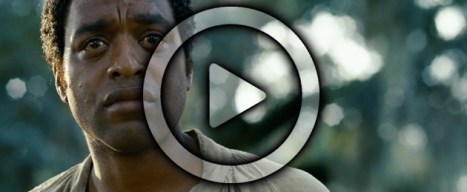
342. 12 Years a Slave (#182)

Hosted by Andrew Quinn and Darren Mooney, and this week with special guest Lee Murkey, The 250 is a weekly trip through some of the best (and worst) movies ever made, as voted for by Internet Movie Database Users. New episodes are released Saturdays at 6pm GMT.

So this week, Steve McQueen’s 12 Years a Slave.

In 1841 New York, Solomon Northup is a free man. While his wife and family are away, Solomon earns his way as a travelling musician. However, two conmen take advantage of his trust, drugging him and selling him into slavery. Transported to Louisiana, Solomon finds himself stripped of all the rights and comforts afforded a human being. Through twelve years of brutality, horror and violence, Solomon struggles not only to survive, but to live – and to hold on to some vestige of his humanity in the process.

At time of recording, it was ranked 182nd on the list of the best movies of all time on the Internet Movie Database.

Continue reading

New Escapist Column! On David as the Monster in “Prometheus” and “Alien: Covenant”…

I published a new piece at Escapist Magazine this evening. This week, Ridley Scott explained that he wanted to “re-evolve” the central monster from the Alien franchise.

This is an interesting argument, particularly given Scott’s long-standing criticism about the xenomorph, and his argument that the creature has perhaps outlived its relevance. Indeed, one of the most interesting facets of Prometheus and Alien: Covenant is the way in which David essentially updates many of the core thematic elements of the xenomorph. David takes the creature’s threat of sexual violence, and updates it for the twenty-first century.

You can read the piece here, or click the picture below.

Non-Review Review: Alien – Covenant

Alien: Covenant feels as though somebody facehuggered Prometheus and ended up with Alien.

It is a very messy, very awkward, very clever piece of film. It is a genre movie that understands both what it wants to be, and also the reasons why it cannot be what it wants to be. It is a film aware of its own grotesque attributes, of the way that it has been warped and deformed in its journey from original idea to concept to screen. It is a movie very much aware of what it wants to be, but it is also cognisant of the fact that it cannot be that film. Alien: Covenant is the result of any number of compromises, but it is very pointed on the subject of those compromises.

Alien DNA.

Most likely driven by the critical and audience reaction to Prometheus, the sequel is a decidedly more conservative affair. For all intents and purposes, Covenant is wed more tightly to the Alien franchise than to its direct predecessor. Although one main character (and performer) carries over from Prometheus to Covenant, most of the major characters from Prometheus are relegated to small supporting roles and cameos. Even the Engineers, the alien race at the centre of Prometheus, are primarily relegated to an extended flashback sequence.

In contrast, Covenant embraces the trappings of the familiar Alien franchise. The soundtrack repeatedly samples Jerry Goldsmith’s iconic score from the original Alien. The climax devolves into a hybrid of the most iconic action beats from the first two Alien films. The film lingers on the dramatic reveals of familiar Alien iconography, only barely teasing audience expectations before fulfilling them. It seems fair to argue that Covenant is a movie more consciously designed to appeal to fans of the Alien franchise than Prometheus was. The clue is in the title.

Bursting at the seams.

However, Covenant is most interesting when it plays up the tension between what it clearly wants to be and what it actually is, when the script throws the concept of sequel to Prometheus into conflict with the demands of a prequel to Alien. There is a strong sense of disillusionment and frustration in Covenant, particularly as explored through the story of David. Michael Fassbender’s enigmatic android is the only major returning character from Prometheus, and in many ways the central character. He reappears after being lost in the wilderness, angry and resentful.

Covenant is a big ball of Oedipal rage. It’s clever, awkward, messy and disjointed, but also entirely in keeping with the themes of the larger series.

The wilderness years.

Continue reading

Non-Review Review: Trespass Against Us

This film was seen as part of the Audi Dublin International Film Festival 2017.

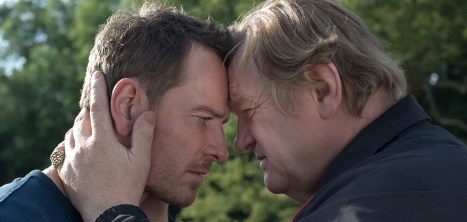
Trespass Against Us is a relatively solid crime thriller, albeit one that suffers slightly from heavy-handedness and clumsiness.

At its core, Trespass Against Us hews close to a tried and tested crime movie formula. Chad is a family man who is working hard to ensure that his children have a better life than he ever enjoyed, making sure that his children get an education that was never available to him and trying to do right by his long-suffering wife. At the same time, Chad struggles against his familial connections to organised crime, with his free-wheeling driving skills inevitably drawing him into his father’s tangled web of plotting and scheming.

"I knew it was you, Chad, and it breaks my heart."

“I knew it was you, Chad, and it breaks my heart.”

The most innovative aspect of Trespass Against Us lies in the decision to transpose those tried-and-tested character and plot beats to a novel setting. Audiences are well accustomed to epic crime stories about familial obligations set within the Irish American or Italian American communities, but Trespass Against Us unfolds against the backdrop of a family of Irish Travellers living in rural England. It is an interesting juxtaposition, given how relatively under-exposed that community is.

Trespass Against Us earns a lot of credit based on the novelty of its setting and the fantastic cast that it has assembled. However, a lot of that goodwill is squandered on a very conventional plot and an awkward clunking heavy-handedness that trips the script up in its third act.

"I keep telling you 'til Gordo's blue in the face..."

“I keep telling you ’til Gordo’s blue in the face…”

Continue reading

Non-Review Review: Assassin’s Creed

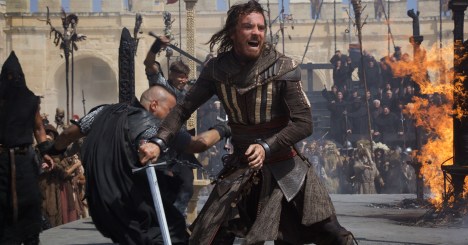
“What the f%$k is going on?” asks Michael Fassbender about halfway through the film.

It is not the first time that Cal Lynch has asked this question. Earlier on, the character wondered out loud “what’s happening?” after waking up following his state-sanctioned execution and being hooked up to a gigantic robotic claw that yanking him into the air mid-sentence. The audience is probably asking the same questions as Assassin’s Creed bounces across time and space with mountains of exposition (occasionally helpfully subtitled) about rival societies conspiring to find an artefact that can harness (and eliminate) mankind’s free will.

The Fass and the Furious.

The Fass and the Furious.

To be fair, incoherence is not the real problem with this disjointed video game adaptation. In fact, there is a certain weird charm to watching the amazing cast and the game director react to the crazed concepts that they have been dealt. For the first hour or so, the sheer weirdness of the film proves compelling, drawing in audience members willing to resist the tonal whiplash and laboured exposition as the film rockets along. What ultimately kills Assassin’s Creed is not its lack of sense, but the stubborn insistence that it must make sense.

Assassin’s Creed would be a stronger film were it willing to revel in its incoherence instead of trying to impose order upon it. The gonzo plotting and zany high concepts give the film a strange texture, but the problems do not really kick in until Assassin’s Creed starts awkwardly and painfully trying to construct a rational framework around this bizarre cavalcade. The result is to wed a visually hyper-kinetic and tonally unruly film to an incredibly tired generic plot that winds transforming the film into a plodding mess.

He's so hot right now.

He’s so hot right now.

Continue reading

Non-Review Review: Macbeth

Justin Kurzel understands Macbeth.

A lot of Shakespeare’s work is viewed through the lens of cultural importance, and quite rightly. His plays codified a phenomenal amount of the English language in use today, incorporation and amalgamating words and phrases that people use without even thinking. Shakespeare codified drama and storytelling in the English language, to the point where any number of his plays can be cited as the defining example of particular styles of dramaturgy. There is no other figure who can cast such a shadow over English-language culture.

A Field in Scotland...

A Field in Scotland…

However, the tendency to treat Shakespeare’s works as priceless artefacts – an attitude engrained by the (rightful) reverence they receive and the way that they are taught in schools – is to miss the vitality and excitement of his work. Shakespeare might have endured as the defining wordsmith of the English-language, but before that he was just a really popular writer with an incredibly populist touch. His plays existed as spectacle before they became holy relics. The jokes played to the galleries packed with punters wanting both high and low culture.

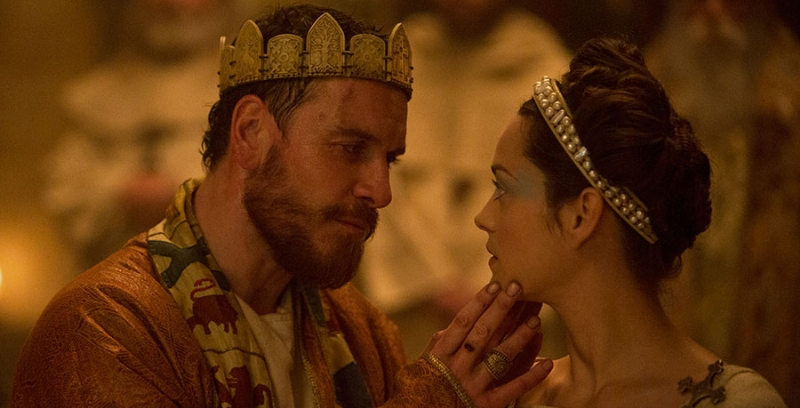
As much as Macbeth might be a searing and insightful exploration of the relationship between violence and masculine identity, it was also pure unadulterated pulp. Justin Kurzel plays up this pulpy spectacle, crafting a version of Macbeth that anchors apocalyptic horror in two amazing central performances. Macbeth is a joyous and horrific piece of cinema, brutal and beautiful in a way that befits its source material.

Oh I just can't wait to be king...

Oh I just can’t wait to be king…

Continue reading

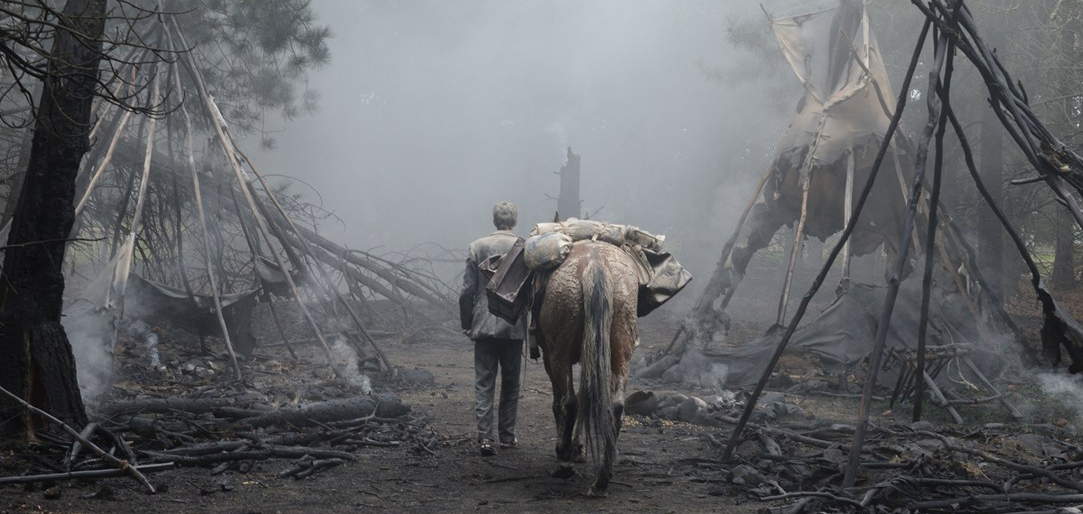
Non-Review Review: Slow West

There is a reason that the western has fallen from popularity after its cinematic heyday.

For decades, it seemed like Hollywood punctuated its release of western films with sampling for other genre, returning time and again to the story of the men who shaped America from the ground up. Over the years, the familiar tropes have been deconstructed and reconstructed and deconstructed again. They have been mashed up and knocked down and spun around. They have been torn apart and thrown back together with reckless abandon. With all of that going on, it often seems like anything that the genre has to say has been said and repeated time and again.

Life is peaceful there...

Life is peaceful there…

There are probably still things to be said about the myth of the Old West, even if the genre seems as explored and catalogued as the American continent itself. There are little hidden pockets and eccentric spaces that might hold a surprise or several. Slow West doesn’t necessarily have anything new or revelatory to say about the western. It seems unlikely to shatter any illusions or break any preconceptions. A lot of the ground covered by Jay Cavendish and Silas Selleck on their trek westward will be familiar to anybody with a passing knowledge of the genre.

At the same time, there is a lyrical beauty to Slow West. The film is a haunting and evocative trip through a landscape that most viewers know better than their own locality. Slow West might not say anything particularly earth-shattering, but it does articulate itself clearly and elegantly. It is a meticulously crafted film, finely constructed and sumptuously filmed. It might be a tourist trip over well-travelled group, but it takes the most scenic route imaginable.

Saddle up!

Saddle up!

Continue reading

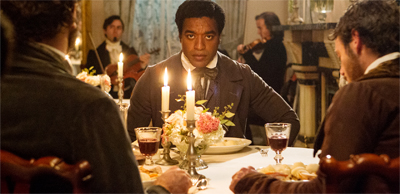
Non-Review Review: 12 Years a Slave

12 Years a Slave is a harrowing and moving piece of cinema. The most profound and cutting of the recent studio films to explore slavery in America, Steve McQueen’s 12 Years a Slave is almost relentless in its probing explorations of the systems an structures that allowed and reinforced that slavery – it’s hard to watch at points, providing a deeply unsettling glimpse at the suffering that man is capable of inflicting upon his fellow man.

12yearsaslave9

Continue reading