• Following Us

  • Categories

  • Check out the Archives


  • Awards & Nominations

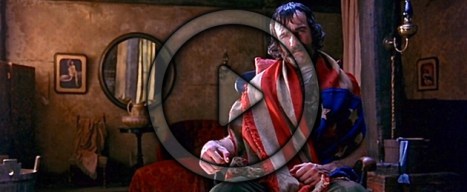
204. Gangs of New York – Summer of Scorsese (#—)

Hosted by Andrew Quinn, Jay Coyle and Darren Mooney, The 250 is a (mostly) weekly trip through some of the best (and worst) movies ever made, as voted for by Internet Movie Database Users. New episodes are released every Saturday at 6pm GMT.

This time, continuing our Summer of Scorsese season, Martin Scorsese’s Gangs of New York.

Martin Scorsese is one of the defining directors in American cinema, with a host of massively successful (and cult) hits that have shaped and defined cinema across generations: Alice Doesn’t Live Here Anymore, Raging Bull, The Last Temptation of Christ, Goodfellas, KundunThe Aviator, The Departed. The Summer of Scorsese season offers a trip through his filmography via the IMDb‘s 250.

New York is a furnace. As Irish immigrants arrive off the boats, they find an old conflict waiting for them. As the Civil War wages and passions stir, young Amsterdam Vallon seems to avenge the death of his father by slaying the local crime lord Bill the Butcher. However, things are never as simple as they appear; worlds collide and loyalties shift as the city begins to settle around them.

At time of recording, it was not ranked on the Internet Movie Database‘s list of the best movies of all-time.

Continue reading

203. Kundun – Summer of Scorsese (#—)

Hosted by Andrew Quinn, Jay Coyle and Darren Mooney, The 250 is a (mostly) weekly trip through some of the best (and worst) movies ever made, as voted for by Internet Movie Database Users. New episodes are released every Saturday at 6pm GMT.

This time, continuing our Summer of Scorsese season, Martin Scorsese’s Kundun.

Martin Scorsese is one of the defining directors in American cinema, with a host of massively successful (and cult) hits that have shaped and defined cinema across generations: New York, New York, Raging Bull, The Colour of Money, Goodfellas, Casino, Shutter Island, The Irishman. The Summer of Scorsese season offers a trip through his filmography via the IMDb‘s 250.

The fourteenth Dalai Lama navigates the complicated web of faith and politics at a highly volatile time in the history of Tibet, meditating on both his divine responsibilities and the looming threat of Chinese intervention as the world changes around him.

At time of recording, it was not ranked on the Internet Movie Database‘s list of the best movies of all-time.

Continue reading

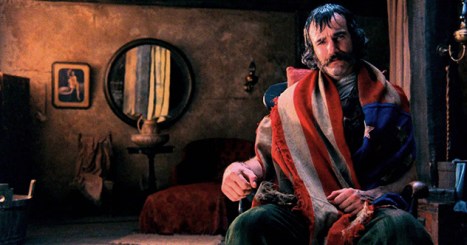
“The Blood Stays on the Blade”: The Birth of a Nation in Scorsese’s “Gangs of New York”…

The podcast that I co-host, The 250, continued our belated Summer of Scorsese last week with a look at Kundun. This week, we’re looking at Gangs of New York. It is a fun and broad discussion that is well worth your time, but it spurred some of my own thoughts about Martin Scorsese’s complicated and messy 2002 passion project.

Martin Scorsese had wanted to make Gangs of New York for over thirty years.

The director had reportedly stumbled across a copy of Herbert Asbury’s book while house-sitting for a friend over New Year in 1970. Gangs of New York became one of the projects that Scorsese desperately wanted to make, alongside The Last Temptation of Christ, which had been given to him by Barbara Hershey on the set of Boxcar Bertha. Of course, Scorsese would not get to make either The Last Temptation of Christ or Gangs of New York during the seventies. Instead, the implosion of New York, New York would set his plans back years.

Scorsese had reportedly been hoping to make either The Last Temptation of Christ or Gangs of New York following the release of New York, New York, when Robert DeNiro convinced him to direct Raging Bull instead. Scorsese would spend the eighties adapting to the collapse of the New Hollywood movement, and would just about manage to get The Last Temptation of Christ produced. He never gave up on Gangs of New York, and the film went through various iterations over the years. It might have starred Jim Belushi and Dan Aykroyd or Mel Gibson and Willem Dafoe.

When the possibility of making Gangs of New York emerged in the late nineties, it might have seemed like a culmination. As the project lurched closer and closer to actually materialising, it must have seemed like it would be one of Scorsese’s last major motion pictures. After all, Scorsese was almost sixty. Steven Spielberg and George Lucas were the only two other “movie brats” who were still making high-profile and big-budget films. There was perhaps a sense that Scorsese might just about have this film left in him, before retiring to less mainstream and more esoteric works.
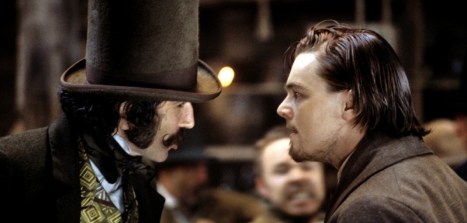
While Scorsese had entered the nineties on a high note with Goodfellas, the films that followed were not as universally welcomed. Roger Ebert complained about “a certain impersonality” in Cape Fear, the film following Goodfellas. The Age of Innocence arrived with a shrug. Casino was treated as highly derivative of Goodfellas, with Peter Travers sighing that “the black cloud of letdown hung over Scorsese’s epic tale.” Kundun sparked a diplomatic incident with China, and was quietly buried by Disney. Bringing Out the Dead felt like a curiosity more than a classic.

Of course, history has been kind to all (or at least most) of those films. Scorsese’s nineties output is recognised in hindsight as a vibrant and important part of his career. Nevertheless, as Gangs of New York slowly and awkwardly forced itself into being, it might have looked like the last swing of the bat from one of the great American directors. A film that had been simmering in the director’s imagination for decades, it might serve as a definitive and concluding statement about the city and the nation that he loved.
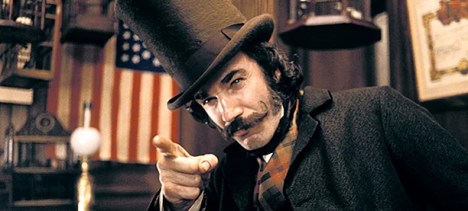
More than twenty years after the shutters came down on the New Hollywood movement, Scorsese would finally get to make an epic that was comparable to Francis Ford Coppola’s Apocalypse Now or Michael Cimino’s Heaven’s Gate. Of course, those sorts of projects feel like capstones – Heaven’s Gate famously brought United Artists tumbling down, while Coppola would never direct anything with as much freedom or cultural impact after Apocalypse Now. As such, Scorsese’s long-delayed shot at making his epic passion project seemed like closure.

Looking back at Gangs of New York, this seems absurd. Almost two decades after Gangs of New York, Scorsese is still making films. Scorsese is enjoying larger budgets on films like The Irishman and The Killers of the Flower Moon than he did earlier in his career. If anything, Gangs of New York is a watershed. It is not Scorsese’s epic finale, but is instead the first in a series of epics that includes films like The Aviator or The Wolf of Wall Street. It introduced Scorsese to a young actor who “reignited” his enthusiasm for film making.
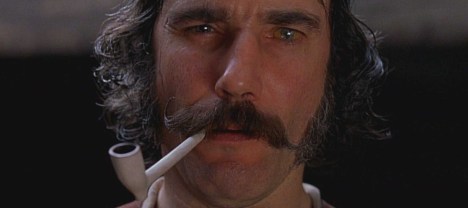
Indeed, time has been very kind to Gangs of New York. The film seemed to arrive at a crucial moment, both for Scorsese as director and for the United States as a nation. Gangs of New York offers a snapshot of American history that resonates strongly. It is not so much a historical picture as a dive into the depths of a shared unconscious and an excavation of the scars left on the American psyche. The catchy Oscar-nominated theme song might have boasted that the film was about “the hands that built America”, but the film was decidedly less optimistic in its perspective.

Gangs of New York is a story about the blood that stains those hands, and how history tends to repeat for those who refuse to learn from it.
Continue reading

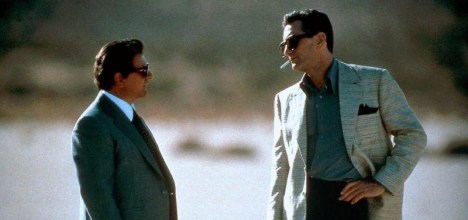
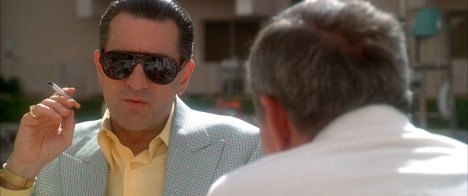
202. Casino – Summer of Scorsese (#141)

Hosted by Andrew Quinn, Jay Coyle and Darren Mooney, and this week with special guest Aoife Martin, The 250 is a (mostly) weekly trip through some of the best (and worst) movies ever made, as voted for by Internet Movie Database Users. New episodes are released every Saturday at 6pm GMT.

This time, continuing our Summer of Scorsese season, Martin Scorsese’s Casino.

Martin Scorsese is one of the defining directors in American cinema, with a host of massively successful (and cult) hits that have shaped and defined cinema across generations: Taxi Driver, Raging Bull, After Hours, Goodfellas, Cape Fear, The Wolf of Wall Street, The Irishman. The Summer of Scorsese season offers a trip through his filmography via the IMDb‘s 250.

Against the backdrop of the seventies, the mob pushes westward. Hustler and gambler Sam “Ace” Rothstein is sent to Las Vegas to oversee the mob’s holdings in the Tangiers, and he discovers an unspoiled paradise just waiting for exploitation. However, Sam doesn’t count on the inevitable complications that will bring that house of cards crashing down.

At time of recording, it was ranked 141st on the Internet Movie Database‘s list of the best movies of all-time.

Continue reading

“There’s Nobody Here to See Us”: The Untamed Frontier in Martin Scorsese’s “Casino”…

The podcast that I co-host, The 250, continued our belated Summer of Scorsese last week with a look at Goodfellas. This week, we’re looking at Casino. It is a fun and broad discussion that is well worth your time, but it spurred some of my own thoughts about Martin Scorsese’s 1995 gangster classic.

When Casino was released, it experienced something of a minor backlash.

Part of this backlash was motivated by the film’s perceived similarities to Goodfellas – Scorsese had made another soundtrack-heavy period-piece mob movie starring both Robert DeNiro and Joe Pesci, adapted from the work of Nicholas Pileggi. To a certain extent, this was fair. There were legitimate concerns that Scorsese was simply repeating himself, and that any comparisons to Goodfellas did not flatter Casino.

These problems were compounded by content. At time of release, Casino was Scorsese’s longest movie, clocking in at just shy of three hours. That is a lot of mobster movie, particularly if that movie felt in anyway derivative of the appreciably shorter Goodfellas. There were also rumblings of the movie’s brutality and violence, which was seen as being particularly excessive and graphic. These complaints circulated even before Casino hit cinemas. Peter Travers summarised the mood, “Even before Casino opened, the black cloud of letdown hung over Scorsese’s epic tale.”

However, time has been kind to Casino. Although the film undoubtedly still exists in the shadow of Goodfellas, it has come to be recognised as one of the great crime films and to merit some appreciation on its own terms. Casino is a fascinating piece of work. It is bold and ambitious, epic and sweeping. However, what is most striking about Casino is not how it compares to Goodfellas, but how it contrasts. The differences are instructive.

Casino is often categorised as a mob movie, and it is definitely that. It is a story about gangsters and organised crime. However, it is also a western. It is perhaps the closest that Scorsese has come to making a traditional western in his entire cinematography. More than that, while Goodfellas is anchored in the character of Henry Hill, Casino lacks a similar hook. Both Sam and Nicky are much more oblique characters than Henry; Sam is less proactive, and Nicky is much more brutal. They are harder to invest in, tougher to root for.

However, this allows Casino to take a much wider view of this world and the people that inhabit it. Casino is arguably a religious parable, a story about mankind’s destruction of paradise and the inevitable exile that followed. In that sense, Casino feels like more of a bridge between Goodfellas and Scorsese’s more overtly religious-tinged parables like Bringing Out the Dead or Silence than it initially seemed. This is a story about heaven on earth, and the fallen sinful human beings who turn that heaven into a nightmarish hell.

Continue reading

“Your Reminiscence”: Martin Scorsese’s “Cape Fear”, Nostalgia, and Parental Anxiety…

The podcast that I co-host, The 250, continued our belated Summer of Scorsese last week with a look at Goodfellas. This week, we’ll looking at Casino. It is a fun and broad discussion that is well worth your time, but the season skips over large swathes of Scorsese’s filmography. So I thought it might be worth taking a look back at Cape Fear.

Cape Fear is often overlooked in terms of Martin Scorsese’s filmography.

It falls in the gap between the instant classic Goodfellas and the sleeper masterpiece Casino. It shares that gap with The Age of Innocence, which is one of the films in Scorsese’s filmography that has been begging for a reappraisal and seems more likely to receive critical attention than a trashy remake of a pulpy sixties thriller. (The Age of Innocence recently received a re-release as part of the high-end Criterion Collection.) Indeed, Cape Fear seems designed to be seen as disposable in the context of Scorsese’s filmography.

At best, Cape Fear is typically seen as a curiosity – and potentially a worrying one. While Roger Ebert praised the film, he lamented “a certain impersonality in a film by this most personal of directors.” There was a whiff of moral panic to Kenneth Turan’s review, which asked, “Are we, perhaps, too quick to heap praise on films just because they are expertly done, shrugging off the troubling nature of the content? Is an audience’s increasing avid addiction to increasingly twisted thrills any justification for cheering on the people who provide them?”

However, there’s a lot interesting happening in Cape Fear. Most obviously, the film is a vehicle for Scorsese’s love of a certain style of directorial technique. The original Cape Fear had been directed by J. Lee Thompson, who had worked as a dialogue coach under Alfred Hitchcock. The film arrived two years after Alfred Hitchcock’s Psycho, and the influence of Hitchcock is obvious on Thompson’s work; it’s scored by Hitchcock collaborator Bernard Herrmann, editted by Hitchcock veteran George Tomasini and features art direction from Robert Boyle and Alexander Golitzen.

However, what’s particularly interesting about Cape Fear is the way in which it actively translates the original movie from the early sixties to the early nineties, playing not only on the same underlying fears that informed the original, but also understanding that they existed in a different context during the nineties. It’s a movie that cannily and shrewdly transposes those two times, tapping into the same fears, but in a way that demonstrates both how those fears have evolved – and also how they haven’t.

Cape Fear is a lurid b-movie thriller, but in the most interesting and unsettling ways. It is a film fascinated by what lurks beneath the surface.

Continue reading

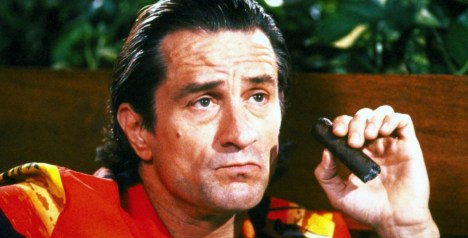
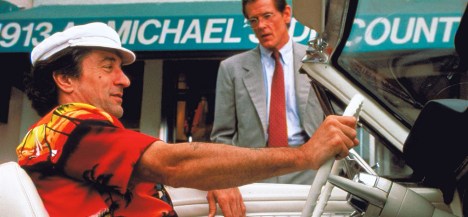
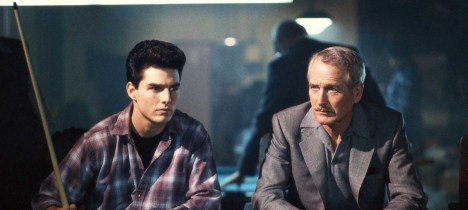
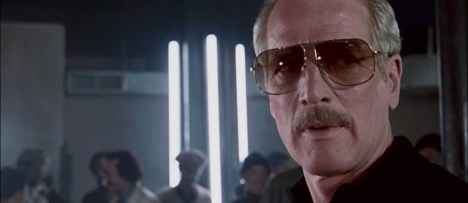
“I Never Kid About Money”: Marty Goes Mainstream With “The Colour of Money”…

The podcast that I co-host, The 250, continued our belated Summer of Scorsese last week with a look at Goodfellas. Next week, we’ll looking at Casino. It is a fun and broad discussion that is well worth your time, but the season ends up largely avoiding Scorsese’s output during the 1980s. So I thought it might be worth taking a look back at The Colour of Money.

For Martin Scorsese, the eighties come sandwiched between two masterpieces: Raging Bull and Goodfellas.

These are two of the quintessential Martin Scorsese movies. They are frequently ranked among the best movies that Scorsese has made, and often included in lists of the best movies ever made. Indeed, there’s a famous Hollywood myth that director Brian de Palma reacted to a screening of Goodfellas by involking Raging Bull, proclaiming, “You made the best movie of the eighties and, God damn it, we’re barely into the nineties and you’ve already made the best movie of this decade, too!”

With that in mind, there’s a tendency of overlook Scorsese’s work during the eighties – to treat it as something equivalent to a cinematic lost decade largely defined by the failure of King of Comedy and the controversy over The Last Temptation of Christ. This is understandable, but it is also unfair. Indeed, recent years have seen a welcome push to reassess Martin Scorsese’s tumultuous journey through the era of excess.

Scorsese’s eighties might not have been the best decade or most productive decade in his filmography, but they were instructive. They were a time of growth and evolution for the filmmaker, a point at which the director seemed to finally figure out how to reconcile the movies that he wanted to make with movies that studios wanted to finance. Although often overlooked and ignored in this context, The Colour of Money is perhaps the most instructive of Scorsese’s films from this period.

Continue reading

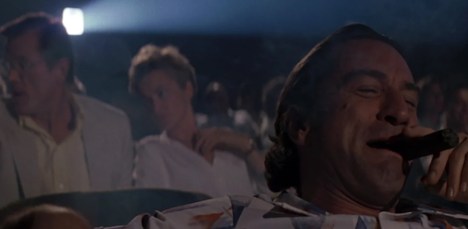
200. Goodfellas – Summer of Scorsese (#17)

Hosted by Andrew Quinn, Jay Coyle and Darren Mooney, and this week with special guest Jenn Gannon, with Andy Melhuish, Jack Hodges and others, The 250 is a (mostly) weekly trip through some of the best (and worst) movies ever made, as voted for by Internet Movie Database Users. New episodes are released every Saturday at 6pm GMT.

This time, continuing our Summer of Scorsese season, Martin Scorsese’s Goodfellas.

Martin Scorsese is one of the defining directors in American cinema, with a host of massively successful (and cult) hits that have shaped and defined cinema across generations: Taxi Driver, Raging Bull, The Colour of Money, The Aviator, The Departed, Hugo, The Wolf of Wall Street. The Summer of Scorsese season offers a trip through his filmography via the IMDb‘s 250.

As far back as he could remember, Henry Hill always wanted to be a gangster. However, the life that Henry leads doesn’t turn out exactly as the young hoodlum might have expected, as he finds himself navigating a web of betrayal and violence involving his closest friends.

At time of recording, it was ranked 17th on the Internet Movie Database‘s list of the best movies of all-time.

Continue reading

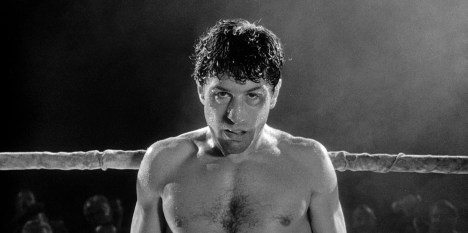
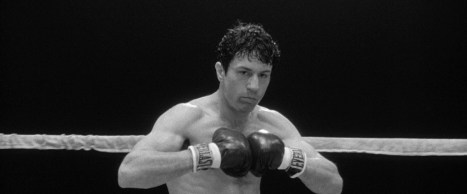
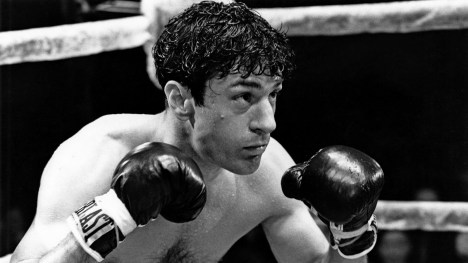
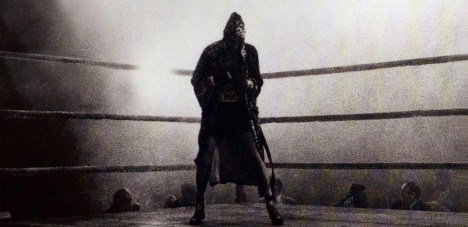
“I’m Not an Animal!” Raging Bull and Pushing the Boundaries of the Empathy Machine…

The podcast that I co-host, The 250, launched a belated Summer of Scorsese last week with a look at Taxi Driver. This week, we’re looking at Raging Bull. It is a fun and broad discussion that is well worth your time, but it spurred some of my own thoughts about Martin Scorsese’s 1980 black-and-white boxing film.

“So, for the second time, [the Pharisees]
summoned the man who had been blind and said:

‘Speak the truth before God.
We know this fellow is a sinner.’

‘Whether or not he is a sinner, I do not know.’
the man replied.

‘All I know is this:
once I was blind and now I can see.’

By Scorsese’s own admission, Raging Bull was a “kamikaze” film.

By the end of the seventies, Scorsese was personally and professionally wiped out. The director had just gone through his second divorce. He was recovering from a cocaine addiction that had almost killed him. Scorsese had attempted to capitalise on the critical and commercial success of Taxi Driver by making New York, New York. The film was intended as an update of the classic MGM musicals shot in a New Hollywood style, but it was a critical and commercial failure.

The New Hollywood era was ending around Scorsese. William Friedkin had been brought down to earth by the critical and commercial failure of Sorcerer, which had the misfortune to open opposite Star Wars. While Apocalypse Now had become a hit, the film’s troubled production was already the stuff of Hollywood legend. Indeed, it has been suggested that Scorsese was able to sneak Raging Bull through United Artists because its production overlapped with the attempts to fight fires on Michael Cimino’s studio-killing flop Heaven’s Gate.

Scorsese was committed to seeing through his vision of Raging Bull. He wanted to make a film that satisfied him, even if it was to be the last film that he ever made. The result is a singularly abrasive piece of work. It is a biography of the boxer Jake LaMotta that paints a harrowing and horrifying sketch of an innately violent man who succeeds in alienating everybody close to him and destroying every opportunity that he has to build a better life for himself.

Even watched forty years after its original release, Raging Bull is an uncompromising and unflinching portrayal of a protagonist who is deliberately and aggressively unlikable. This is a bold and daring move. Studio biographies are often designed to soften the rough edges of their subjects, to temper biting commentary with glimpses of humanity. Even Oliver Stone’s Nixon offers a surprisingly sensitive study of a subject that the audience might expect the director to skewer.

However, this is the power of Raging Bull. Roger Ebert famously described film as an “empathy machine”, and Raging Bull seems to probe the limits of that idea. The audience spends two hours inside the head of Jake LaMotta, and sees the man with his all his flaws and through all his failings. The film then asks its audience, having subjected them to that brutality and violence, to look on Jake as a human being deserving some measure of compassion and empathy. Raging Bull accomplishes this, one of the most remarkable feats in Scorsese’s filmography.

Continue reading

198. Taxi Driver – Summer of Scorsese (#107)

Hosted by Andrew Quinn, Jay Coyle and Darren Mooney, and this week with special guests Rioghnach Ní Ghrioghair and Alex Towers, The 250 is a (mostly) weekly trip through some of the best (and worst) movies ever made, as voted for by Internet Movie Database Users. New episodes are released every Saturday at 6pm GMT.

This time, kicking off our Summer of Scorsese season, Martin Scorsese’s Taxi Driver.

Martin Scorsese is one of the defining directors in American cinema, with a host of massively successful (and cult) hits that have shaped and defined cinema across generations: Raging Bull, King of Comedy, The Last Temptation of Christ, Goodfellas, Casino, The Departed, Shutter Island. The Summer of Scorsese season offers a trip through the director’s filmography via the IMDb‘s 250.

Travis Bickle cannot sleep. So he splits his nights between the Times Square porno theatres and his job as a taxi driver. Bickle immerses himself in the nightlife of New York City, finding himself adrift in a world of anomie and urban decay. Thoughts begin to formulate in his head, thought he can’t articulate or express, but thoughts that push him in a horrific and unsettling direction.

At time of recording, it was ranked 107th on the Internet Movie Database‘s list of the best movies of all-time.

Continue reading