• Following Us

  • Categories

  • Check out the Archives


  • Awards & Nominations

Star Trek (DC Comics, 1989) #49-50 – The Peacekeepers (Review)

The first Star Trek pilot, The Cage, was produced in 1964. To celebrate its fiftieth anniversary, this December we are reviewing the second season of the original Star Trek show. You can check out our first season reviews here. Check back daily for the latest review.

There is something quite disconcerting about Gary Seven.

Abducted from Earth at a young age by a race of mysterious aliens, Gary Seven was then returned to Earth in order to ensure that human history unfolds as expected. The unstated assumption is that “as expected” is a euphemism for “according to the wishes of his mysterious employers.” Using his advanced technology, Gary Seven manipulates the world around him. His technology allows him to cloud the minds of his enemies, and to materialise wherever he might wish. He tinkers with nuclear weapons, keeping his existence – and his objectives – a secret from the local people.

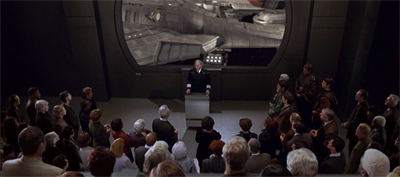
Everything comes apart...

Everything comes apart…

It is interesting to wonder how Assignment: Earth might have developed had it successfully spun off from Star Trek. After all, a pilot does not exist to completely define a new television show; it exists to set up a framework through which interesting stories might be told. Would a weekly television show built around Gary Seven have explored these big questions? Or would it have been content to exist as an imitation of Mission: Impossible? As with ever road not taken, it is absolutely impossible to be sure where it might lead.

Still, Howard Weinstein’s The Peacekeepers teases out some of these interesting questions and queries. Even if it never really offers any answers, there is a lot to chew over.

A spectre...

A spectre…

Continue reading

Star Trek: Enterprise – Broken Bow (Review)

Next year, Star Trek is fifty years old. We have some special stuff planned for that, but – in the meantime – we’re reviewing all of Star Trek: Enterprise this year as something of a prequel to that anniversary. This January, we’re doing the first season. Check back daily for the latest review.

Broken Bow is probably the strongest pilot in the Star Trek canon, with Emissary and The Cage vying for second place.

That’s not saying a lot. Broken Bow is still a troubled production with some rather sizeable issues marring what is otherwise an ambitious début for a new Star Trek show. Watching, Broken Bow – as with watching most of the first few years of Star Trek: Enterprise (or just Enterprise) – it feels like the show is at war with itself. It wants to be something new and fresh and exciting, but it also wants to be an important part of this larger tapestry. And the episode has difficulty reconciling that.

New (old) frontier...

New (old) frontier…

So we get new aliens like the Suliban, but a plot that revolves around the Klingons; we get an entirely new crew with a Vulcan science officer and Southern gentleman as the Captain’s best friend; we get a ship without most of the conveniences that we take for granted on Star Trek, but with substitutes and a resolution that relies on technological gimmickry; we get to explore an uncharted part of the Star Trek canon, but with the intrusion of the future to help make it feel a little more familiar.

From the first episode, Star Trek: Enterprise seems to exist as a show trapped between what it could have been and what it has to be. It’s a premise rich with potential, but which still feels a little too much like everything that came before.

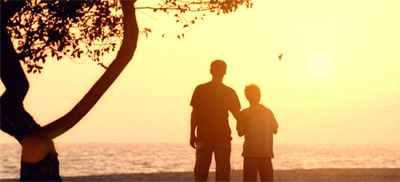
Into the sunset...

Into the sunset…

Continue reading

Star Trek – A Private Little War (Review)

The first Star Trek pilot, The Cage, was produced in 1964. To celebrate its fiftieth anniversary, this December we are reviewing the second season of the original Star Trek show. You can check out our first season reviews here. Check back daily for the latest review.

Star Trek is a pop culture relic of the sixties. It’s possible to see the decade reflected in just about every facet of the production. The show’s costume and set design speak to the decade, as do the series’ sexual politics. The Cold War colours a significant portion of the series, reflected in the Klingons and elsewhere. The Second World War is treated as the beginning of the future, while much emphasis is put on mankind’s expansion to the stars.

Even outside of these general parallels, there are episodes that speak to particular facets of the sixties. The Naked Time, This Side of Paradise and The Way to Eden all play with the idea of social liberation. The Ultimate Computer, Return of the Archons, The Apple and The Changeling all speak to concerns and insecurities about the rapid advance of technology and the people left behind. Journey to Babel touches on the gap felt between conservative parents and liberal children ready to embrace life’s possibilities.

Make war, not love...

Make war, not love…

And then there’s the Vietnam episodes. Shows like Errand of Mercy and A Taste of Armageddon reflect the conflict in a number of ways that were not possible in the scripted dramas of the time. However, A Private Little War is perhaps the definitive Vietnam episode. Part of this is due to the script and the production, which makes explicit reference to “the twentieth century brush wars on the Asian continent.” With the Klingons and the Federation meddling directly in the conflict on a small backwater planet, comparisons invite themselves.

However, there were factors at play outside the control of the production team. A Private Little War was produced in late 1967. It aired on February 2, 1968. However, North Vietnamese forces had launched the Tet Offensive only a few days earlier – the campaign would land through the end of March. The Tet Offensive would end with the North Vietnamese suffering heavier losses than the American or South Vietnamese forces, but the attacks would have a devastating affect on public opinion.

"Got your nose! And, soon, your planet!"

“Got your nose! And, soon, your planet!”

A Private Little War is placed terribly. It is a reluctant justification of the Vietnam War, presenting interference in a foreign war as a terrible (but necessary) burden weighing on Kirk’s conscience. The episode closes with Kirk committing to arm the natives, even if the show doesn’t have the courage of its conviction to follow the idea to its logical consequences. For all that Star Trek is described as a liberal and pacifistic vision of the future, A Private Little War endorses American interference in Vietnam.

The broadcast of A Private Little War only a couple of days following the turning point of the public perception of the war is an absolutely fascinating pop cultural synergy – a demonstration of how Star Trek was inevitably and inexorably of its time in a way that even a few months delay between filming and broadcast could change the context of the episode so dramatically.

I wouldn't look so happy with myself...

I wouldn’t look so happy with myself…

Continue reading

Star Trek (Gold Key) #61 – Operation Con Game (Review)

The first Star Trek pilot, The Cage, was produced in 1964. To celebrate its fiftieth anniversary, this December we are reviewing the second season of the original Star Trek show. You can check out our first season reviews here. Check back daily for the latest review.

The Gold Key comics came a long way, in the end.

The early issues were full of errors and contradictions – feeling like Star Trek as described across a crowded bar, the broad strokes present but the details never synching up. Those early comics – much like James Blish’s novelisations – suggest a missing link between Star Trek and fifties science-fiction. The earliest issues offered a glimpse of Star Trek through a prism. However, the comics grew more professional (and more familiar with their source material) as they went along.

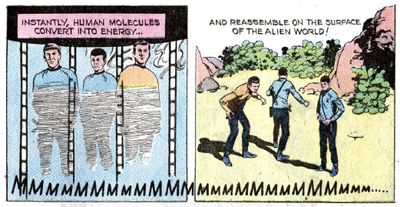
Beam me down, Scotty...

Beam me down, Scotty…

Indeed, the series attracted a number of notable writers and artists, including Len Wein. Wein would go on to write for the franchise when DC procured the license in the mid-eighties. More than that, it was clear that the writers and artists had begun to watch the show. There were none of the early mistakes that come from working with publicity materials and without context. Although the earliest issue of the comics achieved infamy among Star Trek fans, the book ran for over a decade – stumbling a bit close to traditional Star Trek values as it went along, even if it never quite abandoned its more absurd tendencies.

Operation Con Game is the last issue of Star Trek published by Gold Key, and serves as an example of how far the comics have come.

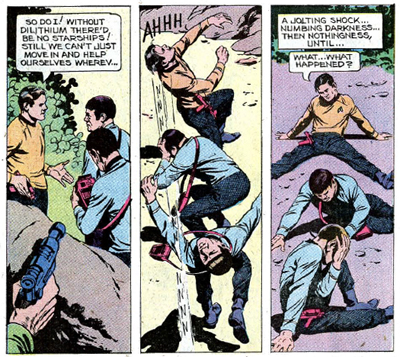
Disrupting that thought...

Disrupting that thought…

Continue reading

Star Trek – The Trouble With Tribbles (Review)

The first Star Trek pilot, The Cage, was produced in 1964. To celebrate its fiftieth anniversary, this December we are reviewing the second season of the original Star Trek show. You can check out our first season reviews here. Check back daily for the latest review.

This is a classic.

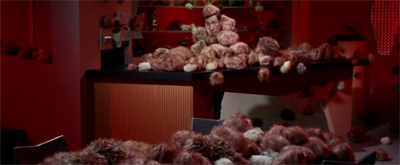
The Trouble With Tribbles is an episode that can make a legitimate claim to being the best episode of Star Trek, if not the best episode of the entire franchise. It is a genuine classic in countless ways, perfectly embodying so much of what makes Star Trek classic and iconic and loved. David Gerrold’s script, polished by Gene Coon, is easily the best comedy episode that the franchise has ever produced, but never at the expense of the show’s credibility. The Trouble With Tribbles may be silly, but it is also very clever and insightful.

Nobody knows the Tribbles I've seen...

Nobody knows the Tribbles I’ve seen…

Continue reading

Star Trek – Friday’s Child (Review)

The first Star Trek pilot, The Cage, was produced in 1964. To celebrate its fiftieth anniversary, this December we are reviewing the second season of the original Star Trek show. You can check out our first season reviews here. Check back daily for the latest review.

Errand of Mercy was a highlight of the first season. A wry script from producer Gene L. Coon introduced the Klingons as an antagonist for the Federation. Made up to look like space!Mongols, the Klingon Empire was presented as an imperial force hell-bent on expanding its sphere of influence. In case the parallels were a little too subtle, they were locked in a Cold War with the Federation. As such, they were the perfect stand-ins for Communist aggressors trying to undermine American foreign policy.

Of course, Errand of Mercy was brutally cynical in its depiction of the Federation. The episode suggested quite heavily that the Federation was just as imperialist and adversarial as the Klingons. They might couch their foreign policy in friendly language and polite overtures, but their end goals are quite similar. Smaller political entities are nothing but pieces shuffled around a board in a deadly game of chess. Errand of Mercy was not flattering in its portrayal of Kirk, presenting him as little more than a warmonger.

"Damn dirty Klingon!"

“Damn dirty Klingon!”

Errand of Mercy was a massive success. It remains a fan favourite to this day. In some respects, that is due to the introduction of the Klingons, but it is also an exceptional hour of scripted science fiction. So it makes sense that the show would return to the Klingons when it was renewed for a second season. Friday’s Child was the third episode produced during the second season, and returns to quite a few themes hit on by Errand of Mercy. Those themes would recur.

Friday’s Child demonstrates the obvious risks of an episode like Errand of Mercy. It’s an episode that essentially takes the “Klingons as space!Communists” seriously.

We come in peace...

We come in peace…

Continue reading

Star Trek: Deep Space Nine – Visionary (Review)

This September and October, we’re taking a look at the jam-packed 1994 to 1995 season of Star Trek, including Star Trek: Deep Space Nine and Star Trek: Voyager. Check back daily for the latest review.

Visionary confirms that “O’Brien must suffer” is to become an annual tradition on Star Trek: Deep Space Nine. The second season of the show had made a good start with episodes like Whispers and – to a lesser extent – Armageddon Game, but Visionary confirms that this will really be O’Brien’s niche in the ensemble from this point on. Visionary sees O’Brien randomly jumping forward through time, inevitably glimpsing some horrible tragedy that must be avoided. (Boy, it sure is lucky that he started jumping at this point, isn’t it?)

Visionary should feel contrived and convenient, hinging on a pretty flimsy plot hook. That said, the episode ultimately works quite well, even if it doesn’t stand out as a classic piece of Star Trek. Watching Visionary, there’s very much a sense that Visionary only really works as well as it does because Deep Space Nine has built up a larger mythology of characters and long-form plotting that can support what might otherwise be a fairly flimsy premise.

"Why the hell doesn't this ever happen to Julian?!"

“Why the hell doesn’t this ever happen to Julian?!”

Continue reading

Star Trek: Deep Space Nine (Malibu Comics) – The Rules of Diplomacy (Review/Retrospective)

The September and October, we’re taking a look at the jam-packed 1994 to 1995 season of Star Trek, including Star Trek: Deep Space Nine and Star Trek: Voyager. Check back daily for the latest review.

One of the more interesting aspects of Star Trek: Deep Space Nine is the way that the cast actively involved themselves in the mythology of the show. Armin Shimerman originally pitched The 34th Rule as an episode of the show, along with Eric A. Sitwell and David R. George III. Andrew Robinson published A Stitch in Time, a novel based on notes he had been making about Garak during the production of the series. Even J.G. Hertzler co-wrote the Left Hand of Destiny duology.

Of course, this was not a unique occurrence. Walter Koenig had written an episode of Star Trek: The Animated Series, an issue of Marvel’s on-going Star Trek comic and even The Machiavellian Principle, a play performed at the Ultimate Fantasy convention. John DeLancie had co-written The Gift, a story published in DC’s Star Trek: The Next Generation comics. Ethan Phillips and Robert Picardo would lend their names to tie-in Star Trek: Voyager books.

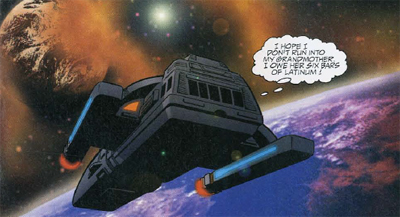
However, it seems reasonable to observe that the supporting cast on Deep Space Nine were particularly interested in fleshing out and developing their characters. So it seems appropriate that Aron Eisenberg should co-write The Rules of Diplomacy, a special about Nog earning some credits before shipping off to Starfleet Academy.

You can't go home again...

You can’t go home again…

Continue reading

Star Trek: Deep Space Nine – House of Quark (Review)

The September and October, we’re taking a look at the jam-packed 1994 to 1995 season of Star Trek, including Star Trek: Deep Space Nine and Star Trek: Voyager. Check back daily for the latest review.

House of Quark is a delightful episode that probably does a better job of setting the tone for the third season of Star Trek: Deep Space Nine than The Search. As much as the Dominion were introduced as “a big deal” and clearly intended to change the show’s status quo, the third season does very little with them. There are a few mentions here and there, a late-season two-parter, two scattered episodes looking at aspects of the Dominion, and a series finalé, but they don’t drive the third season as much as one might expect, or as much as they drive the fifth through seventh seasons.

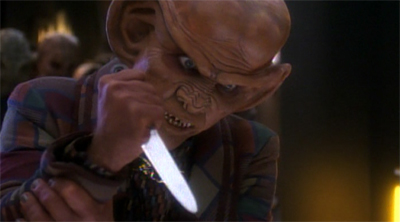
In contrast, House of Quark is a decidedly irreverent look at the world of Star Trek, a decidedly cynical perspective on one of the franchise’s sacred cows – a downright subversive exploration of something that the franchise takes for granted.

A knife story, there, Quark...

A knife story, there, Quark…

Continue reading

Star Trek – Debt of Honour (Review)

This June, we’re taking a look at some classic Star Trek movie tie-ins and other interesting objects. Check back daily for the latest reviews and retrospectives.

By all accounts, Debt of Honour should be an unqualified success.

It’s a prestige graphic novel from DC comics, produced around the twenty-fifth anniversary of Star Trek and the release of Star Trek VI: The Undiscovered Country. It is written by celebrated comic book scribe Chris Claremont, fresh off his career-defining stint on Uncanny X-Men. An avowed Star Trek fan and comic book veteran, this should be in his wheel house. The art is provided by Adam Hughes, one of the most celebrated and respected artists of his time.

Talk about kicking off a comic...

Talk about kicking off a comic…

By any measure, Debt of Honour should count as some sort of hallmark for DC Comics’ Star Trek tie-ins. Unfortunately, that isn’t quite the case. A rather muddled storyline that is hopelessly devoted to Star Trek continuity while awkward interfacing with it,  Debt of Honour is just packed a little too tight. Charting a story from the earliest days of Kirk’s career to the aftermath of Star Trek IV: The Voyage Home, Claremont bites off more than he can chew.

Over the course of Debt of Honour, Claremont introduces a vague alien threat that has apparently been haunting Kirk for his entire career, a new arch-foe or love interest for Kirk, and even a supporting role for Kor. Along the way, he packs in cameos and shout-outs to various parts of Star Trek lore. He even explains why Klingons suddenly had ridges around the time of Star Trek: The Motion Picture. Ultimately, Debt of Honour is ambitious, but a little over-stuffed and quite over-cooked.

Warp speed ahead!

Warp speed ahead!

Continue reading