• Following Us

  • Categories

  • Check out the Archives


  • Awards & Nominations

Non-Review Review: Scream III

Today, we’re reviewing the entire Scream trilogy. Sadly, I’ll have to wait to get a look at the latest instalment, but reviews of the first three will be going on-line throughout the day.

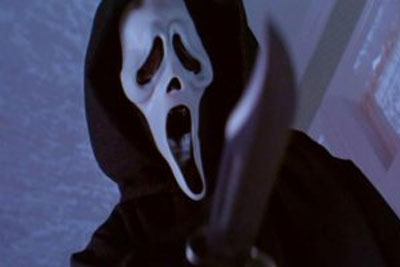
There are a lot of problems with Scream 3. It’s overlong, it’s more soap opera than horror, more camp parody than post modern deconstruction. It’s clear from the outset that very few of the people involved in the film had any interest in making it. However, its single most damning problem is that it has become exactly the type of bland and indistinct slasher movie that the first two films picked apart so skilfully.

Taking a stab at the trilogy...

Continue reading

Marvel Crossover Continuity

In August, I decided it would be… interesting to take a look at the event-driven storylines that Marvel was producing between 2005 and 2010. So, for sixteen weeks (and more, if you consider the occasional bonus back-up feature), I reviewed one of the many “events” Marvel produced during the period. I’ve grouped the particular strands of continuity together below for easy of browsing (also providing the original date of publication). I hoped that exploring this particular aspect of the medium might grant me some insight into why big events like this continually upset on-going stories being told by writers in individual characters’ books. It was an interesting experiment, even if I doubt I’ll be engaging with the core of the Marvel Universe so thoroughly any time soon.

Note: It is incomplete. I had planned to follow The Avengers through to Siege, but it looks like my reviewing schedule caught up with them – for the same reason I haven’t got around to The Thanos Imperitive yet. I will return to this thread in the future.

Avengers-Based Continuity
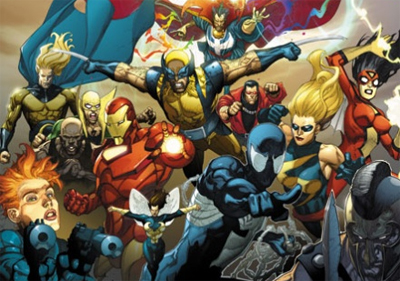
It was a good decade for The Avengers as a franchise, with Marvel consciously pushing the franchise to the forefront – not just in comics but in other media as well. If the nineties and early naughties belonged to the X-Men (with X-Men: The Animated Series on the airwaves, Bryan Singer’s X-Men in cinemas and crossovers like Age of Apocalypse in comic books), this was very clear attempt to take that back. Brian Michael Bendis was tasked with turning the Avengers into Marvel’s prime franchise and succeeded – most of the “big” comic book events of the decade revolved around them. That said it was certainly a controversial restructuring of the book, with a line-up crafted to feature more popular characters like Spider-Man and Wolverine instead of more obscure characters like Quicksilver or the Scarlet Witch.

The Avengers branched out into other media too. Iron Man demonstrated that Marvel’s “big three” could hold viewer interest in cinemas, and promised a series of crossovers on the big screen that would see The Avengers assemble under the direction of Joss Whedon. As a brand, Marvel made sure these characters were everywhere.

The stories featuring these characters over the decade form something of a larger meta-story which seems to reflect on the superhero genre as a whole. Although Bendis’ New Avengers opens with a supervillain breakout, the characters spent more time fighting each other than bad guys (Civil War, World War Hulk). When they did fight bad guys, they were more often than not corrupted mirrors of themselves, be it the Skrulls who had managed to so perfectly imitate heroes despite being villains (Secret Invasion) or government-sanctioned psychotic “Dark Avengers” (Siege). It was a story about how difficult it was to be a hero in the last few years – in the wake of the “dark age” of comic books – and a deconstruction of the effectiveness of a group of individuals like this to actually make a difference. You could even argue that this was a grim reflection of real world political and social uncertainty – particularly mistrust of authority (it’s telling how much time these heroes spend going “rogue”). Of course, this is open to interpretation, and many fans were less than pleased with the execution of this particular tale.

“Cosmic Marvel” Continuity

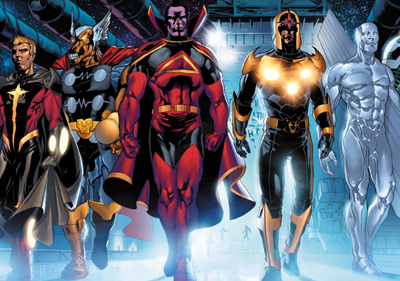
Marvel’s Cosmic Universe got a much-needed revitalisation this decade, offering perhaps a better-plotted and more straightforward avenue for Marvel’s crossover events. Although Jim Shooter had done great work with many of these characters in the nineties (with Infinity Gauntlet and so forth), they had mostly remained in relative obscurity before the relaunch.

The distinguishing aspect of these stories is the way that they are structured. Rather than a big event coinciding with countless tie-ins across countless books, most of these stories would open with a single prologue issue which would branch into a handful of miniseries running for a set number of issues, before dovetailing into a main series. This meant that every issue remotely connected with a series could be collected in a hardcover. Admittedly the titles become more entangled in continuity as they went on (with War of Kings tying in directly to Ed Brubaker’s The Rise & Fall of the Shi’ar Empire story arc in Uncanny X-Men), but by and large these series served to avoid pointless tie-ins and an exceptionally convoluted continuity (everything you needed was included in the books themselves).

They’re the best crossovers that you weren’t reading.

X-Men Continuity

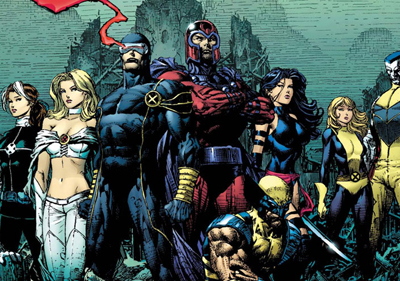
The last decade has been an interesting one for the X-Men, as both the books and the characters have found themselves looking for purpose. Grant Morrison’s New X-Men posited a world where mutants would be the dominant species with a few generations and proposed to move the “mutants as oppressed minority” metaphor firmly into the twenty-first century, where the worries weren’t (at least for the most part) about government-sponsored genocide or legal rights, but cultural and social questions about the way that mutants and humanity live together. This was clearly a step too far, as Marvel decided to essentially wipe out the mutant population, feeling there were too many mutants in the Marvel Universe. This was done with three words from a psychotic Scarlet Witch rather than a more subtle approach (like simply reducing the number of mutants featured in various books).

Suddenly the X-Men found themselves facing extinction, and this became a driving narrative force for the book. It was as if the line was actively rebelling against the editorial mandate forced upon them. Instead of granting narrative clarity, the edict had instead complicated things. It also forced the X-Men away from their widely-loved position as a civil rights metaphor and towards a more straight forward “find the cure” narrative. It also served to isolate the franchise from the rest of the Marvel Universe (except for Wolverine, of course, who is everywhere) – the X-Men were always busy doing their thing and trying not to die out rather than assisting with Civil War or Secret Invasion. The solution to this narrative thread is entirely predictable, but it does offer a clear structure to the X-Men stories from the period.

It’s interesting to note that while all the major Avengers titles from this period (New/Mighty/Dark Avengers) have been consistantly collected, the X-Men books have not been. Ed Brubaker’s run is quite difficult to collect in one consistent format, as is Matt Fraction’s – and both are writing for what should be “the flagship book” of the X-Men publishing line, Uncanny X-Men. This makes it considerably harder to follow than the Avengers franchise, for example.

Non-Review Review: Wonder Woman

This post is part of the DCAU fortnight, a series of articles looking at the Warner Brothers animations featuring DC’s iconic selection of characters. I’ll be looking at movies and episodes and even some of the related comic books. This is one of the animated feature films involving the characters from the creators of the original animated shows.

Did you… did you stop Ares?

No. I didn’t. I couldn’t.

What? Why not?

I had to save you.

(slap!)

Ow!

– Diana clarifies to Steve that she isn’t a damsel in distress

I have to confess, I’ve never been grabbed by Wonder Woman as a concept. Is she a feminist? A socially conscious superhero? A female superman? A superhero who is willing to take a life if it’s necessary? A diplomat? She’s been all these things and many more, which is perhaps why it’s hard to get a handle on her – which is perhaps why it’s difficult to care for her. Her origins cannot be summed up in a single sentence like Batman (an orphaned “rich kid with issues… lots of issues”) or Superman (who Grant Morrison managed to sum up in eight words) – her origin will likely eat up at least a paragraph of this review. As such, you can understand my surprise that Wonder Woman is perhaps the best DC comics animated adaptation they have produced to date.

Taking a swing at the character...

Continue reading

House of M (Review/Retrospective)

This is the third in a series of comic book reviews that will look at the direction of Marvel’s “Avengers” franchise over the past five or so years, as they’ve been attempting to position the property at the heart of their fictional universe. With The Avengers planned for a cinematic release in 2012, I thought I’d bring myself up to speed by taking a look at Marvel’s tangled web of continuity. Get an overview of what I’m trying to take a look at here.

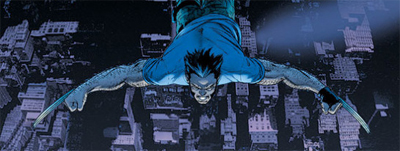
The X-Men represent the oddball of mainstream superhero comic books. In a genre and medium dedicated offering a static setup – things never really change or resolve – the X-Men are built upon the very idea of evolution. The whole basis of the franchise is the pursuit of equality by the genetically distinct mutant population, the idea that they and mankind can grow together. It has even been frequently suggested that these super-powered individuals represent out future or our replacements. However, the only way to actually tell a story like that is to follow it through to its logical conclusion – to let the ball roll and to let the world change. It feels a little counterproductive for Charles Xavier and his students to still be fighting for the same rights as everyone else nearly fifty years on – it might even seem a little stale. Grant Morrison’s superb New X-Men run offered a solution of sorts – it gave us a world where humanity would be extinct in a couple of generations and showed the growth and relationship between human and mutant subculture. Gone was the minority struggling against an oppressive majority – a more complex example of race relations had come into play with “mutant music” and “mutant slang” making their impression on the youth, amid a silent and almost invisible middle-class backlash. This was an ingenious approach which demonstrated the relevance of the franchise. Unfortunately, Marvel were not quite pleased with this – some people even, ridiculously, accused Morrison of telling all the remaining X-Men stories – and decided to set things right. They did that through House of M.

Dive in...

Continue reading

Non-Review Review: Serenity

“Love,” someone suggests at a key moment in Joss Whedon’s big screen sequel to his cult television show Firefly, is what keeps a ship afloat, “Love keeps her in the air when she oughta fall down, tells ya she’s hurtin’ ‘fore she keens. Makes her a home.” In a way, it’s hard not to feel that he could just as easily be talking about this particular movie adaptation. Serenity is a movie which by all rights shouldn’t exist. Based on a television show unfairly cancelled by a network which couldn’t bring itself to offer it a fighting chance, it seems odd to see the series transitioned to the big screen in search of closure. The movie is itself an act of love – an act early in the film confused (understandably) with madness – love for the show, for its concepts and for those who gave it the benefit of the doubt that its own producers couldn’t.

Thank god there's a master at the helm...

Continue reading

Astonishing X-Men Omnibus by Joss Whedon & John Cassaday

Why did I have to follow Grant Morrison?

– Joss Whedon’s email correspondence with Marvel

What with all that talk of Whedon directing The Avengers on the big screen, I decided it was worth checking out his run on one of the most enduring superhero teams of all time.

Is this a breakout hit?

Continue reading

Firefly

Psychic, though? That sounds like something out of science fiction.

We live in a spaceship, dear.

So?

– Wash and Zoe, Objects in Space

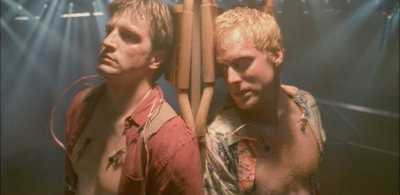
Joss Whedon writing a science fiction show – a science fiction western, to be precise. Doesn’t that excite you? Just a bit? Well, it should, because they’re just so… very… pretty. Huh? Look at that chiselled jaw!

And yes, I am already quoting it. It’s going to be a fun review.

Male bonding... Or bondage, I'm not sure...

Continue reading

Should Joss Whedon Direct the Avengers?

It appears that releasing news that Joss Whedon was in contention for the gig as director of The Avengers on April 1st was just horrible timing – it looks like this particular story might not be a festive-themed joke and might just be something thiat may be actually happening. However, since Marvel’s somewhat shrewd business strategy seems to consist of mentioning a name and dodging the internet backdraft long enough to determine how fans will react, we thought that a Joss Whedon helmed Avengers film might merit some discussion.

Will Joss Whedon assemble the Avengers?

Continue reading

In Defense of “One Season Wonders”…

I’ve been thinking a lot about this lately, what with the US version of Life on Mars ending on FX over the weekend and the rumours that Caprica doesn’t have strong enough ratings to secure a second season. We live in what is increasingly the era of “one season wonders” – television shows that are lucky to get a full season (or maybe a full season and a half) before being unceremoniously dumped from the schedule. It’s easy to look at shows like Firefly and Dollhouse and bemoan executives unwilling to take a chance with edge material, but part of me thinks it might really be for these best. Although maybe I’m trying to put a good spin on a bad situation.

The network may nuke Caprica early...

Continue reading

Non-Review Review: Dr. Horrible’s Sing-Along Blog

Who would have thought that the writers’ strike last year would have been a blessing in disguise? Not only did the condensing down of seasons of House and Lost give the series a tighter narrative flow, but we also got the highest-profile “web original” series ever written. It may have been somewhat disingenous of Time to name this little musical masterpiece “one of the best inventions of 2008” – as there have been web-based series before – but what is astounding is how well this little drama stands on its own. Produced with a shoestring budget using favours called in from all over the industry as a means of artistic expression circumventing the studio system (which was being boycotted by the strike), Joss Whedon continues to demonstrate his cult credentials with another sure-fire geek hit.

The doctor will see you now...

Continue reading