• Following Us

  • Categories

  • Check out the Archives


  • Awards & Nominations

Millennium – The Pest House (Review)

This May and June, we’re taking a trip back in time to review the fifth season of The X-Files and the second season of Millennium.

Millennium is largely a show about the nature of evil.

It feels a little redundant to point that out more than halfway through the second of three seasons, but it is worth repeating. When Chris Carter created Millennium, he designed the show to explore the many faces of evil in a variety of ways. It could be argued that Millennium was largely spawned from episodes of The X-Files like Irresistible or Grotesque, stories fascinated by very human forms of evil that almost become supernatural. Carter and his writers played with that idea over the course of the first season, particularly in episodes like The Pilot and Lamentation.
A pointed commentary?

A pointed commentary?

However, Carter was not the guiding visionary for all of Millennium‘s run. He remained involved in the production of the show, but the day-to-day running of the series was handed over to Glen Morgan and James Wong, who immediately reinvented it from the ground up. One of the more interesting aspects of this transition is watching the differences in how the two creative teams approach various aspects of Millennium. In many ways, The Pest House would be read as an exploration and critique of Carter’s approach towards the concept of evil by Morgan and Wong.

Carter’s work seems to suggest that evil is an external and infectious force – a contagion or pathogen that can be passed from one person (or generation) to another. In contrast, Morgan and Wong seem to argue that evil must be rooted in a person, that it must come from inside rather than outside. The Pest House contrasts these two different visions of evil, finding Morgan and Wong playing with the recurring Ten Thirteen trope of evil as a transferable quantity that can be moved and reallocated. And The Pest House seems horrified by such a concept.
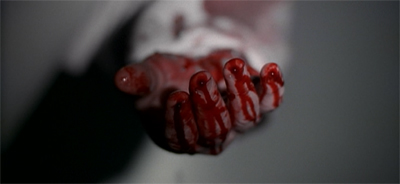
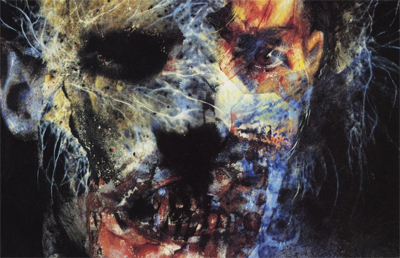
A bloody mess...

A bloody mess…

Continue reading

The X-Files – Kill Switch (Review)

This May and June, we’re taking a trip back in time to review the fifth season of The X-Files and the second season of Millennium.

On the surface of it, William Gibson seems a strange fit for The X-Files.

He certainly seems like a more eccentric choice than Stephen King. King was a writer famed for his horror stories, with a fascination for small-town life and an interest in guilt as a legacy of American history. On paper, King should have been the perfect “special guest writer” for the show, able to churn out a script that would resonate perfectly with the larger themes of The X-Files while still sitting comfortably within his own oeuvre. While Chinga is not a bad episode, it is not an exceptional episode by any measure. It feels perfectly adequate.

Well, that's going in the DVD menu.

Well, that’s going in the DVD menu.

As such, Kill Switch seems like a story that could go horribly wrong. Gibson is a writer most famous for his work in defining and popularising “cyberpunk”, a science-fiction subgenre that is far removed from the horror trappings generally associated with The X-Files. Gibson was a writer who tended to explore the possible future development of cyberspace and associated issues, while Carter worked very hard to anchor The X-Files in the now. Gibson’s stories seemed to take place in the not-too-distant future; Carter grounded The X-Files in a very particular now.

However, Kill Switch works. It works phenomenally well. It is an episode that feels markedly different from everything else around it, while still feeling like it belongs to The X-Files. The clash of styles is evident in Kill Switch, as writers William Gibson and Thomas Maddox find themselves adapting their themes and ideas to a completely different aesthetic. That is perhaps part of appeal. While Chinga made it look quite easy to construct a solid Stephen King story that was also a solid episode of The X-Files, Kill Switch is nowhere near as smooth. This is a different beast. And it is glorious.

"Woah, woah, woah. What happened to floppies?"

“Woah, woah, woah. What happened to floppies?”

Continue reading

The X-Files – Chinga (Review)

This May and June, we’re taking a trip back in time to review the fifth season of The X-Files and the second season of Millennium.

Chinga is the episode of The X-Files that was written by Stephen King.

That is a pretty big deal. Stephen King is one of the most influential American writers of the twentieth and twenty-first centuries. He is a writer who has enjoyed tremendous commercial success, but who has also balanced that popularity with considerable respect of critics and academics. His work has permeated popular cultured, and sparked all sorts of analysis and exploration. While no creator of that calibre works without at least some small level of backlash, King is one of the most successful American writers by any measure.

Play time!

Play time!

Writing about King in A Century of Great Suspense Stories, Jeffery Deaver argued that the author “helped free the popular name from the shackles of simple genre writing. He is a master of masters.” As such, he should be quite a comfortable fit for The X-Files. Even aside from any stylistic sensibilities that he might share with the series, King is a creator who manages to consistently producer work that might be dismissed as “genre”, but manages to compete with more prestigious and high-profiler literature.

The X-Files did something similar in the nineties. It was a show that frequently dabbled in cult genres – it was a show that dealt with horror and science-fiction themes on a regular basis. However, thanks to the craftsmanship of those involved, The X-Files was frequently able to compete with more “serious” fare at the major awards ceremonies. Chris Carter worked very hard to prevent the show from being relegated to the horror or science-fiction “ghetto.” It was a show that could slide to high-brow to low-brow over a single act; that was part of what made it so fun.

A bloody disaster...

A bloody disaster…

So landing King was very much a coup for The X-Files. He was one of the best-selling and most prolific American writers of the nineties, with his name all over a wealth of media. All that Chinga really needs to do is exist. It would be next to impossible for Chinga to be anything but “that episode of The X-Files written by Stephen King.” Indeed, it seems almost unreasonable to expect anything more from it. The hype on Chinga was unbelievable – as one might expect from a television show that had bagged one of the most popular fiction writers around.

Chinga is a very flawed piece of television, an episode that feels too much like an early draft than a fully-developed concept. The styles of Chris Carter and Stephen King blend reasonably well, but there is a sense that neither is pushing the other out of their comfort zone. Chinga is a pretty average piece of television, a pretty average Stephen King story, and a pretty average episode of The X-Files. While not necessarily a catastrophic failure, it is hardly a fantastic success.

"Yeah, I'm sure this vacation will be completely uneventful!"

“Yeah, I’m sure this vacation will be completely uneventful!”

Continue reading

Millennium – The Mikado (Review)

This May and June, we’re taking a trip back in time to review the fifth season of The X-Files and the second season of Millennium.

Glen Morgan and James Wong famously pulled Millennium away from its “serial killer of the week” format in its second season. While the label might be a little harsh (and perhaps a little exaggerated), it did hint at a recurring formula in the first season. Frank Black would be called in to catch a serial killer with a unique and distinctive modus operandi. The first season was littered with episodes built around that core format, wildly varying in quality. For every Blood Relatives or Paper Dove, there was a Loin Like a Hunting Flame or Kingdom Come.

The second season largely moved away from all that. Although Morgan and Wong occasionally made nods towards the classic format in episodes like Beware of the Dog, 19:19 or Goodbye Charlie, the second season of the show was a lot less formulaic and familiar. This is was a show that could transition from The Hand of St. Sebastian to Jose Chung’s “Doomsday Defense” to Midnight of the Century to Goodbye Charlie to Luminary. It seemed quite reasonable to suggest that the second season of Millennium was not as firmly attached to the concept of serial killers as the first season had been.

This is Avatar calling...

This is Avatar calling…

This makes The Mikado a rather unique instalment, arriving a little past half-way through the season. Written by Michael R. Perry, The Mikado is very much an archetypal serial killer story. There is a case from Frank Black’s past, lots of victims, some occult imagery, and even a ticking plot. In fact, The Mikado is probably the only episode of the second season that would arguably fit more comfortably in either the first or third seasons of the show. All you’d have to do is write out the character of Roedecker.

However, there is something decidedly big and bold about The Mikado. It is perhaps the most archetypal (and maybe the most successful) straight-down-the-middle “serial killer of the week” story that Millennium ever produced. After all, if you are only going to do produce one truly traditional “serial killer of the week” story in a season, you may as well go big. And you can’t go much bigger than the Zodiac.

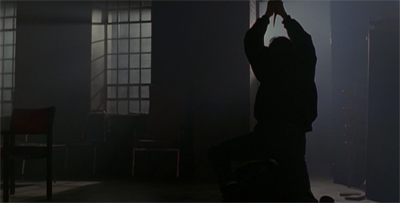
It's all about the execution...

It’s all about the execution…

Continue reading

Millennium – A Single Blade of Grass (Review)

This May and June, we’re taking a trip back in time to review the fifth season of The X-Files and the second season of Millennium.

A Single Blade of Grass is one of those episodes of television that skirts a line. It is very much a companion to “subculture” episodes of The X-Files, shows that would see our white heroes wading into the world of an ethnic minority – be the Haitian refugees in Fresh Bones, Chinatown in Hell Money, African immigrants in Teliko or Mexican-Americans in El Mundo Gira. In the case of A Single Blade of Grass, Frank Black is wandering into the world of Native Americans in New York.

It goes without saying that these sorts of episodes have to be very careful. Both Millennium and The X-Files are very white television shows – they have exclusively white primary casts, and the vast majority of their supporting cast are also white. (Also, most of the writers’ rooms.) As such, telling a story about a subculture can be very tricky – it is easy to seem shallow or condescending, trite or exploitative. It is worth noting that some of the biggest misfires on The X-Files occurred when the production team got this horribly wrong – Excelsis Dei, Teso Dos Bichos, El Mundo Gira, Badlaa.

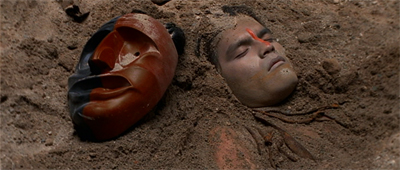
Burial mask...

Burial mask…

It is very easy to get caught up in mysticising and fetishising the Other, which can become quite problematic when “the Other” corresponds to a real-life minority that have – historically speaking – never been treated particularly well by those in authority. As such, A Single Blade of Grass feels like a very risky and very difficult story, particularly for a show that was already struggling in the ratings and trying to gain some traction with audiences. A Single Blade of Grass has the potential to go spectacularly wrong in places, and it is to the credit of all involved that it (mostly) doesn’t.

Then again, this is a large part of the appeal of the second season of Millennium – what makes even the year’s failures seem compelling in their own eccentric way. There is a sense that the second season of Millennium is completely unfazed by the possibility of failure, and so commits completely to what it wants to do. While A Single Blade of Grass might be a little muddled and unfocused in places, it retains a raw energy that makes for compelling viewing.

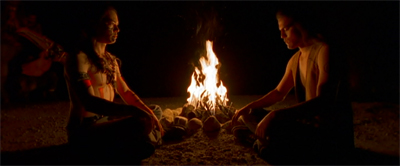
Let us sit upon the ground and tell sad stories about the death of worlds...

Let us sit upon the ground and tell sad stories about the death of worlds…

Continue reading

Star Trek: Enterprise – Regeneration (Review)

Next year, Star Trek is fifty years old. We have some special stuff planned for that, but – in the meantime – we’re reviewing all of Star Trek: Enterprise this year as something of a prequel to that anniversary. This April, we’re doing the second season. Check back daily for the latest review.

It seems like a bit of an understatement to describe Regeneration as highly controversial.

The blu ray release of the second season of Star Trek: Enterprise includes two commentaries for the episode, a sure sign that there is a lot to talk about. On a track recorded in 2005, writers Mike Sussman and Phyllis Strong describe the episode as “infamous.” On a track recorded in 2013, John Billingsley describes how certain segments of fandom considered it a “jumping the shark” moment for the show. That last statement illustrates one of the perverse qualities of Star Trek fandom; one would assume that the viewers turned off by Regeneration would have already tuned out with Acquisition.

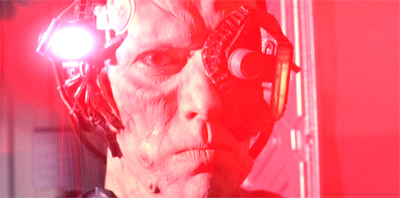
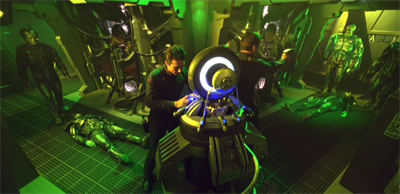
We are Borg.

We are Borg.

After all, the decision to bring back the Ferengi in Acquisition is hard to explain. Nobody was clamouring for more Ferengi episodes after Star Trek: Deep Space Nine had gone off the air. Outside of Deep Space Nine, the most enduring impression of the Ferengi was that they had begun their life as “villains that didn’t quite work” and bad quickly been transformed into “comic relief that didn’t quite work.” As such, it is hard to account for the decision to bend continuity in order to introduce the Ferengi into the first season of a prequel show designed to escape the baggage of the larger Star Trek franchise.

On the other hand, it made a great deal of sense to bring back the Borg. After all, the Borg were one of the few Star Trek aliens created after 1969 to make a genuine impression on popular culture. The Borg will never be as iconic as Klingons or Vulcans, but they will always be more iconic than Cardassians or Bajorans. They were also stars of the best-loved Star Trek movie starring the cast of Star Trek: The Next Generation. The Borg are a big deal; there is a reason that Star Trek: Voyager ran them into the ground.

"Assimilate this!"

“Assimilate this!”

It is no wonder that the Borg are frequently cited in discussions around the future of JJ Abrams’ Star Trek reboot. Asked if the creative team would consider bringing the Borg to the rebooted twenty-third century, Roberto Orci answered, “I think we would think about it.” Damon Lindelof was even blunter in his assessment, “You can’t talk about Trek and not talk about the Borg.” While they have undoubtedly been over-exposed and over-used since they first appeared in Q Who?, the Borg are the most distinctive and most successful addition to the Star Trek mythos outside the classic show.

While common sense and experience seemed to weigh against bringing back the Ferengi in Acquisition, it seems that continuity is the only thing holding the Borg back from making an appearance on Enterprise. That said, Sussman and Strong find a clever way around that issue, by remembering the suggestion in Broken Bow that Enterprise is as much a sequel to Star Trek: First Contact as a prequel to the rest of the Star Trek universe.

"Oh no, Cap'n, they've discovered the mood lightin' settin'."

“Oh no, Cap’n, they’ve discovered the mood lightin’ settin’.”

Continue reading

The X-Files (Topps) #30-31 – Surrounded (Review)

This February and March, we’re taking a trip back in time to review the fourth season of The X-Files and the first season of Millennium.

Surrounded marks the beginning of the end for Topps’ licensed X-Files tie-in comic book. There are only twelve issues remaining before Ten Thirteen would decided not to renew the contact, making this the last year for the comic. Of course, Topps would rather relentlessly milk the comic for whatever it was worth over the next year, publishing both a range of Season One adaptations and an adaptation of Kevin J. Anderson’s Ground Zero novel. They would also finally get around to releasing Stefan Petrucha and Jill Thompson’s AfterFlight graphic novel.

So there is a lot of content coming in the final year of Topps’ hold on that license. The X-Files was clearly a massive success for the newly-minted comic book wing of the company. Indeed, The X-Files was the last comic standing for Topps, and there is ample evidence that Topps was hoping to continue the line beyond The X-Files: Fight the Future, with several Season One adaptations solicited, but never published. Much like for the show itself, this was a boom time for Topps.

What's eating you?

What’s eating you?

However, the final year of the comic ultimately feels rather safe and generic. John Rozum is a competent comic writer; he understands the medium, and he knows how to play with other peoples’ toys. However, there is a sense that the comic book is really just marking time. There is very little that stands out about this last stretch of the comic; nothing which really demands to be read or to be added to the great X-Files canon. It is not bad, by any measure; it is just there.

Surrounded is a prime example of the comic book marking time. It feels like a retread of familiar ground – both for the comic book and for the parent show. When Stefan Petrucha and Charles Adlard set stories like Silent Cities of the Mind or Home of the Brave in militia compounds, they were very much ahead of the television. By the time that Surrounded was published at the end of the fourth season, the show itself had already told stories about this world in episodes like The Field Where I Died, Tunguska, Terma and Unrequited.

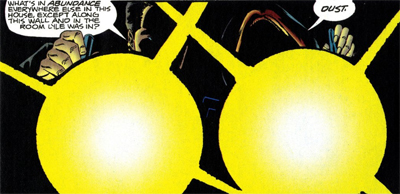
Shining some light on the matter...

Shining some light on the matter…

Continue reading

Non-Review Review: The Canal

This film was seen as part of the Jameson Dublin International Film Festival 2015.

Ghosts are all around us.

As the opening scene of The Canal quite clearly states, the deceased endure long after their passing. Whether as images captured on camera or stories repeated in hushed tones, the dead haunt us. What are ghosts but the voices of history reaching out to the individual like some nightmare lodged deep in the collective unconscious? The “stone tape” theory of paranormal activity suggests that horrific events leave their mark, a blood stain that won’t wash out. What if that stain is psychological? What if ghosts are nothing but tales that echo in the darkness?

thecanal

It is not an entirely original concept, to be fair. The idea of ghosts that exist as stories (or as media) is quite an old idea. In fact, one particular jump scare in The Canal owes quite a specific debt to Ringu, the iconic Japanese horror story about a ghost trapped inside a haunted video cassette. That scene is not the only parallel; The Canal centres itself upon a man working at the National Archives who finds himself processing old footage. No sooner has he discovered the gory details of a brutal murder in his home than it seems that those same ghosts come to life.

The Canal hits a few speed bumps in its final act, but – for most of its runtime – the film is a thoroughly compelling modern day ghost story. Writer and director Ivan Kavanagh wears his cinematic homages on his sleeve, drawing quite openly from directors like Roeg or Kubrick. The Canal is an unsettling and fascinating Irish horror film.

thecanal5

Continue reading

Non-Review Review: Let Us Prey

This film was seen as part of the Jameson Dublin International Film Festival 2015.

Let Us Prey marks the feature film debut of director Brian O’Malley.

O’Malley certainly knows his stuff. Let Us Prey is visually striking and very well-directed. It is rich and memorable, perfectly capturing the eighties exploitation vibe that O’Malley is striving for. It isn’t too difficult to imagine Let Us Prey as a lost horror film from the eighties, with its synth-heavy soundtrack and vague paranormal underpinnings. O’Malley draws from a wealth of sources, but Let Us Prey feels most obviously indebted to the work of John Carpenter, feeling like a curious blend between Prince of Darkness and Assault on Precinct 13.

letusprey1

Unfortunately, O’Malley confident direction can do little to conceal the obvious flaws in a clumsy script. While Let Us Prey has an obvious affection for classic schlock-fest horror films, the script feels more than a little lazy and generic. Horror films generally trade in tastelessness or tackiness – that’s a huge part of the fun – but there is no sense of technique in how Let Us Prey parades its own depravity. The “shock” elements feel cheap and half-hearted.

O’Malley is very much a director to watch, but Let Us Prey is saddled with a script that is far more horrifying than anything O’Malley can actually put on screen.

letusprey

Continue reading

Millennium – The Well-Worn Lock (Review)

This February and March, we’re taking a trip back in time to review the fourth season of The X-Files and the first season of Millennium.

The Well-Worn Lock is trying to say something important.

As easy as it is to mock Chris Carter for being a little heavy-handed in his writing, he tends to wear his heart on his sleeve. There is an honesty and an earnestness to his writing that is quite endearing – a sense that he has some things that he wants to say, and that he will say them. The Well-Worn Lock is a tough and grueling episode, with some pretty harrowing things to say. It confronts the types of issues that are often overlooked or ignored, because they are so uncomfortable to examine head-on. There is a lot to admire here.

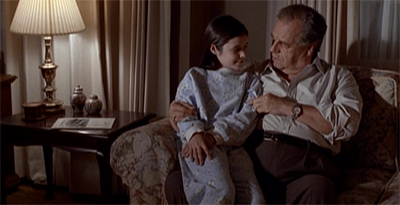
Happy families...

Happy families…

However, The Well-Worn Lock is also clumsy and ham-fisted. It is so committed to saying what it wants to say that it occasionally gets caught up in itself. It has been argued that Carter constructed Millennium as a vehicle to examine the nature of evil in the modern world, and there are points where the series feels more like a pulpet that a television show. The Well-Worn Lock is an episode about an insidious and oft-ignored evil, but there are points where it has the depth and complexity of a life-action cartoon.

The problem is not that the episode’s antagonist is a monster – after all, it is hard to describe anybody who commits this sort of abuse as anything but a “monster” – but that he seems a grotesquely exaggerated and one-dimensional caricature. Tackling a subject that requires considerable tact and grace, The Well-Worn Lock often has the emotional nuance of a sledgehammer.

The world according to Catherine Black...

The world according to Catherine Black…

Continue reading