• Following Us

  • Categories

  • Check out the Archives


  • Awards & Nominations

Millennium – The Sound of Snow (Review)

This July, we’re taking a trip back in time to review the sixth season of The X-Files and the third (and final) season of Millennium.

“Our pasts are what we are,” Alice Severin explains to Emma Hollis and Bob Giebelhouse towards the climax of The Sound of Snow. It seems as if she might be talking for Millennium itself.

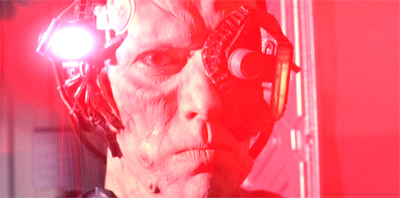
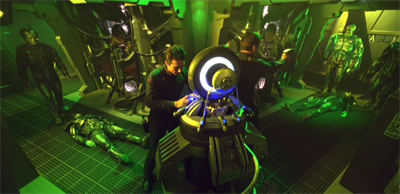
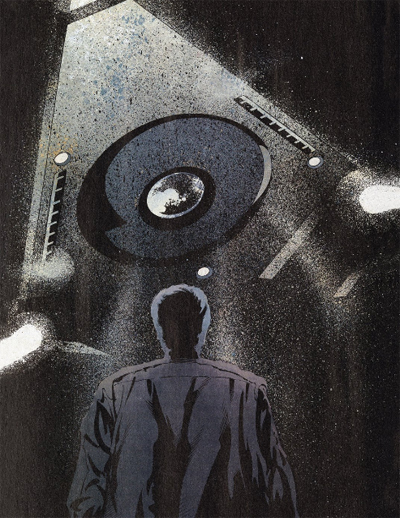
The Sound of Snow is a literal homecoming for Frank Black and Millennium as a television show. It is the last time that a number of crucial elements of Millennium appear in the show. It is the last appearance of Detective Bob Giebelhouse, the Seattle police officer who has been around since The Pilot. It is the last appearance of the yellow house, although it has since been painted a less striking white. It is also the last appearance of Catherine Black, who was a regular character for the show’s first two seasons.

...............

……………

The Sound of Snow features Frank Black returning to Seattle. This is not a big deal of itself. After all, Frank visited Seattle during TEOTWAWKI. However, The Sound of Snow sees Frank wading through memories. He flashes back to the events of The Fourth Horseman and The Time is Now, and visits the yellow house. He even takes a trip out to visit the cabin where he tried to wait out the end of the world with his wife and daughter. The Sound of Snow is about reconciliation, allowing Frank one last conversation with his beloved.

The Sound of Snow is also about reconciliation for the show itself. Since Omertà, the show has been trying to deal with the legacy of a second season that the first eight episodes of the year had tried minimise or ignore. The Sound of Snow is the culmination of that approach, with the third season finally picking up from where the second season let off.

...............

……………

Continue reading

Non-Review Review: Ant Man

Ant Man was always going to be a tough one to crack.

There are obvious reasons. Some of them involve the unique production history of the film, which arguably serves as an example of the downside of the tight managerial style operated by Disney and Marvel. Some of them are more fundamental, tied into the legacy and impact of the source material that make adapting Hank Pym and Janet Van Dyne to screen a particularly dicey proposal for a family-friendly blockbuster movie studio. There’s a lot of pressure on the film, and a lot that could go wrong.

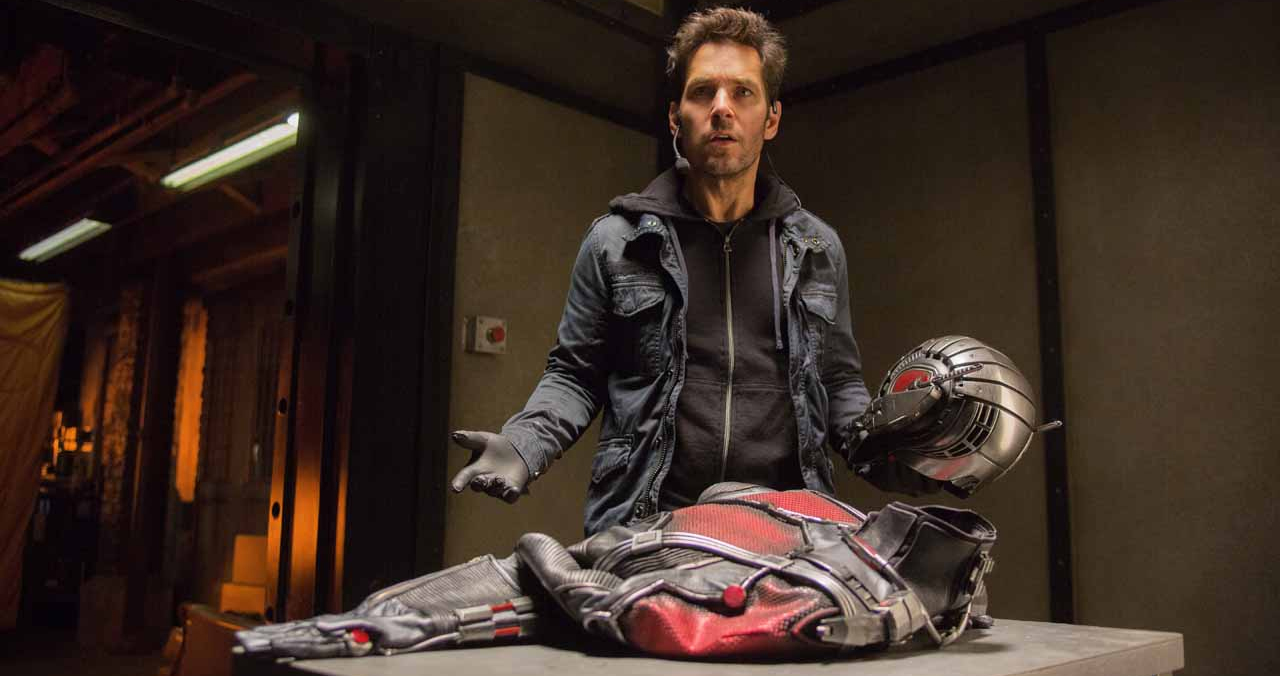
"You couldn't have called him 'Giant Man'?"

“You couldn’t have called him ‘Giant Man’?”

As such, director Peyton Reed does a pretty good job bringing the character to screen. Adam McKay and Paul Rudd adapted the original story written by Edgar Wright and Joe Cornish, providing a movie that sits more comfortably within the framework of the ever-expanding shared universe. Ant Man is a little clumsy in places, suffering from some of the stock weaknesses of the Marvel film franchises, but it is also clever and fun. All involved shrewdly play to the Marvel house style, offering a light run around populated by likable characters with clear-cut conflicts.

However, Ant Man‘s real strengths become obvious when the film deviates (even slightly) from the standard formula. After seven years of watching superhero films grow bigger and bigger, it’s nice to have a smaller story.

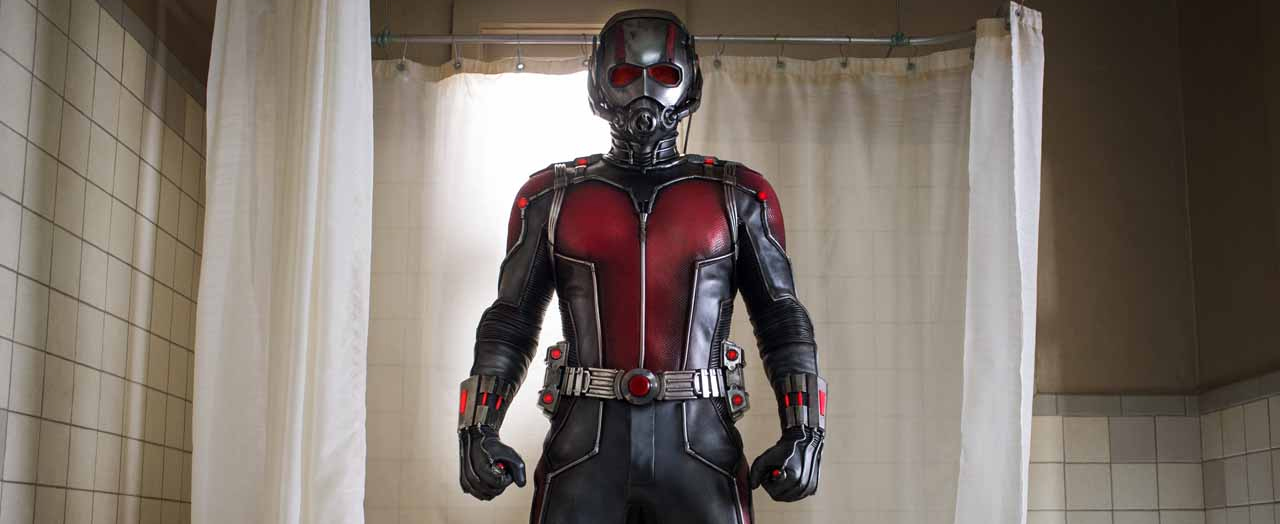
"One size fits all, eh?"

“One size fits all, eh?”

Continue reading

Millennium – Skull and Bones (Review)

This July, we’re taking a trip back in time to review the sixth season of The X-Files and the third (and final) season of Millennium.

Skull and Bones brings a lot of the problems with the third season of Millennium to the fore.

Most obviously, the third season of Millennium is making a conscious effort to return to the aesthetic and style of the first season, with an emphasis on horrific crimes and abhorrent psychologies. In interviews around the launch of the third season, Chris Carter repeatedly suggested that something had been lost in the second season. TEOTWAWKI was an issue-driven episode about school shootings and Y2K. Closure was a story about how spree killers can engage in random patterns of violence and there is no way to reliably discern a pattern of logic in truly evil behaviour.

The hole in things...

The hole in things…

At the same time, the third season is struggling to deal with the legacy and impact of the second season. The Innocents and Exegesis rather clumsily attempted to write their way out of The Fourth Horseman and The Time is Now by downplaying the impact of the end of the world at the end of the second season. However, the third cannot completely erase what happened. The absence of Catherine Black and the presence of Peter Watts are constant reminders. The Millennium Group itself cannot revert back to its first season self.

Skull and Bones plays out this conflict, creating an impression of a show trapped at a crossroads with a problem it cannot resolve. Skull and Bones is an episode that attempts to both minimise the impact of the second season of Millennium while still acknowledging and building upon it. It is not an approach that lends itself to satisfactory or fulfilling storytelling. However, it does articulate just how confused the show must be at this point in its life cycle.

There are going to be a lot of Yorrick captions this time...

There are going to be a lot of Yorrick captions this time…

Continue reading

The X-Files – The End (Review)

This May and June, we’re taking a trip back in time to review the fifth season of The X-Files and the second season of Millennium.

The End is a watershed moment for the show.

There is a reasonable argument to be made that The End accomplishes very little in terms of narrative. It doesn’t really do a great job bridging to The X-Files: Fight the Future. It certainly doesn’t do a great job wrapping up any of the show’s long-running concerns. Indeed, it adds two characters who will go on to become major (if controversial) players in the show’s overarching mythology. Even the big dramatic twist at the end of the episode feels familiar, with The End closing on a more memorable visualisation of the cliffhanger to The Erlenmeyer Flask.

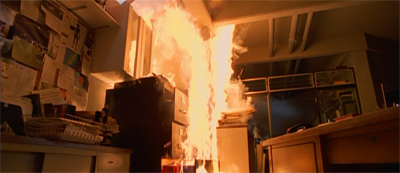
Burn, baby, burn...

Burn, baby, burn…

Nevertheless, The End does feel like an end of sorts. It closes out five seasons of The X-Files. Carter had suggested in interviews that he only wanted to do five seasons of the show before transitioning into feature films, and so The End marks the conclusion of the run that Carter had originally planned for the show. After all, The X-Files had crossed the hundred episode mark earlier in the year. It was ripe for syndication. It was at the stage where Fox and Ten Thirteen did not need to keep the show on the air to keep printing money.

At the same time, The End marks another more definitive sort of end. It would be the last piece of The X-Files to be filmed in Vancouver until The X-Files: I Want to Believe a decade later. Vancouver was a part of the show’s DNA. It had been the show’s production hub since The Pilot. More than two decades later, The X-Files would return to Vancouver for its six-episode wrap-up miniseries. Discussing the revival, Carter argued that Vancouver was “a natural place to make a show like The X-Files.” Certainly, the mood and atmosphere lent itself to the series.

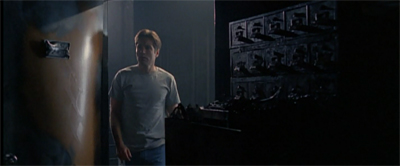
"My video collection!"

“My video collection!”

So The End marks a fond farewell from the production team to a city and region that had served them well.  In that respect, it feels like a more definitive sort of ending. The End opens with a scene that is confident enough to let Canada be Canada. As with the opening scene of Herrenvolk, it is almost comical how hard The End flags its “and starring Canada as Canada” cred, to the point where a mountie rushes to the aid of an assassination victim. The closing scene of The End burns down the show’s most iconic and memorable sets.

While The End is not necessarily a satisfying mythology episode or season finalé in its own right, it does feel like a suitably big moment in the evolution of the show.

Smoking gun...

Smoking gun…

Continue reading

The X-Files (Topps) #37 – The Face of Extinction (Review)

This May and June, we’re taking a trip back in time to review the fifth season of The X-Files and the second season of Millennium.

Suspension of disbelief is a curiously fickle thing.

It is a concept that generates considerable debate in its function and application. After all, the normal mode of fiction generally accepts that fiction is… well, fictional. There is no real belief to shatter, because there is an innate understanding between artist and audience that a work of art should be interpreted as a representation of reality rather than a piece of reality. Even in the case of “true stories”, audiences will willingly and readily accept alterations and adjustments designed to streamline the story in question.

Ramming speed...

Ramming speed…

After all, the concept of “suspension of disbelief” is quite firmly disengaged from the concept of reality. The old cliché about “truth being stranger than fiction” illustrates the distinction. The real world (and the stories of the people who inhabit it) are full of coincidences and contrivances that audiences would consider to be lazy writing or poor construction if they appeared in a work of fiction. Nevertheless, while “suspension of disbelief” might be more complex than its three-word nature would suggest, it is a useful philosophy.

What “breaks” a work of fiction? At what point does the artist – whether intentionally or otherwise – push the audience out of the story? What causes a double take to occur or a quizzical eyebrow to raise? What story developments prompt angry sighs or bitter grumbling? There is no hard and fast answer. The line will always be arbitrary, varying from audience member to audience member. Everybody has different expectations when it comes to art, and so that threshold is distinct for every person.

"Don't worry, Scully! Stay right there... I'm going to get my camera."

“Don’t worry, Scully! Stay right there… I’m going to get my camera.”

Sometimes people can agree on where the line falls on a certain work, but everybody has their limits. There are some people who embrace perceived absurdities or inconsistencies or incongruities in their stories; there are some people who simple do not consider those absurdities or inconsistencies or incongruities to exist at all. One of the great things about The X-Files as a television show is the sense of adventure and excitement that the premise generates. It is highly flexible, allowing for almost anything.

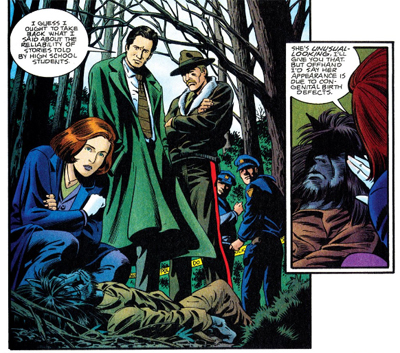
At the same time, it seems quite clear that writer John Rozum and artist Alex Saviuk find themselves charging head-first towards that highly arbitrary and high flexible boundary with The Face of Extinction, a story about a secret race of intelligent goat people who have lived alongside human civilisation for millennia and who also (conveniently) speak perfect English. It is a rather absurd concept, and one that seems at odds with the relatively grounded style of the first five seasons of The X-Files.

Beastly.

Beastly.

Continue reading

Star Trek: Enterprise – Season 2 (Review)

Next year, Star Trek is fifty years old. We have some special stuff planned for that, but – in the meantime – we’re reviewing all of Star Trek: Enterprise this year as something of a prequel to that anniversary. This April, we’re doing the second season. Check back daily for the latest review.

The second season of Star Trek: Enterprise is a strange beast, breaking down into roughly three sections.

The first section runs from Shockwave, Part II through to A Night in Sickbay. There is a nice energy to these episodes, with the first appearance of the Romulans in Minefield and nice internal continuity between otherwise stand-alone adventures like Minefield and Dead Stop. Carbon Creek is a fun diversion and A Night in Sickbay at least tries to do something novel and exciting – even if the show can’t quite pull it off. This stretch of the season feels like an organic development from the first season, a collection of episodes of variable quality; balancing the desire to try new things with nods to the franchise’s strengths.

ent-theexpanse9

The final stretch runs from Judgment to The Expanse. The third season looms large over these episodes, with a sense of impending change in the air. These episodes seem to bid farewell to a version of Star Trek that has existed since the third season of Star Trek: The Next Generation. Judgment gives the Klingons one last epic story, Regeneration checks in on the Borg. The Breach offers a traditional Star Trek morality play, while Cogenitor brutally subverts it. Even episodes like Horizon and First Flight call back to the earliest episodes of Enterprise, as if to offer one last reflection on what might have been.

However, the second season is dominated by a long middle stretch – episodes running from Marauders through to The Crossing. While episodes like Future Tense provide an occasional reprieve, this middle stretch of the season is workmanlike and functional. This is the first two seasons of Enterprise as they are often dismissed: a lite version of Star Trek: Voyager in the same way that Star Trek: Voyager is a lite version of Star Trek: The Next Generation. In that long and dull middle stretch, it feels like the writing staff might as well be blowing dust off of scripts written for the seventh season of The Next Generation.

ent-shockwavepart2o

Unfortunately, while the first and third sections of the season have a lot to recommend them, it is the middle stretch that sets the mood for the season. The second season of Enterprise has more than a couple genuine stinkers – Precious Cargo, The Crossing and Bounty come to mind – but the season never hits the sustained lows of the third season of Star Trek, the first and second seasons of The Next Generation or the second season of Voyager. However, there is long string of episodes that are just dull and uninspired; formulaic and familiar.

In that extended run in the middle of the season, there are episodes that can be easily reduced to “[earlier episode or pop culture reference] by way of [earlier episode or pop culture reference]” without missing anything much. Marauders is The Magnificent Seven by way of Star Trek”, The Communicator is A Piece of the Action by way of First Contact”, Singularity is “Bliss by the way of The Game”, Vanishing Point is “Realm of Fear by way of Remember Me”, Precious Cargo is “Elaan of Troyius by way of The Perfect Mate”, Dawn is The Enemy by way of Darmok.” And so on.

ent-futuretense16

The result is a second season that is exhausting and draining. Watching it on original broadcast was a disheartening experience; each week seemed to bring more of the same. The long stretch from the end of October to the start of April was unforgiving; each week seemed to offer more evidence that Star Trek was tired and played out, a franchise disengaged from not only the world around it but also from the changing rules of its own medium. Coupled with the spectacular (but entirely foreseeable) failure of Star Trek: Nemesis, the second season of Enterprise seemed to seal the franchise’s fate.

There is a very real tragedy to all this. For all that the tail end of the second season sees a massive up-swing in quality and energy, it is perhaps too little and too late. By the time that Judgment had begun a late-season revitalisation, Rick Berman had already announced a bold new direction for the third season. That last stretch is a lame duck. In a way, the second season of Enterprise plays like a microcosm of the series itself; a dramatic upswing in quality and ambition at a point where fate has already made its decision.

ent-cogenitor

Continue reading

Star Trek: Enterprise – Bounty (Review)

Next year, Star Trek is fifty years old. We have some special stuff planned for that, but – in the meantime – we’re reviewing all of Star Trek: Enterprise this year as something of a prequel to that anniversary. This April, we’re doing the second season. Check back daily for the latest review.

Just when it seemed like Star Trek: Enterprise was on a roll, it produces Bounty.

To be fair to writers Mike Sussman and Phyllis Strong, and showrunners Rick Berman and Brannon Braga, Bounty has all the makings of a network-mandated episodes. It is easy to see the stock plot elements manufactured from a checklist provided by the network. T’Pol in her underwear! Space battles! Klingons! The script also demonstrates a clear reluctance about some of these elements, as uncomfortable to be making Bounty as the viewers are to be watching it.

An enlightening experience?

An enlightening experience?

It is perhaps telling that Bounty was buried as the second half of a “double feature” with First Flight on initial broadcast. Not a feature-length adventure or a two-part episode, the scheduling of Bounty seems a little conspicuous, as if everyone involved is trying to get it out of the way as quickly and quietly as possible. Viewers watching UPN on 14th May 2003 would have tuned in for First Flight as usual. If they were lucky, they simply tuned out afterwards and returned to watch The Expanse a week later.

It is a much smoother transition from First Flight to The Expanse, but that does little to justify Bounty. The last stretch of the second season has generally done a good job of bidding farewell to a particular style of Star Trek. However, Bounty is an episode the embodies the worst tendencies of Enterprise. Sadly, those tendencies that may not actually be going anywhere.

"You're gonna sit there, and like it."

“You’re gonna sit there, and like it.”

Continue reading

Star Trek: Enterprise – First Flight (Review)

Next year, Star Trek is fifty years old. We have some special stuff planned for that, but – in the meantime – we’re reviewing all of Star Trek: Enterprise this year as something of a prequel to that anniversary. This April, we’re doing the second season. Check back daily for the latest review.

First Flight is a prequel to a prequel.

First Flight unfolds before the events of Broken Bow, providing something of a belated origin story for Captain Jonathan Archer. The tail end of the second season feels like an odd place for such a story. The decision to air First Flight and Bounty as a double feature meant that First Flight premiered only a week before The Expanse, an episode that changed everything that fans thought they knew about Star Trek: Enterprise. Then again, perhaps this is the perfect place for an episode like this.

Ground Control to Commander Robinson... Ground Control to Commander Robinson...

Ground Control to Commander Robinson… Ground Control to Commander Robinson…

Much of the final stretch of the second season of Enterprise is introspective and reflective. The show seems aware that a big change is coming, and takes the opportunity of these last few episodes to look back on a classic model of Star Trek. Judgment puts Archer on trial; Cogenitor wonders whether old-fashioned Star Trek morality plays can still work in the twenty-first century; Regeneration finds the Borg lying among the (literal) wreckage of Star Trek: The Next Generation. First Flight opens with the death of Captain A.G. Robinson, a character we never met before.

More to the point, First Flight opens with the death of the man who was almost the captain of the Enterprise. On the cusp of a creative change in direction that effectively kills the show as it existed in the first two seasons, First Flight is pretty heavy on the symbolism.

... Take your protein pill and put your helmet on...

… Take your protein pill and put your helmet on…

Continue reading

Star Trek: Enterprise – Regeneration (Review)

Next year, Star Trek is fifty years old. We have some special stuff planned for that, but – in the meantime – we’re reviewing all of Star Trek: Enterprise this year as something of a prequel to that anniversary. This April, we’re doing the second season. Check back daily for the latest review.

It seems like a bit of an understatement to describe Regeneration as highly controversial.

The blu ray release of the second season of Star Trek: Enterprise includes two commentaries for the episode, a sure sign that there is a lot to talk about. On a track recorded in 2005, writers Mike Sussman and Phyllis Strong describe the episode as “infamous.” On a track recorded in 2013, John Billingsley describes how certain segments of fandom considered it a “jumping the shark” moment for the show. That last statement illustrates one of the perverse qualities of Star Trek fandom; one would assume that the viewers turned off by Regeneration would have already tuned out with Acquisition.

We are Borg.

We are Borg.

After all, the decision to bring back the Ferengi in Acquisition is hard to explain. Nobody was clamouring for more Ferengi episodes after Star Trek: Deep Space Nine had gone off the air. Outside of Deep Space Nine, the most enduring impression of the Ferengi was that they had begun their life as “villains that didn’t quite work” and bad quickly been transformed into “comic relief that didn’t quite work.” As such, it is hard to account for the decision to bend continuity in order to introduce the Ferengi into the first season of a prequel show designed to escape the baggage of the larger Star Trek franchise.

On the other hand, it made a great deal of sense to bring back the Borg. After all, the Borg were one of the few Star Trek aliens created after 1969 to make a genuine impression on popular culture. The Borg will never be as iconic as Klingons or Vulcans, but they will always be more iconic than Cardassians or Bajorans. They were also stars of the best-loved Star Trek movie starring the cast of Star Trek: The Next Generation. The Borg are a big deal; there is a reason that Star Trek: Voyager ran them into the ground.

"Assimilate this!"

“Assimilate this!”

It is no wonder that the Borg are frequently cited in discussions around the future of JJ Abrams’ Star Trek reboot. Asked if the creative team would consider bringing the Borg to the rebooted twenty-third century, Roberto Orci answered, “I think we would think about it.” Damon Lindelof was even blunter in his assessment, “You can’t talk about Trek and not talk about the Borg.” While they have undoubtedly been over-exposed and over-used since they first appeared in Q Who?, the Borg are the most distinctive and most successful addition to the Star Trek mythos outside the classic show.

While common sense and experience seemed to weigh against bringing back the Ferengi in Acquisition, it seems that continuity is the only thing holding the Borg back from making an appearance on Enterprise. That said, Sussman and Strong find a clever way around that issue, by remembering the suggestion in Broken Bow that Enterprise is as much a sequel to Star Trek: First Contact as a prequel to the rest of the Star Trek universe.

"Oh no, Cap'n, they've discovered the mood lightin' settin'."

“Oh no, Cap’n, they’ve discovered the mood lightin’ settin’.”

Continue reading

The X-Files: Season One (Topps) #2 – Deep Throat (Review)

This February and March, we’re taking a trip back in time to review the fourth season of The X-Files and the first season of Millennium.

Season One feels like a very odd way to franchise The X-Files.

Topps had enjoyed tremendous success with their licensed tie-in comic book, so it made a certain amount of sense to try to milk the franchise as much as possible. After all, they had already tried a number of other promotions, like releasing “digests” to supplement that monthly series and releasing tie-in comics to appear with magazines like Wizard. So offering another series that would publish on a regular basis starring Mulder and Scully made perfectly logical sense.

The truth is up there...

The truth is up there…

About a year after the release of their adaptation of The Pilot, Topps decided to push ahead with a series of regular adaptations of first season episodes of The X-Files. They reissued their adaptation of The Pilot as the first comic in the series, and then began publishing new adaptations of those early episodes written by Roy Thomas and illustrated by a rotating team of artists. The comics would be about twice as long as the issues of the monthly series, but would only publish once every two months. The monthly series was priced a $2.50, with Season One priced at $4.95.

It is hard not to feel quite cynical about Season One, particularly in an era where these classic episodes of The X-Files stream of Netflix and entire seasons are available to purchase at very low prices.

The shape of things to come...

The shape of things to come…

Continue reading