• Following Us

  • Categories

  • Check out the Archives


  • Awards & Nominations

Star Trek: Deep Space Nine – The Darkness and the Light (Review)

The Darkness and the Light is the first television credit for writer Bryan Fuller.

There is no way around that. It puts a lot of emphasis on this fifth season episode, drawing a lot attention to the story. Fuller didn’t even write the script, instead pitching a story that would be developed by Ronald D. Moore. However, later in the fifth season, Fuller would pitch the story for Empok Nor. After that, he would be recruited on to the writing staff on Star Trek: Voyager. Then Fuller would begin developing his own shows. Dead Like Me. Wonderfalls. Pushing Daisies. Hannibal. American Gods. Star Trek: Discovery.

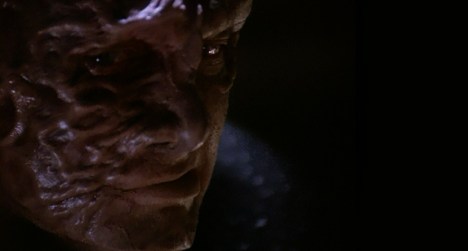
Face-off.

Face-off.

That naturally casts a shadow over his first television pitch, the premise sold to the writing staff of Star Trek: Deep Space Nine. Even watching Fuller’s idea filtered through the lens of Ronald D. Moore, there is a strong urge to read too much into this forty-five-minute piece of television. How much of it represents Bryan Fuller’s vision of Star Trek? How have its themes and ideas resonated across the rest of the writer’s work? What insight might it offer into the producer’s vision for the future of the franchise?

A lesser episode would crumple under that weight. It helps that The Darkness and the Light is an ambitious and exciting piece of television, a triumph of concept and execution that stands as one of the most distinctive and memorable episodes in the fifty-year history of the franchise.

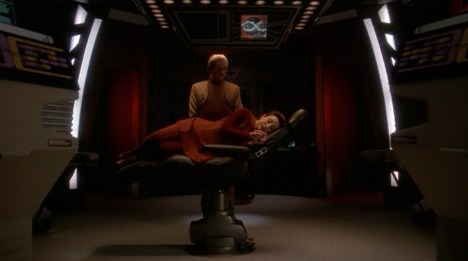
A time to heal.

A time to heal.

Continue reading

The X-Files: Season 10 (IDW) #1-5 – Believers (Review)

This June, we’re going to be taking a look at the current run of The X-Files, beginning with the IDW comic book revival and perhaps taking some detours along the way. Check back daily for the latest review.

Five years can be a long time.

To be fair, there was a six-year gap between the broadcast of The Truth and the release of The X-Files: I Want to Believe, so the gap was not unprecedented. Nevertheless, the fact is that Mulder and Scully had been retired for five years since their last film and eleven years since their last television episodes. Even the most hardcore fans of The X-Files had begun to doubt that the show would ever return in any tangible form. However, the show was entering its twentieth anniversary year, and forces were stirring in the background.

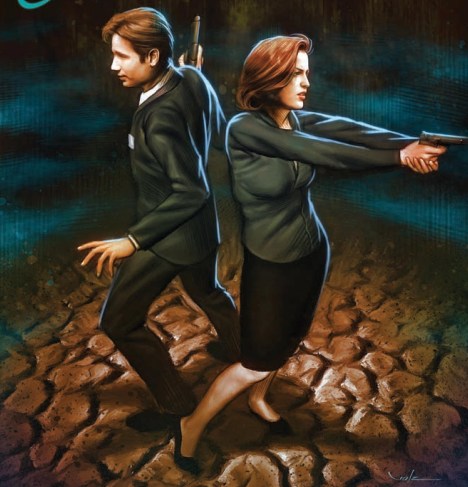
X-appeal.

X-appeal.

Occasionally interviews would surface with David Duchovny or Gillian Anderson mooting the possibility of doing a third feature film. After all, despite the promise made in the opening of The Truth, 2012 had come and gone without an alien invasion or a global apocalypse. The franchise had set its own alarm clock and slept through it. There were still fitful stirrings, suggestions of possible future developments. As the franchise passed what many regarded as its “best before” date, Frank Spotnitz even speculated that fans might be treated to a reboot.

In many ways, the revival of The X-Files began somewhat innocuously. In January 2013, comics publisher IDW announced that they would be publishing a monthly series focusing on the continuing adventures of Mulder and Scully. This was not necessarily news of itself. IDW had a long history of managing licensed properties, such as the JJ Abrams Star Trek reboot and the Russell T. Davies Doctor Who relaunch. That was very much their market niche in the comic book industry, especially with nostalgic titles like Ghostbusters or Teenage Mutant Ninja Turtles.

How the years 'shroom by...

How the years ‘shroom by…

While the launch of the title did suggest that there was an audience for stories featuring Mulder and Scully, it did not necessarily lead to the promise of greater things. Indeed, the announcement that IDW would be publishing The X-Files: Season 10 consciously and clearly evoked the approach that the publisher Dark Horse had adopted towards Buffy: The Vampire Slayer and Angel, running entire seasons of comic book stories that served as the new “canon” for the characters. But nobody was expecting Sarah Michelle Gellar to reprise the role of Buffy Summers.

However, the IDW comic book launch served to bring Chris Carter out of semi-retirement and back into the media spotlight. Joss Whedon had consulted with Dark Horse on Buffy: Season Eight, the prolific television writer and producer was also working on his own concurrent projects that included directing episodes of The Office and preparing Doctor Horrible’s Sing-Along Blog. In contrast, Chris Carter had been largely silent since the release of I Want to Believe. The launch of the comic book brought him back.

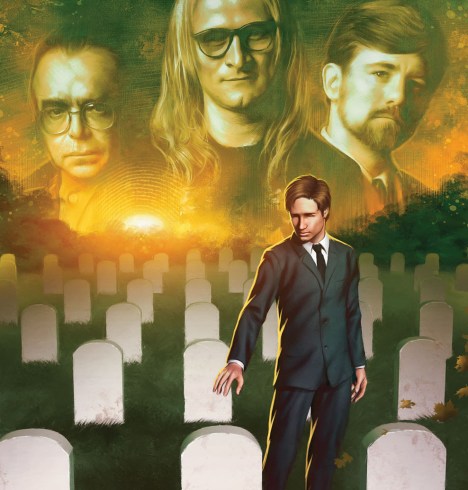
Where there's smoke...

Where there’s smoke…

Continue reading

Grant Morrison’s Run on Action Comics (Review/Retrospective)

This March sees the release of Batman vs. Superman. To celebrate, we’ll be looking at some iconic and modern Batman and Superman stories over the course of the month.

On paper, Grant Morrison and Rag Morales’ Action Comics should have been a slam dunk.

The title was announced as part of DC’s “new 52” relaunch, a resetting of the comic book giant’s continuity beginning in September 2011. Designed to revitalise the line, shoring up sales numbers and providing a clear point of entry, the “new 52” was clearly intended as a “jumping on” point for new and lapsed comic fans. It was bold and radical, an even greater departure for the company than their reboot following Crisis on Infinite Earths back in 1986. The comic book publisher gave themselves a blank slate.

Wow, he IS more powerful than a locomotive...!

Wow, he IS more powerful than a locomotive…!

In theory, this was a great idea; anything was possible and everything was on the table. In practice, the execution was more muddled; the massive experiment curtailed by a very conservative aesthetic. In many respects, the “new 52” felt like more of the same; familiar mid-tier talent working on familiar mid-tier ideas. The most interesting books were those that dared to do things differently; Scott Snyder inverting Alan Moore’s brilliant twist on Swamp Thing made for iconoclastic reading, as did Brian Azzarello’s ground-up reimagining of Wonder Woman.

In contrast, a lot of the line felt like hedging. Hellblazer was cancelled so that John Constantine could be dragged under the corporate umbrella in Justice League Dark, all in the name of coporate synergy. The Wildstorm characters were ported over into mainstream continuity, in spite of the fact that they were largely redundant or incompatible. Instead of courting either exciting new talent or industry veterans, the company had difficulty drawing top-tier talent. Scott Lobdell and Rob Liefeld were among the relaunch’s heavy hitters.

... And what was that about speeding bullets?

… And what was that about speeding bullets?

To be fair, there were bright spots. But the ideas and concepts that were interesting were frequently hobbled by the demands of the publisher. All-Star Western was diminished by having to tie to Gotham City continuity, while attempts at genre diversity in books like Demon Knights or I, Vampire were under-promoted. Emphasis was placed squarely on monthly print sales numbers, with little patience for books to grow their audiences whether online or through collected editions.

In spite of all the confusion and chaos of the relaunch, Grant Morrison writing Action Comics was the cause of considerable excitement. Morrison was one of few comic book writers who could legitimately be described as a superstar, arguably with a higher profile outside mainstream comics than executives Jim Lee and Geoff Johns. Having Morrison on a monthly book was a big deal, particularly a monthly book as important to the company’s legacy as Action Comics. (Then again, the relaunch also chose to put Tony Daniel on Detective Comics, so there’s that.)
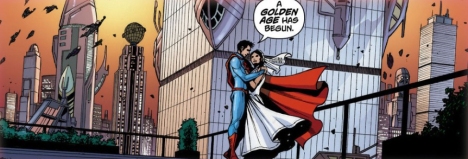
Happily never after...

Happily never after…

More than that, the book represented something of a homecoming for Morrison. Although the character of Superman had struggled with issues of relevance in the twenty-first century, Morrison had been the architect of one of the character’s most beloved stories. All-Star Superman is widely regarded as one of the best Superman stories ever published. Having its author writing a monthly book as part of the relaunch was a big deal. Following high-profile misfires like New Krypton or Grounded, it seemed like the perfect opportunity to put Superman back on the right course.

In many respects, Grant Morrison’s run on Action Comics typifies the sort of push-and-pull at the publisher as part of the relaunch. The great ideas smothered by corporate mandates, the tension between familiarity and novelty, the burden of expectation even while trying to chart a new course. For better or worse, Action Comics could be seen as the flagship of DC’s “new 52” initiative. This seems entirely appropriate, given the title’s historical significance to DC comics.

Running jump...

Running jump…

Continue reading

Star Trek: Voyager – Alliances (Review)

This September and October, we’re taking a look at the 1995 to 1996 season of Star Trek, including Star Trek: Deep Space Nine and Star Trek: Voyager. Check back daily for the latest review.

One of the more persistent and convincing criticisms of Star Trek: Voyager is the idea that it was very narrative conservative; that the show got comfortable playing out the familiar formula that had been established by Star Trek: The Next Generation, and so never attempted to innovate or experiment in the way that Star Trek: Deep Space Nine (or eventually Star Trek: Enterprise) did. This is a perfectly valid criticism of the show as a whole, but it does ignore some of the weird tensions that played out across the first two seasons.

It is fair to say that Voyager never truly experimented. However, there are several moments in the first two seasons where it looks like the show was considering doing something unique or unprecedented. The show walked up to the edge, looking up and down; it never quite made the leap, but it seemed to weigh the possibility of jumping headlong into uncharted territory. However, it ultimately only dipped its toes in the water before getting cold feet and returning to the comfort of the familiar.

"Everyone liked Godfather III, right?"

“Everyone liked Godfather III, right?”

The sad truth about the second season of Voyager is that the show made a number of attempts to do something different or unique, only to botch each and every one of those attempts so completely that the production team learned not to even try. The second season’s more adventurous creative decisions all ended in humiliation and farce, explaining why the show desperately sought the warm blanket of a familiar format and an established template. After all, it was the more conventional episodes of the second season that had been (relatively) well received.

The second season of Voyager turned the process of trying something moderately ambitious and failing spectacularly into something of an artform. Of course, given the simmering tensions behind the scenes, it often seemed like the show wanted to fail. Michael Piller desperately wanted to do new things, only to meet resistance from his fellow producers and writing staff. Writers like Kenneth Biller would publicly criticise assignments they had been handed, offering a sense of just how much faith the staff had in these ideas.

"You wouldn't like me when I'm angry..."

“You wouldn’t like me when I’m angry…”

Alliances marks perhaps the most ambitious element (and most spectacular failure) of the second season of Voyager. It is the centrepiece of Michael Piller’s attempts to develop the Kazon into a credible (and convincing) alien threat, while also setting up a recurring arc that will allow Piller to push Tom Paris into the role of “lovable rogue” of which Piller was so fond. These were elements that excited Piller a great deal, but left most of the rest of the production team relatively cold.

So there is a great deal of irony in the fact that Alliances is ultimately written by Jeri Taylor, who was increasingly at loggerheads with Piller over the direction of Voyager. In light of that context, it makes sense that Alliances is an episode that aggressively critiques its own existence. Janeway spends most of the episode frustrated at the fact that the story is happening at all, and Alliances builds towards a climax that seems designed to convince the viewer that this whole idea is misconceived on just about every possible level.

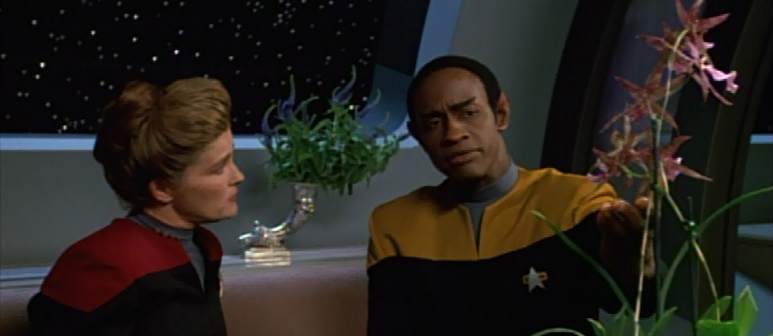
Blooming disaster...

Blooming disaster…

Continue reading

Star Trek: Deep Space Nine – Little Green Men (Review)

This February and March, we’re taking a look at the 1995 to 1996 season of Star Trek, including Star Trek: Deep Space Nine and Star Trek: Voyager. Check back daily Tuesday through Friday for the latest review.

Little Green Men might just be the best Ferengi episode from the seven-year run of Star Trek: Deep Space Nine.

It helps that the episode is very clearly a passion project for writers Ira Steven Behr and Robert Hewitt Wolfe. More than any other Star Trek show, Deep Space Nine had a deep and abiding affection for classic cinema. Michael Piller might have tried to steer the first two seasons of Star Trek: Voyager back to classic western storytelling tropes, while Rick Berman and Brannon Braga might have promised that Star Trek: Enterprise would be a “back to basics” reimagining of the show, but Deep Space Nine was a show that adored old-school Hollywood.

Quark's Family Vacation...

Quark’s Family Vacation…

This was reflected in a number of ways. In Past Tense, Part II, B.C. planned to escape to Tasmania because Errol Flynn was born there. There was also the fact that Ira Steven Behr could never resist the lure of a good homage to classic cinema – even when it was not the best of ideas. Meridian was written as an attempt to adapt Brigadoon to the Star Trek universe; Fascination was based on the 1935 adaptation of A Midsummer Night’s DreamRules of Acquisition was basically YentlProfit and Loss was Casablanca.

It seemed almost inevitable that at some stage the cast and crew of Deep Space Nine would find themselves colliding with classic Hollywood.

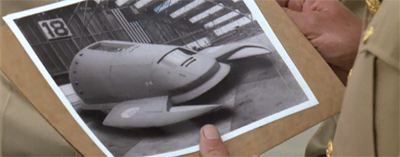
"Well, it's not a saucer..."

“Well, it’s not a saucer…”

Continue reading

The X-Files – DeadAlive (Review)

This October/November, we’re taking a trip back in time to review the eighth season of The X-Files and the first (and only) season of The Lone Gunmen.

The X-Files is dead. Long live The X-Files.

What is dead may never die...

What is dead may never die…

Continue reading

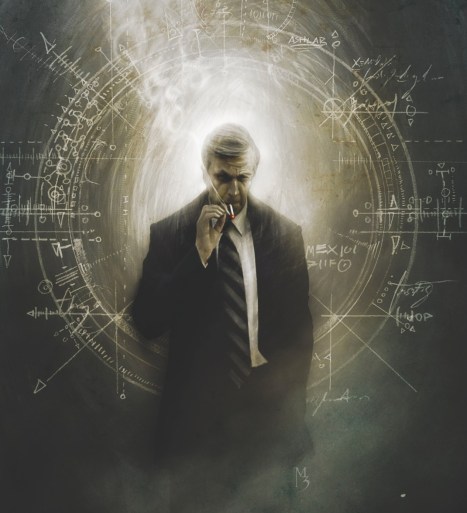
Millennium – Season 3 (Review)

This July, we’re taking a trip back in time to review the sixth season of The X-Files and the third (and final) season of Millennium.

Three seasons is a good run.

It’s not a great run, but it is worth noting that Millennium ran longer than any of Chris Carter’s creations other than The X-Files. Given you grim and esoteric Millennium turned out to be, that is quite impressive. Notably, even the third season of Millennium performed better in the ratings than the first season of Harsh Realm. In many respects, Millennium is a very odd television show; it seems surprising that it lasted for three seasons. While fans (and many who worked on it) might have wanted more, Millennium is not a failure.

millennium-thesoundofsnow28

That said, the third season of Millennium is a disaster. There are a lot of reasons for this. The show was renewed by Fox quite late in the process, meaning the production team had little time to prepare. Glen Morgan and James Wong had no interest in returning to run the show, even if the rest of the staff would have them. Either due to time constraints or frustration, nobody asked Morgan and Wong about resolving the ending of The Time is Now. Michael Duggan was hired as showrunner, only to depart eight episodes into the season.

With all of this going on, the problems with the third season are entirely understandable. The season feels like a disjointed mess because there was chaos behind the scenes. The season was confused about its own continuity because the production team had no idea what to make of the second season. With ratings plunging, the show sought comfort in the familiar; there is an extended stretch near the start of the third season where it feels like the production team were trying to turn the show into a copy of The X-Files.

millennium-teotwawki22

The third season of Millennium has fairly terrible reputation among fans. This is not entirely undeserved; the early stretch of the third season contains a string of the worst episodes that Millennium ever produced. As sympathetic as the surrounding circumstances might make an audience to the show, that goodwill evaporates when confronted with episodes like The Innocents, Exegesis, TEOTWAWKI, Skull and Bones, Through a Glass Darkly, Human Essence and Omertà. The series improves dramatically in its middle section; but it is never consistent.

The third season contains a number of underrated episodes that do count among the best that the show ever produced, and a whole host of more interesting failures around those episodes. Perhaps the best thing that might be said about the third season is that it is interesting at least as often as it is bad. That might not sound like a ringing endorsement. It isn’t. The third season of Millennium doesn’t work. The reasons for this are entirely understandable, but that does not make it any easier to watch.

millennium-sevenandone24

Continue reading

The X-Files – The Unnatural (Review)

This July, we’re taking a trip back in time to review the sixth season of The X-Files and the third (and final) season of Millennium.

Let me get this straight: a free-spirited alien fell in love with baseball and ran away from the other non-fun-having aliens and made himself black, because that would prevent him from getting to the majors where his unspeakable secret might be discovered by an intrusive press and public and you’re also implying that…

You certainly have a knack for turning chicken salad into chicken spit.

– Fox Mulder and Arthur Dales discuss the merits of The Unnatural

Swing and a hit...

Swing and a hit…

Continue reading

Millennium – Matryoshka (Review)

This July, we’re taking a trip back in time to review the sixth season of The X-Files and the third (and final) season of Millennium.

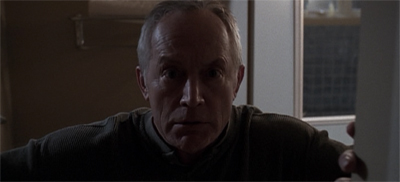
It seems like every time that the third season of Millennium takes a step forward, it is simply preparing to take a tumble backwards.

After spending over a third of the season trying to rewrite the events of the second season, it seemed like the show was finally accepting the changes that had been made by Glen Morgan and James Wong over the course of the sophomore year. Omertà, Borrowed Time, Collateral Damage and The Sound of Snow had all seen the show trying to make its peace with the loss of Catherine Black and the changes to the Millennium Group stemming from the second season finalé. It looked like the show was working through its conflicted feelings, and was ready to move on.

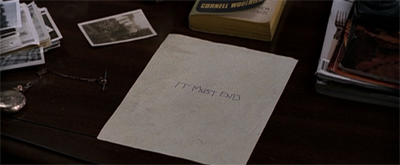
Perhaps it must...

Perhaps it must…

However, both Antipas and Matryoshka represent a very clear step backwards. Antipas feels like an attempt to return to the mood and aesthetic of the late first season (and first season characterisation of Lucy Butler) with no regard for what came afterwards. Matryoshka attempts to reintroduce the sort of clumsy revisionist rewriting of Millennium‘s internal continuity in a manner that evokes The Innocents or Exegesis or Skull and Bones. It presents a secret history of the Millennium Group that heavily contradicts The Hand of St. Sebastian.

There is a host of potentially interesting stuff buried under all of this, but – as with a lot of the third season – it is very hard to care about a show more invested in playing ping-pong with its own history than in trying to tell a new and compelling story. It seems like the most striking thing about most third season episodes is how they engage with what came before, more than what they are actually trying to do. Watching the third season, it seems like the Millennium writing staff is just as divided as the Millennium Group was in Owls and Roosters.

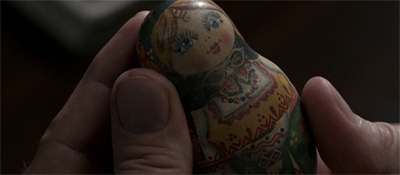
Nesting dolls...

Nesting dolls…

This approach is self-defeating on a number of levels. The second season was admittedly divisive among fans, but it seems like the third season simply cannot get past The Fourth Horseman and The Time is Now in any meaningful fashion. Fans who enjoyed the second season will inevitably feel frustrated by the repeated efforts to minimise or over-write it. Fans who disliked the second season will grow increasingly annoyed that the show is still fixated upon it. Any viewers without a working knowledge of the history of the show are likely to just be confused and befuddled.

Matryoshka is not the worst offender for this sort of confused self-contradiction and self-fixation, but there is a sense that Millennium‘s fascination with the continuity (or lack thereof) of the second season has already passed to point of diminishing returns. Much like the script for Matryoshka, it seems like the third season of Millennium is trapped in the past.

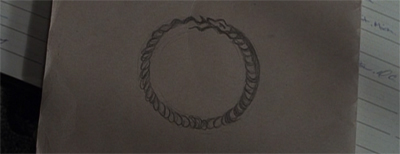
Eating its own tale...

Eating its own tale…

Continue reading

Millennium – The Sound of Snow (Review)

This July, we’re taking a trip back in time to review the sixth season of The X-Files and the third (and final) season of Millennium.

“Our pasts are what we are,” Alice Severin explains to Emma Hollis and Bob Giebelhouse towards the climax of The Sound of Snow. It seems as if she might be talking for Millennium itself.

The Sound of Snow is a literal homecoming for Frank Black and Millennium as a television show. It is the last time that a number of crucial elements of Millennium appear in the show. It is the last appearance of Detective Bob Giebelhouse, the Seattle police officer who has been around since The Pilot. It is the last appearance of the yellow house, although it has since been painted a less striking white. It is also the last appearance of Catherine Black, who was a regular character for the show’s first two seasons.

...............

……………

The Sound of Snow features Frank Black returning to Seattle. This is not a big deal of itself. After all, Frank visited Seattle during TEOTWAWKI. However, The Sound of Snow sees Frank wading through memories. He flashes back to the events of The Fourth Horseman and The Time is Now, and visits the yellow house. He even takes a trip out to visit the cabin where he tried to wait out the end of the world with his wife and daughter. The Sound of Snow is about reconciliation, allowing Frank one last conversation with his beloved.

The Sound of Snow is also about reconciliation for the show itself. Since Omertà, the show has been trying to deal with the legacy of a second season that the first eight episodes of the year had tried minimise or ignore. The Sound of Snow is the culmination of that approach, with the third season finally picking up from where the second season let off.

...............

……………

Continue reading