• Following Us

  • Categories

  • Check out the Archives


  • Awards & Nominations

Non-Review Review: The Death of Stalin

The Death of Stalin is an ambitious tonal mishmash.

The Death of Stalin is funny and smart. It is a very well observed comedy of errors set against the backdrop of the power struggle that unfolds against the backdrop of the passing of the eponymous Soviet dictator. Officials, relatives and hangers-on all jockey for position, scrambling over one another to secure their place on top of the heap. “How can you scheme and run at the same time?” Lazar Kaganovich challenges Nikita Khrushchev at one point during the film, a line that sets the tone for the ensuing madcap chaos.

Fools Russia in.

However, The Death of Stalin struggles to find the right pitch for its political shenanigans. Based on historical events, The Death of Stalin juxtaposes the sly and transparent manoeuvrings of its central characters against depictions of real-life historical violence and brutality. The Death of Stalin is very candid about the collateral damage incurred by these sorts of regimes, as well it should be. The Death of Stalin would be wrong to gloss over the human cost of its political jousting. At the same time, these brutal beats undercut the movie’s broader slapstick comedic plotting.

The Death of Stalin is charming and endearing in places, but it struggles to find a proper tone. The Death of Stalin is at once too dark to work as a broad farce and too light to play as a pitch black comedy. The result is a movie that feels far too unbalanced and unhinged, with brilliant moments and great performances that never manage to find a consistent groove.

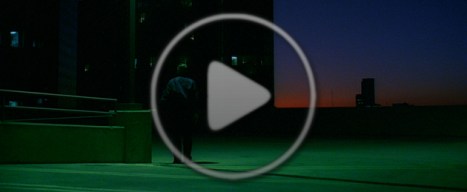
Sorry state of affairs.

Continue reading

47. The General (#151)

Hosted by Andrew Quinn and Darren Mooney, The 250 is a fortnightly trip through some of the best (and worst) movies ever made, as voted for by Internet Movie Database Users. New episodes are released every second Saturday at 6pm GMT, with the occasional bonus episode between them.

This time, Buster Keaton and Clyde Bruckman’s The General.

Johnny Gray is a train engineer working in the South during the Civil War, with two loves in his life; the southern belle Annabelle Lee and the train engine known as The General. When a group of Union spies abscond with both, Johnny finds himself an unlikely hero on a quest that takes him down train lines and across enemy lines.

At time of recording, it was ranked the 151st best movie of all time on the Internet Movie Database.

Continue reading

46. Ah-ga-ssi (The Handmaiden) – This Just In (#247)

Hosted by Andrew Quinn and Darren Mooney, and this week with special guests Grace Duffy and Graham Day, This Just In is a subset of The 250 podcast, looking at notable new arrivals on the list of the 250 best movies of all-time, as voted for by Internet Movie Database Users.

This time, Park Chan-Wook’s Ah-ga-ssi.

Continue reading

Non-Review Review: Goodbye Christopher Robin

Goodbye Christopher Robin is largely a container for a set of impressive performances.

The most memorable aspects of this biopic are the three leading performances; Domhnall Gleeson as the writer himself, Margot Robbie as Daphne de Sélincourt and Kelly MacDonald as the nanny Olive. This triumvirate elevates the material to hand, fleshing out an overly broad and overly sentimental script through their ability to underplay moments. Gleeson, Robbie and MacDonald communicate their characters effectively through meaningful glances as much as overloaded dialogue.

Bear with me.

In some ways, Goodbye Christopher Robin suffers from a surplus of ambition. Written by Frank Cottrell-Boyce and Simon Vaughan, the film casts a very wide net, hoping to encapsulate decades in the lives of these characters. The result is that many of the film’s emotional arcs and beats feel truncated in the move to the next important event, which in turn leads the movie to amp up the sentimentality for maximum impact. There are moments where Goodbye Christopher Robin works perfectly, but there are more moments where it seems to fumble.

Goodbye Christopher Robin tries to cover too much ground. “That bear swallowed us whole,” Milne reflects towards the end of the story, but there is a sense that the script poses just as much danger.

“If we could sell these stories, we’d by Milne-aires.”

Continue reading

45. Paris, Texas (#241)

Hosted by Andrew Quinn and Darren Mooney, The 250 is a trip through some of the best (and worst) movies ever made, as voted for by Internet Movie Database Users. New episodes are released Saturdays at 6pm GMT, with the occasional weekend off.

This time, Wim Wenders’ Paris, Texas.

Four years after mysteriously disappearing, Travis wanders out of the desert and back into the lives of his family. Adapting to the outside world, Travis embarks upon a journey across America to bring together the shattered remains of his past life.

At time of recording, it was ranked the 241st best movie of all time on the Internet Movie Database.

Continue reading

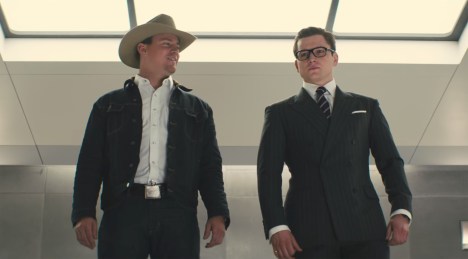
Non-Review Review: Kingsman – The Golden Circle

If Kingsman captured the nastiness of the early Roger Moore Bond movies, then Kingsman: The Golden Circle emulates the indulgent bloat of the later Roger Moore installments.

Part of the appeal of Kingsman was that it captured (and laid bare) the inherent ugliness running beneath the surface of the early Roger Moore movies, films like Live and Let Die or The Man With the Golden Gun. In many respects, Kingsman felt like a Roger Moore Bond movie that was acutely aware of how awful it was, willing to be transparent in its unpleasantness; whether in its sexual politics, in its casual violence, in its portrayal of individuals with disabilities. Kingsman took a lot of the sheen of nostalgia off those Sunday afternoon actioners, and revelled in the dissonance.

The Golden Circle is nowhere near as sharp and pointed. Instead, in its indulgence evokes the overstuffed and bloated feeling of the late Roger Moore films, of movies like Moonraker, Octopussy and A View to a Kill. Indeed, The Golden Circle seems coyly aware of that. What point could there be in casting Halle Berry in the thankless role of a member of an American counterpart to the eponymous British organisation, except to consciously nod towards Die Another Day, the belated tribute to the late Moore era?

The Golden Circle is a mess of a sequel, a film so in love with itself that it seems genuinely indifferent to anybody watching from audience.

Continue reading

Non-Review Review: The Ritual

The Ritual is a fairly conventional horror movie that is slightly elevated by a number of nice touches.

The Ritual is pretty predictable piece of horror, at least in the broad strokes. A group of friends set out on an international adventure together, tracking into the wild. The group is tied together by a common loss, but there are all manner of silent (and not so silent) resentments simmering beneath the surface. Journeying to Sweden, the quartet embark upon a hike into the wilderness. When fate intervenes, and forces them to cut their trip short, they make a choice to take a turn off the beaten track. They quickly come to regret that particular decision.

The Ritual belongs to a familiar genre of modern horror, the tale of adult friends who wander off into the wilderness and find themselves confronted by something primal and horrific; The Descent, The Blair Witch, Cabin Fever. Of course, these are all the descendants of classic horror movies offering similar warnings about daring to wander off the beaten track; The Hills Have Eyes, Deliverance, Texas Chainsaw Massacre. There is very little in the basic form of The Ritual that will catch many audience members off-guard, even in the jump scares.

The Ritual is elevated by technique, by attention to detail from writer Joe Barton and director David Bruckner. The Ritual never catches the audience off guard by zigging when one might expect it to zag, but it occasionally teases the possibility of zigging. There are any number of little touches that charm, minor subversions of horror movie conventions that enrich the more predictable beats. The film looks impressive, is paced nicely, and is very well cast. While none of this allows The Ritual to transcend its more stock qualities, it does add up to a well-made film.

Continue reading

Non-Review Review: IT

IT works best as a fusion of weird fiction with a classic coming of age story.

IT is arguably one of Stephen King’s most iconic and influential works. Pennywise the Dancing Clown is perhaps King’s most instantly recognisable creation. King’s work seems to recognise this. The monster clown haunts his fiction, making various appearances in other works, suggesting that the creature is an infection spreading across the author’s vast tableau. There are lots of reasons for IT‘s success and status, but a lot of it comes down to the fact that IT is an encapsulation of many of King’s pet themes and plays to many of King’s strengths.

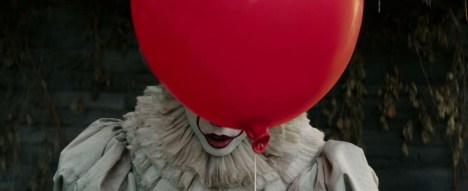
Bill Skarsgård used his other 98 red balloons on Atomic Blonde.

Director Andrés Muschietti seems to understand this. In fact, IT serves as a smorgasbord of cinematic King adaptations, drawing upon and even quoting from various other successful adaptations of the author’s work. Most notably, IT owes a surprisingly large debt to Stand By Me. The decision to exorcise the “present day” sequences of the novel from this film, leaving them to a potential sequel, means that IT is even more overtly and consciously a coming of age narrative.

However, IT is very much a coming of age horror story, a grotesque and unsettling expression of the nightmares lurking just behind familiar childish fears.

There’s something in water.

Continue reading

42. Cinema Paradiso (#55)

Hosted by Andrew Quinn and Darren Mooney, The 250 is a fortnightly trip through some of the best (and worst) movies ever made, as voted for by Internet Movie Database Users. New episodes are released every second Saturday at 6pm GMT, with the occasional bonus episode between them.

This time, Giuseppe Tornatore’s Cinema Paradiso.

Successful film director Salvatore Di Vita receives word the projectionist at the Cinema Paradiso has died. This news prompts Salvatore to embark on a literal and metaphorical journey back to the small village in which he grew up, exploring memories of his childhood and of the magical days spent in the cinema that served as the lynchpin of his idyllic community.

At time of recording, it was ranked the 55th best movie of all time on the Internet Movie Database.

Continue reading

Non-Review Review: Patti Cake$

Patti Cake$ is intermittently charming, but far too familiar.

Patti Cake$ is a familiar breed of indie movie. It is the story of a young protagonist trapped in a small town and surrounded by eccentric characters who yearns to escape, but finds herself hemmed in by lack of opportunity, by family and by sheer economic pressure. It is a quintessential triumph-over-adversity narrative, albeit approached from the slightly skewed perspective of a young white female rapper in New Jersey.

Let’s get this Patti started in here.

There are some interesting elements of Patti Cake$, especially the performances by actors like Danielle Macdonald and Bridget Everett. There are moments when this familiar template works very well at hitting particular cues, whether the mundanity of Patti’s day-to-day existence, the emotional realism of particular relationships in her life, or even a really good and well-timed joke. However, those moments are largely fleeting. For most of its runtime, Patti Cake$ is a perfectly adequate story of what it feels like to socially strive.

Patti Cake$ doesn’t have any new rhymes, and so settles for some well-worn beats.

She’s got drive.

Continue reading