• Following Us

  • Categories

  • Check out the Archives


  • Awards & Nominations

Non-Review Review: Artemis Fowl

Artemis Fowl is only ninety-three minutes long, but it feels much longer. In more ways than one.

As with Scoob! or Trolls World Tour, there’s something slightly cynical in releasing Artemis Fowl direct to streaming. The film feels like it might have wallowed in a theatrical release, with little to distinguish it from other young adult adaptations like The Maze Runner or The Mortal Engines. Although derived from a series of beloved children’s books, the cinematic adaptation of Artemis Fowl was never going to be this generation’s answer to Harry Potter and the Philosopher’s Stone or The Hunger Games – despite the belaboured sequel hooks.

Fowl play.

The most interesting question that occurs when watching Artemis Fowl is at what point this became clear to the production team. Artemis Fowl has the look and feel of a movie that has been fed through a meat grinder. It is appreciably shorter than most would-be tentpoles, even though there is a seemingly continuous voice-over delivering reams of exposition. The plotting is haphazard. The character arcs are broad. There is a palpable sense that something happened in getting from page to screen, and the real mystery is where in the process things went so wrong.

Watching Artemis Fowl becomes almost an interactive mystery of itself. Was the project always this disjointed and chaotic, or was that something that happened in postproduction? More than that, was that process something that happened before or after Artemis Fowl was earmarked for a streaming release? When exactly on the creative process did everybody working on Artemis Fowl just give up completely?

A flying finish.

Continue reading

Non-Review Review: Da 5 Bloods

Da 5 Bloods argues that the wounds inflicted by the Vietnam War never truly healed.

The basic plot of Da 5 Plots is standard war movie stuff, recalling the set up of the classic Simpsons episode Raging Abe Simpson and His Grumbling Grandson in “The Curse of the Flying Hellfish”, which itself drew upon a variety of inspirations including episodes of M*A*S*H and Barney Miller. The film follows four veterans who return to Vietnam ostensibly to repatriate the remains of their lost squad commander “Stormin’ Norman.” However, it quickly becomes clear that these former soldiers also have their eyes on a more lucrative prize.

The past never stays buried.

Co-writer and director Spike Lee uses the familiar trappings of war movies – and specifically of Vietnam War movies – to interrogate the legacy of the conflicts and the scars that it left on the national psyche. Indeed, one of the most interesting structural choices in Da 5 Bloods is to effectively invert the basic structure of BlacKkKlansman, which opened as a pointed genre tribute before seguing into actual contemporary news footage during its final act. Da 5 Bloods starts by offering a glimpse of the chaos of the early seventies before diving into the story that it wants to tell.

The result is to contextualise both Da 5 Bloods and its statement on contemporary American identity, drawing a strong line from the unrest and horror of the Vietnam era to the madness of the present moment. Da 5 Bloods was obviously written and filmed well before the latest crisis in the United States, but Lee is a shrewd filmmaker with his finger on the pulse. Da 5 Bloods feels like a movie that is both about the nightmare of this particular moment and the tragic inevitability of that moment as the outcome of unprocessed trauma that has been festering for decades.

Normcore.

Continue reading

Non-Review Review: The King of Staten Island

The King of Staten Island is very much a typical late Judd Apatow project, in the style of Funny People, This is 40 or Trainwreck.

It is a serio-comic character study that essentially tries to wed the juvenile comedic sensibility that Apatow brought to the mainstream with films like Knocked Up and The 40-Year-Old Virgin with the more earnest adult coming-of-age stories that were popular in the early nineties. The results are sporadically funny and affecting, often built around a single or multiple star personas. In each cause, the quality of the film largely comes down to the quality of the star anchoring it, with Trainwreck standing out due to strong turns from both Amy Schumer and Bill Hader.

“King of One of the Boroughs of New York!”

The King of Staten Island tries this approach with Pete Davidson, the stand-up comedian who is currently best known for his work on Saturday Night Live that often involved him directly addressing his own personal controversies. As with Trainwreck, the film is driven by Davidson who shares a co-writing credit and whose character is transparently modelled on Davidson himself. As such, Davidson’s star persona exerts a strange gravity on The King of Staten Island, all the more notable for the fact that this is really Davidson’s first proper starring role of itself.

The King of Staten Island is occasionally moving and engaging, but it never manages to escape from Davidson’s shadow. Simultaneously, there’s something slightly frustrating in the way that for all The King of Staten Island transparently draws from Davidson’s own experiences and history, its narrative structure is painfully generic. Its central character arc is so routine as to undermine any real sense of personality or intimacy. This is the central paradox of the film. The King of Staten Island is both unable to escape Davidson’s gravity and unable to bring itself to look directly at him.

Fighting firemen.

Continue reading

Non-Review Review: The Vast of Night

The Vast of Night is a loving fifties homage, with more than a few contemporary resonances.

The film is structured so as to evoke pulpy science-fiction, opening on a slow push in on an old black-and-white television set airing Paradox Theatre, a show clearly designed to evoke the various fantastical anthology shows modelled after The Twilight Zone. Director Andrew Patterson keeps reminding audiences of this framing device, occasionally pushing out of his narrative on to the grainy distorted television screen and even occasionally cutting to black to underscore the fact that the narrative the audience is watching is being controlled.

Zero to fifties in only ninety minutes!

The premise of The Vast of Night is remarkably straightforward. One summer evening late in the fifties, something strange happens in a New Mexico town. As the bulk of the town gathers for a big basket ball game, only a handful of residents remain at home. Fay dutifully mans the town switchboard, while the charming DJ Everett handles the radio broadcast for the benefit of “the five of you out there listening.” However, his radio show is briefly interrupted by a strange noise, sparking an investigation that leads to somewhere very strange indeed.

The Vast of Night doesn’t really have too many surprises. After all, the basic premise all but suggests an inevitable conclusion: what could possibly be causing strange signals in New Mexico in the late fifties? However, The Vast of Night is elevated by a number of key factors. Patterson brings a very confident and assured direction to the story, making The Vast of Night a very compelling watch given its relatively low budget and tight focus.

Radio gaga.

However, writers James Montague and Craig W. Sanger deserve a great deal of credit for the script. The Vast of Night is a film that takes great pleasure in the trappings of its late fifties setting, and is keenly aware of the context in which its characters operate. “I am not now, nor have I ever been a member of the communist party,” Fay jokingly records into a microphone early in the film, while later events include accounts of the horror of radiation. The Vast of Night is a loving homage to the era in which it is set.

However, more than that, The Vast of Night understands the strange tethers that tie that idealised past to the more complicate present. By its nature, The Vast of Night is a film about hearing and listening. More than that, though, it is a story about the choices that people make in what they choose to hear and who they choose to listen to. It is a film about conversation, about signal, about noise, about cross talk, and about decay. The Vast of Night is a story about the breakdown of communication, and the horrors that unfold in what society tunes out as white noise.

Interview to a kill.

Continue reading

Non-Review Review: The High Note

The High Note doesn’t quite manage to hit the peak that it title suggests, but it hits most of the notes that it needs to.

The basic plot of The High Note concerns a personal assistant named Maggie who works for Grace Davis. Davis is a singer in the twilight years of her career, working hard to remain relevant and to stay afloat in an industry that seems ready to cast her aside. Maggie is convinced that her boss (and her idol) is capable of delivering so much more than her management and her record label expect of her, but finds herself trapped in an uphill battle to prove that she has a vision that is worth listening to.

She’s got the juice.

There are any number of obvious comparisons to be made with The High Note. The classic underappreciated-working-stiff-is-finally-recognised-as-a-prodigious-talent narrative unfolding against a Hollywood backdrop obviously evokes any of the myriad (official and unofficial) versions of A Star is Born. However, the emphasis within that template on a demanding ageing female star and the younger woman working under her feels like it is somewhat carried over from Nisha Ganatra’s previous film, Late Night.

The High Note is tremendously predictable, but it’s to the credit of Flora Greeson’s screenplay that the movie understands this. There are very few surprises nestled in the story, but The High Note leans into that. It is a surprisingly and endearing gentle movie about the path to stardom, one that keeps its stakes low and which tempers its formula with just enough self-awareness to avoid feeling stale or rehashed. The High Note is solid, sturdy and appealing – even if it seems to reflect the Grace Davis that audiences see, rather than the one that Maggie aspires towards.

Tune in for more…

Continue reading

Non-Review Review: Scoob!

Have you ever wondered what it might look like is a beloved fifty-one-year-old children’s television franchise had a midlife crisis?

If so, Scoob! might just be for you.

We have lift-off.

Continue reading

Non-Review Review: The Assistant

The Assistant is a quiet and simmering examination of complicity.

The story unfolds over the course of a single day in the life (mostly the office) of Jane. Jane is the eponymous assistant, working at an independent film company in New York as the right-hand woman to a(n in)famous producer with an explosive temper and monstrous appetites. Kitty Green’s film follows Jane from her early morning Uber ride into work to the single muffin that she allows herself at the deli on the way home, keeping an intense and claustrophobic close-up on lead actor Julia Garner.

Garnering praise.

The Assistant arrives with enough weight that the audience knows what it is about even before the film clearly articulates it. The Assistant is transparently a #metoo movie and the unnamed and largely unseen (but very clearly heard and very strongly felt) producer is very plainly a stand-in for convicted sexual offender Harvey Weinstein. This allows The Assistant a great deal of freedom. Because the audience comes to the film with that assumed knowledge, Green’s script and direction are able to peddle in ambiguity and tease the veil of plausible deniability.

The beauty of The Assistant lies in the way that both the audience and Jane (and seemingly everybody else) knows what is happening, but keep their head down and their focus elsewhere. It’s a story about looking away so that one might see no evil and the noise that people make so that they might hear no evil. It’s an anxious, ominous, suffocating study of the constant smoothing done at the margins of these sorts of horror stories.

Dial it back.

Continue reading

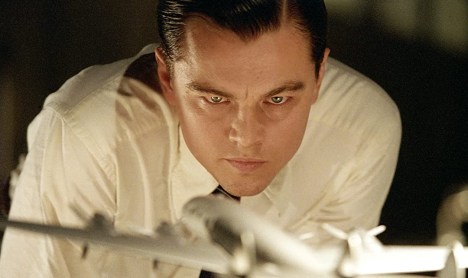
“They Are Touching Things!” The Aviator, and the Yearning for Human Contact…

I was thrilled to get back invited on The Movie Palace with Carl Sweeney to talk about Martin Scorsese’s The Aviator. It’s a film that I hadn’t watched in quite a while, and which had a much stronger impact on me than I expected. You should listen to the whole podcast conversation, but I had some thoughts I wanted to more properly articulate.

Q-U-A-R-A-N-T-I-N-E…

The Aviator is about many things.

Most obviously, it is about famous Hollywood director and aviation pioneer Howard Hughes. Hollywood had been trying for decades to bring Hughes’ life to screen. Directors like Christopher Nolan and Warren Beatty had failed to get their Hughes-related projects off the ground. Indeed, The Aviator almost feels like a work-for-hire project from Scorsese, who replaced Michael Mann as the director of this project at the behest of lead actor Leonardo DiCaprio. Having previously collaborated on Gangs of New York, The Aviator cemented Scorsese and DiCaprio’s partnership.

However, despite his late arrival on the project, The Aviator feels very much like a Martin Scorsese film. After all, the second half of the film is given over to an impassioned creator dragged out into the limelight and forced to justify a spectacular and costly failure while arguing for his exacting creative vision. This aspect of the film would undoubtedly have resonated with Scorsese, who had just come on to the project fresh from the debacle of Gangs of New York, which involving fighting with Harvey Weinstein over the cut of a movie “whose box office returns weren’t overwhelming.”

Still, there’s one aspect of The Aviator that feels much more pointed and resonant in the current context of global lockdowns and self-isolation. In a very fundamental way, The Aviator is a story about the paradox of touch. It is a story of a man who longs for human connection, but whose neuroses make that sort of connection impossible. The Aviator tells the tale of a man who locks himself away from the world, but must eventually find the strength to put himself back in it.

Continue reading

New Escapist Column! On the Bleak Nihilism at the Heart of Alien³…

I published a new piece at Escapist Magazine this evening. With “Alien Day” arriving tomorrow, I thought this was as good a time as any to celebrate the most under-appreciated film in the series.

Alien³ has a somewhat tarnished legacy. It was subject to a lot of criticism when it came out, some of which was justified and some was not. While director David Fincher’s original vision is lost to history, there have been welcome efforts to reclaim the film. The Assembly Cut is well worth any film fan’s time, and deserves consideration as a worthy entry within the larger franchise. Even allowing for this minor rehabilitation, the film is still undervalued.

Alien³ will never be as good or as iconic as Alien or Aliens. However, it is a worthy successor. The film’s unrelenting commitment to – and loud endorsement of – nihilism is very much in keeping with the spirit of the franchise. Alien³ is a massive and expensive studio blockbuster that argues for the horror of existence and the cruelty of a vicious universe. It is a $50m argument for self-negation in the face of such cosmic terror. These ideas simmered through Alien, but Alien³ allows them to come to a boil. It’s breathtaking.

You can read the piece here, or click the picture below.


179. Le salaire de la peur (The Wages of Fear) – World Tour 2020 (#202)

Hosted by Andrew Quinn and Darren Mooney, and this week with special guest Tony Black, The 250 is a (mostly) weekly trip through some of the best (and worst) movies ever made, as voted for by Internet Movie Database Users.

This time, Henri-Georges Clouzot’s Le salaire de la peur.

Four men drift idly around a deadend town in the heart of South America, when an unlikely opportunity strikes. A freak accident has caused a fire at an American oil well, and the company is offering a lavish payday to anybody who can help. The only catch is that to earn that money, these four men will have to drive extremely volatile nitroglycerine across some of the most treacherous terrain imaginable. Those who survive will have enough to escape the purgatory in which they’ve found themselves, and those who don’t won’t care.

At time of recording, it was ranked 202nd on the list of the best movies of all time on the Internet Movie Database.

Continue reading