• Following Us

  • Categories

  • Check out the Archives


  • Awards & Nominations

Millennium – Roosters (Review)

This May and June, we’re taking a trip back in time to review the fifth season of The X-Files and the second season of Millennium.

Then Peter remembered the word Jesus had spoken: “Before the rooster crows, you will disown me three times.” And he went outside and wept bitterly.

– Matthew 26:72

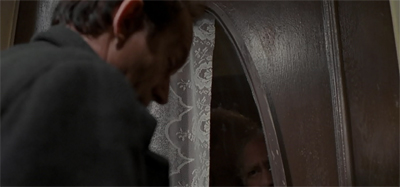
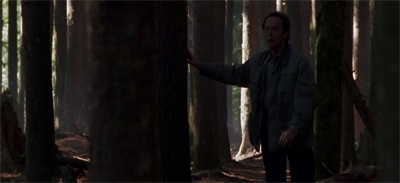
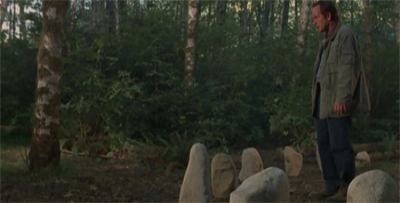
Everything is in runes...

Everything is in runes…

Continue reading

Millennium – Midnight of the Century (Review)

This May and June, we’re taking a trip back in time to review the fifth season of The X-Files and the second season of Millennium.

Midnight of the Century is a Millennium Christmas episode, as strange as that might sound.

In hindsight, it really should not seem so strange. After all, The X-Files had just done a big two-part Christmas episode with Christmas Carol and Emily. More than that, executive producers Glen Morgan and James Wong had demonstrated an affinity for holiday-themed episodes. The duo had written the Christmas-themed Beyond the Sea for the first season of The X-Files, and had commissioned The River of Stars while they were running Space: Above and Beyond. They had also written The Curse of Frank Black, a Halloween-themed Millennium episode.

Angels in America...

Angels in America…

Midnight of the Century is the second Millennium script credited to writers Kay Reindl and Erin Maher. The duo had been recruited by Morgan and Wong at the start of the second season, and had already produced A Single Blade of Grass. It was a messy episode, albeit one with flashes of genius. Midnight of the Century gives the two writers a much cleaner brief and a lot more room to work. As with The Curse of Frank Black, there is a wonderfully relaxed pace to Midnight of the Century, a sense it knows both where it’s going and how it wants to get there.

On paper, the idea of “a Millennium Christmas episode” sounds like the bleakest thing ever. However, while there are elements of melancholy involved, it is to the credit of everybody involved that Midnight of the Century feels so damn bittersweet.

A Black (family) Christmas...

A Black (family) Christmas…

Continue reading

Millennium – Beware of the Dog (Review)

This May and June, we’re taking a trip back in time to review the fifth season of The X-Files and the second season of Millennium.

Beware of the Dog opens with the shot of the same comet discussed at the start of The Beginning and the End, just in case viewers thought that The Beginning and the End was somehow a fluke or a deviation. The Beginning and the End was not a freak occurrence, it was not some random divergence from the rest of Millennium. It was very much a new beginning for the series, harking in a bold new direction utterly unlike that marked out by The Pilot. The second season of Millennium was a new breed of animal.

And so a lot of Beware of the Dog is devoted to reinforcing this new direction – convincing the viewers at home that Millennium had reinvented itself from the ground up. Part of what is interesting about Beware of the Dog is the way that the basic structure and beats of the episode hark back to the formula and themes of the first season, but in a way that makes it quite clear that things have changed. Beware of the Dog embraces the pulpy absurdity of a show about millennial fears and anxieties, about the nature of good and evil in the world.

Call of the wild...

Call of the wild…

Beware of the Dog is a very weird piece of television. It is resoundingly and unapologetically odd. It is nowhere near as quirky and eccentric as the second season would become in episodes like The Curse of Frank Black or Jose Chung’s “Doomsday Defense” or The Time is Now, but decidedly more surreal than the first season had allowed itself to be – even in episodes like Force Majeure or Powers, Principalities, Thrones and Dominions. This is an episode which takes the first season’s “serial killer of the week” format, and substitutes in packs of wild dog.

The result is a piece of television that is quite difficult to classify and quantify, but which feels fresh and exciting. As with The Beginning and the End, there is a playfulness and fun to Beware the Dog that was sorely lacking from extended stretches of the first season. Indeed, it seemed unlikely during the first season that Millennium would ever be classed as “playful” or “fun.” That sense of energy and vibrance imbues the second season with life, helping to carry the show across some admittedly rough episodes later in the year.

Circle of trust...

Circle of trust…

Continue reading

The X-Files – Home (Review)

This February and March, we’re taking a trip back in time to review the fourth season of The X-Files and the first season of Millennium.

Home is a big one.

It is an episode that is frequently ranked among the best that the show ever produced. It is an episode that many viewers remember quite clearly, even if they only saw it once years earlier. It was the first episode of the show to receive a viewer discretion warning on initial broadcast and was famously never repeated on the Fox Network. “It had one airing and then it was banned,” writer Glen Morgan quipped. “Jim and I don’t get rerun money for that.” It is also one of the rare episodes of The X-Files that is not explicitly paranormal in its subject matter, instead wandering into the macabre and the taboo.

Here there be monsters...

Here there be monsters…

Home also marks the return of writers Glen Morgan and James Wong to the series, following the cancellation of Space: Above and Beyond. With the debut of Millennium looming, the production team on The X-Files was under pressure. Fox had convinced Morgan and Wong to return to Ten Thirteen in return for producing a pilot for The Notorious Seven, one the duo’s long-gestating ideas. Morgan and Wong would produce four episodes of the fourth season of The X-Files and three episodes of the first season of Millennium.

Home is the first of their four scripts for the fourth season of The X-Files, and it sets the mood quite well. Returning from Space: Above and Beyond, the two seemed to be bristling with an electric energy and a palpable frustration. While not all four scripts are unqualified masterpieces, they each serve to push The X-Files further than it has gone before. Perhaps the most surprising thing about Home is that it is the most conventional of these four explosive scripts.

The mother of all problems...

The mother of all problems…

Continue reading

My 12 for ’14: Gone Girl and the most $£@!ed up people…

With 2014 coming to a close, we’re counting down our top twelve films of the year. Check back daily for the latest featured film.

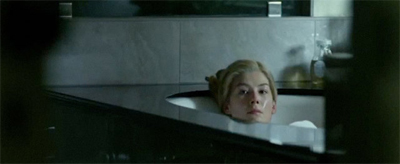
Gone Girl is a surprisingly playful film.

David Fincher is a director who likes to play with his audience, constructing elaborate and stylish labyrinths that might trap the audience as easily as they trap his characters. Gone Girl plays to Fincher’s strengths, as Gillian Flynn adapts her best-selling novel into a pulpy thriller. The news that Fincher and Flynn would collaborate on HBO’s Utopia is fantastic, giving television viewers something to anticipate; one hopes that the collaboration might be as fruitful as that enjoyed by Nic Pizzolatto and Cary Joji Fukunaga on True Detective this year.

gonegirl3

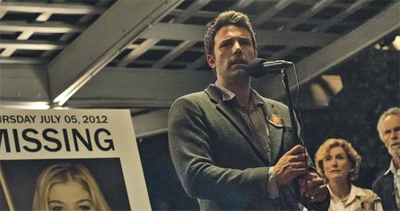
Gone Girl is a story about stories. Most particularly, it is the story of two people fighting to control their own narratives; to try to steer the stories being told around them. Is Nick Dunne a loving husband desperately searching for his missing wife? Or is Nick Dunne a sociopath desperately trying to cover-up her murder? Is Amy Dunne an innocent victim who has worked her way into the heart of the American public? Or is Amy Dunne a manipulative and ruthless (and ruthless) cynic who has helped to turn her marriage into a perpetual struggle?

Gone Girl is a very sleek and stylish film that is lovingly crafted and wryly self-aware. It is a horror story about a dysfunctional marriage, a tale about media fascination and a black comedy about resentment and revenge. More than that, it is a puzzle that competes against the audience, a story that seems to change form at any point where the viewer might finally have come to grips with what they are watching.

gonegirl5

Note: This “best of” entry includes spoilers for Gone Girl. You should probably go and see the movie, because everybody is talking about it. Don’t worry, we’ll wait for you. Still there? Good. Let’s continue. Continue reading

Star Trek – Journey to Babel (Review)

The first Star Trek pilot, The Cage, was produced in 1964. To celebrate its fiftieth anniversary, this December we are reviewing the second season of the original Star Trek show. You can check out our first season reviews here. Check back daily for the latest review.

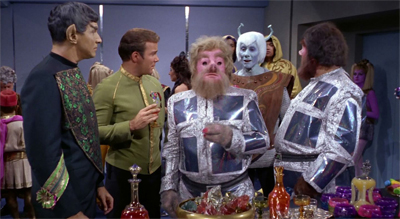
Journey to Babel is pretty influential, as episodes of Star Trek go. It is an episode that really cements idea of the Federation that came to be at the heart of the franchise, suggesting that the organisation really is a diverse intergalactic alliance of diverse alien species, rather than a union between Earth and Vulcan. More than that, the episode suggests that the individual members of the Federation might not exist in perfect harmony with one another, but may each operate with their own agenda and motivations.

However, what is really remarkable about Journey to Babel is how much of this unfolds in the background. All this world-building and -embellishing is very much a secondary concern for writer D.C. Fontana. Despite its scale and its scope, Journey to Babel is a decidedly personal story about a family in crisis. It works remarkably well, offering viewers a bit more insight into Spock as a character and where he came from.

Party on, Gav...

Party on, Gav…

Continue reading

The X-Files – End Game (Review)

This August (and a little of September), we’re taking a trip back in time to review the second season of The X-Files. In November, we’ll be looking at the third season. And maybe more.

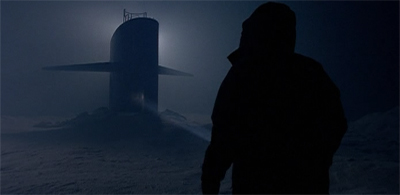
Towards the end of End Game, Mulder stumbles across a nuclear submarine that was attacked in the episode’s teaser. The craft was disabled by a strange craft it picked up in the ocean. Now, following a mysterious alien figure across the world in a quest to find his sister, Mulder approaches the location of the lost American submarine. As he does, he notices the submarine’s coning tower, bursting through the ice.

It’s one of those beautifully iconic television moments. It’s an image that is audacious and stunning and beautiful and breathtaking. It immediately gives End Game (and Colony) a sense of scale. All of a sudden, this isn’t just a bunch of stuff happening under the radar in some small town somewhere. This is the hijacking of a nuclear submarine by a hostile entity. This is Mulder going to the ends of the Earth to get his sister back.

Not so green any longer...

Not so green any longer…

It’s also worth noting that the symbolism is beautiful. Even looking at a picture of Mulder on the ice conjures up all manner of associations. Coupled with the non-linear storytelling employed by Colony and End Game, it calls Frankenstein to mind – Frankenstein serving as a massively influential text on Chris Carter. However, the idea of Mulder finding important existential answers on an Arctic soundstage also evokes Clark Kent’s self-discovery in Richard Donner’s Superman films, playing into the sense that this is an episode framed in cinematic terms.

The rest of the episode could just be dead air, and End Game would still work impressively well. However, End Game remains a fantastic piece of work in its own right, effectively codifying how a two-parter is meant to work.

The truth is out there...

The truth is out there…

Continue reading

Scott Snyder & Greg Capullo’s Run on Batman – Death of the Family (Review/Retrospective)

23rd July is Batman Day, celebrating the character’s 75th anniversary. To celebrate, this July we’re taking a look at some new and classic Batman (and Batman related) stories. Check back daily for the latest review.

In many respects, despite the massive hype that it received and the gigantic crossover that it spawned, Death of the Family is structured as an anti-epic. The triumphant return of the Joker to the world of Batman over a year into the “new 52” instead turns into a deconstruction and criticism (and arguably a rejection) of the character. Sandwiched between Scott Snyder and Greg Capullo’s much larger and more ambitious epic Batman stories, Death of the Family is a story about how small the Joker really is.

In many respects, Death of the Family reads best as the story of a collapsing relationship, where one partner refuses to deal with the fact that the other has outgrown them.

Ever dance with the devil in the pale moonlight?

Ever dance with the devil in the pale moonlight?

Continue reading

Star Trek: The Next Generation – Family (Review)

This January and February, we’ll be finishing up our look at the second season of Star Trek: The Next Generation and moving on to the third year of the show, both recently and lovingly remastered for high definition. Check back daily for the latest review.

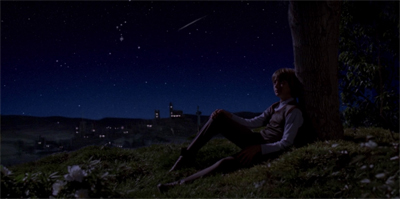
He’s still out there. Dreaming about starships and adventures. It’s getting late.

Yes. But let him dream.

– Robert and Marie try to figure out what all this “Star Trek” milarky is about

Starry, starry night...

Starry, starry night…

Continue reading

Star Trek: The Next Generation – The Best of Both Worlds, Part II (Review)

This January and February, we’ll be finishing up our look at the second season of Star Trek: The Next Generation and moving on to the third year of the show, both recently and lovingly remastered for high definition. Check back daily for the latest review.

The Best of Both Worlds, Part II was always going to feel like a bit of an anti-climax. After all, the show had spent so much time building up the Borg as this implacable and undefeatable adversary. In Q Who?, it had taken the interference of a god-like entity to allow the Enterprise a chance to escape their unstoppable foe. In The Best of Both Worlds, Part I, the Enterprise had been able to run for a while – but the Borg eventually caught up with them and took what they wanted.

Since The Best of Both Worlds, Part II was never going to end with the Borg destroying Earth, and since Star Trek: The Next Generation was never going to be a show willing to exact a dramatic cost high enough to justify victory against such overwhelming odds, the resolution to the two-parter was never going to live up to the heightened drama and impossible stakes suggested by The Best of Both Worlds, Part I.

Still, the second part of the adventure is charming and exciting enough that it never completely falls apart. While the resolution to the crisis does seem a little trite and convenient, The Best of Both Worlds hangs together as the show’s best two-part adventure until at least Chain of Command in the sixth season.

A Number One fan?

A Number One fan?

Continue reading