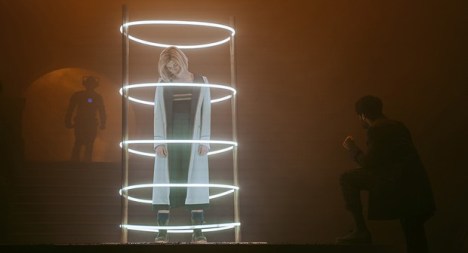
I published a new column at The Escapist yesterday. With the announcement that both Chris Chibnall and Jodie Whittaker would be leaving Doctor Who after this season and a string of specials, it seemed like a good opportunity to take a look back at their time on the show.
In particular, how this three-season stretch marks the first time since the revival that an actor’s interpretation of the Doctor has been left awaiting rehabilitation. Jodie Whittaker’s Thirteenth Doctor was a striking opportunity for the show, a talented actor in a bold reinvention. However, despite the combination of the actor’s enthusiasm and the audience’s goodwill, the show itself failed to deliver on her potential. This essentially places Whittaker in the same position as Colin Baker. The Thirteenth Doctor will have to look outside the show to find stories and characterisation worthy of the actor involved.
You can read the piece here, or click the picture below.
I’m thrilled to be launching movie reviews on The Escapist. Over the coming weeks and months, I will be joining a set of contributors in adding these reviews to the channel. For the moment, I’m honoured to contribute a three-minute film review of The Suicide Squad, which is releasing theatrically in Europe this week and in cinemas and on HBO Max in the United States next weekend.
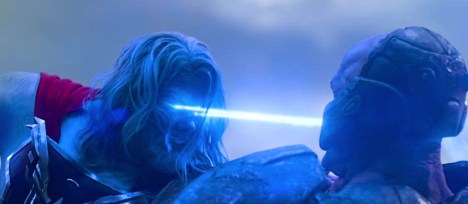
I published a new In the Frame piece at The Escapist this evening. With Loki wrapping up its first season this week, it seemed like a good opportunity to take a look back at the show. In particular, how the season finale betrayed the show’s core themes and characters.
Loki is a story about many things, but it is primarily about power. It is about whether individuals have the power to determine the paths of their own lives. It is about who has the power to determine what stories get told and what they do with that power. It is also about how power intrinsically acts in its own best interests. There’s a lot of really interesting and biting stuff in Loki, which makes it slightly frustrating when the final makes a conscious choice to rob its characters of their agency, to reveal that this story doesn’t belong to them, and to argue that power must be centralised. In the end, Loki betrayed itself.
You can read the piece here, or click the picture below.
So, as I have mentioned before, I am launching a new video series as a companion piece to In the Frame at The Escapist. The video will typically launch with every second Monday’s article, and be released on the magazine’s YouTube channel the following week. This is kinda cool, because we’re helping relaunch the magazine’s film content – so if you can throw a subscription our way, it would mean a lot.
This month, with Aliens celebrating its thirty-fifth anniversary, it seemed like a good opportunity to take a look at the film. In particular, how James Cameron designed one of the great sequels by refusing to simply repeat what worked about the original Alien. Instead, Aliens works in large part because it actively responds to and engages with Alien, in a way that enriches both films.
The Escapist have launched a movie podcast, and I was thrilled to join Jack Packard and Lee Murkey for the eighteenth episode of the year, to discuss Zack Snyder’s Army of the Dead and the perennial debate over movie lengths.
So, as I have mentioned before, I am launching a new video series as a companion piece to In the Frame at The Escapist. The video will typically launch with every second Monday article, and be released on the magazine’s YouTube channel the following week. This is kinda cool, because we’re helping relaunch the magazine’s film content – so if you can throw a subscription our way, it would mean a lot.
This week, given that TENET is now available to stream in the United States and around the world, it seemed like a good time to take a look at Christopher Nolan’s latest. In particular, a look how the themes of TENET resonate with other films in Nolan’s filmography, from Memento to The Prestige to Inception to Interstellar.
I published a new In the Frame piece at The Escapist yesterday evening. With the release of Superman: The Animated Series in high-definition on HBO Max in March, it seemed like an opportunity to take a look back at the underappreciated entry in the DC Animated Universe.
Superman: The Animated Series tends to get overshadowed in discussions of the DCAU by the two shows either side of it, by the earlier Batman: The Animated Series and by the two later Justice League series. However, Superman: The Animated Series is an interesting bridge between the two, eschewing the “villain of the week” structure of Batman: The Animated Series to instead focus on long-form storytelling that developed character and built the world in ways that would pay off in the later spin-offs. It remains one of the best takes on the Man of Steel.
You can read the piece here, or click the picture below.
I published a new In the Frame piece at The Escapist yesterday evening. With the release of the first season volume of Jupiter’s Legacy on Netflix, it seemed like an opportunity to talk about the weirdness of the Netflix bloat.
The first season of Jupiter’s Legacy is eight episodes long, but covers about as much narrative real estate as the first two issues of Mark Millar and Frank Quitely’s comic book. The season doesn’t even get to what is effectively the big inciting incident for the bulk of the comic book, instead stretching certain plot points and certain threads past breaking points. It’s not that Netflix departs or deviates from the source material; it’s often quite faithful in quoting from the comic. It’s that the show can’t seem to even get started.
You can read the piece here, or click the picture below.
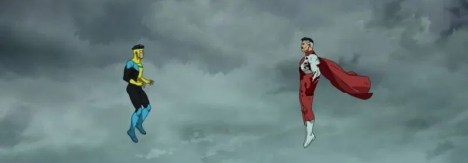
I published a new In the Frame piece at The Escapist yesterday evening. With the end of the first season of Invincible, it seemed like a nice opportunity to take a look at what makes the animated superhero show so interesting.
A lot of the discussion of Invincible has focused on the violence of the show, with many commentators arguing that Invincible is a deconstruction of classic superhero tropes. However, what’s striking about Invincible is what this violence conceals. At its core, Invincible is a surprisingly earnest and conventional superhero story, executed with a minimum of ironic detachment and self-aware distance. It is not a deconstruction of the tropes of superhero storytelling, but an earnest celebration of them.
You can read the piece here, or click the picture below.
So, as I have mentioned before, I am doing some film critic work at The Escapist. Part of that includes long-form video criticism, such as this piece which is now available to watch at the Escapist YouTube Channel, looking at Peter Weir’s underrated maritime masterpiece, Master and Commander: The Far Side of the World.


















 the m0vie blog