• Following Us

  • Categories

  • Check out the Archives


  • Awards & Nominations

Star Trek: Enterprise – North Star (Review)

Next year, Star Trek is fifty years old. We have some special stuff planned for that, but – in the meantime – we’re reviewing all of Star Trek: Enterprise this year as something of a prequel to that anniversary. This August, we’re doing the third season. Check back daily for the latest review.

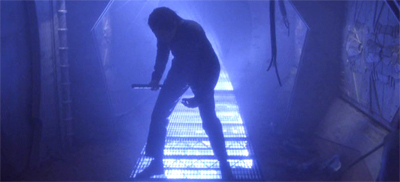
It is surprising just how hasty some sections of Star Trek fandom are to dismiss North Star as absurd or ham-fisted or ridiculous.

It is precisely those qualities the make North Star quintessential Star Trek.

Spectre of gun...

Spectre of gun…

Continue reading

Star Trek: Enterprise – Twilight (Review)

Next year, Star Trek is fifty years old. We have some special stuff planned for that, but – in the meantime – we’re reviewing all of Star Trek: Enterprise this year as something of a prequel to that anniversary. This August, we’re doing the third season. Check back daily for the latest review.

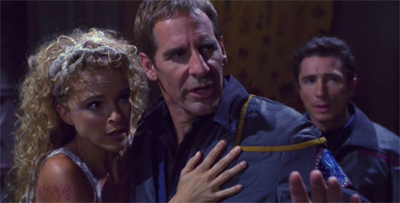
Twilight is a fascinating piece of Star Trek.

There are some significant flaws with the episode, particularly in how it treats T’Pol as a character and the eagerness with which it grabs at the famed “reset button.” However, despite these problems, Twilight is pretty much perfectly positioned. Eight episodes into the third season, the new status quo has been established. The ground rules have been laid down. Over the past seven episodes, fans have been given a sense of how the third season of Star Trek: Enterprise is supposed to work.

Keep your shirt on, Archer...

Keep your shirt on, Archer…

However, there is a palpable sense of unease about the larger arc – a question of how Star Trek can tell a story like the Xindi arc while remaining true to itself. The Shipment was an awkward attempt to impose a traditional Star Trek moral structure upon the season. North Star and Similitude are very much traditional Star Trek morality tales set against the backdrop of the larger arc. Like many of the stronger shows towards the tail end of the second season, these episodes seem to ask how you can apply old Star Trek standards to the twenty-first century.

Twilight is an episode about what happens if the Xindi arc goes wrong. Obviously, this is a story about what happens if Archer cannot save Earth from the Xindi, documenting the slow death of mankind as they are hunted through the cosmos. However, on an external level, Twilight is a story about what happens if Star Trek bungles this big grasp at relevance. It is no coincidence that the debilitating impairment that Archer develops involves his long-term memory. If the franchise forgets itself, all is lost.

Everything dies...

Everything dies…

Twilight is not just the story about the death of Earth or the death of humanity. It is a story about the death of Star Trek. Two years earlier, the franchise had seemed almost invincible; the idea of there not being any Star Trek on the air after the end of Star Trek: Voyager seemed almost absurd. However, by the time that the show had reached the third season, its existence was very much in peril. Twilight is a story about how horrible and apocalyptic the future might be; how Star Trek might find itself hobbled and then destroyed.

As its name implies, Twilight is a lament for the franchise; perhaps a tacit acknowledgement that the show was nothing more than a dead man walking at this point. The result is a surprisingly moving piece of television, a thoughtful and considerate examination of just how much is on the line for the franchise as well as the characters.

Waking dream...

Waking dream…

Continue reading

Star Trek: Enterprise – Exile (Review)

Next year, Star Trek is fifty years old. We have some special stuff planned for that, but – in the meantime – we’re reviewing all of Star Trek: Enterprise this year as something of a prequel to that anniversary. This August, we’re doing the third season. Check back daily for the latest review.

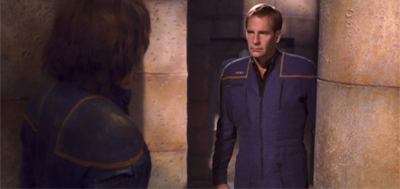
If Impulse was Star Trek doing contemporary horror, then Exile is Star Trek doing gothic horror.

It is quite impressive how committed Exile is to its gothic horror trappings. Tarquin doesn’t just live alone in exile and project flattering images of himself; he lives in an honest-to-goodness gothic mansion lit by candles, where he dabbles in the occult while wearing what is a highly stylised dressing gown and between tending to the graves of his beloved(s). Exile does not skimp on its pulpy trappings. Like a lot of the early third season episodes, Exile would make for a satisfying dime-store paperback sci-fi novel; several images from the story would make a suitable cover.

It was a dark and stormy night...

It was a dark and stormy night…

That said, it is quite difficult to pull off gothic science-fiction. The original Star Trek pulled it off on a number of occasions – most obviously with The Squire of Gothos. The later spin-offs have struggled getting the right balance of po-faced seriousness with heightened absurdity. Star Trek: The Next Generation attempted Sub Rosa in its final season, while Star Trek: Voyager had some early experiments with Janeway’s gothic horror fantasy. Neither could be deemed a resounding success, and Exile stumbles a bit in the execution.

There are a number of leaps that the plot doesn’t quite articulate as well as it might. It is hard to believe that Archer would leave Hoshi alone with Tarquin, even with a phase pistol tucked under her pillow. The revelation of Tarquin’s powers should terrify the crew; having the ability to alter another person’s perception across lightyears is utterly unlike anything these explorers have seen before. However, everybody seems to accept it at face value so that the plot can move along at a reasonable rate.

Somebody has a fixation...

Somebody has a fixation…

The way that Exile ties back into the larger arc is somewhat clumsy, right down to the convenient segue into The Shipment that comes in the final scene. In many ways, the structure of Exile recalls that of Extinction, an effectively stand-alone story that contains a very trite nods to the larger Xindi arc without any substantive connection. Despite the vital exposition that Tarquin provides in his final scene (and the subplot involving the spheres), Exile feels rather unnecessary in the larger scheme of things.

And yet, despite all that, Exile has something quite interesting to say. Written by Phyllis Strong, directed by Roxann Dawson and starring Linda Park, Exile is a very rare episode of Enterprise. It is a story with a very clear (and somewhat prescient) feminist subtext that has some very astute observations to make about certain facets of what might be deemed “nerd culture.” Specifically, male nerd culture.

He sees you when you're sleeping...

He sees you when you’re sleeping…

Continue reading

Star Trek: Enterprise – Impulse (Review)

Next year, Star Trek is fifty years old. We have some special stuff planned for that, but – in the meantime – we’re reviewing all of Star Trek: Enterprise this year as something of a prequel to that anniversary. This August, we’re doing the third season. Check back daily for the latest review.

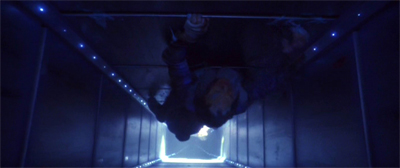
Impulse is a Star Trek zombie story.

It might sound absurd, but it works very well. After all, the Star Trek franchise rooted in pulp space horror, with extended stretches of the original show portraying space as haunted. In some ways, Impulse could be seen as a logical extension of Regeneration from late in the second season. Both episodes are very much modelled on the classic zombie horror movie formula, both deal with how traditional Star Trek morality applies to that formula, and both are even directed by veteran Star Trek producer David Livingston, who brings a nice kinetic feel to the adventures.

Dead space...

Dead space…

Impulse works a lot better than it really should. There are some plotting issues created by the secondary storyline grafted into the episode, and the show doesn’t quite develop its Vulcan themes as well as it might. However, it compensates for these issues with an incredible sense of energy and momentum. The third season of Star Trek: Enterprise might be the first season of Star Trek to be seriously facing cancellation in decades, but it had an entirely new lease on life.

Impulse is a bold and exciting piece of television, one that feel vital and urgent. It recaptures some of the appeal of the new status quo that had been somewhat squandered by Extinction and Rajiin.

Reed shirt...

Reed shirt…

Continue reading

Star Trek: Enterprise – Rajiin (Review)

Next year, Star Trek is fifty years old. We have some special stuff planned for that, but – in the meantime – we’re reviewing all of Star Trek: Enterprise this year as something of a prequel to that anniversary. This August, we’re doing the third season. Check back daily for the latest review.

Rajiin is not as bad as Extinction. So there’s that.

Rajiin continues the pulpy theme that runs through the third season of Star Trek: Enterprise and into the fourth. There is a sense that the writing staff are cutting loose with a collection of decidedly retro science-fiction tropes that they found in the old storage cupboard. The third and fourth seasons have a gonzo energy to them, with elements like the reptile!Xindi and the evil!alien!space!Nazis feeling like ideas that escaped from the types of magazines where Benny Russell used to work.

"Captain, my scans report that she does have Bette Davis eyes."

“Captain, my scans report that she does have Bette Davis eyes.”

At its best, this new storytelling freedom allows the show to cut loose with ideas that would have made Star Trek: The Next Generation or Star Trek: Voyager blush. The show would never have attempted episodes like Impulse and North Star in its first or second season. Even if the episodes are not flawless, they have an energy and vitality that was sorely lacking in the first two years of the show. It feels like the writing staff are really having fun with the concept, playing with the sort of goofy ideas that they never would have attempted a year or so earlier.

Of course, there is a flip side to that coin. The biggest misfires of the third season are generally rooted in that pulpy storytelling style. Extinction was effectively a “lost race” story that felt like a throwback to colonial narratives about explorers in exotic parts of the world. Rajiin is the story of an alien seductress who our hero rescues from slavery, only to use her womanly wiles to seduce the crew for a sinister purpose.

"Hey, Kirk got to do this all the time!"

“Hey, Kirk got to do this all the time!”

Continue reading

Star Trek: Enterprise – Extinction (Review)

Next year, Star Trek is fifty years old. We have some special stuff planned for that, but – in the meantime – we’re reviewing all of Star Trek: Enterprise this year as something of a prequel to that anniversary. This August, we’re doing the third season. Check back daily for the latest review.

In many respects, The Xindi and Anomaly opened the third season as if it were the first season of a new show. In particular, Anomaly built consciously and cleverly off of Fight or Flight and Strange New World in providing a solid foundation for the year ahead. The comparison works quite well. By that logic, Extinction and Rajiin serve as Unexpected and Terra Nova. They are two of the weakest episodes of the season, harmed by their close proximity to the start of the year. Anybody wanting to reach Twilight or Damage has to get through Extinction and Rajiin.

In many respects, this early lag in the third season demonstrates just how inexperienced the creative team were at long-form serialised storytelling. The only arc comparable to the Xindi arc in the entire Star Trek franchise is the Dominion War arc on Star Trek: Deep Space Nine. There, the writers were clever enough to launch the new status quo with an unheralded six-episode interconnected story. The Dominion War had its share of duds, but the opening salvo was magnificently confident.

Archer's not feeling himself lately...

Archer’s not feeling himself lately…

In contrast, the third season of Star Trek: Enterprise suffers out of the gate. The Xindi and Anomaly do good work setting up plot points and character beats that will be of use later in the season, but there is no real sense that the writing staff has any idea what that use might be at this point of the season. Two episodes into the third season, the show is already back to fairly formulaic adventures that stand quite cleanly alone. It is not too difficult to imagine Extinction or Rajiin as episodes in any other season – albeit with some slight tinkering.

However, this is only part of the problem. Long-form storytelling need not become a burden. There is a great deal of value to be had in drifting away from a serialised story arc to tell a quality standalone tale. Unfortunately, Extinction is not a quality standalone tale. In fact, it is one of the worst episodes of Enterprise ever produced. Airing it as the third episode of a bold new season feels like a poor choice.

"C'mon, wouldn't you like to go back to being a torturing and almost genocidal human?"

“C’mon, wouldn’t you like to go back to being a torturing and almost genocidal human?”

Continue reading

Star Trek: Enterprise – Anomaly (Review)

Next year, Star Trek is fifty years old. We have some special stuff planned for that, but – in the meantime – we’re reviewing all of Star Trek: Enterprise this year as something of a prequel to that anniversary. This August, we’re doing the third season. Check back daily for the latest review.

Anomaly continues the sense that the third season of Star Trek: Enterprise is essentially a new first season of the show.

That is most obvious in the way that the script works hard to establish the ground rules of the Expanse. There is a sense that the episode is very clearly establishing rules and plot points that will come into play later in the run. Anomaly not only explains why mining for trellium-D is such a profitable enterprise; explaining that ships without it are susceptible to all sorts of strange distortions to the laws of physics. Anomaly also introduces the spheres, strange structures that will become a key part of the third season’s mythology.

A good man goes to war...

A good man goes to war…

The show is also marking out ground for later exploration. Anomaly becomes a lot more potent in hindsight, with various decisions here reversed in later episodes. In Anomaly, Archer is a victim of piracy; in Damage, he is forced to commit piracy. In Anomaly, Archer tortures a prisoner in order to procure information that he needs; in Countdown, Hoshi is tortured by Dolim in order to procure information that he needs. It is not entirely clear whether these plot beats were figured out ahead of time, but – like the destroyed Xindi home world in The Xindi – they lend the third season a nice sense of moral symmetry.

Most interestingly – and, perhaps, most pointedly – Anomaly represents a clear return to two very early episodes of the first season. The script of Anomaly touches quite overtly on plot points from Fight or Flight and Strange New World. In some ways, it could be seen as a belated do-over.

Sparks fly...

Sparks fly…

Continue reading

Star Trek: Enterprise – The Xindi (Review)

Next year, Star Trek is fifty years old. We have some special stuff planned for that, but – in the meantime – we’re reviewing all of Star Trek: Enterprise this year as something of a prequel to that anniversary. This August, we’re doing the third season. Check back daily for the latest review.

Delivering on change is always more difficult than promising change.

The first block of episodes in the third season of Star Trek: Enterprise struggle with the weight of expectation and the sense that the production team have no real idea of how to manage this sort of storytelling. Rick Berman and Brannon Braga had consulted with Ira Steven Behr towards the end of the second season, suggesting that they wanted to model the storytelling loosely on the blend of episodic and serialised scripting that Behr oversaw on Star Trek: Deep Space Nine. It makes sense, as Deep Space Nine was the only Star Trek series to really engage with that sort of storytelling.

A primate example of the Xindi...

A primate example of the Xindi…

In hindsight, it seems a shame that the writing room on Deep Space Nine was allowed to disintegrate so thoroughly. Ira Steven Behr, Hans Beimler and Rene Echevarria departed immediately following What You Leave Behind. Ronald D. Moore migrated briefly over to Star Trek: Voyager, but quit quite promptly following creative disagreements with former collaborator Brannon Braga. The veteran writers on Enterprise came from Voyager. Brannon Braga, Mike Sussman, Phyllis Strong and André Bormanis were all writers who had come into their own working on Voyager.

Star Trek: Voyager a show that was incredibly episodic and seemed to actively resist serialisation even more than Star Trek: The Next Generation. This is not a reflection on the production team. Braga had lobbied to expand Year of Hell into a year-long story arc during the fourth season, but his proposal had been rejected. Discussing the Xindi arc, Braga has talked about how he wanted to tell a year-long Star Trek story, and it is telling that one of his post-Star Trek writing assignments was on 24.

The ascent...

The ascent…

Nevertheless, it meant that the writers working on Enterprise faced a sharp learning curve when it came to structuring the third season. The experience accumulated during the arc-building on Deep Space Nine was largely lost to the franchise, and a lot of the early part of the third season sees Enterprise making a number of teething mistakes. The early stretch of the third season struggles to pace itself, and it struggles to integrate stand-alone stories with its larger serialised arc.

The Xindi is a prime example of this, an episode that has a wealth of interesting ideas and great concepts, but one that stumbles in the execution.

Pointing the finger...

Pointing the finger…

Continue reading

Star Trek: Enterprise – Season 2 (Review)

Next year, Star Trek is fifty years old. We have some special stuff planned for that, but – in the meantime – we’re reviewing all of Star Trek: Enterprise this year as something of a prequel to that anniversary. This April, we’re doing the second season. Check back daily for the latest review.

The second season of Star Trek: Enterprise is a strange beast, breaking down into roughly three sections.

The first section runs from Shockwave, Part II through to A Night in Sickbay. There is a nice energy to these episodes, with the first appearance of the Romulans in Minefield and nice internal continuity between otherwise stand-alone adventures like Minefield and Dead Stop. Carbon Creek is a fun diversion and A Night in Sickbay at least tries to do something novel and exciting – even if the show can’t quite pull it off. This stretch of the season feels like an organic development from the first season, a collection of episodes of variable quality; balancing the desire to try new things with nods to the franchise’s strengths.

ent-theexpanse9

The final stretch runs from Judgment to The Expanse. The third season looms large over these episodes, with a sense of impending change in the air. These episodes seem to bid farewell to a version of Star Trek that has existed since the third season of Star Trek: The Next Generation. Judgment gives the Klingons one last epic story, Regeneration checks in on the Borg. The Breach offers a traditional Star Trek morality play, while Cogenitor brutally subverts it. Even episodes like Horizon and First Flight call back to the earliest episodes of Enterprise, as if to offer one last reflection on what might have been.

However, the second season is dominated by a long middle stretch – episodes running from Marauders through to The Crossing. While episodes like Future Tense provide an occasional reprieve, this middle stretch of the season is workmanlike and functional. This is the first two seasons of Enterprise as they are often dismissed: a lite version of Star Trek: Voyager in the same way that Star Trek: Voyager is a lite version of Star Trek: The Next Generation. In that long and dull middle stretch, it feels like the writing staff might as well be blowing dust off of scripts written for the seventh season of The Next Generation.

ent-shockwavepart2o

Unfortunately, while the first and third sections of the season have a lot to recommend them, it is the middle stretch that sets the mood for the season. The second season of Enterprise has more than a couple genuine stinkers – Precious Cargo, The Crossing and Bounty come to mind – but the season never hits the sustained lows of the third season of Star Trek, the first and second seasons of The Next Generation or the second season of Voyager. However, there is long string of episodes that are just dull and uninspired; formulaic and familiar.

In that extended run in the middle of the season, there are episodes that can be easily reduced to “[earlier episode or pop culture reference] by way of [earlier episode or pop culture reference]” without missing anything much. Marauders is The Magnificent Seven by way of Star Trek”, The Communicator is A Piece of the Action by way of First Contact”, Singularity is “Bliss by the way of The Game”, Vanishing Point is “Realm of Fear by way of Remember Me”, Precious Cargo is “Elaan of Troyius by way of The Perfect Mate”, Dawn is The Enemy by way of Darmok.” And so on.

ent-futuretense16

The result is a second season that is exhausting and draining. Watching it on original broadcast was a disheartening experience; each week seemed to bring more of the same. The long stretch from the end of October to the start of April was unforgiving; each week seemed to offer more evidence that Star Trek was tired and played out, a franchise disengaged from not only the world around it but also from the changing rules of its own medium. Coupled with the spectacular (but entirely foreseeable) failure of Star Trek: Nemesis, the second season of Enterprise seemed to seal the franchise’s fate.

There is a very real tragedy to all this. For all that the tail end of the second season sees a massive up-swing in quality and energy, it is perhaps too little and too late. By the time that Judgment had begun a late-season revitalisation, Rick Berman had already announced a bold new direction for the third season. That last stretch is a lame duck. In a way, the second season of Enterprise plays like a microcosm of the series itself; a dramatic upswing in quality and ambition at a point where fate has already made its decision.

ent-cogenitor

Continue reading

Star Trek: Enterprise – The Expanse (Review)

Next year, Star Trek is fifty years old. We have some special stuff planned for that, but – in the meantime – we’re reviewing all of Star Trek: Enterprise this year as something of a prequel to that anniversary. This April, we’re doing the second season. Check back daily for the latest review.

And, finally, everything changes.

It feels inevitable. Maybe not in this particular form, maybe not in this particular way, but Star Trek: Enterprise needed something. The show needed to stop feeling like a relic of the early nineties – a great song played on loop to the point where it became nothing more than generic white noise. The Expanse gives the show a clear sense of direction and a clear sense of purpose. It is not a direction that is unanimously loved, and it is not a purpose that is realised as well as it might be, but it finally feels like Enterprise is boldly going in its own direction.

A walk among the wreckage...

A walk among the ruins…

In many respects, the obvious point of comparison for The Expanse is an episode like The Jem’Hadar or A Call to Arms. It is an episode that is clearly written to reach an ending so that the show can start doing something new. These episodes tend to tease a brave new future, one utterly unlike anything that Star Trek has done before, but they play like extended forty-five minute trailers. Watching The Expanse, it feels like show runners Rick Berman and Brannon Braga are thinking more about the direction than the destination. That’s not a bad thing at this point.

Polarising as it might be, and occasionally awkward as it might be, The Expanse was utterly necessary. Enterprise is a Star Trek show that exists in the shadow of 9/11. That horrific terrorist attack has reverberated throughout the series. The War on Terror informs and distorts narratives like Shadows of P’Jem, ShockwaveThe SeventhCease FireThe CrossingJudgmentRegeneration and Cogenitor. However, there is a sense that Enterprise never accepted that heavy pull of gravity.

Homecoming...

Homecoming…

Sometimes it worked; Judgment, Regeneration and Cogenitor are all examples of the series trying to apply its own morality to a more complicated and confusing geopolitical climate. However, the War on Terror made it hard to reconcile Jonathan Archer as both an explorer and a paranoid reactionary. The unquestioning trust in authority in The Seventh, to the point where he did not question the Vulcan High Command’s mindwipe of T’Pol? The all-consuming dread upon meeting something different in The Crossing? These do not fit well within Star Trek.

So The Expanse pushes all that to the front. The opening teaser features a strange alien ship appearing and carving a large scar in the surface of the planet – a very visual representation of the damage done to the utopian optimism of Star Trek. Now that the scar had been literalised, it could be discussed and explored. The Expanse made sure that nobody was talking around the elephant in the room; everybody was now charging right at it.

The way ahead is cloudy...

The way ahead is cloudy…

Continue reading