












Maze Runner: The Death Cure feels like a movie that has arrived several years too late, a belated epilogue to the young adult boom.
The Death Cure is the last in the trilogy, the culmination of a journey that began with The Maze Runner in 2014. By that point, the young adult adaptation boom was already winding down. The Twilight Saga – Breaking Dawn, Part II had been released two years earlier, and Harry Potter and the Deathly Hallows, Part II had been released the year before that. There was a clear sense that The Maze Runner was starting when everybody else was ending.

“So, it turns out that the Death Cure is… not dying. Whudda thunk it?”
Of course, there were still faint signs of life in the genre when the series began, but those sparks have largely been extinguished. The Hunger Games: Mockingjay, Part II was released the year after The Maze Runner. One year later, The Divergent Series: Allegiant underperformed to such a degree that it has been suggested that the series might be resolved on television. Even in the context of The Death Cure, there is a sense that the production team understand the fatigue; there is no over-extended duology to bring the series to a close; no lingering Part II.
The Death Cure is mostly an efficient film, one that keeps moving well enough for the bulk of its two-hour-and-twenty-two-minute runtime, although the bloat eventually becomes too much in the final act. There is something very functional about The Death Cure, a sense that everybody involved the film – and every character within the film – has adopted a “let’s get stuff done” attitude towards the production. There is all the expected angst, betrayal, insecurity and hesitation expected of a young adult novel, but surprisingly little wallowing in those emotions.
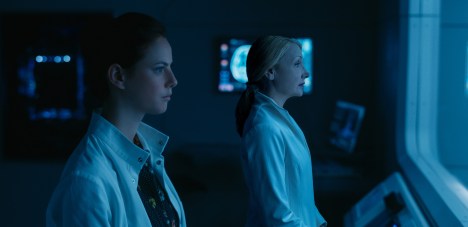
After initial trials proved unsuccessful and disappointing third quarter returns, WCKD moved on to producing “The Death Treatment.”
The result is something of a mixed blessing. Very few young adult adaptations had the benefits and strengths that defined the Harry Potter or Hunger Games franchises. Those two heavy-weight franchises had the luxury of several built-in advantages denied to many of their imitators; the strong ensemble cast, the compelling source material and the distinctive-within-limits voice. The Death Cure seems cognisant of its limitations, and so structures itself in a way to avoid exposing them too readily and too often.
However, this efficiency hinders The Death Cure. The film only rarely stumbles, and never falls flat on its face. However, it never manages to soar either.
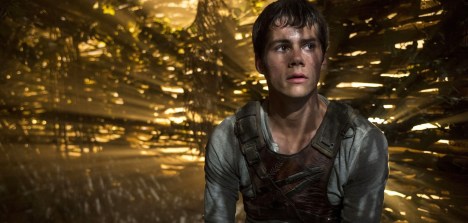
Runner, runner.
Filed under: Non-Review Reviews | Tagged: child soldiers, cynicism, death, film, movement, nihilism, non-review review, review, the death cure, the maze runner, violence | Leave a comment »









 the m0vie blog
Star Trek: Discovery – The Butcher’s Knife Cares Not for the Lamb’s Cry (Review)
The Butcher’s Knife Cares Not for the Lamb’s Cry represents another attempt to reconcile one of the central tensions of Star Trek: Discovery, the conflict that exists between the expectations of a Star Trek series and the demands of a piece of prestige television. It frequently feels like there is a tug of war between these two competing impulses within the series, and the production team are trying desperately to find the right balance between these two very different storytelling models.
Much like Context is for Kings, the basic story at the heart of The Butcher’s Knife Cares Not for the Lamb’s Cry is quintessential Star Trek plotting. The contours of the plot will be recognisable to any viewer with even a passing familiarity with the narrative structures and templates of the larger Star Trek franchise. At the same time, a lot of the episode’s finer details are more recognisable as the hallmarks of contemporary prestige television. The result is a piece of television that tells a very simplistic Star Trek in a manner that feels somewhat dissonant.
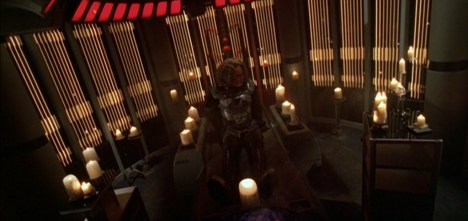
Hanging out with the Kol kids.
There is an awkwardness to The Butcher’s Knife Cares Not for the Lamb’s Cry, a sense that the creative team are still working out the proverbial kinks. Much like the engineering and science staff on the Discovery itself, the production team are creating something new and exciting, but something without a clear precedent or blueprint. Discovery often struggles to properly mix its constituent elements, some of its narrative choices feeling clumsy and others struggling to mesh with the story being told.
At the same time, like Context is for Kings before it, The Butcher’s Knife Cares Not for the Lamb’s Cry is an episode that exists primarily to reassure viewers that Discovery is still fundamentally Star Trek, no matter the production design or the prestige trappings. However, Discovery is investing so much time in proving that it is Star Trek, that it is still searching for its own clear voice.
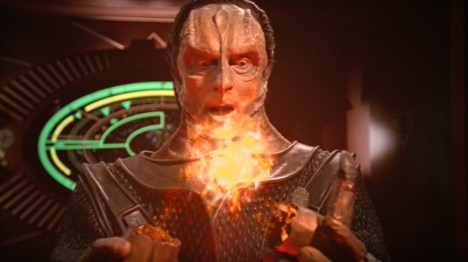
Resting uneasy.
Continue reading →
Filed under: Star Trek | Tagged: burnham, death, klingons, landry, Lorca, prestige television, social commentary, star trek, star trek: discovery, the devil in the dark | 5 Comments »