• Following Us

  • Categories

  • Check out the Archives


  • Awards & Nominations

Millennium – Blood Relatives (Review)

This February and March, we’re taking a trip back in time to review the fourth season of The X-Files and the first season of Millennium.

Blood Relatives is the best episode of Millennium to air within the first half of the first season. It is an episode that seems to recognise the potential of a show like Millennium to be more than just a formulaic procedural, acknowledging that the show needs to find its own unique narratives in the same way that The X-Files did during its first season. Blood Relatives adheres rather loosely to the serial-killer-of-the-week format, but is rather more interested in the stories of the characters around the murders than in the murders themselves.

Blood Relatives is also notable as the first Millennium script written by Chip Johannessen. Johannessen would go on to become one of the defining voices of the show’s run, writing some of the best episodes of the first two seasons and steering the show through its troubled two years. Johannessen was good to Millennium, and Millennium was good to Johannessen. It transitioned the writer from shows like Married… With Children, Beverly Hills 90210 and The Monroes towards 24, Dexter and Homeland.
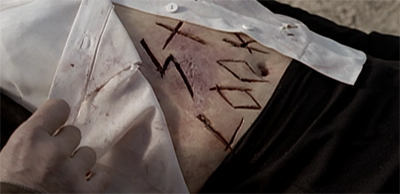
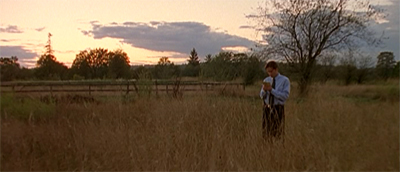
Not cut out for all this...

Not cut out for all this…

As with his next script, Force Majeure, Johannesson hones in quite beautifully on the potential of Millennium. Blood Relatives is an episode of television that is almost perfectly tailored for Millennium. While it retains the elements of a procedural, it is hard to image the episode working on something like Law & Order or CSI, more rigidly-structured television shows with clearer boundaries. Indeed, it seems like Johannessen recognised Millennium as a show spun out of Irresistible, and chose to play Blood Relatives on the same sort of themes about loss and dysfunction.

Blood Relatives is a superbly constructed piece of television, one that marks Johannessen as a talent to watch going forward.
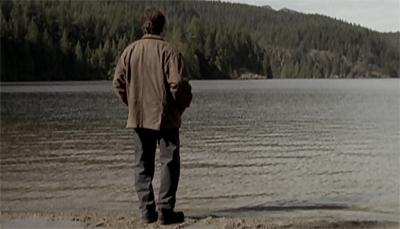
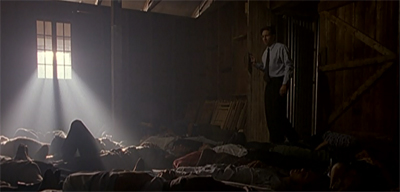
Wading in...

Wading in…

Continue reading

The X-Files – The Field Where I Died (Review)

This February and March, we’re taking a trip back in time to review the fourth season of The X-Files and the first season of Millennium.

Morgan and Wong’s four scripts for the fourth season of The X-Files are utterly unlike any other stories in the show’s nine-season run. Experimental, bold, confrontational; these four stories stretch and pull at The X-Files, as if eager to see just how far the hit show will bend.

The Field Where I Died is probably the weakest of these four episodes, but it is also the most ambitious. It is a script with big ideas and a willingness to commit to those ideas. There is no modesty here, no hesitation. There is a sense that Morgan and Wong are committing wholeheartedly to their themes and their concepts. The Field Where I Died is an episode that rubs quite a lot of people the wrong way, for a number of different reasons; however, the episode never pulls its punches. It never holds back. It never tries to be anything that it is not.

Far afield...

Far afield…

There is a lot to admire here. The Field Where I Died is not an episode with a simply formulaic concept or a conventional structure. It looks and feels completely unlike any other episode of the show. Even when the show touched on similar themes in its final season, the result was radically different. Hellbound is a much more conventional episode than The Field Where I Died. More than Home or Musings of a Cigarette-Smoking Man or Never Again, this is an episode that really seems like an odd fit for The X-Files.

Then again, that may be the beautiful thing about The Field Where I Died, for all its many flaws. It is utterly unlike anything else on television in the nineties. The fact that it can produce an episode of television so unique and incomparable is ultimately what makes The X-Files feel like The X-Files. The fact that The Field Where I Died feels so unconventional and eccentric is precisely what makes it a worthy episode of The X-Files.

Another roaring success for Mulder...

Another roaring success for Mulder…

Continue reading

Star Trek: Enterprise – Strange New World (Review)

Next year, Star Trek is fifty years old. We have some special stuff planned for that, but – in the meantime – we’re reviewing all of Star Trek: Enterprise this year as something of a prequel to that anniversary. This January, we’re doing the first season. Check back daily for the latest review.

Strange New World is the first episode of Star Trek: Enterprise to come from a writing team other than Brannon Braga and Rick Berman. Berman and Braga would dominate the writing credits for the first season. Even when the final teleplay was credited to another writer or writing team, there was often a “story by” credit given to Berman and Braga. Braga himself has conceded that he essentially re-wrote all of the episodes of the first season.

Still, Strange New World is credited to the writing team of Mike Sussman and Phyllis Strong. Both had worked on Star Trek: Voyager before migrated to Star Trek: Enterprise along with André Bormanis. Sussman had pitched the story for Meld and worked on a number of solo stories and scripts before teaming with Strong on the seventh and final season of the show. The two would remain a writing team for the first two seasons of Star Trek: Enterprise, hitting their stride with some of the strongest episodes of the troubled second season.

Picture perfect...

Picture perfect…

Strange New World is an interesting début for the pair. On the hand, it is a story that celebrates the unique place of Star Trek: Enterprise in the Star Trek pantheon. It’s a story about how great it must be to set foot on an alien planet, and how wondrous it must be to breath air from outside our atmosphere. With its emphasis on shuttlepods and primitive transporters, it does remain relatively true to the prequel premise of Enterprise.

On the other hand, Strange New World is a very familiar Star Trek template. Indeed, it’s a very familiar first season template. It’s the episode where the crew of the ship are exposed to some strange outside force that makes them all act out of character. It’s something of a Star Trek standard. The original Star Trek had The Naked Time and Star Trek: The Next Generation had The Naked Now, while Star Trek: Deep Space Nine had both Babel and Dramatis Personae. In many ways, Strange New World feels like a familiar old story.

Strange yellow daisy fields forever...

Strange yellow daisy fields forever…

Continue reading

Star Trek – Obsession (Review)

The first Star Trek pilot, The Cage, was produced in 1964. To celebrate its fiftieth anniversary, this December we are reviewing the second season of the original Star Trek show. You can check out our first season reviews here. Check back daily for the latest review.

The Star Trek franchise really does like Moby Dick, doesn’t it?

The show had done its first appropriation of Herman Melville’s iconic story of obsession and revenge earlier in the second season with The Doomsday Machine. In that episode, Commodore Decker sought to avenge the loss of his crew upon an unstoppable planet-killing machine. However, the basic formula quickly worked its way into the franchise’s blood. Obsession casts Kirk in the role of Ahab, albeit with a radically different ending and tone. After all, it is very cast Ahab as the heroic lead of a weekly television show.

"It's behind you!"

“It’s behind you!”

Star Trek II: The Wrath of Khan would return to Moby Dick for inspiration. Khan would even paraphrase from the book, without a hint of self-awareness or irony. After that point, it seemed like the franchise was more interested in mimicking the themes of The Wrath of Khan , which inevitably meant carrying over the themes of Moby Dick as well. Nevertheless, Star Trek: Voyager did its own variant of Moby Dick in Bliss and Star Trek: First Contact would reference the book directly.

Obsession is a competent if unspectacular episode, one that suffers from the fact that it has been done better and more compellingly in recent memory. However, given all the changes taking place behind the scenes, Obsession flows surprisingly well.

It really sucks to be a red shirt, eh?

It really sucks to be a red shirt, eh?

Continue reading

Star Trek: Voyager – Emanations (Review)

This September and October, we’re taking a look at the jam-packed 1994 to 1995 season of Star Trek, including Star Trek: Deep Space Nine and Star Trek: Voyager. Check back daily for the latest review.

Emanations has a pretty effective set-up and solid premise. It is very clearly one of Star Trek: Voyager‘s “planet of the week” stories – like the show directly before it and the show directly following it – but it’s build around some vaguely interesting ideas. It’s very clearly an episode designed to function as social commentary in the grand Star Trek tradition, hitting on big ideas and bold concepts.

Unfortunately, it’s not the type of script that Brannon Braga is best suited to handle. It doesn’t feel so much an exploration of an important issue as a social treatise. It’s simplistic and heavy-handed while dealing with ideas that require a bit of nuance and sophistication. It feels under-developed, contrived and a little shallow. Despite an attempt at ambiguity in its closing scene, it feels like an episode driven primarily by an agenda rather than a strong story.

Emanations is a misfire, another example of the weird tendency in the first season of Voyager to assign the wrong writers to the wrong scripts.

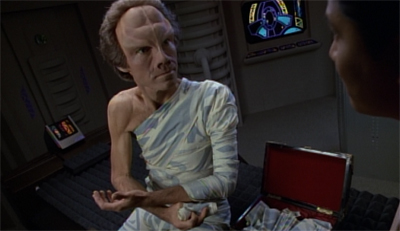
Harry really got wrapped up in local culture...

Harry really got wrapped up in local culture…

Continue reading

Non-Review Review: The Book Thief

This film was seen as part of the Jameson Dublin International Film Festival 2014.

Any film set in Germany between 1938 and 1945 narrated by death itself is going to feel a little… surreal. As wonderful as Roger Allam’s tones might be, there’s something decidedly unwholesome about the narration of the story told from the perspective of the Grim Reaper, particularly as he recounts a story from his “best of” collection.

The implication is that the life of the eponymous booklifter has touched the Death itself, which feels rather uncomfortable in the context of Nazi Germany. One would imagine that there would be quite a lot of moving and affecting stories to hold our narrator’s attention, without a need to single out one particular story as especially moving.

This is, in essence, the heart of the problem with The Book Thief, an efficient and well-produced – if condescending and tone-deaf – family film exploring the story of one family living in the shadow of Hitler’s Germany. It spends far too long telling us why these protagonists are unique, when the crux of the story seems to be that they are not.

Book her, boys!

She has no shelf-control…

Continue reading

Doctor Who: The End of Time, Part I (Review)

To celebrate the fiftieth anniversary of the longest-running science-fiction show in the world, I’ll be taking weekly looks at some of my own personal favourite stories and arcs, from the old and new series, with a view to encapsulating the sublime, the clever and the fiendishly odd of the BBC’s Doctor Who.

The End of Time, Part I originally aired in 2009.

The human race was always your favourite, Doctor. But now, there is no human race. There is only the Master race.

– the Master always did like a good pun

The problem with The End of Time isn’t a lack of good ideas. Indeed, there are far too many good ideas here. There are enough large concepts here to sustain an entire season of Davies’ Doctor Who, from the resurrection of the Master to the return of Gallifrey to the resurrection gate to Naismith to the Tenth Doctor’s impending mortality and quite a few more. The End of Time is bristling with so many ideas and concepts that only the truly outrageous examples really stick. Is that really the Tenth Doctor’s mother?

The End of Time is fundamentally flawed, but it remains intriguing. There’s a wealth of good ideas here that tend to get drowned out in the spectacle and fury of it all, a sense that Davies had a wealth of clever ideas but was unable to tie them into anything fully satisfying.

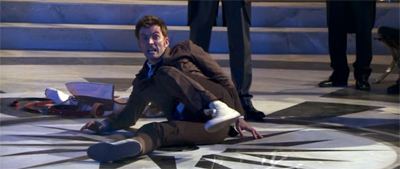
Ten cedes the floor...

Ten cedes the floor…

Continue reading

Batman: Ego (and Other Tails) (Review/Retrospective)

To celebrate the release of The Dark Knight Rises, July is “Batman month” here at the m0vie blog. Check back daily for comics, movies and television reviews and discussion of the Caped Crusader.

“It’s at times like this…. In the cold… in the dark… I feel that I’m losing my way.”

– Batman’s opening monologue, Ego

Few modern comic book artists and writers are as respected as Darwyn Cooke. The illustrator began his career on Batman: The Animated Series, and then expanded out into the comic books that inspired it. He’s worked on any number of iconic projects, including the miniseries New Frontier and the adaptations of Richard Stark’s Parker books. This summer, he’s a major part of DC’s Before Watchmen initiative, writing Silk Spectre and writing and illustrating The Minutemen. Batman: Ego and Other Tails collects the bulk of the writer/illustrator’s work on the Caped Crusader, with Selina’s Big Score included for good measure. In his introduction, the writer confesses that the story was”an earnest yet flawed first effort”, and it seems like he’s being remarkably fair.

He’s created a monster!

Continue reading

Joe the Barbarian: The Deluxe Edition (Review)

December is “Grant Morrison month” here at the m0vie blog, as we take the month to consider and reflect on one of the most critically acclaimed (and polarising) authors working in the medium.

Ultimus Alpha tells it how it is, Kid. This fairtale’s on a one-way trip to Hell.

Joe the Barbarian isn’t Grant Morrison at his creative peak. It isn’t going to redefine the medium, or become an enduring classic for the ages. If it features on college reading lists, I suspect it will be sorted with the “optional” texts somewhere below the “key” Morrisonian works. That doesn’t mean that Joe the Barbarian is bad or anything nearly as drastic. It’s a nice little fairytale fantasy story, one that feels like Morrison paying homage to a bizarre mix of Cabaret and The Lord of the Rings. There’s a lot here to enjoy, but there’s nothing that’ll really knock anybody’s socks off.

Swordplay...

Continue reading

Non-Review Review: Final Destination 5

This movie was seen as part of Movie Fest, the rather wonderful film festival organised by Vincent and everybody else over at movies.ie. It was well worth attending, and I’m already looking forward to next year. Good job all.

Okay, if you’re reading this, I’m going to assume that it means you’re interested in the Final Destination series. I mean, at a fifth instalment, it’s hard to argue that the audience doesn’t know what to expect – especially in a series like this, which is build around a particular gimmick. In this case, the gimmick happens to be turning the entire world into a Rube Goldberg Machineof death. So the question isn’t really whether the film works as a self-contained entity, or whether the entire concept works. We’ve had four films to determine whether the very idea of Final Destination 5 appeals to you, so let’s just focus on – if you’ll pardon the pun – the execution this time around.

It's a grave matter...

Continue reading