• Following Us

  • Categories

  • Check out the Archives


  • Awards & Nominations

The X-Files: Year Zero (IDW) #1-5 (Review)

This June, we’re going to be taking a look at the current run of The X-Files, beginning with the IDW comic book revival and perhaps taking some detours along the way. Check back daily for the latest review.

Year Zero is the best thing that IDW has done with the X-Files license.

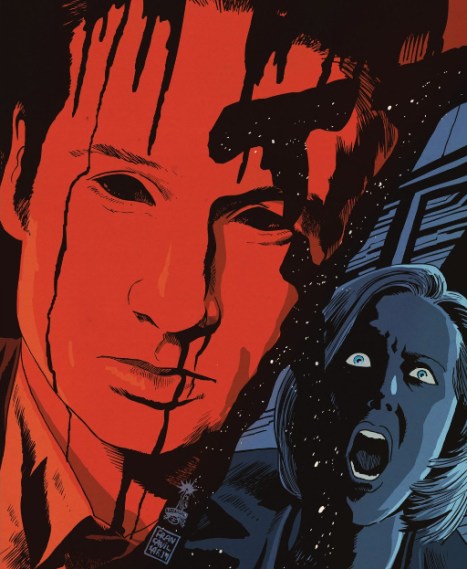
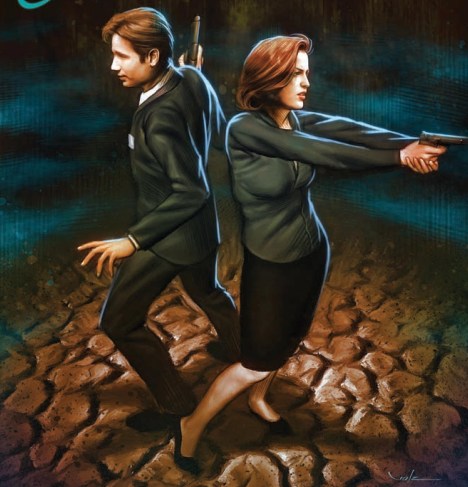
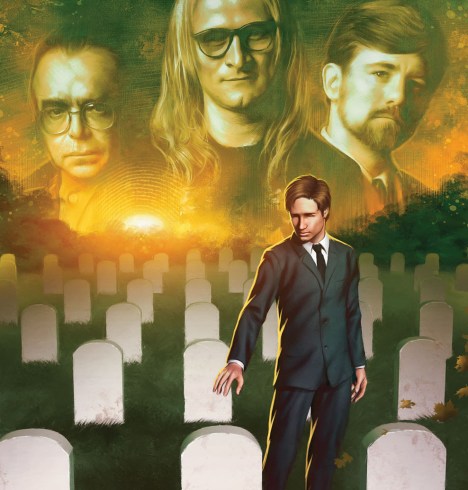
There are multiple reasons for that. Most obviously, the five-part miniseries is incredibly charming when taken on its own terms. Writer Karl Kesel offers in incredibly playful script, one full of teases and wordplay that holds together remarkably well without ever seeming heavy-handed or awkward. Artists Greg Scott and Vic Malhotra do an excellent job keeping the comic consistent while clearly distinguishing between its two time periods. The modern day sequences as scratchy and detailed, while the flashbacks are illustrated more like cartoons.
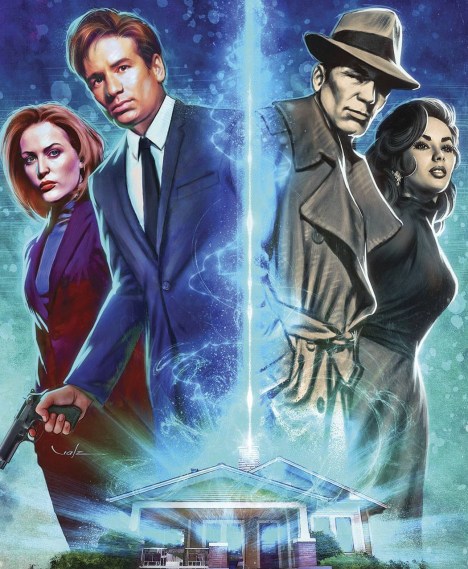
X-over appeal.

X-over appeal.

There is also a clever metafictional commentary underpinning the story that feels like something of a companion to the larger mythology of The X-Files. If the mythology of The X-Files can be read as a secret history of the United States filtered through folklore about aliens and UFOs, then Year Zero positions itself as an origin story for that folklore. It places the origin of The X-Files at the moment those narratives began to change, tying the series into the aftermath of the Second World War in a manner distinct from (but still compatible with) that featured on the show.

More than that, Year Zero is a story that unfolds without a heavy reliance on the mythology or continuity. Given the way that Joe Harris has approached The X-Files: Season 10 and The X-Files: Season 11, it is a welcome surprise that the comic does not feature a guest appearance from William Mulder or C.G.B. Spender. There are lots of little winks and nods to the finer details of the show, but Year Zero is more than just a story carved out from a throwaway line of dialogue in Shapes or as an extension of Travelers.
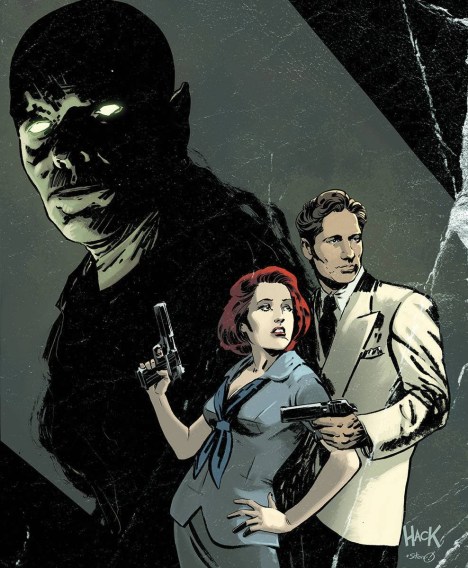
Holding out for a Zero.

Holding out for a Zero.

In fact, Year Zero practically revels in the discontinuity of it all. References to existing stories seem to exist primarily to emphasise the disconnect that exists between them. Given the care the IDW have taken in trying to craft and shape a consistent X-Files continuity, there is something quite refreshing in the cheeky approach taken by Karl Kesel to Year Zero. This is a book that could easily be handed to a casual fan who stopped watching the show around the fifth season, or even to somebody who had only seen a handful of episodes.

However, Year Zero does something far more important. The IDW comics have placed a heavy emphasis on the idea of legitimacy and canon. The comics have worked hard to present themselves as a viable continuation of the franchise. However, a lot of that has involved looking backwards and evoking nostalgia. The Cigarette-Smoking Man returns, Mister X reappears, Alex Krycek is revived. Even the other tie-in miniseries exist to market existing aspects of the brand. Conspiracy is a companion to The Lone Gunmen. Millennium brings back Frank Black.
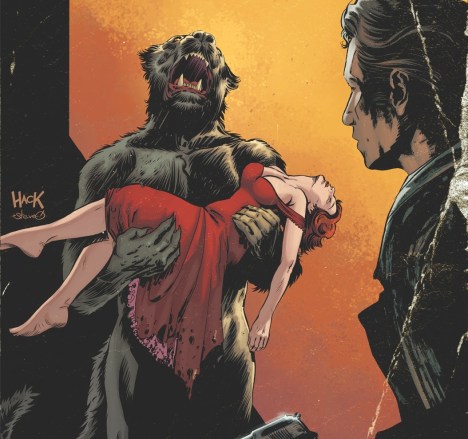
A beast of a man...

A beast of a man…

Year Zero gives the IDW comics something unique and novel. It creates something fresh and exciting rather than simply repackaging recognisable moments or iconic characters. It gives the IDW line something that never existed in any prior incarnation of The X-Files. The characters of Humility Ohio and Bing Ellinson might be familiar archetypes, but they represent something intriguing. Instead of simply repackaging material and elements that fans loved, Year Zero slots in something exciting and intriguing.

The fact that all of this is done as through what is effectively positioned as a clichéd “origin story” makes it all the more exciting.
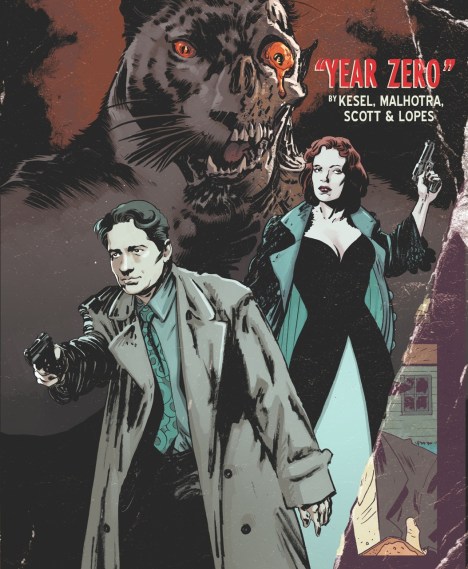
Madame X.

Madame X.

Continue reading

The X-Files: Season 10 (IDW) #11-15 – Pilgrims (Review)

This June, we’re going to be taking a look at the current run of The X-Files, beginning with the IDW comic book revival and perhaps taking some detours along the way. Check back daily for the latest review.

Pilgrims is essentially an attempt to do a mid-season mythology episode in the style of Colony and End Game or Tunguska and Terma, a big sprawling epic populated by familiar faces and impossible scale that is driven more by questions and mysteries than by answers or revelations. It is in many ways a testament to writer Joe Harris’ desire to emulate the basic structure and framework of The X-Files, right down to the manner in which he structures The X-Files: Season 10.

There are a lot of obvious markers and touches that help Pilgrims to feel like a classic mid-season mythology episode. There is an international scope, as seen in the trip to the Arctic in End Game or to Hong Kong in Piper Maru or to Russia in Terma. The first half of Pilgrims unfolds in Saudi Arabia, with Mulder and Scully dispatched to investigate what initially appears to be a terrorist attack on an oil operation but is promptly revealed to be something far more sinister.

The red and the black.

The red and the black.

Similarly, in keeping with the style and tone of many of the best mythology two-parters, the basic plot is relatively straightforward even as complications appear at the edge of the frame. In End Game, Mulder is racing to recover his lost sister as details about secret cloning experiments spill out around him. In Nisei, Mulder is trapped in a traincar with a ticking time bomb and a dangerous assassin as he digs away at the conspiracy. In Apocrypha, the black oil just wants to go home. The same is true in Pilgrims, which follows an alien trying to escape.

Even the structure of the five-issue arc recalls that of many X-Files two-parters, with a massive pivot coming between the third and fourth issues in the same way that many two-parters would switch premises at the half-way point. The Saudi Arabia plot wraps up at the end of the third issue, while Gibson Praise is introduced at the start of the fourth. The first three issues focus on the mystery of the Saudi attack, while the final two put a much greater emphasis on the traditional trappings of the X-Files mythology including the conspirators and Skyland Mountain.

Lone survivors.

Lone survivors.

It is remarkable how faithful Joe Harris is to the format of those classic X-Files mythology episodes. Of course, this is something of a double-edged sword. As with a lot of The X-Files: Season 10, the biggest weakness of Pilgrims is the fact that it all feels a little overly familiar and a little too indulgent. Krycek was one of the most popular supporting characters from the nine-season run of The X-Files, but bringing him back at the centre of a five-part epic mythology story feels like pandering and fan service. Harris is not inventing his own mythology, but resurrecting an old one.

Then again, that might seem to be the point. The black oil discovered in Pilgrims is compared to the oil resting beneath Saudia Arabia. In that respect, it is the remains of long-dead organisms compressed and decayed and converted into fuel. There is something more than a little appropriate about that.

Eye see.

Eye see.

Continue reading

The X-Files: Season 10 (IDW) #10 – More Musings of a Cigarette-Smoking Man

This June, we’re going to be taking a look at the current run of The X-Files, beginning with the IDW comic book revival and perhaps taking some detours along the way. Check back daily for the latest review.

More Musings of a Cigarette-Smoking Man is certainly an ambitious story.

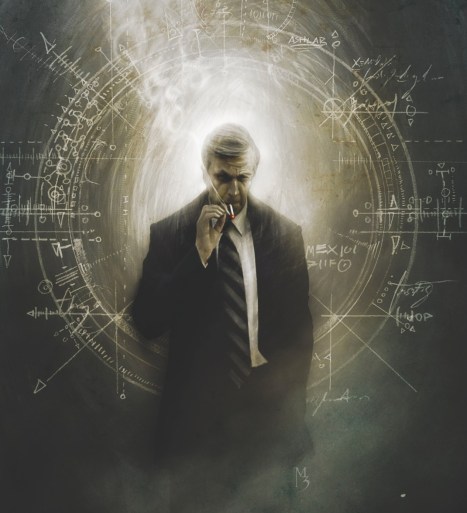
As the title suggests, writer Joe Harris and artist menton3 position this one-shot as a spiritual sequel to Musings of a Cigarette-Smoking Man, the controversial fourth season episode written by Glen Morgan and directed by James Wong. Musings of a Cigarette-Smoking Man offered a window into the past of the Cigarette-Smoking Man, a possible glimpse of who he had been and how he had come to be. It was also one of the most consciously stylised and ambiguous episodes in the entire nine-year run of the show.

Wheels within wheels.

Wheels within wheels.

Writing a spiritual sequel to that classic episode is a bold decision from the creative team. As with a lot of the big creative decisions concerning The X-Files: Season 10, More Musings of a Cigarette-Smoking Man seems too focused on the past. There is a sense that the monthly series is a little too beholden to what came before, too rooted in continuity, too dedicated to revisiting the iconography of the series. Writing a single-issue standalone story positioned as a sequel to on of the most unique episodes of the original run only emphasises this unease.

And, yet, in spite of these legitimate concerns, More Musings of a Cigarette-Smoking Man works reasonably well. It is indulgent and obsessive, but it is also rich and mysterious. It is disjointed and uneven, but that feels like the point. In keeping with the spirit of Musings of a Cigarette-Smoking Man, it feels like More Musings of a Cigarette-Smoking Man is a reflection on the comic book itself. This is a comic book contemplating its own identity and purpose, even as it finds itself being made redundant.

X marks the spot.

X marks the spot.

Continue reading

The X-Files: Season 10 (IDW) #1-5 – Believers (Review)

This June, we’re going to be taking a look at the current run of The X-Files, beginning with the IDW comic book revival and perhaps taking some detours along the way. Check back daily for the latest review.

Five years can be a long time.

To be fair, there was a six-year gap between the broadcast of The Truth and the release of The X-Files: I Want to Believe, so the gap was not unprecedented. Nevertheless, the fact is that Mulder and Scully had been retired for five years since their last film and eleven years since their last television episodes. Even the most hardcore fans of The X-Files had begun to doubt that the show would ever return in any tangible form. However, the show was entering its twentieth anniversary year, and forces were stirring in the background.

X-appeal.

X-appeal.

Occasionally interviews would surface with David Duchovny or Gillian Anderson mooting the possibility of doing a third feature film. After all, despite the promise made in the opening of The Truth, 2012 had come and gone without an alien invasion or a global apocalypse. The franchise had set its own alarm clock and slept through it. There were still fitful stirrings, suggestions of possible future developments. As the franchise passed what many regarded as its “best before” date, Frank Spotnitz even speculated that fans might be treated to a reboot.

In many ways, the revival of The X-Files began somewhat innocuously. In January 2013, comics publisher IDW announced that they would be publishing a monthly series focusing on the continuing adventures of Mulder and Scully. This was not necessarily news of itself. IDW had a long history of managing licensed properties, such as the JJ Abrams Star Trek reboot and the Russell T. Davies Doctor Who relaunch. That was very much their market niche in the comic book industry, especially with nostalgic titles like Ghostbusters or Teenage Mutant Ninja Turtles.

How the years 'shroom by...

How the years ‘shroom by…

While the launch of the title did suggest that there was an audience for stories featuring Mulder and Scully, it did not necessarily lead to the promise of greater things. Indeed, the announcement that IDW would be publishing The X-Files: Season 10 consciously and clearly evoked the approach that the publisher Dark Horse had adopted towards Buffy: The Vampire Slayer and Angel, running entire seasons of comic book stories that served as the new “canon” for the characters. But nobody was expecting Sarah Michelle Gellar to reprise the role of Buffy Summers.

However, the IDW comic book launch served to bring Chris Carter out of semi-retirement and back into the media spotlight. Joss Whedon had consulted with Dark Horse on Buffy: Season Eight, the prolific television writer and producer was also working on his own concurrent projects that included directing episodes of The Office and preparing Doctor Horrible’s Sing-Along Blog. In contrast, Chris Carter had been largely silent since the release of I Want to Believe. The launch of the comic book brought him back.

Where there's smoke...

Where there’s smoke…

Continue reading

Star Trek: Enterprise – The Aenar (Review)

This May, we’re taking a look at the fourth (and final) season of Star Trek: Enterprise. Check back daily for the latest review.

The United trilogy does not flow as well as the Kir’Shara trilogy did.

In fact, it is debatable whether these three episodes are best described as a single three-parter or instead as a two-parter with a coda tacked on. After all, the bulk of the action and drama unfolds in Babel One and United, with the penultimate scene of United finding Archer sitting down with the Andorians and Tellarites to begin laying the groundwork for the United Federation of Planets. Even the subplots are neatly tidied up between those two episodes; Trip and Reed get stranded on the Romulan drone in Babel One and rescued by Enterprise in United.

This blue world.

This blue world.

It would be perfectly reasonable to close off the story at that point. The Romulans had been scared off, and Senator Vrax had already made it clear that an embarrassing failure would mean the end of his career and that of Valdour. Even the closing scene of United, revealing an albino Andorian operating the drone ship from Romulus, feels almost tacked on after the previous sequence that had memorably pulled out from the meeting room on Enterprise to emphasise the union of Starfleet, the Vulcans, the Andorians and the Tellarites.

Using that cliffhanger at the end of UnitedThe Aenar pivots away from that to focus on a trip to Andoria. It affords Archer (and Star Trek: Enterprise) one last opportunity to visit Shran’s homeworld.

A cold reception.

A cold reception.

Continue reading

Star Trek: Voyager – False Profits (Review)

This February and March (and a little bit of April), we’re taking a look at the 1995 to 1996 season of Star Trek, including Star Trek: Deep Space Nine and Star Trek: Voyager. Check back daily for the latest review.

If ever there was an argument against the importance of continuity, False Profits would appear to be it.

The Price was not a good episode of Star Trek: The Next Generation. In fact, it was quite a bad episode of television. There is a credible argument to be made that The Price was the worst episode of the third season of The Next Generation. Another contender is Ménage à Troi, another third season episode of The Next Generation that coincidentally (or not) happens to feature the Ferengi. By all accounts, The Price is an episode of television that should be forgotten about, consigned to reference books and ill-considered classic television marathons.

"Now, I know fans don't like the Ferengi episodes, but this is too much!"

“Now, I know fans don’t like the Ferengi episodes, but this is too much!”

Unfortunately, continuity intervenes. The climax of The Price ends with two Ferengi stranded in the Delta Quadrant after the Barzan wormhole collapses. In most stories, that would be the last time that those two characters appeared; they had served their dramatic purpose, demonstrating that the Barzan wormhole was effectively useless. However, once it became clear that Star Trek: Voyager was heading to the Delta Quadrant, that ending became a plot thread. It became a piece of continuity that could be employed by the production team, a storytelling opportunity.

That explains how False Profits came to be, a terrible sequel to a terrible episode that seems to exist purely to satisfy some dangling continuity.

Proxy war...

Proxy war…

Continue reading

Star Trek: Deep Space Nine – Broken Link (Review)

This February and March (and a little bit of April), we’re taking a look at the 1995 to 1996 season of Star Trek, including Star Trek: Deep Space Nine and Star Trek: Voyager. Check back daily for the latest review.

What is perhaps most surprising about Broken Link is how quiet and subdued it all it.

The fourth season began with a bang, with the dissolution of the alliance between the Klingons and the Federation that had been established in Heart of Glory and dramatised in Star Trek VI: The Undiscovered Country. In fact, The Way of the Warrior featured the largest and most impressive combat sequence in the history of the Star Trek franchise to that point. Even allowing for The Sacrifice of Angels and What You Leave Behind, the fourth season premiere still ranks as one of the most elaborate set pieces in the franchise’s history.

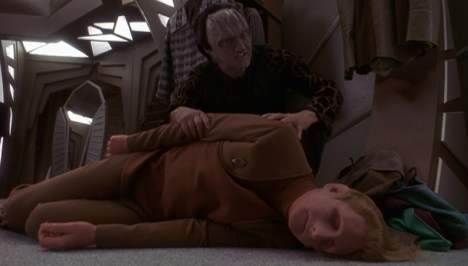
Pray... for... Odo...

Pray… for… Odo…

Broken Link consciously circles back to that. It features the first reappearance of Robert O’Reilly as Gowron since The Way of the Warrior. The episode makes it clear that the problems depicted in The Way of the Warrior are only worsening. There is no small suggestion that Gowron is hoping to turn the cold war between the Federation and the Klingon Empire into a shooting war. Broken Link is very much a show about taking the status quo that was established in The Way of the Warrior and ramping it up.

However, what is most striking about Broken Link is the manner in which it escalates the situation. Not a single weapon is discharged in Broken Link, which is the last season finalé of Star Trek: Deep Space Nine not to feature a combat sequence of some description. The actual plot of the episode is remarkably straightforward and linear, keenly focused on a single member of the ensemble rather while relegating politics into the background. Even in terms of the scripting of the episode, care is taken to slow the pace down and allow character-driven dialogue scenes.

Oh no, Odo!

Oh no, Odo!

The result is a strangely intimate season finalé, one free of the bombast that comes with the season-bridging two-parters favoured by Star Trek: The Next Generation and Star Trek: Voyager. It is interesting to compare Broken Link to something like Basics, Part I, if only because the latter would never make room for Jadzia joking about being surrounded by “naked men” or Garak playing “Star Trek Cluedo” with Odo in sickbay. In fact, Broken Link is even relatively quiet by the standards of Deep Space Nine, lacking the galactic status quo shift of The Jem’Hadar or A Call to Arms.

As with a lot of the fourth season, there is a sense that the production team have made a point to learn from the third season: to improve upon what works and to fix what doesn’t. The Adversary was something of a happy accident at the end of the third season, a script thrown together at short notice when Paramount vetoed a season-ending cliffhanger that would be loosely adapted for Homefront and Paradise Lost. The slow character-centric tension of The Adversary was never intended to close the third season, but Broken Link realises that such an approach worked well.

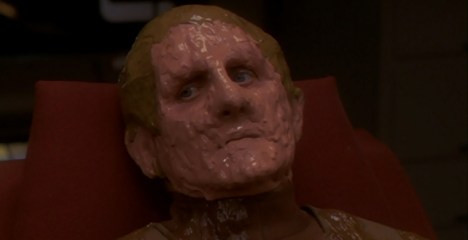
"Melting! Melting! Oh, what a world!"

“Melting! Melting! Oh, what a world!”

The result is an episode that feels incredibly comfortable in its own skin. Deep Space Nine is well aware of what it is, regardless of the direction and input that the studio offered the production team at the start of the fourth season. In fact, despite its somewhat relaxed pace and the space that it affords its character interactions, Broken Link is remarkably focused on what it wants to do. The closing line of the episode (and the season) is clever, consciously tying back the bold new direction of The Way of the Warrior back into the series’ own larger endgame.

In hindsight, Broken Link is something of a misleading title. Instead, it ties everything together.

Only a stone's throw away...

Only a stone’s throw away…

Continue reading

Star Trek: Voyager – Tuvix (Review)

This February and March (and a little bit of April), we’re taking a look at the 1995 to 1996 season of Star Trek, including Star Trek: Deep Space Nine and Star Trek: Voyager. Check back daily for the latest review.

Tuvix is a controversial piece of Star Trek.

The episode tends to polarise fandom. In particular, the climax of the episode seems to divide fans firmly down the middle. When the fan site Trek Today marked the end of Star Trek: Voyager by staging a mock “Court Martial of Captain Kathryn Janeway”, it was argued that the events of Tuvix should have been included as evidence against her. It is no surprise that the episode generated such a strong response. Discussing the production of the episode, Tom Wright reflected, “The truth is that the higher ups of Star Trek knew that this would cause some controversy.”

"Neevok was never gonna cut it."

“Neevok was never gonna cut it.”

Of course it generates some controversy. This is the episode where Janeway elects to murder one crew member in order to resurrect two lost crew members. This is a story about how the title character is convenient for about forty-five minutes of screentime, only for the crew to quickly dispose of him as soon as the end credits beacon. Tuvix never really makes a convincing moral case for why the eponymous character has to die, beyond the fact that it conveniently resets the status quo.

Then again, perhaps that is reason enough.

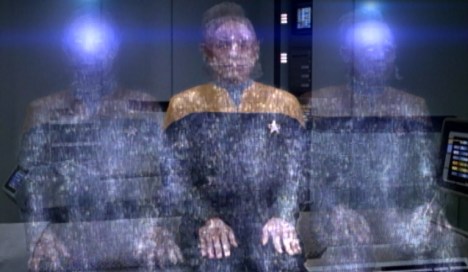
Two for the price of one...

Two for the price of one…

Continue reading

Star Trek: Voyager – Dreadnought (Review)

This February and March, we’re taking a look at the 1995 to 1996 season of Star Trek, including Star Trek: Deep Space Nine and Star Trek: Voyager. Check back daily Tuesday through Friday for the latest review.

Dreadnought is arguably a much better version of Prototype.

Both are essentially horror stories about B’Elanna Torres essentially creating a new mechanical life form, making a decision that has unforeseeable consequences. There is an element of reproductive horror to all this, reinforced by the clever decision to have B’Elanna literally give the eponymous warhead her own voice and watch it engage in a course that is quite literally self-destructive. It is perhaps the quintessential reproductive horror story, the fear that we might create something that will supplant us; that our children become the worst reflections of ourselves.

Engine of mass destruction...

Engine of mass destruction…

It is interesting that Dreadnought followed Meld so closely; both are essentially stories about how Star Trek: Voyager (and its characters) cannot cleanly escape their past, as much as the show might push it (and them) towards a generic Star Trek template. The middle of the second season sees an emphasis on the idea that Voyager is composed of two radically different crews – that Starfleet and the Maquis are not as integrated as shows like Parallax or Learning Curve might suggest.

Alliances, Meld and Dreadnought all build on the idea of underlying tensions that were mostly glossed over during the first season. Of course, this creates a weird dissonance, as Voyager seems to actually be moving backwards rather than forwards – attempting a half-hearted do-over of some of its earliest miscalculations.

Engineering a solution...

Engineering a solution…

Continue reading

Star Trek: Voyager – Meld (Review)

This September and October, we’re taking a look at the 1995 to 1996 season of Star Trek, including Star Trek: Deep Space Nine and Star Trek: Voyager. Check back daily for the latest review.

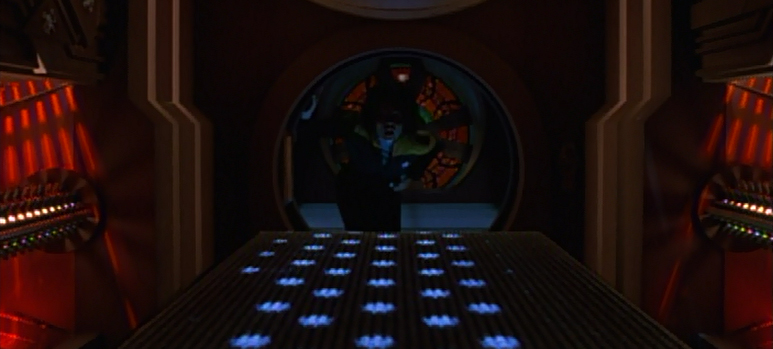
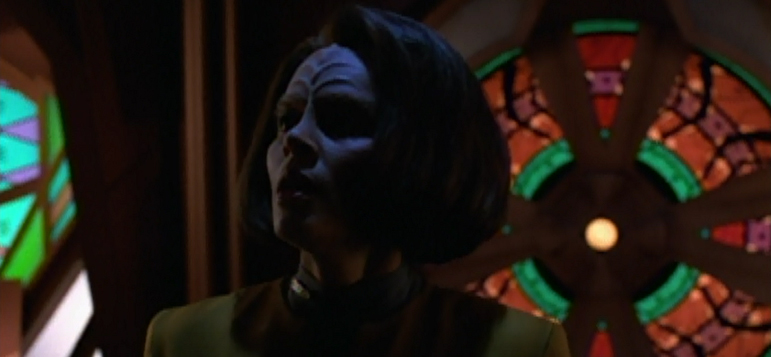
Meld is a masterpiece. It is the best episode of Star Trek: Voyager to date. There is perhaps a reasonable argument to be made that it is one of the best episodes that the series ever produced. It is, in many respects, one of the strongest and most compelling exploration of themes that have been bubbling around in the background since Caretaker, offering a more thoughtful and insightful exploration of the nineties culture of fear and anxiety than anything involving the Kazon. It is certainly the best use of Tuvok that the show managed in its seven year run.

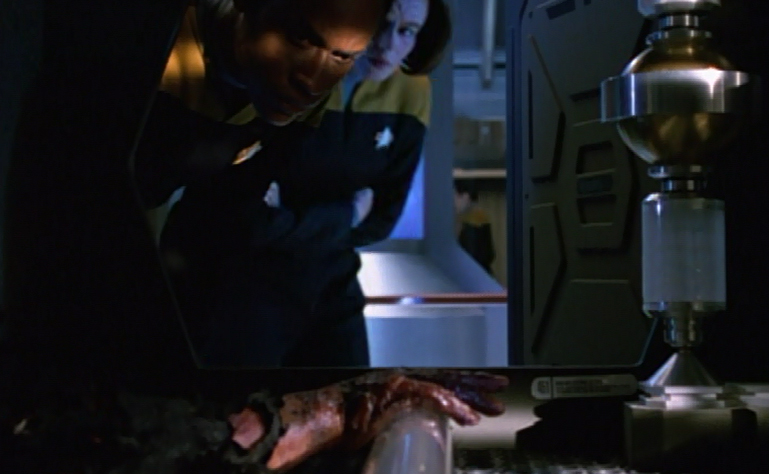
Meld is an episode about violence, in its many forms. It is a story about the horrors and arbitrariness of unprovoked violence, but also about the cycles of violence that such actions can create. In many respects, Meld is a more scathing criticism of the death penalty than Repentance, the seventh season episode explicitly written as a death penalty allegory. Unlike many of the surrounding episodes, Meld actually manages to make good use of the show’s Delta Quadrant setting to heighten the dramatic stakes.

"Where's your head at?"

“Where’s your head at?”

In a way, Meld represents a collision of the franchise’s past and future. Meld may be the last truly great Star Trek script written by Michael Piller, the writer who helped to define the modern iteration of the franchise with his work on the third season of Star Trek: The Next Generation. At the same time, it is also Mike Sussman’s first story credit on the franchise; Sussman would go on to join the show’s writing staff in its final season and would be one of the few writers to serve a full four seasons on Star Trek: Enterprise.

While the script for Meld is exceptionally well-written, the episode is elevated by a combination of factors. Cliff Bole does great work in bringing a very unconventional Star Trek episode to life. Meld could be seen as a continuation of the second season’s b-movie charms. Following on from the robot wars of Prototype and the body horror of Threshold, Meld plays like a Star Trek serial killer thriller. Bole’s directorial choices are consciously stylised, with delightful little touches like the band of light across Tuvok’s eyes when the body is discovered.

"Funny. I though Braga murdered Darwin last week."

“Funny. I thought Braga murdered Darwin last week.”

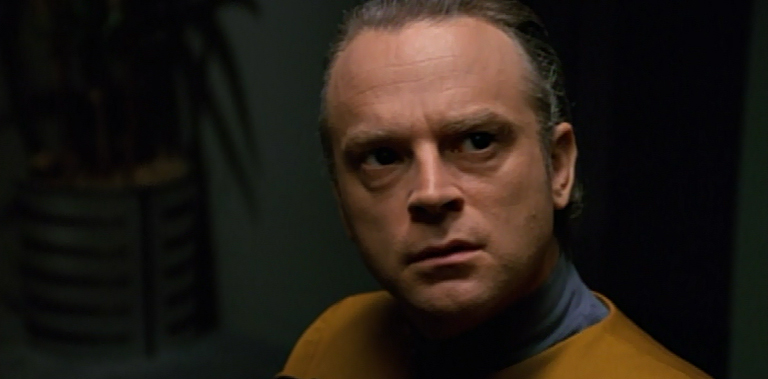
The episode also benefits from two mesmerising central performances from guest star Brad Dourif and Tim Russ. Russ was always one of the more under-utilised members of the Voyager ensemble, particularly when his “obligatory emotionally detached character” role was usurped by Seven of Nine in the fourth season. It is a shame, as Russ has a great deal of fun channeling Nimoy in his portrayal of the franchise’s first full-blooded Vulcan regular. Tuvok (and Russ) deserved more attention than the show afforded him.

That said, it is Brad Dourif who steals the show here. Lon Suder is one of the most fascinating guest characters in the history of the Star Trek franchise, and perhaps the only recurring character member of the Voyager crew who made any impression. A lot of that is down to the novelty of a fundamentally violent character in a Starfleet uniform, but Dourif is absolutely brilliant in the part. Dourif might just be the best guest star ever to appear in Voyager, and one of the franchise’s all-time greats.

Beta(zoid) male.

Beta(zoid) male.

However, perhaps the most striking aspect of Meld is the way that it feels very much of its time; it is an episode that firmly engages with a cultural context around Voyager. So much of Voyager seems lost in some sort of weird science-fiction neverland where the fifties and sixties never ended that a well-produced episode that feels of its time is a rarity. Meld is an episode that would feel strange ten years earlier or ten years later, but one which aligns perfectly with the wider context of 1996.

It is a overdue triumph from the Voyager team.

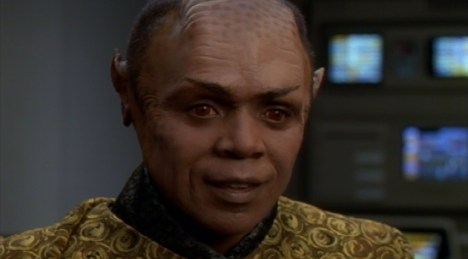
Smile!

Smile!

Continue reading