• Following Us

  • Categories

  • Check out the Archives


  • Awards & Nominations

Iron Fist – Shadow Hawk Takes Flight (Review)

Who is Danny Rand?

It is a question that any television show should be asking of its lead. The audience will be spending an extended period of time with this character in this world, so the character needs to be interesting and compelling in their own right. The other Netflix Marvel shows made a point of answering this challenge out of the gate. Into the Ring made it clear that Matt Murdock was a ball of repressed rage buried beneath Catholic Guilt. AKA Ladies’ Night established Jessica Jones as a self-destructive super-strong survivor. Moment of Truth sets up Luke as the immovable object.

There are probably easier ways to make sure that Finn Jones stops giving interviews.

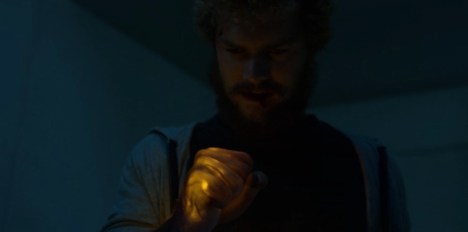
There is a recurring sense that Iron Fist understands that establishing its lead character is an important thing to do. Certainly, Snow Gives Way spends enough time on Danny Rand asserting his identity as the sole heir of the Rand Corporation. Shadow Hawk Takes Flight locks Danny in a psychiatric institution in which he is forced to prove his identity to people who believe that he has lost his mind. These are all plot points that, in theory, hinge upon Danny demonstrating who he is. They are, in theory, a solid way to introduce the character to audiences.

However, in practice, there is a recurring sense that Iron Fist simply doesn’t care about making Danny Rand interesting. Iron Fist seems to think that it is enough that the character exists and loosely resembles a superhero. Just like Iron Fist seems to think that it is enough that the show exists and loosely resembles a superhero show.

Not quite a glowing endorsement.

Continue reading

The X-Files: Season 11 (IDW) (Review)

This June, we’re going to be taking a look at the current run of The X-Files, beginning with the IDW comic book revival and perhaps taking some detours along the way. Check back daily for the latest review.

The X-Files: Season 11 is a relatively lean beast.

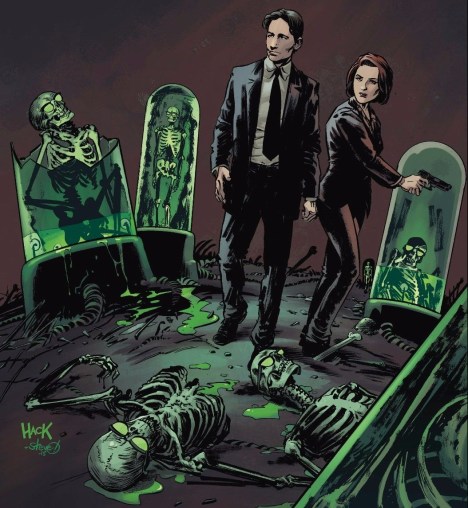
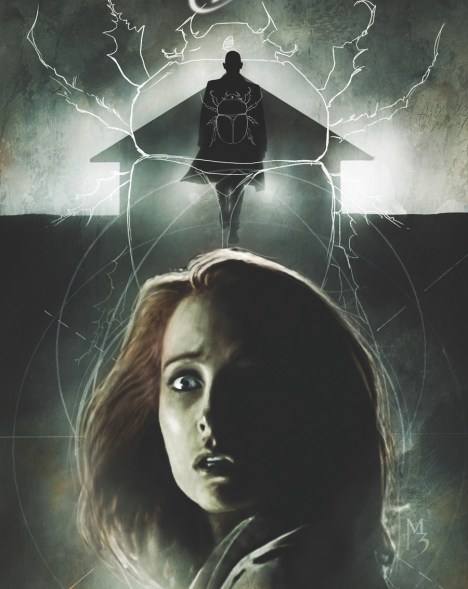
The X-Files: Season 10 seemed to struggle to map out a clear direction or identity for itself. This was most obvious in the context of the comic book’s mythology, as writer Joe Harris and his collaborators frequently found themselves revising and rewriting the mythology from one story to the next. All the elements introduced in Believers were reduced to a footnote in Monica & John. Although Gibson Praise made his first reappearance in the final pages of Believers, the mythology only truly galvinised around him over the course of Elders.

xfiles-endgames1

In contrast, The X-Files: Season 11 has a very clear idea of where it is going and room for a minimal amount of distractions along the way. While the art team on Season 10 changed quite frequently, the nine comic book issues that comprise Season 11 are all handled by the core team of writer Joe Harris, penciller Matthew Dow Smith and colourist Jordie Bellaire. There is a consistency and focus to the run that is striking. There is no time for exploration or improvisation. Everything serves its purpose in the context of the story being told.

This is a double-edged sword. While it does reduce the chance of an endearing standalone story like Chitter or Immaculate, it does afford the run a purity and energy that was somewhat lacking as Harris had to revise and rewrite his mythology while the revival miniseries moved closer and closer to public announcement. In some respects, Season 11 feels kind of like the version of The X-Files that some fans wanted when the revival was announced. It is an efficient attempt to resolve dangling plot threads and bring closure to the story being told.

xfiles-homeagain2

Continue reading

The X-Files (IDW) Annual 2015 – Most Likely to… (Review)

This June, we’re going to be taking a look at the current run of The X-Files, beginning with the IDW comic book revival and perhaps taking some detours along the way. Check back daily for the latest review.

Most Likely to… is an interesting stories in a number of respects.

Most obviously, it represents a clear change in how IDW are approaching their X-Files license. When The X-Files: Season 10 was announced in January 2013, a big deal was made of the fact that it would be the “official” continuation of the adventures of Mulder and Scully. The comic line was very much an expansion of the series, to the point that the bulk of issues – including spin-offs like Conspiracy and like Millennium – took place following the events of The X-Files: I Want to Believe. The future of the franchise was up for grabs.

Flashback.

Flashback.

Most Likely to… is notable as the first X-Files comic published by IDW to unfold entirely within the continuity of the television series, rather than beyond it. Even the framing device in Year Zero was very much set during Season 10. The comic is dated as taking place in November 1999, which would place it early in the seventh season of the show. The dialogue makes it clear that this issue takes place before the events of Sein und Zeit and Closure. This choice of setting feels more like the Topps or Wildstorm comics than the IDW line.

This is a very interesting transition, given how keenly IDW had been focused on their position as the continuation of the franchise. However, it does demonstrate just how much as changed.

Burning down the house...

Burning down the house…

Continue reading

The X-Files: Season 10 (IDW) #9 – Chitter (Review)

This June, we’re going to be taking a look at the current run of The X-Files, beginning with the IDW comic book revival and perhaps taking some detours along the way. Check back daily for the latest review.

Chitter is an interesting single-issue story.

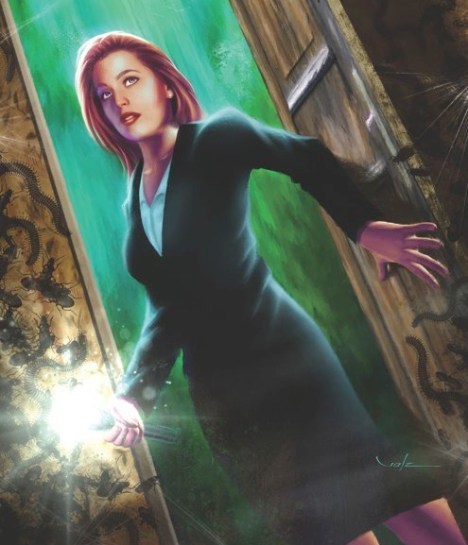
In many ways, Chitter feels very much like a throwback. It is a “monster of the week” story, the first such story to be written by Joe Harris focusing on an original creation. In fact, Harris acknowledged as much on his blog, remarking, “It’s my first, original ‘Monster of the Month’ (a term I’m taking sole credit for) story and it’s utterly disgusting, I’m sorry.” Although the plot includes a few nods towards the overarching themes of The X-Files: Season 10, the story stands almost completely alone. It would be possible to skip the issue entirely without missing much of importance.

Bugging out...

Bugging out…

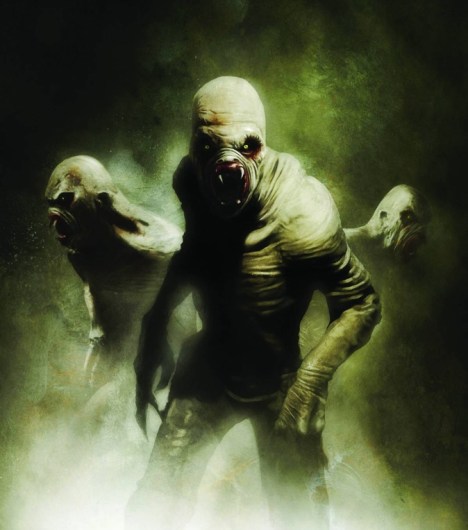
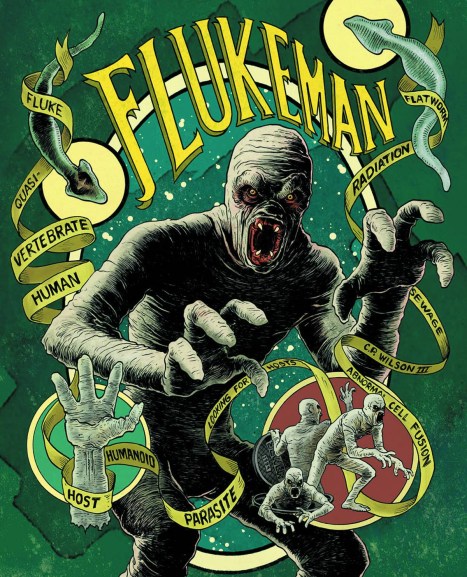
This is very much an oddity in terms of The X-Files: Season 10, a monthly comic book series that has been very focused on the mythology and continuity of The X-Files. The first eight issues of the series were given over to threads dangling from the original show, whether the continuation of the mythology in Believers or the fate of the Fluke Man in Hosts or the origin of Mister X in Being for the Benefit of Mister X. This is the first time that the comic book has told a story that feels self-contained and truly standalone.

There is something very refreshing in that, with Harris constructing a story that feels very much in keeping with the tone and mood of The X-Files without relying on specific details. In many ways, it feels more like a classic episode than any of the previous issues. More than that, it actually feels very much like one of the early X-Files comics written for Topps by writers like Stefan Petrucha or John Rozum. It is a very strong piece of work.

Crawl good...

Crawl good…

Continue reading

The X-Files: Season 10 (IDW) #6-7 – Hosts (Review)

This June, we’re going to be taking a look at the current run of The X-Files, beginning with the IDW comic book revival and perhaps taking some detours along the way. Check back daily for the latest review.

Balance was always going to be an issue for The X-Files: Season 10, even in a purely logistical sense.

At its peak, The X-Files was churning out twenty-six episodes in a season. Of those, maybe a third would be mythology episodes and the rest would be standalone monster of the week stories. As a result, the show could find the time to balance earth-shaking mythology episodes like Paper Clip, Nisei, 731 and Talitha Cumi with brilliant episodic television like Clyde Bruckman’s Final ReposeOublietteGrotesquePusher and Jose Chung’s “From Outer Space.” Part of the appeal of The X-Files was always striking that balance.

No Fluke.

No Fluke.

That is not really possible with a conventional comic book release schedule. Comic books are released once a month, limiting the creative team to twelve issues in a given year. They might also get an annual, if the comic is popular. Given modern comic book narrative conventions and the lower page counts of modern comics, “done-in-one” standalone stories are increasingly uncommon. At best, it seems like a creative team might get away with seven stories in a year, six two-parters and an annual.

This causes issues in structuring a comic book season of The X-Files. Quite cleverly, The X-Files: Season 10 runs for twenty-five issues, evoking the length of a classic television season. However, it tells far fewer stories, with the run dominated by epic sprawling mythology stories like the five-part Believers, the five-part Pilgrims and the five-part Elders. That is three-fifths of the “season” given over to three mythology stories. It is no wonder that the rest of the run feels so compressed.

Worming his way back to you...

Worming his way back to you…

Continue reading

Batman: Sword of Azrael (Review)

This March sees the release of Batman vs. Superman. To celebrate, we’ll be looking at some iconic and modern Batman and Superman stories over the course of the month.

Given how messy Knightfall ended up, readers would be forgiven for assuming that the Batman editorial staff had been making it up on the fly.

To a certain extent, the editors and writers were effectively making it up as they went along. According to writer Greg Rucka, the big Batman events of the nineties were not so much mapped out as loosely plotted. The creative talent had some vague idea of where they wanted to go and what they wanted to accomplish, but not necessarily the particulars of how they would get there or how they would accomplish it. After all, Rucka’s novelised adaptation of No Man’s Land had a different ending to the comic book because the novel had to be finished ahead of time.

All fired up...

All fired up…

Reading Knightfall, it quickly becomes clear that the writers had no real idea about how they wanted the story to unfold. The event has a fairly solid first act, but its second act is cluttered and much of the resolution is messy and unsatisfying. At the same time, it is clear that the writers had some idea of what they were doing and where they were going; at least in the beginning. As much as the sprawling nineties even might bungle the pay-off, it benefits from a very careful and meticulous set-up.

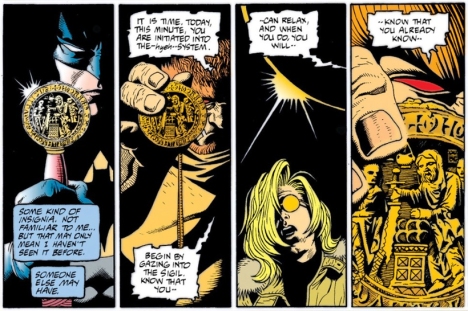
A lot of the key elements of the Knightfall saga were set up and signposted ahead of time. The months leading up to the start of Knightfall in April 1993 were quite busy at the Batman offices. Shondra Kinsolving was introduced in November 1992. Bane was introduced in a special one-shot in January 1993, The Vengeance of Bane, that provided the back story of the new antagonist. Bridging these two milestones was the miniseries Batman: Sword of Azrael, introducing the character who would step into the vacancy left by the broken bat.

Medallion man.

Medallion man.

Continue reading

Jessica Jones – AKA I’ve Got the Blues (Review)

Jessica Jones loses a little steam when it gets out of the adrenaline rush that was the AKA WWJD?, AKA Sin Bin and AKA 1,000 Cuts triptych.

There is a sense that the show is not entirely sure about how exactly it wants to end; like its eponymous lead, there is an anxiety about sticking the landing. It is a problem similar to the one that faced Daredevil, which had its own issues when it come to offering a satisfactory conclusion to a season-long arc. (Indeed, Daredevil feels more like a checklist of matters that require closure rather than a story of itself.) More than that, the show has built towards a sustained climax in its eighth through tenth episodes, but there are still three hours left to fill.

jessicajones-ivegotthebluesa

Jessica Jones has always felt a little over-extended. AKA Crush Syndrome and AKA It’s Called Whiskey essentially introduced Kilgrave twice. AKA The Sandwich Saved Me, AKA Sin Bin and AKA 1,000 Cuts each feature Kilgrave captured by our heroes only to escape through various convenient means. The Will Simpson subplot fits with the themes of the season, but does feel like a stalling tactic. Malcolm provides the heart of the show, but the writers never find a convincing voice for Robyn and so their subplot also feels like padding.

So there are some basic structural issues going into the final few episodes of the season, just as there were some structural issues with the opening few episodes of the season. Nevertheless, Jessica Jones does make a number of clever decisions as it builds towards its conclusion. Instead of ramping up and outwards, as would be the natural impulse, the show begins narrowing its focus and winding down. AKA I’ve Got the Blues and AKA Take a Bloody Number are surprisingly intimate in their scope following the scale of the show’s climax.

jessicajones-ivegottheblues32a

Continue reading

Non-Review Review: Fantastic Four (2015)

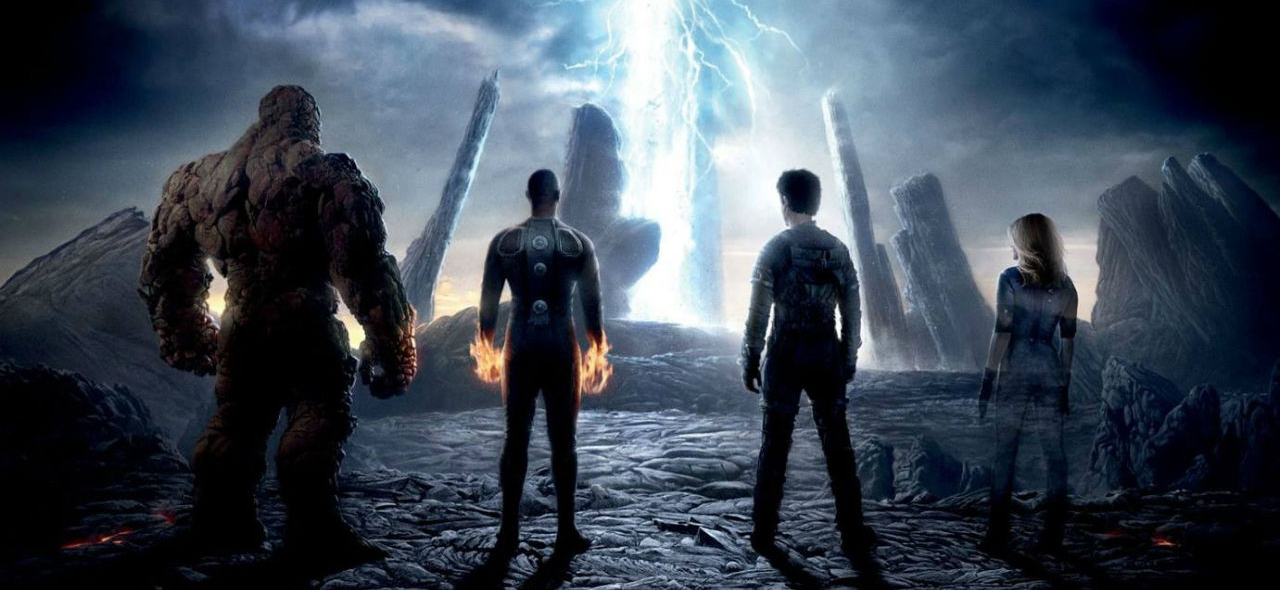
The second scene of Fantastic Four opens on a shot of a red neon sign reading “Grimm”, panning down slowly to a scrapyard packed with exhausted husks of old vehicles that have long outlived their usefulness. If you were to reduce Josh Trank’s Fantastic Four down to a single shot, that would be it; the purest possible distillation of this hundred-minute effort to adapt Marvel’s (literal) first family to the silver screen. It is possible to make a good Fantastic Four film, even if the movies bearing the family’s name suggest otherwise; The Incredibles proved as much.

What is remarkable about Fantastic Four is just how thoroughly and meticulously the edges have been sanded down, replaced with a misshapen grey blob that wants to be X-Men or The Avengers, or anything but what it is. All the moving parts of the film are compelling on their own merits. This is the first studio effort from Josh Trank. It is a vehicle for Miles Teller. It has a soundtrack from Philip Glass (and Marco Beltrami). It features Victor Von Doom in an era when studios have demonstrated they are not afraid of comic book tropes and absurdities.

Fantastic finish?

Fantastic finish?

Fantastic Four effortlessly squanders just about all that good will in a ruthlessly efficient manner, a demonstration of how brutal a bad script and a cynical edit can be. Trank only fleetingly shines through, commandeering the film for about ten minutes in the middle. Miles Teller is reduced to an exposition machine. Any unique identifiers on the Philip Glass soundtrack are pared down for generic superhero movie bombast. The film is so concerned that the audience won’t take a character named Doctor Doom seriously that he’s barely in the film.

The most interesting aspect of Fantastic Four is the recurring sense that the characters themselves openly resent the direction that the project took. Sadly, even Reed Richards cannot stretch far enough to bend the film back into shape.

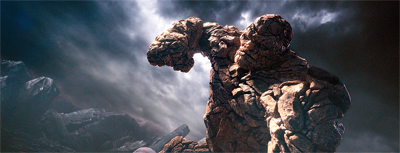
Clobbering time...

Clobbering time…

Continue reading

Non-Review Review: Ant Man

Ant Man was always going to be a tough one to crack.

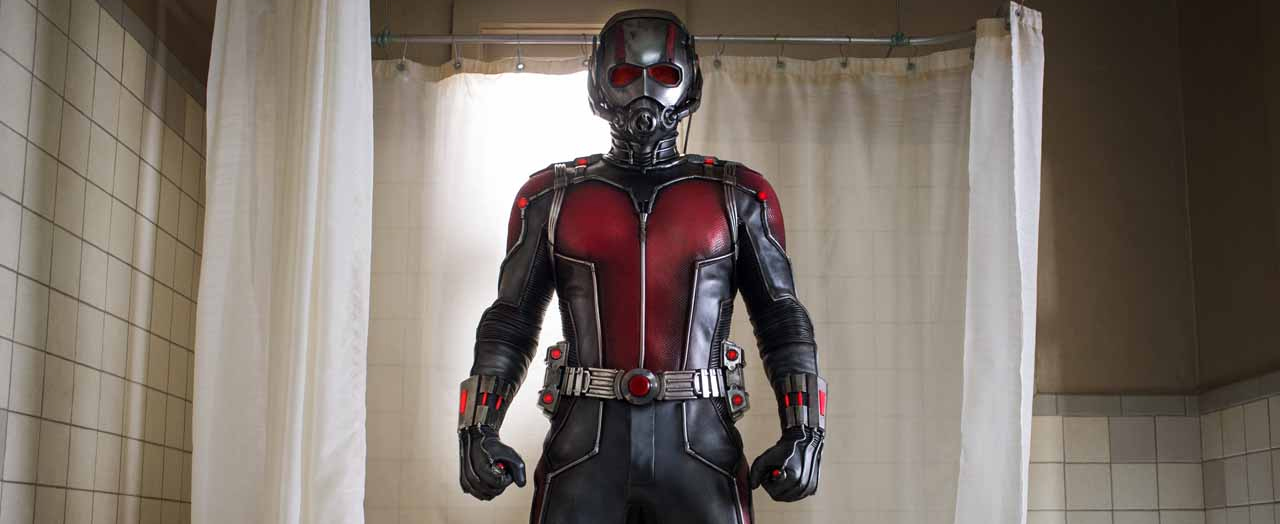
There are obvious reasons. Some of them involve the unique production history of the film, which arguably serves as an example of the downside of the tight managerial style operated by Disney and Marvel. Some of them are more fundamental, tied into the legacy and impact of the source material that make adapting Hank Pym and Janet Van Dyne to screen a particularly dicey proposal for a family-friendly blockbuster movie studio. There’s a lot of pressure on the film, and a lot that could go wrong.

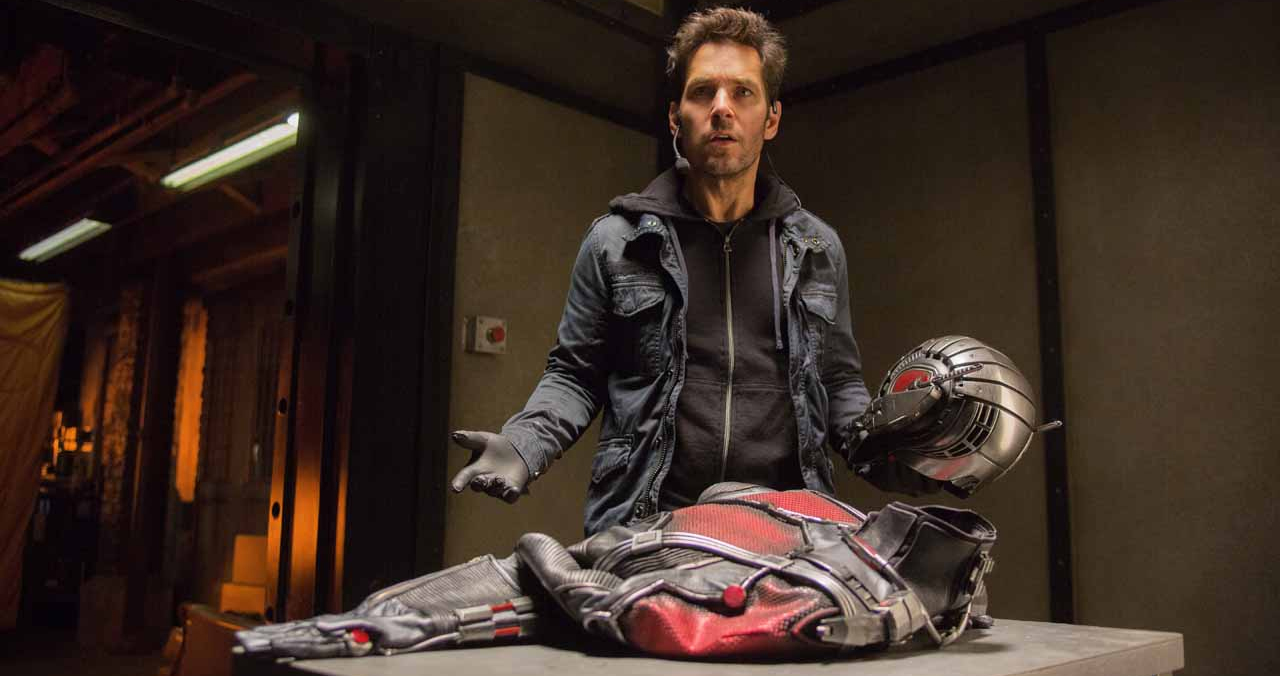
"You couldn't have called him 'Giant Man'?"

“You couldn’t have called him ‘Giant Man’?”

As such, director Peyton Reed does a pretty good job bringing the character to screen. Adam McKay and Paul Rudd adapted the original story written by Edgar Wright and Joe Cornish, providing a movie that sits more comfortably within the framework of the ever-expanding shared universe. Ant Man is a little clumsy in places, suffering from some of the stock weaknesses of the Marvel film franchises, but it is also clever and fun. All involved shrewdly play to the Marvel house style, offering a light run around populated by likable characters with clear-cut conflicts.

However, Ant Man‘s real strengths become obvious when the film deviates (even slightly) from the standard formula. After seven years of watching superhero films grow bigger and bigger, it’s nice to have a smaller story.

"One size fits all, eh?"

“One size fits all, eh?”

Continue reading

John Rozum and Alex Saviuk/Charles Adlard/Gordon Purcell’s Run on The X-Files (Topps) (Review)

This May and June, we’re taking a trip back in time to review the fifth season of The X-Files and the second season of Millennium.

It is amazing to think that Topps’ licensed comic book tie-in to The X-Files lasted three-and-a-half years, let alone that it was such a success that it spawned a second on-going series, a miniseries and a considerable volume of one-shots and digests and annuals. If anything, Topps enjoyed greater success exploiting the license than even IDW has – despite the fact that Topps was a relatively young company with minimal experience in comic book publishing while IDW has a reputation for (and a lot of experience at) skilfully leveraging these sorts of tie-in properties.

This success would be remarkable in any context, but the comic book succeeded at a time of turmoil for the entire comic book industry. The late nineties were not a good time for comics, with the speculation bubble imploding and Marvel filing for bankruptcy. The success of Topps’ X-Files comic book is in many way a triumph of the brand, yet another reminder of how the series was on top of the world. There were lots of others – the ratings, the film, the tie-in video game – but the success of the comic was part of the narrative of The X-Files at this stage of its life.
xfiles-remotecontrol10

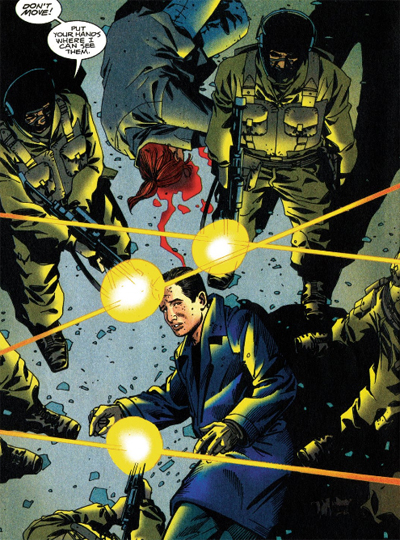
The comics themselves are actually surprisingly good. There is a reason that one of the first things that IDW did upon receiving the license was to publish “classic” collections of these comics. One of the more interesting aspects of the monthly series was the way that it managed to feel like The X-Files while still seeming suited to the medium in question. Stefan Petrucha and Charles Adlard pitched their run as something akin to a Vertigo comic, feeling like a crossover between The X-Files and the work of Grant Morrison or Neil Gaiman.

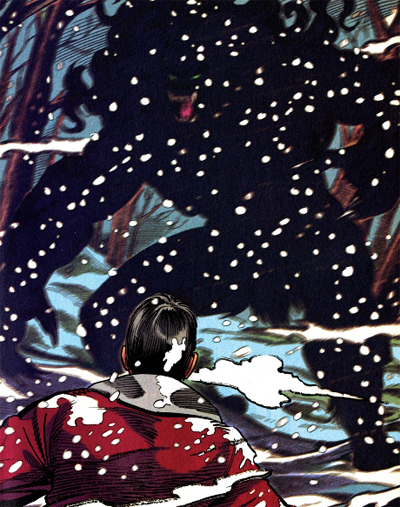
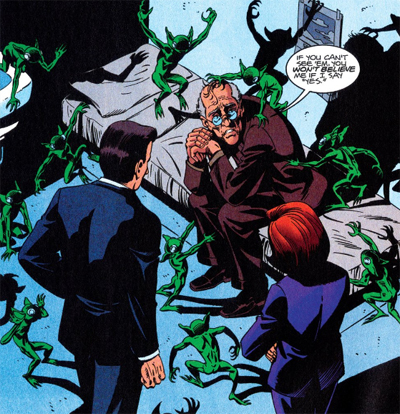
The influences on John Rozum’s run are a lot less ambitious. Time and time again, Rozum seems to position his run on The X-Files as a rather strange hybrid between the first season of the television series and pulpy fifties horror comics. There are quite a few stories in Rozum’s run that might easily be read alongside Fantagraphics’ E.C. Comics archives, albeit guest starring Mulder and Scully. (And modern fashions. And phones. And so on.) It is a perfectly reasonable and legitimate way to approach the idea of “X-Files comic books.”
xfiles-beprepared3

Indeed, it seems especially reasonable given the existing tensions between Ten Thirteen and Topps over the comics. The relationship had been fraught since the early days of the comic, with Ten Thirteen objecting to both Petrucha’s dense and ambitious plotting and Adlard’s moody and atmospheric art. Petrucha was fired from the title after sixteen issues, while Adlard was phased out in favour of better likeness artists like Gordon Purcell or Alex Saviuk. Ten Thirteen wanted a safer and more conventional comic book under Rozum’s pen, and they got it.

While it is easy to understand why these creative decisions were made, it does not make them any more palatable. Rozum’s work on The X-Files is generally quite consistent and occasionally even impressive. But it seldom seems ambitious or exciting. Under Petrucha, the tie-in comic carved out its own space that intersected with the parent show. Under Rozum, the comic book seems to do nothing but skirt the margins.
xfiles-cropduster2

Continue reading