• Following Us

  • Categories

  • Check out the Archives


  • Awards & Nominations

Doctor Who: Dinosaurs on a Spaceship (Review)

You know when Amy and I first got married and we went travelling…

To Thailand?

More the entirety of space and time… in that Police Box.

– Rory and Brian Williams share some truths

There is a strange listlessness to the seventh season, despite its position on the cusp of the big anniversary year. In many ways, the seventh season feels awkwardly positioned between the “timey wimey” ambitiousness of the sixth season and the “new beginning” aesthetic of the eighth season. The fact that the seventh season is split in half doesn’t help matters; it feels like an epilogue to the story of Amy and Rory, and a prologue to the story of Clara. It feels very much like a “light” year, which is a strange way to head into a big anniversary celebration.

There is a curious sense of idleness to all this. There is, for example, no clear story that links both halves of the season – Jenna-Louise Coleman’s role in Asylum of the Daleks notwithstanding. The seventh season has no real purpose beyond clearing out the ensemble and building towards the anniversary. As a result, it can feel more than a little rudderless and indulgent. Steven Moffat has described the “blockbuster” aesthetic of the year, and long stretches of the season feel like the show is just doing stuff because it can.
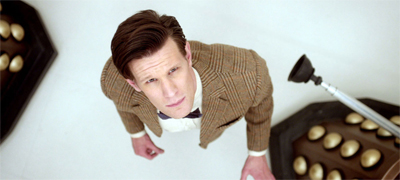
Gone to the birds?

Give Amy and Rory a five-episode coda? Sure, why not! Actually shoot a western in a country that could pass for the United States? Go for it! It’s been a while since we’ve seen the Ice Warriors, hasn’t it? Throw them in there! Neil Gaiman wants to write a Cyberman episode? Ah, go on! Develop those quirky supporting characters from A Good Man Goes to War into a part of the show’s ensemble in Victorian London? It just makes sense! Richard E. Grant as a villain from two Second Doctor stories? We’d be crazy not to!

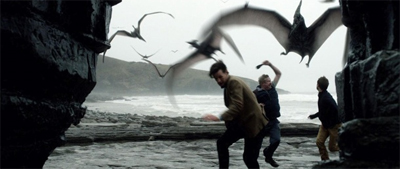
There is a sense that the seventh season is a victory lap for the show and many involved in the production. Deservedly so. What is the point of an anniversary year if you can’t go a little wild? That is the kind of thinking that leads to Dinosaurs on a Spaceship, a simple “because we can!” story. After all, one of the stock cringe-inducing Doctor Who images is the dinosaur special effects from Invasion of the Dinosaurs. What’s the point in turning the show into a hit if you can’t take an episode to prove how far your dinosaur effects have come in four decades?

Locking horns…

Continue reading

Doctor Who: Asylum of the Daleks (Review)

You’re going to fire me at a planet? That’s your plan? I get fired at a planet and expected to fix it?

In fairness, that is slightly your M.O.

Don’t be fair to the Daleks when they’re firing me at a planet.

And more wacky structural hijinks ensue.

The sixth and seventh seasons of the revived Doctor Who are strange beasts, for a number of reasons. The decision to split the seasons stands out, but there is also a sense that they are structured in a counter-intuitive manner. The Impossible Astronaut and Day of the Moon served as a two-part season finalé, despite opening the sixth season. In contrast, Let’s Kill Hitler played like a frothy season premiere. (The Wedding of River Song is perhaps the most difficult to place; while certainly not a light run-around season opener, it was nevertheless a bit light for a finalé.)

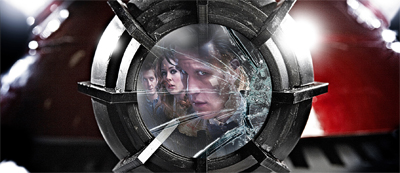
Things are looking up...

Things are looking up…

The seventh season arguably streamlines the structure a bit. The Name of the Doctor plays almost like a season premiere, revealing the origin story for “the Impossible Girl” and teasing ideas like the War Doctor and Trenzalore relentlessly. In contrast, Asylum of the Daleks feels like a season finalé, teasing a new companion as the existing companions struggle to get on with their real lives, featuring fleets of Dalek ships destroying planets and massive amounts of continuity.

Indeed, the biggest problem with Asylum of the Daleks is that it has not enough time to establish all its core elements. Plot points come out of nowhere. Character beats are established in the same scenes that resolve them. Asylum of the Daleks is a big episode in keeping with the “blockbuster” aesthetic of the anniversary season, but it also establishes the limitations of that approach.

Moffat’s crack at writing a Dalek episode…

Continue reading

Does Cabin in the Woods Out- “Hunger Games” The Hunger Games?

Sometimes I form weird movie connections in my head – tying two particular films together even if there’s very little common ground on which to link them. For example, I sat through quite a bit of Shame thinking of Collateral, a film linked tangentially thematically, as both offered rather scathing portraits of anomie against the backdrop of a major American city. On the other hand, I also formed a rather strong connection between the superb Cabin in the Woods and the mega blockbusting phenomenon The Hunger Games. As I watched Joss Whedon and Drew Goddard’s powerful exploration of the horror genre, I couldn’t help but feel that this was exactly what The Hunger Games wanted to be, even if the film adaptation couldn’t quite manage it.

The show must go on!

Note: This article contains some background information on Cabin in Woods. Nothing too big, but I would honestly recommend that you see the film as blind as possible. It is, by some considerable margin, one of the best films of 2012, and entirely deserving of both your time and your money. This article will still be here when you get back.

Continue reading

To Play the King (Review)

The wonderful folks at the BBC have given me access to their BBC Global iPlayer for a month to give the service a go and trawl through the archives. Read my thoughts on the service here, but I thought I’d also take the opportunity to enjoy some of the fantastic content.

You’ve got the King against the Prime Minister, the Lords against the Commons. The bishops are in now, you’ve got “don’t blame the royals”, and – in particular – you’ve got Urquhart’s plan to bring down the monarchy for good and all. And they’ve all played the personal morality card. Every one of them. Which means, in my book, that everybody’s private life is now up for grabs. And I mean everybody’s!

– Sir Bruce Bullerby sums it up

The second part of the House of Cards trilogy has some fairly interesting subject matter. While Francis Urquharts Machiavellian rise to power was enough to ground the first four-part serial, it does occasionally feel like To Play The King has just a bit too much going on. Of course, Andrew Davies’ tight scripting ensures that all the necessary subplots are tidied up before we reach the end credits of the final episode, but things do occasionally feel just a little bit too packed. Still, it’s hard to blame a television show for having too much substance, and there’s a compelling issue at the heart of To Play The King, as novelist Michael Dodds takes the opportunity to explore Britain’s constitutional monarchy, and the possibility of friction that a proactive King might present.

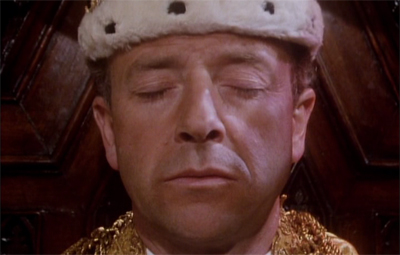
A crowning accomplishment for the BBC?

Continue reading

House of Cards (Review)

The wonderful folks at the BBC have given me access to their BBC Global iPlayer for a month to give the service a go and trawl through the archives. Read my thoughts on the service here, but I thought I’d also take the opportunity to enjoy some of the fantastic content.

You might very well think that… I couldn’t possibly comment.

House of Cards is an uncanny political drama. Based on the book written by Michael Dodds, the former “baby faced assassin” for Margaret Thatcher, one wonders just how much of this very dark thriller might actually be based on fact. Charting the rise of the Chief Whip of the Conservative Party, Francis Urquhart, it’s a disturbing exploration of the workings of the system as our villainous protagonist manages to efficiently (and sometimes brutally) remove any obstacles on his path to power. It’s often darkly hilarious, brutally sinister and strangely compelling – sometimes at the same time. While airing, it was granted a sense of relevance by the resignation of then-sitting Prime Minister Margaret Thatcher, but it remains a gripping example of British television drama even two decades after it originally aired.

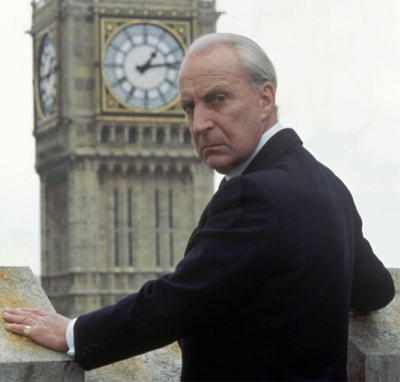
Clocking in as a compelling lead actor...

Continue reading

A Month on the BBC Global iPlayer

The kind folks over at the BBC were nice enough to give me access to the iPlayer for a month in order to review it. So I’ve spent to past month watching various BBC productions on my iPhone in a variety of circumstances. I’ve streamed them at home, I’ve downloaded and watched them on the bus; I’ve used the iPhone’s speakers and I’ve listened with my headphones; I’ve tried old and new and various types of programmes and shows. I have to admit to being quite impressed with the product, even if I do have some slight reservations.

Continue reading

The Thick of It – Series III (Review)

The wonderful folks at the BBC have given me access to their BBC Global iPlayer for a month to give the service a go and trawl through the archives. I’ll have some thoughts on the service at the end of the month, but I thought I’d also take the opportunity to enjoy some of the fantastic content.

No one forgot their first carpeting from Tucker – it was like a red hot poker.

– the BBC’s career retrospective on Malcolm Tucker

The first two seasons of The Thick of It proved to be quite the success for BBC4. Critics were raving about, the politicians it sought to ridicule were loving it. Creator Armando Iannucci even got to produce a movie with HBO using characters from the series (In The Loop) and plans were underway for a US adaptation. (In fairness, the adaptation was killed very quickly, which might be for the best given Iannucci’s opinion of it, but he’s currently working on Veep for HBO with Julie Louis Dreyfus.) So it seems fitting that the series came back to television in a big way. Fresh off two specials, with a new minister and a new slot on BBC2, the show was commissioned for eight glorious episodes. And it was great. The decision to re-focus the series on Malcolm Tucker, the Prime Minister’s advisor who thinks of himself”as a thin, white Mugabe.”

It's Party (Conference) time...

Continue reading

The Thick of It: Rise of the Nutters (Review)

The wonderful folks at the BBC have given me access to their BBC Global iPlayer for a month to give the service a go and trawl through the archives. I’ll have some thoughts on the service at the end of the month, but I thought I’d also take the opportunity to enjoy some of the fantastic content.

Are you f***ing kidding me? I mean, you’ve just watched me break my not-inconsiderable balls trying to get you the second spot on Newsnight. And succeeding! I can’t back down! No, no, you’re on, pal, right? And it better not be too boring, and it better not be too interesting either, ok? And it better not cost too much. It can’t be an old thing, obviously, and don’t make it too new. And whatever you do, please try not to embarrass yourself, right?

– Malcolm tells Swain his media strategy

I love the BBC’s Christmas specials. I mean, I know that other networks do Christmas-themed episodes of their shows, but the BBC does tend to go the extra mile. We get the opportunity to spend some time with a series that is on hiatus or even to provide an epilogue to a series that has ended. It generally affords considerably more leeway to a series to tell a different kind of story than they normally would. Here, in the hour-long Christmas special, Armando Iannucci’s political comedy gets a chance to drift its attention away from the fictional surroundings of the Department of Social Affairs and Citizenship to explore the resignation of the sitting Prime Minister. Mirroring Tony Blair’s decision to step down at the same time, it lends the series a somewhat especially timely feeling, as well as allowing more focus to fall on the show’s main attraction, the brilliantly cynical and manipulative political advisor Malcolm Tucker, brought to life by Peter Capaldi.

Bully to that...

Continue reading

The Thick of It – Series II (Review)

The wonderful folks at the BBC have given me access to their BBC Global iPlayer for a month to give the service a go and trawl through the archives. I’ll have some thoughts on the service at the end of the month, but I thought I’d also take the opportunity to enjoy some of the fantastic content.

My expert would totally disprove that.

Who is your expert?

I don’t know, but I can get one by this afternoon. The thing is, you’ve been listening to the wrong expert. You need to listen to the right expert. And you need to know what an expert is going to advise you before he advises you.

– Malcolm explains how advisers work to Hugh

In its sophomoric three-episode season, The Thick of It remains a shrewdly-observed and immensely funny political satire. It’s a very British send-up of the sort of idealism inherent in drama like The West Wing, a show where everything is so murky and uncertain that the script is highly improvised and even the camera wobbles. While it’s still as funny as it was in its first season, though, I have to confess that the second season didn’t quite grab in the same way. The first season represents one of the most cynical explorations of mainstream politics that I have ever seen, but it actually seems relatively optimistic when measured against this much more scornful second cluster of episodes.

The series that coined the phrase “Malchiavelli”…

Continue reading

Gideon’s Daughter (Review)

The wonderful folks at the BBC have given me access to their BBC Global iPlayer for a month to give the service a go and trawl through the archives. I’ll have some thoughts on the service at the end of the month, but I thought I’d also take the opportunity to enjoy some of the fantastic content.

Stephen Poliakoff’s companion piece to Friends and Crocodiles, airing just a month after that original drama film, Gideon’s Daughter feels like it owes a lot to a bunch of fascinating central performances. While Robert Lindsay provides the only on-screen evidence of a link between the two projects, reprising his role as an embittered old writer here, Poliakoff’s two stories are thematically linked, as the author focuses a lot of his frustrations on meaningless celebrity culture. This time, however, he sets the stories in the late nineties, allowing him to explore what he undoubtedly sees as the vulgarity of the millennium celebrations and to subtly examine the national outpouring of grief offer the loss of Princess Diana, while telling a rather simple story of a father and his daughter.

All tied up...

Continue reading