• Following Us

  • Categories

  • Check out the Archives


  • Awards & Nominations

Doctor Who: The Pirate Planet (Review)

To celebrate the fiftieth anniversary of the longest-running science-fiction show in the world, I’ll be taking weekly looks at some of my own personal favourite stories and arcs, from the old and new series, with a view to encapsulating the sublime, the clever and the fiendishly odd of the BBC’s Doctor Who.

The Pirate Planet originally aired in 1978. It was the second part of The Key to Time saga.

Excuse me, are you sure this planet’s meant to be here?

– The Doctor

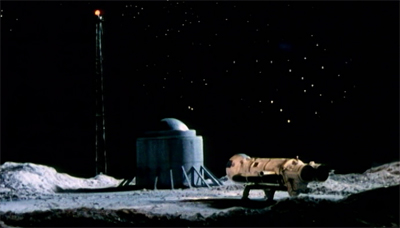
I have to admit, I admire The Pirate Planet for its lofty aim. Douglas Adams’ script is vast and impressive and epic, incorporating and number of brilliant high concept ideas, traditional science-fiction story-telling devices, and healthy sense of humour into one Doctor Who story. Unfortunately, the production is restricted both by the technical limitations of the time, but also by the sense that there’s simply too much going on over the course of this four-episode adventure. Still, it’s as bold, fun and imaginative as any Doctor Whostory, and showcases the series at its most ambitious. There’s nothing wrong with that.
Pulling a fast one...

Continue reading

Doctor Who: The Ribos Operation (Review)

To celebrate the fiftieth anniversary of the longest-running science-fiction show in the world, I’ll be taking weekly looks at some of my own personal favourite stories and arcs, from the old and new series, with a view to encapsulating the sublime, the clever and the fiendishly odd of the BBC’s Doctor Who.

The Ribos Operation originally aired in 1978. It was the first part of The Key to Time saga.

Your name!

What about my name?

It’s too long… by the time I’ve called out “Look out Romanadv…” – what’s your name again?

Romanadvoratrelundar!

By the time I’ve called that out you could be dead! I’ll call you Romana.

I don’t like Romana!

It’s either Romana or Fred!

All right, call me Fred!

Good! Come along Romana!

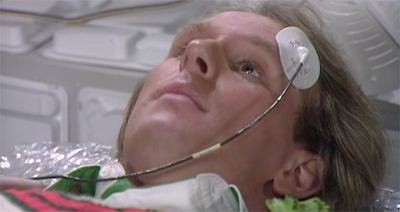
The Key to Time was a rather ambitious project for the time – the idea being that an entire series of the show would centre around one core arc, suggested in the first story, developed through the rest of the season, and tied up at the end of the year. It helps, when you’re doing something like that, to have an experienced hand at the reins. While The Ribos Operation doesn’t stand as Robert Holmes’ finest contribution to the series, it’s a suitable introduction to the adventure.

Time Lord and Lady...

Continue reading

Doctor Who: Hide (Review)

Say we actually find her. What do we say to her?

We ask her what she is, how she came to be.

Why?

Because I don’t know and ignorance is… what’s the opposite of bliss?

Carlisle.

Yes, Carlyle. Ignorance is Carlyle.

– the Doctor and Clara

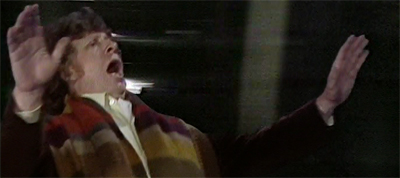
Hide is the best episode of Doctor Who to air since The God Complex, almost two years ago. Writing an affectionate tribute to gothic horror Doctor Who, Hide allows even the most skeptical member of the audience to forgive writer Neil Cross for his somewhat clunky script for The Rings of Akhaten. It’s a nostalgic and atmospheric trip back in time, and a reminder of just exactly what this show is capable of, offering a creepy haunted house horror that manages to morph into an epic love story by the time the credits have rolled.

What lies beyond?

What lies beyond?

Continue reading

Doctor Who: Planet of the Daleks (Review)

To celebrate the fiftieth anniversary of the longest-running science-fiction show in the world, I’ll be taking weekly looks at some of my own personal favourite stories and arcs, from the old and new series, with a view to encapsulating the sublime, the clever and the fiendishly odd of the BBC’s Doctor Who.

Planet of the Daleks originally aired in 1973.

You know, for a man who abhors violence, I must say I took great satisfaction in doing that.

– The Doctor on demolishing a Dalek

The combined Frontier in Space and Planet of the Daleks serials were intended to mark the tenth anniversary of Doctor Who with a twelve-part epic that could be measured against the lost Daleks’ Master Plan. I’m quite fond of The Frontier in Space, and I’d argue that it stands as the best space-opera of the Pertwee era, but I’ll concede that the story is severely weakened by the links it shares with this little adventure, which is conclusive proof that Daleks were quite stale long before Davros was invented.

Not all Dalek stories are gold…

Continue reading

Doctor Who: The Deadly Assassin (Review)

To celebrate the fiftieth anniversary of the longest-running science-fiction show in the world, I’ll be taking weekly looks at some of my own personal favourite stories and arcs, from the old and new series, with a view to encapsulating the sublime, the clever and the fiendishly odd of the BBC’s Doctor Who.

The Deadly Assassin originally aired in 1976.

I deny this reality.

– the Doctor

The Deadly Assassin is a rather boldly experimental episode of Doctor Who. It’s the first story told without a companion character, and it also ventures quite forcefully into the realm of surrealism. It offers a rather bold deconstruction of the Time Lords, a rather cynical depiction of the aliens who had seemed all-powerful in stories like The War Games or The Three Doctors. More than that, though, The Deadly Assassin feels – appropriately enough – like a treatise on the inevitable death of Doctor Who.

Located in the middle of the fourteenth of twenty-six seasons, and broadcast thirteen years from both the start and the end of the show’s initial run, The Deadly Assassin seems to be positioned at the very heart of Doctor Who.

A rough outline of what's going on...

A rough outline of what’s going on…

Continue reading

Doctor Who: Frontier in Space (Review)

To celebrate the fiftieth anniversary of the longest-running science-fiction show in the world, I’ll be taking weekly looks at some of my own personal favourite stories and arcs, from the old and new series, with a view to encapsulating the sublime, the clever and the fiendishly odd of the BBC’s Doctor Who.

Frontier in Space originally aired in 1973.

To celebrate the tenth anniversary of the show, the four-part serial The Three Doctors was produced. However, it was also decided that Jon Pertwee’s fourth season in the role should also contain something quite a bit grander than the average Doctor Who serial. Clearly intended to rival the epic (and lost) Daleks’ Master Plan in terms of scale and scope, an epic twelve-part adventure was conceived that would run across two back-to-back serials. It would open with Frontier in Space, before easing gently into Terry Nation’s Planet of the Daleks.

Unfortunately the adventure was never quite able to measure up to the series’ earlier Dalek epic, primarily due to problems with the second serial. Still, though somewhat weakened by the necessity to dovetail into the story directly following, Frontier in Space remains a rather wonderful example of the series on its largest scale, offering epic space opera with large-scale consequences.

Lost in space…

Continue reading

Doctor Who: The Sound of Drums (Review)

To celebrate the fiftieth anniversary of the longest-running science-fiction show in the world, I’ll be taking weekly looks at some of my own personal favourite stories and arcs, from the old and new series, with a view to encapsulating the sublime, the clever and the fiendishly odd of the BBC’s Doctor Who.

The Sound of Drums originally aired in 2007.

Doctor.

Master.

I like it when you use my name.

You chose it. Psychiatrist’s field day.

As you chose yours. The man who makes people better. How sanctimonious is that?

– the Doctor and the Master

The Sound of Drums is really more interesting than it is successful. Building off Utopia as the second part of a three-part finalé, building the longest single story in the revived Doctor Who, The Sound of Drums does an excellent job moving the characters along and getting everything where it needs to be for the requisite cliffhanger. Unfortunately, Davies’ weaknesses when it comes to plotting are at play here. While Utopia took advantage of a leisurely pace and conventional plot in order to do some nice set-up, The Sound of Drums doesn’t have that luxury. Utopia came out of left-field, with the last ten minutes taking the audience by surprise. Now the audience knows the game is afoot, so the rules have changed.

The Sound of Drums kicks off with everything in full swing, and Davies has to ratchet up the tension from there. The result is that Davies does solid character work, but that the plot points and set-ups occasionally feel a bit forced. That’s especially true when it comes to the ideas that will be important to the resolution of The Last of the Time Lords.

The End of the World... oh, wait, we already did that one...

The End of the World… oh, wait, we already did that one…

Continue reading

Doctor Who: Cold War (Review)

Hair. Shoulderpads. Nukes. It’s the eighties. Everything’s bigger!

– the Doctor

The theory that this fiftieth anniversary half-season is intended as an homage to Doctor Who‘s rich and varied past holds up with Cold War. If The Bells of St. John was a Pertwee-era invasion tale, and The Rings of Akhaten was a shout-out to classic Hartnell world-building, then Cold War wears its influences even more brazenly. It’s the archetypal “base under siege” story popularised in the Troughton era, to the point where it even brings back one of the era’s most iconic monsters.

Indeed, the “Troughton base under siege by classic monsters” story is the only classic Doctor Who formulation that this half-season visits twice. While Cold War is easily weaker (and less ambitious) than Nightmare in Silver, it still fills that niche remarkably well. After all, if any Doctor Who writer can channel nostalgia, it’s Mark Gatiss.

Going green...

Going green…

Continue reading

Doctor Who: Resurrection of the Daleks (Review)

To celebrate the fiftieth anniversary of the longest-running science-fiction show in the world, I’ll be taking weekly looks at some of my own personal favourite stories and arcs, from the old and new series, with a view to encapsulating the sublime, the clever and the fiendishly odd of the BBC’s Doctor Who.

Resurrection of the Daleks originally aired in 1984.

The universe is at war, Doctor. Name one planet whose history is not littered with atrocities and ambition for empire. It is a universal way of life.

Which I do not accept.

Then you deny what is real.

– yes, in case you’re wondering, the show did let Davros win a philosophical debate with the Doctor

It’s a bit of a cliché to suggest that writer and script editor Eric Saward didn’t actually like Doctor Who. It’s a bit of sensationalist nonsense that appears quite frequently in discussing his contributions to the series. The evidence most often cited in favour of this admittedly exaggerated position points out that Saward had a tendency to marginalise the Doctor within his stories, to portray the character as inefficient or ineffective within the context of an increasingly cynical universe. This characterisation of the Doctor as inherently weak really came to a head during the Colin Baker period of the show, but you can see traces of it during the Peter Davison era, most notably in Earthshock.

However, Resurrection of the Daleks also provides a pretty compelling case study, if only because it makes a compelling case for the Doctor as a massive hypocrite and a coward. You have to worry when the script seems to side more with Davros’ outlook on life than with that of the title character.

Putting the Fifth Doctor to the test...

Putting the Fifth Doctor to the test…

Continue reading

Doctor Who: Dalek (Review)

To celebrate the fiftieth anniversary of the longest-running science-fiction show in the world, I’ll be taking weekly looks at some of my own personal favourite stories and arcs, from the old and new series, with a view to encapsulating the sublime, the clever and the fiendishly odd of the BBC’s Doctor Who.

Dalek originally aired in 2005.

I’m sorry. I’m so sorry! I swear, I just wanted you to talk!

Then hear me talk now. Exterminate! Exterminate! Exterminate!

– Van Statten and the Dalek

Dalek is a pretty effective reintroduction of the show’s most iconic villain. It’s also something of a tour de force for lead actor Christopher Eccleston and Dalek vocal performer Nicholas Briggs. It’s full of interesting ideas, and perhaps the biggest swipe the show would make at “superfans” this side of Love & Monsters. That said, Rob Shearman’s script is occasionally a bit clumsy in its execution, never quite managing to convince the audience that the Doctor might be turning into a Dalek, no matter how firmly it labours to point. Still, minor quibble aside, it’s a wonderful way of welcoming the Daleks back to the fold.

The loneliest Dalek...

The loneliest Dalek…

Continue reading