• Following Us

  • Categories

  • Check out the Archives


  • Awards & Nominations

Non-Review Review: Copshop

Copshop is a loving and pulpy throwback to old-fashioned seventies b-movies, that simply doesn’t know when to quit.

Copshop operates very firmly within the comfort zone of everybody involved. Director Joe Carnahan has made a name for himself as a director of these sorts of high-concept thrillers. Stars Gerard Butler and Frank Grillo both seem perfectly at home glowering at each other across a police station cell block, separated from one another by two sets of bars. Watching Copshop, the film plays as a slight tweak on the basic concept that has made Assault on Precinct 13 an enduring cult hit: an isolated and under-staffed police station finds itself unde rsiege and stuck with a dangerous criminal.
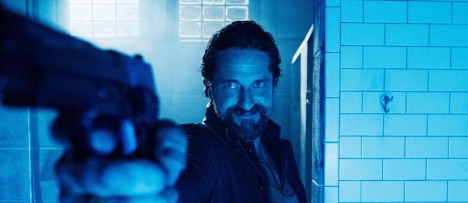
The Butler did it.

There’s a compelling simplicity to Copshop, with the movie building outwards from a solid premise, and understanding the appeal of these sorts of movies. Carnahan imbues the film with an appealing nastiness and cynicism that feels appropriate for this kind of genre throwback. Most of the runtime of Copshop finds its protagonist, Officer Valerie Young, forced to choose between the lesser of two evils as the situation steadily escalates around her. For most of the film’s runtime, Carnahan commits to this meanness in a manner that is often lacking from these sorts of throwbacks and tributes.

Unfortunately, Copshop somewhat falls apart in its final ten minutes, as the film seems unable to settle on a single satisfying ending and so instead cycles through at least three different climaxes hoping that one of them might stick. The movie’s bombastic and over-stuffed third act is a frustrating conclusion to a film that worked to that point largely because of its minimalism and its restraint.

On the chain.

Continue reading

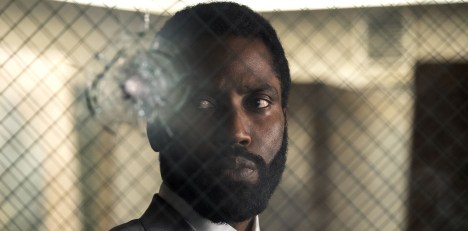
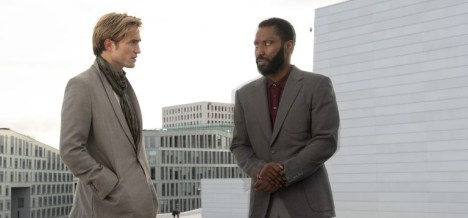
“A Goya? In a Harrods Bag?” “TENET” and the Nightmares of Late Capitalism…

This week, the podcast that I co-host, The 250, celebrated its 250th episode with a conversation about Christopher Nolan’s TENET. I had some additional thoughts on the film.

TENET is a film about many things.

It is a movie about the idea that the future will not only judge us, it will condemn us. It is a movie about the importance of faith and mortality in a world that frequently seems to exist beyond basic human comprehension. It is a movie about time, and how there is no escaping or evading it. TENET is one of the most ambitious mainstream American blockbusters of the twenty-first century, with its fractured narrative reflecting the chaos of the time in which it was produced.

However, TENET is also a film about the nightmare of late capitalist excess. It is the story about wealth and power, and how things insulate and isolate those who hold it. It is something of a cliché to suggest that power and privilege protect the wealthy from the laws of men, from the consequences of their action – that civil and criminal laws bend to those with with enough money. TENET follows that idea to its logical conclusion, suggesting a world in which the laws of physics themselves bend to those with enough power.

TENET is a biting piece of social commentary that reflects a profoundly broken world.

Continue reading

New Podcast! The Time is Now – Millennium in Comics (“Immaculate” & “Mini-Series”)

I’ve been really honoured to be a recurring guest on The Time is Now across its coverage of Millennium, a vastly underrated and under-appreciated television series. The podcast has finished its coverage of the show, but I was thrilled to join Tony Black for a discussion of the tie-in comic books published after the show finished up.

To be fair, it seems like Millennium only really came back as an extension of IDW’s management of the larger X-Files brand, as the publisher tried to figure out if the market would support an X-Files-adjacent comic book as hype built around the franchise’s return to television. Still, the results were interesting and worth discussing on their own merits, an effort to bring Frank Black and the Millennium Group into the twenty-first century.

As ever, you can listen directly to the episode here, subscribe to the podcast here, or click the link below.

Continue reading

New Escapist Column! On the “End of Evangelion” in “Thrice Upon a Time”…

I published a new In the Frame piece at The Escapist this evening. With the release of the last of the Rebuild of Evangelion movies, it seemed like the perfect opportunity to take a look at Hideaki Anno’s third draft of an ending to Neon Genesis Evangelion.

The Rebuild of Evangelion is an interesting experiment. It is essentially a remake of the classic animated series split across four feature length movies. However, as the series unfolds, this reimagining branches further and further from the original run. It’s a fascinating piece of art, a creator essentially returning to a franchise that made them a legend within the industry, and reworking it from the ground up. Rebuild of Evangelion is a set of movies that exist entirely in conversation with what has come before, daring to ask what a happy ending might look like to this familiar story.

You can read the piece here, or click the picture below.

New Podcast! The X-Cast – “Chris Carter’s Harsh Realm”

With The X-Cast moving on to coverage of the seventh season of The X-Files, it seemed like a good opportunity to talk about Chris Carter’s Harsh Realm, the short-lived series that Carter launched in the wake of Millennium.

Harsh Realm is an oddity. The show was hyped as the next great American television show, developed by Chris Carter under a lucrative production deal with Fox. However, with the arrival of Doug Herzog, the network’s priorities shifted and Harsh Realm was effectively dead on arrival. The result is an interesting and disjointed run of episodes, brimming with potential that is never fully realised. In some ways, Harsh Realm is the forgotten Chris Carter television show, which offers an interesting snapshot of his sensibilities at this moment in time.

You can listen to the episode here, or click the link below.

Continue reading

New Escapist Video! “A Marvelous Escape” – What If – “… Doctor Strange Lost His Heart Instead of His Hands?”

With a slew of Marvel Studios productions coming to Disney+ over the next six months, The Escapist has launched a weekly show discussing these series

This week, I join KC Nwosu and Amy Campbell to talk about the fourth episode of What If…?, streaming on Disney+.

(—#) TENET .052

.TMG mp6 ta yadrutaS yreve desaeler era sedosipe weN .sresU esabataD eivoM tenretnI yb rof detov sa ,edam reve seivom )tsrow dna( tseb eht fo emos hguorht pirt ylkeew (yltsom) a si 052 ehT yenooM nerraD dna nniuQ werdnA yb detsoH

.TENET s’naloN rehpotsirhC ,edosipe ht052 ruo gnikram ,emit sihT

.sbarg rof pu si swonk eh skniht oreh eht taht gnihtyrevE .degnahc evah selur eht dna ,labolg era sekats eht ,peed nur seiretsym ehT .dlrow wen yleritne na ni pu sekaw evitarepo na ,gnorw ylbirret seog eniarkU ni noissim trevoc a nehW

.esabataD eivoM tenretnI eht no emit lla fo seivom tseb eht fo tsil eht no deknar ton saw ti ,gnidrocer fo emit tA

Continue reading

New Escapist Column! On the Contradictory Generational Conflicts of “Shang-Chi and the Legend of the Ten Rings”…

I published a new In the Frame piece at The Escapist this evening. With the release of Shang-Chi and the Legend of the Ten Rings, it seemed like a good opportunity to take a look at the film.

Shang-Chi and the Legend of the Ten Rings is an interesting mess of contradictions. On the one hand, it is a classic story of generational conflict about a son who needs to defeat and vanquish his evil father in order to determine his place in the world – like Star Wars. However, it is also a story about a prodigal son who needs to connect with his roots and let his older relatives provide him with an identity that he cannot determine for himself. It’s a weird juxtaposition that creates an irreconciliable conflict at the heart of the movie.

You can read the piece here, or click the picture below.

New Escapist Video! “Shang-Chi and the Legend of the Ten Rings – Review”

I’m thrilled to be launching movie reviews on The Escapist. Over the coming weeks and months, I will be joining a set of contributors in adding these reviews to the channel. For the moment, I’m honoured to contribute a three-minute film review of Shang-Chi and the Legend of the Ten Rings, which is released theatrically in Europe and the United States this weekend.

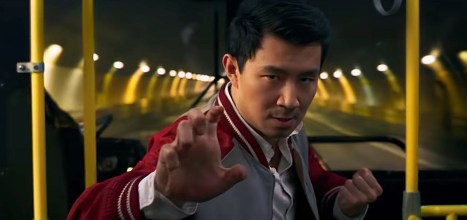
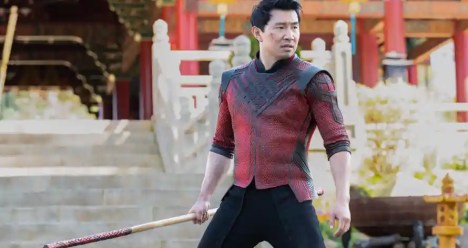
Non-Review Review: Shang-Chi and the Legend of the Ten Rings

There’s something unsettling on how conservative Shang-Chi and the Legend of the Ten Rings is, even by the standards of the Marvel Cinematic Universe.

This is particularly frustrating when Shang-Chi and the Legend of the Ten Rings positions itself as a progressive piece of pop culture. There’s a lot to appreciate about the film, conceptually. It is the first film in the Marvel Cinematic Universe from an Asian American director. It is the first entry in the franchise with a predominantly (almost exclusively) Asian cast. It exists in conversation with the company’s long-standing history of clichés and stereotypes, exploring and reconstructing them. Even more than that, it has a fundamentally charismatic cast and a fairly solid emotional arc, both of which should sustain it.

Stick with it.

However, all of this ultimately feels like empty window dressing arranged around a weirdly traditionalist and pandering core. At its heart, Shang-Chi and the Legend of the Ten Rings is a story about how “kids these days” really don’t know what they’re doing or where they’re going, and really just need to get back in touch with their roots and learn from their elders. There are points when Shang-Chi and the Legend of the Ten Rings feels a little bit like a Jerry Seinfeld joke about stupid millennials with their gap years and their gig economy.

There’s something disheartening in all this, particularly with Shang-Chi and the Legend of the Ten Rings positioned as the first true origin story to follow Avengers: Endgame, the herald of a new era for perhaps the most ubiquitous pop culture franchise in the world. However, when Shang-Chi and the Legend of the Ten Rings should be looking forward into a bold new era, it casts its gaze backwards.

Continue reading