• Following Us

  • Categories

  • Check out the Archives


  • Awards & Nominations

Doctor Who: Daleks in Manhattan (Review)

To celebrate the fiftieth anniversary of the longest-running science-fiction show in the world, I’ll be taking weekly looks at some of my own personal favourite stories and arcs, from the old and new series, with a view to encapsulating the sublime, the clever and the fiendishly odd of the BBC’s Doctor Who.

Daleks in Manhattan originally aired in 2007.

We must evolve! Evolve! Evolve!

– Dalek Sec has perhaps the most out-of-character moment for a Dalek ever

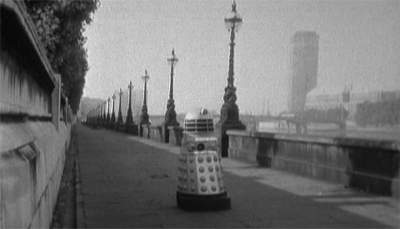
The concept of Daleks in the past is a great idea. However, with the exception of Evil of the Daleks, it is also a bit of a tricky one. Steven Moffat found that out with the first Dalek story of his tenure, Victory of the Daleks, bringing the Daleks to the Second World War. However, Russell T. Davies tried telling a Dalek story set in the past as part of the show’s third season. The Parting of the Ways had featured a Dalek story set in the future, while Doomsday saw the fiends lay siege to modern-day London. Placing the Daleks in 1930s New York seems a staggeringly ambitious proposition.
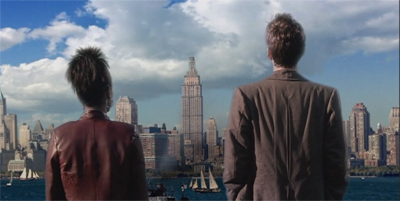
It's a hell of a town...

It’s a hell of a town…

Continue reading

Any Witch Way But Backwards: How Oz The Great & Powerful Erodes the Feminist Appeal of The Wizard of Oz…

I quite enjoyed Oz: The Great & Powerful. The visuals were amazing, and I thought that Sam Raimi brought the world of Oz to life in a way that audiences haven’t really seen since 1939. Despite the fact that the film was limited to elements from the source novels rather than the classic film, meaning no red slippers and the Winkie Guards chanting a generic “ho-ho-ho” instead of “ho-ee-ho-ee-oh”, I think that Oz: The Great & Powerful is the first time that a film has taken us back to that version of the wonderful world of Oz.

It’s a shame, then, about the script. I have a lot of problems with the screenplay by Mitchell Kapner and David Lindsay-Abaire. Indeed, I’m less than thrilled that Kapner has apparently been tapped by Disney to prepare a sequel. While Raimi and his cast, and his production designers, seem to understand a great deal about the magic of The Wizard of Oz, it seems like Kapner and Lindsay-Abaire seem to have missed the point.

It’s a shame, then, that Oz: The Great & Powerful rolled on March 8th, celebrated as International Women’s Day. Dorothy Gale has been described as “the first feminist role model” and The Wizard of Oz is packed to the brim with strong female characters. Although Dorothy obviously can’t play a major role in this prequel, one does wonder where all the strong women have gone.

ozthegreatandpowerful11

Note: This post contains spoilers for Oz: The Great & Powerful. Consider yourself warned.

Continue reading

Doctor Who: The Dalek Invasion of Earth (Review)

To celebrate the fiftieth anniversary of the longest-running science-fiction show in the world, I’ll be taking weekly looks at some of my own personal favourite stories and arcs, from the old and new series, with a view to encapsulating the sublime, the clever and the fiendishly odd of the BBC’s Doctor Who.

The Dalek Invasion of Earth originally aired in 1964.

We are the masters of Earth. We are the masters of Earth. We are the masters of Earth.

– who are the Daleks trying to convince?

Watching the early years of Doctor Who, I often find myself struggling to measure the quality of a show as against its importance to the series as a whole. Sixties Doctor Who has perhaps an unfair reputation when it comes to quality. In fact, as a rule, I’ve been pleasantly surprised on my trips back to the archives for these reviews. However, it’s often much more interesting to look at the context and the legacy of these classic episodes, as the show begins to define what it is and what it isn’t, what it can do and what it can’t do.

In that context, The Dalek Invasion of Earth is a massively important story. It features the first returning monsters of the series (go on, guess!), the first departure of a companion, the first invasion of Earth, the first aliens in London. The list goes on and on. There’s an incredibly vast influence that The Dalek Invasion of Earth has on the half-century of Doctor Who that follows. It’s nearly impossible to deny the shadow that this adventure casts.

However, it’s also a very flawed piece of television, for all its iconic status. Indeed, watching these six episodes I’m more often struck by what is important rather than what is good.

The Daleks of London...

The Daleks of London…

Continue reading

Watch! New Star Trek: Into Darkness Trailer!

I’m pretty excited for the upcoming Star Trek: Into Darkness, especially since it’s now releasing a week earlier in the UK and Ireland. Anyway, there’s a new trailer released, which continues the trend of telling us absolutely nothing about the film while teasing the sense of fun and character dynamics that we all know and love. Check out the trailer below.

Non-Review: Reported Missing (Die Vermissten)

This film was seen as part of the Jameson Dublin International Film Festival 2013.

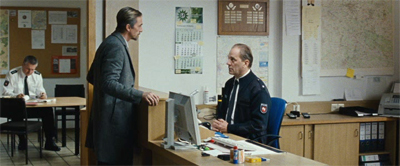
Die Vermissten feels almost like a Clint Eastwood film by the way of David Lynch. If that sounds like a pretty strange combination, it really is. When his 16-year-old daughter disappears, divorcee Lothar is initially reluctant to investigate. He tries to convince his ex-wife that she’ll turn up, while trying to explain to his new girlfriend that he has a daughter. Eventually determining to conduct his own inquiries into the disappearance of his child, Lothar discovers that the incident isn’t quite isolated, and that there’s something much larger going on here.

Missing vital evidence...

Missing vital evidence…

Continue reading

Doctor Who: The Dæmons (Review)

To celebrate the fiftieth anniversary of the longest-running science-fiction show in the world, I’ll be taking weekly looks at some of my own personal favourite stories and arcs, from the old and new series, with a view to encapsulating the sublime, the clever and the fiendishly odd of the BBC’s Doctor Who.

The Dæmons originally aired in 1971.

I’ve bought you a nice cuppa, Sergeant. I hope you like china.

For goodness sake, Miss Hawthorne.

What’s the matter? Don’t you like tea?

Something’s gone badly wrong. We’ve no idea what’s happening to Miss Grant and the Captain, the Doctor should be back here by now, I can’t get through to the Brigadier and you’re nattering on about tea.

You must learn the art of waiting, Sergeant. The Doctor will come, or else he won’t, and that’s all that can be said. Now, milk or lemon?

– Miss Hawthorne helps Sergent Benton get his priorities straight

Barry Letts was a very talented man. I feel like I don’t stress that often often. I’ll freely concede that the UNIT era isn’t my favourite part of Doctor Who history, but there are times when you really have to admire the skill and competence of Letts as the show’s producer. In fact, he served as both a director and a writer on the series. He had a very clear vision for the show, and he implemented it remarkably well, to the point where his work on the show still stands out as something quite distinguished from the work of other producers.

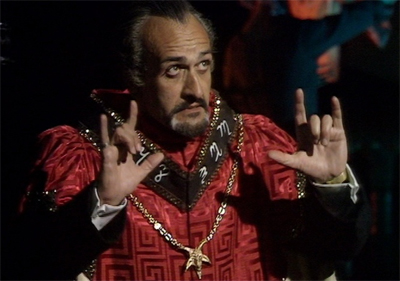
The Dæmons is a very clear illustration of just how carefully and how thoughtfully Letts had overhauled the show for the seventies. While it’s not the most Letts-ian episode ever produced (he would produce, write and direct Pertwee’s final episode, Planet of the Spiders), but it is a great illustration of Letts’ approach to the programme and perhaps a testament to his lasting legacy.

Rock on, you crazy Master...

Rock on, you crazy Master…

Continue reading

Doctor Who: Colony in Space (Review)

To celebrate the fiftieth anniversary of the longest-running science-fiction show in the world, I’ll be taking weekly looks at some of my own personal favourite stories and arcs, from the old and new series, with a view to encapsulating the sublime, the clever and the fiendishly odd of the BBC’s Doctor Who.

Colony in Space originally aired in 1971.

Are you some kind of scientist?

I’m every kind of scientist.

– Caldwell and the Doctor

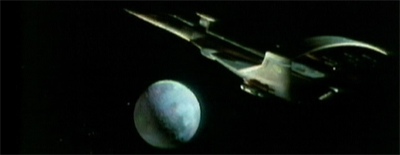
Colony in Space is an interesting story for many reasons. For one thing, it’s the first colour adventure to travel to another world. It was the first time since Jon Pertwee took over the title role that the character had been allowed to leave the surroundings of modern-day Earth. Even if he did land in a quarry. Colony in Space demonstrated the possibilities to tell futuristic and extraterrestrial stories in the new and remodelled version of Doctor Who, and the show began to slowly venture further and further afield over the next few years, with the Doctor finally regaining control of his TARDIS in The Three Doctors a little under two years later.

However, Colony in Space is also interesting because it is a script from Malcolm Hulke, who has really become one of the more Doctor Who script writers more inclined to pepper his scripts with political and moral philosophy. Colony in Space is an interesting exploration of those themes, even if it does run a little bit long in places. (That said, Hulke is one of the better writers of the six-part format in the show’s history.)

Go on, try to fight the urge to pronounce the episode title like "colony... IN SPACE!"

Go on, try to fight the urge to pronounce the episode title like “colony… IN SPACE!”

Continue reading

Non-Review Review: Oz – The Great & Powerful

Oz: The Great & Powerful is a fabulous production. A few minor misgivings aside, it looks and sounds fantastic. Sam Raimi has done the best job bringing Oz to the screen since the original version of The Wizard of Oz all those decades ago. In its best moments, there’s an enthusiasm and a lightness of touch that fits the material perfectly and captures the wonder that we associate with Oz. It’s very clear that a lot of love and care was put into the production design of the film, and that Sam Raimi’s hand moved with the utmost consideration and affection for the original film. It makes it a little disappointing, then, that the script to Oz: The Great & Powerful should feel so undercooked, more like an early draft than a finished screenplay.

Up in the air or down to earth?

Up in the air or down to earth?

Continue reading

Non-Review Review: John Dies at the End

This film was seen as part of the Jameson Dublin International Film Festival 2013.

Don Coscarelli is that most frustrating of film-makers. He’s a remarkable talent able to produce a story with the zany off-kilter madness of Bubba Ho-tep, but can also produce something as disappointing and as frustrating as John Dies at the End. It isn’t that John Dies at the End is completely without charm. It can occasionally be a wittily subversive take on the staples of American horror, from the works of H.P. Lovecraft through to the gore of seventies and eighties schlock-fests.

The real problem with John Dies at the End is that, for all its charm and its wit, it feels terribly unoriginal.

Sauced...

Sauced…

Continue reading

Doctor Who: The Claws of Axos (Review)

To celebrate the fiftieth anniversary of the longest-running science-fiction show in the world, I’ll be taking weekly looks at some of my own personal favourite stories and arcs, from the old and new series, with a view to encapsulating the sublime, the clever and the fiendishly odd of the BBC’s Doctor Who.

The Claws of Axos originally aired in 1971.

Are you trying to tell me you can absorb the total output of this complex in a police box?

Yes.

– Hardiman and the Master discover that self-confidence is a genetic Time Lord trait

The Claws of Axos tends to come in for a fair bit of criticism for pretty much being the quintessential Earth-based Jon Pertwee story, with very little exceptional to distinguish it from the pack. Personally, I’m actually quite fond of it, perhaps precisely for that reason. I think you’re hard-pressed to find an adventure in the early part of Jon Pertwee’s tenure that so effectively and so efficiently captures the spirit of the show – both good and bad. That kind of makes The Claws of Axos stand out if only because it so perfectly embodies those early Pertwee years.

Eye see you…

Continue reading