• Following Us

  • Categories

  • Check out the Archives


  • Awards & Nominations

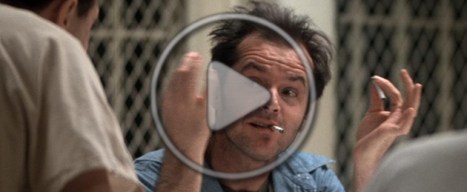
56. One Flew Over the Cuckoo’s Nest (#16)

Hosted by Andrew Quinn and Darren Mooney, The 250 is a (mostly) weekly trip through some of the best (and worst) movies ever made, as voted for by Internet Movie Database Users. New episodes are released every second Saturday at 6pm GMT, with the occasional bonus episode between them.

This time, Miloš Forman’s One Flew Over the Cuckoo’s Nest.

To avoid prison on a statutory rap charge, charming misfit Randle McMurphy secures a transfer to a low-security psychiatric ward for evaluation. What initially seems like a cunning plan to serve out the rest of his sentence in more soothing surroundings quickly evolves into a battle of wits for the hearts and souls of the hospital’s residents.

At time of recording, it was ranked the 16th best movie of all time on the Internet Movie Database.

Continue reading

Non-Review Review: Lady Bird

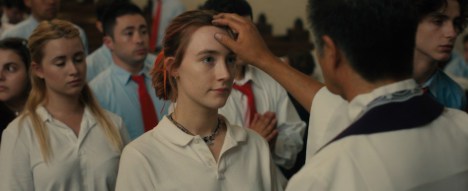
Lady Bird is a sweet and charming little film, one anchored in two great central performances from Saoirse Ronan and Laurie Metcalf.

Lady Bird is relaxed and casual, a story of teenage anxiety unfolding at its own pace without any tangible sense of stakes or scale. Lady Bird is a refreshingly quiet and sincere movie, one that captures a lot of the listlessness associated with youth, the obliviousness to the reality of the outside world, the struggle to define a unique identity. For all the film is anchored in its Californian surroundings, Lady Bird is a universal coming of age story.

Blessing in disguise.

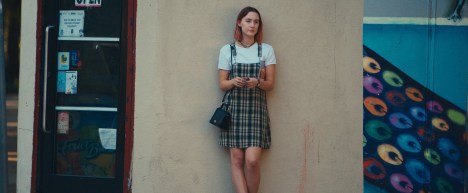
Like its protagonist, Lady Bird is smart and wry, if a little directionless and unsure of itself. However, the movie works in large part because of the decision to build its emotional core around the relationship between the eponymous character and her mother. Ronan is phenomenal here, but Metcalf is just as able to match her co-star. Both actors deliver raw and genuine performances that perfectly capture the push-and-pull of any real-life familial dynamic.

Lady Bird is perhaps a little too eccentric and a little too whimsical in places, drawing its supporting cast in broad strokes and leaning a little too heavily into stereotypes of adolescence, but the film has a warm and beating heart that sustains it for its ninety-three-minute runtime.

Bye, bye, birdie.

Continue reading

Non-Review Review: Darkest Hour

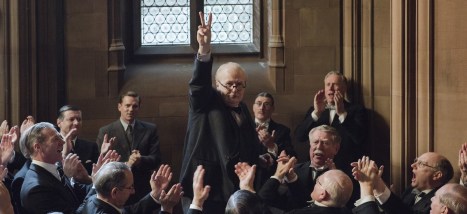
Darkest Hour is a powerhouse performance nested inside a fairly formulaic film.

In terms of plot, Darkest Hour is very much a familiar cinematic biography. Building off the template cemented by writer Peter Morgan on The Deal, The Queen, The Special Relationship and Rush, this is a film that explores its subject through the lens of a single event. The plot of Darkest Hour unfolds across May 1940, in the shadow the Second World War. It charts the life of Winston Churchill from the resignation of Prime Minister Neville Chamberlain to the evacuation of Dunkirk. It is tightly focused, and perhaps the better for that.

Winston, Loseton.

In many ways, Darkest Hour feels like a collection of pop culture standards. Churchill is such an iconic part of European history, and this month was so crucial, that audiences have almost reached saturation point with narratives documenting key moments in the life of the statesman. Darkest Hour cannot help but evoke shades of everything from The King’s Speech to The Crown to Dunkirk, all of which share some sense of the same time and place. Darkest Hour simply combines a lot of pop culture Churchill into what amounts to a “greatest hits” package.

With that in mind, it should be no surprise that Darkest Hour is elevated by the central performance from an almost unrecognisable Gary Oldman. If pop culture has synthesised Churchill’s history to a collection of “greatest hits”, then it is the delivery that truly matters. Oldman carries the film home.

Two-finger salute.

Continue reading

New Podcast! The X-Cast X-Files Podwatch – Episode #70 (The Unnatural/Three of a Kind)

I’m thrilled to be a part of The X-Cast X-Files Podwatch, a daily snippet podcast rewatching the entirety of The X-Files between now and the launch of the new season. It is something of a spin-off of The X-Cast, a great X-Files podcast run by the charming Tony Black. Tony has assembled a fantastic array of guests and hosts to go through The X-Files episode-by-episodes. With the new season announced to be starting in early January, Tony’s doing two episodes of the podcast per day, so buckle up. We’re almost there at this point, approaching the end of the Duchovny era of the show.

My final appearance of the sixth season teams me up with writer Sarah L. Blair. I recorded a couple of episodes with Sarah, and I’m quite fond of this duology. We’re discussing two relatively late episodes of the season, The Unnatural and Three of a Kind. The Unnatural is the first episode to be written and directed by David Duchovny, who had collaborated on some earlier mythology stories with Chris Carter, and which marks out The X-Files as a delightfully unique television series with room for eccentric visions. Three of a Kind is the series’ second Lone-Gunmen-centric episode, paving the way for… well, The Lone Gunmen.

Continue reading

Non-Review Review: Jumanji – Welcome to the Jungle

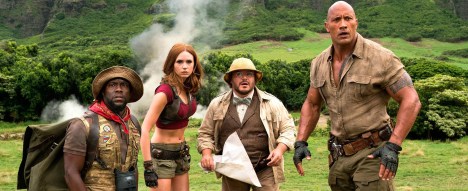
Jumanji: Welcome to the Jungle is a weird and interesting experiment, in part because it is a nostalgic and belated sequel that remains caught between its past and the present.

Welcome to the Jungle joins a long (and perhaps undistinguished) line of twenty-first century franchise revivals for beloved nineties properties. The original Jumanji was a hardly a breakout hit, even if it did make an impression on a younger generation who would have grown up on it as part of Robin Williams’ nineties family-friendly oeuvre along with Hook or Ms. Doubtfire. Indeed, Jumanji is arguably the nineties Robin Williams film most perfectly suited to a revival like this, in that it involves a premise that can be divorced from its iconic and beloved star.

Franchises find a way.

At the same time, Jumanji is undoubtedly near the bottom of nineties adventure films in need of a revival, lurking in the shadow of other resurrected blockbusters like Independence Day or Jurassic Park. Perhaps because of this distance, and perhaps because of the lack of a true cult iconography, Jumanji serves as an interesting control case. This is a film with one leg in the present, aimed at what modern families expect from blockbuster entertainment. The other leg it planted firmly in the past, harking back to certain aspects of formula that seem almost quaint.

Welcome to the Jungle is not a particularly good film, but it is an interesting one. It serves as a prism through which certain aspects of nostalgia might be deconstructed and explored.

Players.

Continue reading

New Podcast! The X-Cast X-Files Podwatch – Episode #61 (The Beginning/Drive)

I’m thrilled to be a part of The X-Cast X-Files Podwatch, a daily snippet podcast rewatching the entirety of The X-Files between now and the launch of the new season. It is something of a spin-off of The X-Cast, a great X-Files podcast run by the charming Tony Black. Tony has assembled a fantastic array of guests and hosts to go through The X-Files episode-by-episodes. With the new season announced to be starting in early January, Tony’s doing two episodes of the podcast per day, so buckle up. We’re almost there at this point, just winding down from The X-Files: Fight the Future.

My first appearance (covering the first episodes) of the sixth season teams me up once again with Tony himself. We’re discussing the first two episodes of the season, The Beginning and Drive, two episodes very clearly flowing out of the feature film. Indeed, Drive is one of my favourite X-Files episodes of all time.

Continue reading

Non-Review Review: The Post

The Post is clean, efficient and timely.

Even to those unfamiliar with the historical events that inspired the film, there will be very little in The Post that is surprising. The Post follows a very clear trajectory for a prestige picture coming into awards season, setting up its character arcs and trajectories in a very straightforward manner and following them all on their clearly defined paths towards the end credits. It is very easy to see where the story will end up, and there are surprisingly few twists and turns in the narrative as it develops.

Food for thought.

However, there is something endearing in this efficiency. The Post famously came together in a hurry while director Steven Spielberg was waiting for postproduction work on Ready Player One, and the film serves as a showcase for the effectiveness of the creative talent involved in the production. The Post is unlikely to become a defining or signature film for anybody involved in its production, but instead exists as a testament to the sheer technique and craft of that production team.

The Post is not a masterpiece or a classic, but it is a sleek and well-made film.

Old news.

Continue reading

CinÉireann – Issue 2 (December 2017)

The new issue of CinÉireann had just been released.

I’m honoured to have a piece about modern film criticism in the magazine, along with wonderful work by Jay Coyle and Ronan Doyle among others. It’s a fantastic line-up of Irish film criticism talent writing about a fantastic line-up of Irish film, and it’s exciting to be a part of it.

As ever, thanks to the fantastic Niall Murphy over at Scannain for letting me be a part of it.

You can read CinÉireann as a digital magazine directly. You can even subscribe and get future issues delivered to you directly. Or click the picture below.

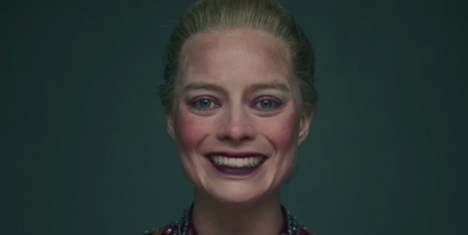
Everyone’s a Winner, Baby: “I, Tonya”, “The Disaster Artist” and the Modern Biopic

Watching certain genres over a number of years, patterns emerge.

A lot of this is down to success and influence. A lot of studio output is driven by what worked in the genre in recent years. This is why so many studios have tried to fashion their blockbusters into a “shared universe” after the success of The Avengers, or why so many franchise reboots went dark and gritty after The Dark Knight. However, other genres also shift in response to trendsetters, albeit in more subtle and nuanced manners. Some of these shifts can be attributed to critical response or awards success.

For example, following the success of Peter Morgan’s intimate and tightly-focused biographical scripts for The Queen or Frost/Nixon, a lot of biographies adopted a similar approach to their subjects, focusing on one particular incident in a life (or in two lives) that could provide a microcosm through which to explore big issues. This led to other biographies that tended to be built around specific events in the lives of their subjects rather than adopting a more holistic approach, like RushMy Weekend with MarilynHitchcock, Elvis and Nixon, Battle of the Sexes.

In the past two years, an interesting trend has emerged in terms of biographical pictures. Historically, biographies have tended to focus on historically noteworthy individuals who accomplished great things; Gandhi, The Aviator, My Left Foot, Milk. Even more ambivalent biographies were usually defined by the sense that those characters had changed the world; Nixon, J. Edgar, The Social Network. However, the last few years have seen an interesting shift away from characters who actually accomplished tangible change, and those who tried and failed.
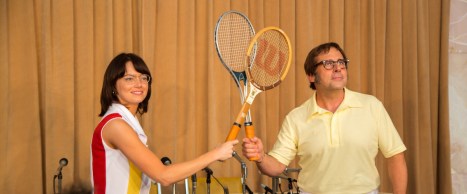
To be fair, there have always been biographies that acknowledged the valour of a failed attempt. Cool Runnings was a film about a the Jamaican bobsled team in which the characters did not even finish their Olympic event. Even in terms of fictional sports films, Rocky famously ended with the title character defeated after struggling for the entire film. However, in these cases, the film often acknowledged the valour in the attempt. The Jamaican bobsled team were competing for the first time and changing preconceptions about their country. Rocky was trying to pull himself out of poverty.

In contrast, more modern biographies seem willing to engage with the idea of failure to the point of mockery, exploring characters who have arguably been reduced to pop culture punchlines. Florence Foster Jenkins is the story of a socialite who cannot sing who dreams of performing in front of a rapt audience. Eddie the Eagle is the story of an awful skier who dreams of making it to the top of his profession. The Disaster Artist is the story of an eccentric with delusions of grandeur who through sheer force of will makes what might be the worst movie of all time.
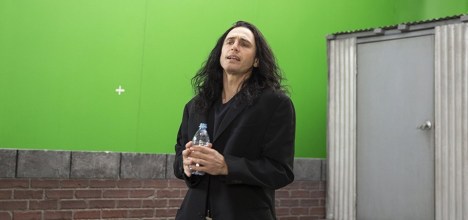
This represents an interesting shift away from many of the conventions of the biographical feature film, providing a sharp contrast with the high-profile prestige pieces that garnered awards and glory in the twentieth century. After all, these movies are not spoofs or comedies. They are not subversions of the biopic in the same way that Walk Hard might be considered to be, nor are they broad comedies adapted from real events like Thirty Minutes or Less. While these films include comedic elements, they are very clearly intended as serious works intended for serious contemplation.

So, what does this shift actually mean?
Continue reading

No, “Twin Peaks: The Return” is Not a Movie

It is December.

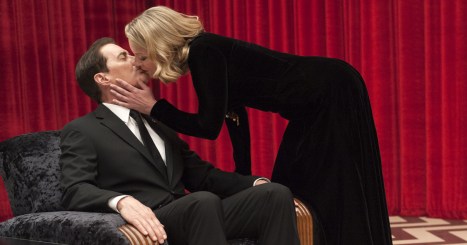
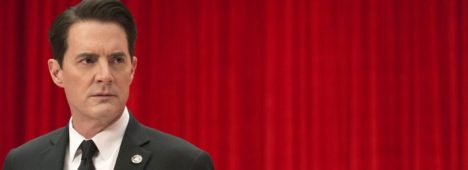
As tradition dictates, the major publications are rolling out their “best of” lists. One of the more interesting trends of the “best of” season in 2017 has been the repeated suggestion that David Lynch’s Twin Peaks: The Return should be considered an eighteen-hour movie. It made the Sight & Sound and Cahiers du Cinema polls, and even got a write-in vote at the Los Angeles Film Critics Awards. This is interesting on a number of levels, because it suggests that labelling The Return as a feature film is not a lone act of contrarianism, but something of a minor trend.

Of course, there are grey areas between film and television. There always have been, given the similarities in the technology and mechanism. Film can be shown on television, and television can be shown in cinemas. There are television movies and film series, and it is often possible for stories that start in one form to transform into the other. The boundaries are not as absolute as they are with theatre or prose, where the technical form is so fundamentally different that any comparison is ridiculous. After all, consider the debate over movies released on Netflix, or films edited for television.

The Return is not an ambiguous area, though. It is a fairly simple case. It is a television series. And there is nothing wrong with that.

Continue reading