• Following Us

  • Categories

  • Check out the Archives


  • Awards & Nominations

Non-Review Review: Under the Silver Lake

There is far too much masturbation in Under the Silver Lake, of both the literal and figurative variety.

To be entirely fair to writer and director David Robert Mitchell, this is entirely the point. Under the Silver Lake is many things, but a large part of it is a genre hybrid between existential slacker drama, anthropological journey through the eccentric and self-absorbed spaces of Los Angeles, and absurdist investigative thriller. Those sorts of genres lend themselves to excessive self-indulgence and self-importance, the sorts of grand-sounding-yet-completely-empty philosophical treatises on the human condition that seem to have been written by those high on their drug of choice or simply themselves. With that in mind, the amount of literal masturbation in Under the Silver Lake seems pointedly self aware, a tacit acknowledgement of the figurative masturbation.

Lost Angeles.

Under the Silver Lake does have a few good ideas. More than that, it has a couple of legitimately great scenes, moments that demonstrate the same skill with the uncanny that made Mitchell’s It Follows so effective. There are moments when Under the Silver Lake walks that fine line between being darkly, bleakly funny and also being uncomfortably, hauntingly unsettling. However, the issue is that these moments are far too fleeting and far too ephemeral, frequently lost amid long and listless passages in which Under the Silver Lake indulges in well-worn cliché and obvious ideas. Under the Silver Lake is shrewd enough to acknowledge and even try to deflate some of its sense of self-importance, but there’s an awkward seam of self-assuredness that runs through the film.

As much as Under the Silver Lake might brutally and incessantly mock its lead character for his assumption that he can figure out the secret code of the universe, it often feels like Under the Silver Lake is convinced that it has a much more insightful perspective, even as it packages well-worn ideas as profound revelations.

This is all going swimmingly.

Continue reading

122. Room – St. Patrick’s Day 2019, w/ When Irish Eyes Are Watching (#151)

Hosted by Andrew Quinn and Darren Mooney, The 250 is a fortnightly trip through some of the best (and worst) movies ever made, as voted for by Internet Movie Database Users. New episodes are released Saturdays at 6pm GMT.

This week, a special crossover episode with When Irish Eyes Are Watching, an Irish film podcast wherein Alex, Clíona and Séan take at a look at films connected to the Emerald Isle.

The 250 and When Irish Eyes Are Watching are crossing over for a St. Patrick’s Day treat. Lenny Abrahamson’s Room.

Jack has spent his entire life within the confines of “Room”, the space which comprises the totality of his world. He knows every inch of the ten-by-ten space in which he was raised, in which he lives day-by-day with Ma between visits from Old Nick. However, as Jack turns five, he is forced to confront some uncomfortable realities about the world within which he lives and the world beyond “Room.”

At time of recording, it was ranked the 151st best movie of all time on the Internet Movie Database.

Continue reading

Non-Review Review: What Men Want

What Men Want is probably as solid an execution as the title premise could expect.

To be clear, What Men Want is very trite and straightforward. It is a movie that is largely defined by cliché. As the title implies, it’s essentially an exercise in broad gender stereotypes. There is very little novel and exciting in What Men Want. In fact, the most frustrating aspect of the whole film is the consistent refusal to work for a joke when the opportunity for a cheap lay-up presents itself. What Men Want is in no way an exceptional piece of work.

“Are you psychic?”
“No, I’ve just seen a rom-com before.”

At the same time, there is a certain charm to all of this. What Men Want is effectively an exercise in familiar formulas. Audience members will recognise all the stock romantic clichés employed here: the absurd lie that spirals into a brutal personal betrayal, the gay supporting character and sounding board, the third act separation and reunion, the protagonist’s journey towards realising that they need other people. However, there is something to be said for hitting those marks in a manner more effective than many modern films in the same subgenre.

It also helps that What Men Want is driven by a powerhouse central performance from Taraji P. Henson, who demonstrates a commitment and energy that the film can seldom match.

Catching up.

Continue reading

Non-Review Review: The Highwaymen

The Highwaymen is an uneven and clumsy piece of work.

In many ways, The Highwaymen positions itself as a logical extension of the modern deconstructive western, the tales of men on the edge of the frontier grappling with the challenges of modernity. Sometimes, those stories are set in the old west as it faces massive social shifts; The Sisters Brothers is a recent, effective example. Sometimes, these stories unfold in a more contemporary setting featuring characters still processing how the world has moved past them; Hell or High Water may be the best of the recent examples. The Highwaymen positions itself somewhere on the spectrum between the two; an early scene has the Governor of Texas offering an elevator pitch for the entire film, “It’s 1934, Lee, and you wanna put cowboys on Bonnie and Clyde?”

This is the basic premise of The Highwaymen, and it is a good one. It is two different American archetypes thrown into stark opposition with one another, a story that pits two of the last cowboys in the old west against a newer and hungrier breed of American outlaw. The Highwaymen is the story of the two Texas Rangers drafted out of retirement to hunt down Bonnie and Clyde. Forget Monsters vs. Aliens or Cowboys and Aliens or Alien vs. Predator, this is a pop cultural match-up for the ages. It is cowboys versus gangsters. (It might be more accurate to describe Bonnie Parker and Clyde Barrow as “public enemies”, but “cowboys versus public enemies” is not quite so evocative.)

With all of this in mind, it is disappointing that The Highwaymen feels so hollow.

Continue reading

“It’s About Family”: Why Are Modern Blockbusters So Preoccupied With the Notion of Family?

“It’s about family” has entered the cultural lexicon, usually delivered with a grim Vin Diesel bass.

It is, of course, a cliché to suggest that the Fast & Furious franchise is “about family.” Of course they are about family. Dominic Toretto never stops talking about how it is “about family.” The entire heart of the film franchise is that it’s “about family.” It arguably has been from the start, with the simmering attraction between undercover cop Brian O’Conner and Mia Toretto in The Fast and the Furious. In that first film, Brian doesn’t merely befriend the criminal that he is supposed to catch, he becomes family with him. The two men become (ironically) something close to brothers-in-law as much as brothers-at-arms. Over the course of the series, Dominic offers such pearls of wisdom as “you don’t turn your back on your family” in The Fate of the Furious.

Family runs through the film franchise. Owen Shaw, the villain of Fast and Furious 6, is revealed to be the brother of Deckard Shaw, the villain of Furious Seven. The series hinges on soap opera plot dynamics like amnesia and betrayal, all of which emphasising the importance of these familial ties in mapping out the world that these characters operate. However, “family” is more than just a word that drives the plots of these movies, as much as those plots can be said to exist. It is also an important thematic element. The films frequently feature extended sequences at family gatherings, such as barbecues and parties. (Indeed, the franchise seems to evoke almost a Pavlovian response between the words “family” and “Corona.”)

However, while the Fast and Furious franchise is perhaps the franchise most overtly and obviously committed to the theme of “family”, and certainly the film franchise with the most frequent articulation of the concept, it is far from the only example. Modern cinema, particularly modern popular cinema, seems obsessed with the notion of family. In particular, contemporary big budget films are very much engaged with the idea of “found family” much more than biological family. It is interesting to wonder why modern pop culture seems so fixated on the idea of “found family”, to the point that it dominates so much cinematic real estate.

Continue reading

121. Guardians of the Galaxy (#248)

Hosted by Andrew Quinn and Darren Mooney, The 250 is a fortnightly trip through some of the best (and worst) movies ever made, as voted for by Internet Movie Database Users.

This time, to mark the release of Captain Marvel, James Gunn’s Guardians of the Galaxy.

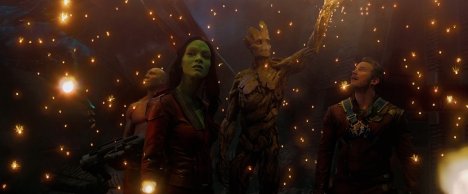
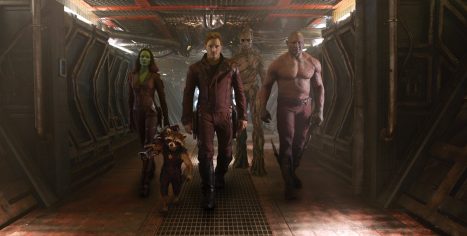
Stealing a mysterious orb from a dead world, Peter Quill become embroiled in a high-stakes plot with galactic repercussions. As time runs out and the threat rises, Quill finds himself forced to assemble a ragtag band of misfits because the galaxy isn’t going to save itself. Among that team, Quill finds the deadliest woman in the galaxy, a literal-minded killing machine, a bounty-hunting raccoon and his “personal house plant slash muscle.” Separately, they are a bunch of failures. Together, they are the Guardians of the Galaxy.

At time of recording, it was ranked the 248th best movie of all time on the Internet Movie Database.

Continue reading

“When I Left Earth”: The Simple Childhood Trauma of “Guardians of the Galaxy”

This Saturday, to mark the release of Captain Marvel, I will be discussing Guardians of the Galaxy on The 250, the weekly podcast that I co-host discussing the IMDb’s Top 250 Movies of All-Time. However, I had some thoughts on the film that I wanted to jot down first. You can listen to the podcast here.

Twenty-one films in, there is a solid argument to be made that Guardians of the Galaxy ranks among the very best of the Marvel Cinematic Universe.

Variety has consistently ranked Guardians of the Galaxy the best film in the shared universe on its own frequently updated list. According to Rotten Tomatoes, the film is ranked joint sixth (but on the fourth tier) of Marvel movies in terms of review aggregation. On a list that included non-Marvel-Studios-properties, MetaCritic ranked the film as the fifth best of the top fifty Marvel films released in the twenty-first century. It landed in the same position on a similar list compiled by Peter Bradshaw for The Guardian. It ranked second on the list compiled by The Independent. Although such a metric is hardly absolute and academic, it is also one of the longest-enduring Marvel films on the Internet Movie Database‘s top 250 movies of all-time.

Similarly, the film endures in popular culture. It is arguably one of the most influential blockbusters of the past decade. It was notably the first film to have its soundtrack top the Billboard album charts without an original song on it. Although directors like Martin Scorsese and Richard Linklater had defined the “jukebox soundtrack”, Guardians of the Galaxy turned it into a standard for blockbuster films. Somewhat ironically, given how James Gunn’s career has since developed, Guardians of the Galaxy is a film that seems like the template for the modern wave of blockbusters like Suicide Squad or even Kong: Skull Island. These are massive tentpole films that consciously wear their weirdness on their sleeve.

At the time, this seemed strange. Guardians of the Galaxy was a fringe property before the film was released, largely unknown to audiences outside of comics. The film does not even adapt the “classic” team line-up, relegating them to a cameo in Guardians of the Galaxy, Vol. 2. Instead, the team depicted in Guardians of the Galaxy was drawn from Dan Abnett and Andy Lanning’s well-loved but under-appreciated twenty-first century run. More than that, the film was to be helmed by a director who had developed his trade working at Troma and whose career included oddities like Slither or Super. The star was a supporting actor on a well-liked-but-not-breakout sitcom. The biggest names were voicing a talking raccoon and “his personal houseplant-slash-muscle.”

As such, the film’s status as a breakout hit and cultural phenomenon seems strange. What is it about Guardians of the Galaxy that endures, that elevates it in the popular memory ahead of other superhero films (and other Marvel Studios films) like Captain America: The First Avenger or Ant Man or Doctor Strange? It’s in interesting question to contemplate, particularly when Guardians of the Galaxy comes with so much of the baggage of those middle Marvel Cinematic Universe. Rewatching the film in hindsight, there is a lot of clunky exposition and unnecessary detail, a host of elements that exist to set up other movies (like Avengers: Infinity War) rather than serving this individual film. This is the film that properly introduced Thanos and the Infinity Stones, after all.

It is perhaps to the credit of Guardians of the Galaxy that it works well enough in spite of the demands of the Marvel Cinematic Universe, that it is the rare Marvel Studios film that feels entirely sure of itself and its own identity. Despite all this continuity and all of these connections, Guardians of the Galaxy is structured by Gunn and credited co-writer Nicole Perlman as a very simple allegory beneath all the talk of “Celestials” and “the Nova Corps”, between trips to “Xandar” and “Morag.” At its core, Guardians of the Galaxy never loses sight of what it’s actually “about” beneath the trappings of comic book lore and the spectacle of a twenty-first century blockbuster. It is the story of a young boy who responds to a massive trauma by retreating into a world of fantasy.

Continue reading

New Podcast! Scannain Podcast (2019) #8! Live From VMDIFF!

It’s time for the latest Scannain podcast!

This time, coming live from the Virgin Media Dublin International Film Festival, recorded in the space between the showings of Another Day of Life and José on Saturday 2nd March. I join Jason Coyle, Ronan Doyle and Alex Towers of When Irish Eyes Are Watching discuss their own experience of the festival to this point, including highlights and otherwise.

Films discussed include: Loro, What Time is Death?, Happy as Lazzaro, Ash is Purest White, Rafiki, Jonathan Agassi Saved My Life, The Man Who Feels No Pain, Fighting With My Family, Angelo, Vox Lux, Her Smell, Dragged Across Concrete, Another Day of Life, Dub Daze, Out of Blue, A Girl From Mogadishu and She’s Missing.

Due to the unique constraints of the festival, this episode eschews the usual format (no top ten! no new releases!), moves at a much brisker and looser pace, and was recorded in the wild. As such, the sound includes ambient rainfall.

New Podcast! Scannain Podcast (2019) #7!

It’s time for the latest Scannain podcast! Almost live from the Virgin Media International Film Festival!

This week, I join Ronan Doyle and Jay Coyle to discuss the week in film news. Jay and I are just back from the premiere of Papi Chulo, while Ronan has brought along a schedule of planned festival highlights for discerning listeners. Due to time constraints, the podcast moves at a tremendous clip, but there’s room to discuss classics like Point Break, Predator and Jodorowsky’s Dune along the way.

The news is given over to the passing of screen legends Bruno Ganz and Albert Finney, Aamir Khan’s trip to the Belfast Film Festival and TOG Hackerspace’s #OIRscars Party this coming Sunday.

The top ten:

  1. The Kid Who Would Be King
  2. The Mule
  3. A Dog’s Way Home
  4. Happy Death Day 2 U
  5. If Beale Street Could Talk
  6. Alita: Battle Angel
  7. Green Book
  8. How to Train Your Dragon III: The Hidden World
  9. Instant Family
  10. The Lego Movie 2: The Second Part

New releases:

You can download the episode here, or listen to it below.

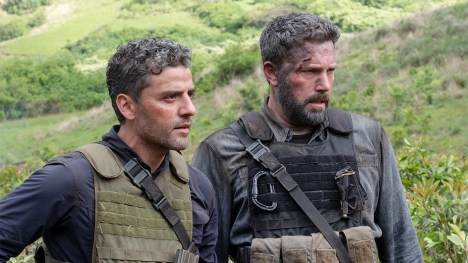
Non-Review Review: Triple Frontier

Triple Frontier feels very much like a J.C. Chandor grab bag. And that’s no bad thing of itself.

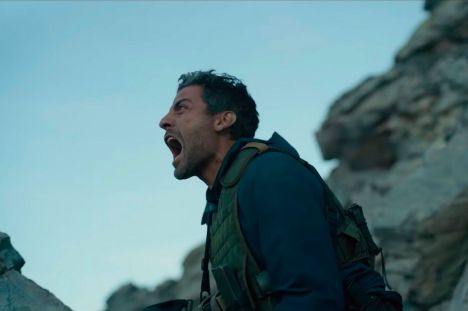
The film runs on a variety of different concepts and ideas that run through Chandor’s other films. On a purely plotting level, the idea of a story about five guys trapped alone in the wilderness trying to survive on hostile terrain evokes the survival drama of All is Lost, albeit with more men carrying more weapons. The thematic underpinnings of the story, particularly its preoccupations with the dangers of greed and the consequences of unchecked avarice, resonate with Chandor’s earlier work like Margin Call or A Most Violent Year. There is a sense in which Triple Frontier feels of a piece with the body of work that Chandor is building for himself.

Even more broadly, Triple Frontier feels like the kind of older sort of film that rarely gets made in the current studio system; an ensemble cast dropped into a fairly standard premise, anchored in the recognisability of the actors rather than the familiarity of the intellectual property. Triple Frontier is a film build around the closest thing that modern Hollywood has to star wattage. The film reunites Chandor with Oscar Isaac, who anchored A Most Violent Year and the secondary lead role is given over to Ben Affleck, who is arguably one of the rare remaining movie stars. There is no small irony in the fact that Triple Frontier should end up on Netflix, despite being the sort of mid-budget, actor-driven, basic-concept action thriller that studios used to churn out on a regular basis.

Triple Frontier is perhaps Chandor’s weakest film. It lacks the raw urgency of Margin Call, the desperate intimacy of All is Lost and the claustrophobic anxiety of A Most Violent Year. However, it is still a well-constructed survival parable driven by a likable cast and confident director with a clear affection for an older style of Hollywood film-making.

Continue reading