• Following Us

  • Categories

  • Check out the Archives


  • Awards & Nominations

A Doll’s Place is in the Home: The Sly, Semi-Subversive Domestic Politics of “Annabelle Comes Home”…

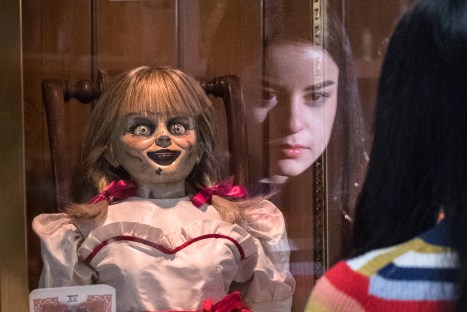
Annabelle Comes Home is an intriguing film. It’s arguably more intriguing than it is successful.

A large part of that is down to the way in which it very much basks in its position as an unlikely lynch pin of a horror shared universe populated by a variety of ghosts and ghouls that seem to be clamouring for their own spin-off movies like Annabelle or The Nun as the eponymous demonic doll just sits back and watches. It’s a surreal spectacle, particularly for a horror movie. Annabelle herself often feels like something of a passenger in her own movie, instead a tether for a variety of episodic horror adventures.
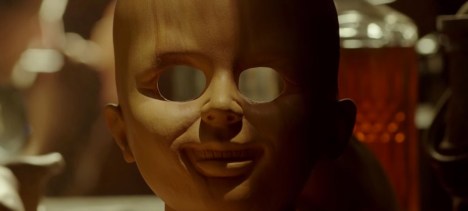
However, there is something more subversive and intriguing happening beneath the surface of the film. As the title implies Annabelle Comes Home is a story centred on the domestic environment, on a suburban family home menaced by a sinister supernatural threat. This is a standard horror movie set-up. A lot of horror movies focus on the idea of evil within the family environment, whether coming from within or without. Annabelle Comes Home borrows a number of cues from The Shining, including the bass on the soundtrack and a possessed typewriter, but it runs much deeper than that.

A lot of horror films focus on the nuclear family placed under siege, often as a metaphor for the pressures at work in the real world. Stephen King has pointed to movies like The Amityville Horror as examples as “economic horror”, reflecting the anxieties of families sinking into debt in their family homes during the seventies. (As if to underscore the point, the real life case that inspire the film was a fraud to help the family get out of debt.) Similarly, the liberal single-parent household in The Exorcist turns back to the Church, perhaps expressing deep-seated anxieties about liberalisation or shifting cultural norms.
There is often a strongly reactionary subtext to these sorts of horror stories. It is not always a conscious choice on the part of the production team, but it is rooted in the fact that change is scary and that subversions of conventional conservative dynamics are unsettling in large part because those conventional conservative dynamics are so ubiquitous. In short, audiences tend to see conventional family units as the default, so anything that attacks or erodes that is potentially uncanny and unsettling, and so many horror movies play on that instinctive reaction.

There are any number of obvious examples of how this approach can lead to very uncomfortable and unsettling implications. The Curse of La Llorona is perhaps an obvious (and easy) contemporary example. The basic set up of the movie finds a single (widowed) mother struggling to provide for her children; she has to leave them for extended periods to work at her job, but is also held back at that job because she is a single mother. Meanwhile, a Mexican spirit invades the family home and attaches itself to her children. The result is a film that seems to be about a single mother who leaves her children open to a foreign threat.
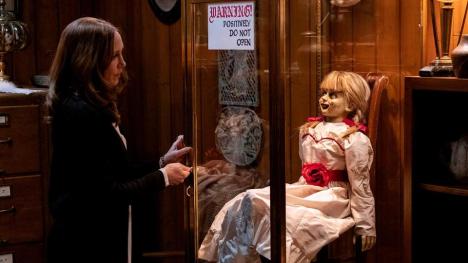
Part of what makes Annabelle Comes Home so interesting is the way in which it seems to play with this central dynamic, how it teases out and subverts some of the central subtext of the larger horror genre to which it belongs. Annabelle Comes Home is not so much a story about outside forces menacing a conventional family within the seeming comfort of their home, but is instead a story about two young women who end up trapped inside a suburban home and attacked by the monstrous forces that the family have consciously placed there and even folded built into the structure.

Annabelle Comes Home offers a slyly feminist twist on the familiar domestic horror.
Continue reading

New Podcast! Scannain Podcast (2019) #26!

It’s time for the Scannain podcast!

We’ve got four of a kind this week, as I join Jay Coyle, Grace Duffy and Ronan Doyle to discuss the week in cinema. This week, Jay has watched Experiment in Terror, Booksmart, Metal Heart and Hotel Monterey. Grace has watched Stoker, Night Moves, The Cabinet of Dr. Caligari and Spider-Man: Homecoming. Ronan has watched The Front Page, Night and Fog, Ricky and Lemonade. Jay and Ronan have also both watched the latest installment in the Up series. I have watched Anima, Shaft and the entire Toy Story franchise.

In film news, it’s a packed July at the Irish Film Institute, the Lighthouse has a special screening of Crouching Tiger, Hidden Dragon, Phantom Islands released on Vimeo on Demand, a list of industry experts announced as speaking at the Galway Film Fleadh, and the casting of Halle Bailey as Ariel in the upcoming live action remake of The Little Mermaid.

The top ten:

  1. Child’s Play
  2. Apollo 11
  3. Avengers: Endgame
  4. The Queen’s Corgi
  5. Rocketman
  6. The Secret Lives of Pets II
  7. Men in Black International
  8. Aladdin
  9. Yesterday
  10. Toy Story 4

New releases:

You can listen to the podcast directly here.

Note: Podcast contains spoilers for both Yesterday and Spider-Man: Far From Home.

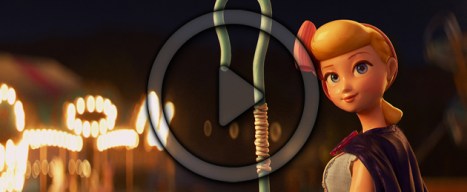
137. Toy Story 4 – This Just In (#116)

Hosted by Andrew Quinn and Darren Mooney, This Just In is a subset of The 250 podcast, looking at notable new arrivals on the list of the 250 best movies of all-time, as voted for by Internet Movie Database Users.

This time, Josh Cooley’s Toy Story 4.

At time of recording, it was ranked 116th on the list of the best movies of all time on the Internet Movie Database.

Continue reading

Non-Review Review: Annabelle Comes Home

At its core, Annabelle Comes Home is the Captain America: Civil War of the Conjuring Shared Universe.

That is a very strange sentence to type, and more than likely a very strange sentence to read. However, it speaks to very strange times. It seemed highly unlikely that The Conjuring would spawn Hollywood’s second most successful cinematic universe, despite efforts by various other studios to emulate the success of the Marvel Cinematic Universe. However, even the Warner Brothers trailers before Annabelle Come Home reinforce how dramatically the franchise has moved the needle. Blockbuster franchise horror cinema is a thriving market even outside these films. Later this year, Warners have IT: Chapter 2 and Doctor Sleep.

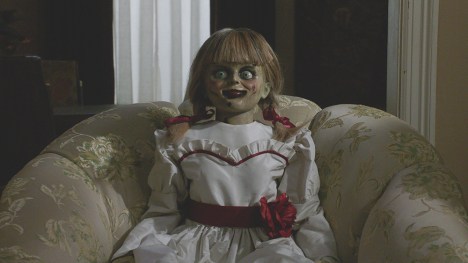
Hello dolly.

However, even the mere existence of Annabelle Comes Home is an illustration of the success of this particular horror franchise. This is a major cinematic release at the height of summer. It is not even counter-programming like, for example, Midsommar. This is event cinema. As with The Conjuring 2, this is also very clearly designed in the language of blockbuster cinema. Like Civil War, this is nominally the third film in its franchise; although the nature of that franchise has changed dramatically with each film. As with Civil War, the production team have tethered this sequel to the heart of the shared universe.

Annabelle Comes Home is a fascinating, if not entirely successful, slice of blockbuster horror that seems to exist primarily as a showcase for the success of its own franchise. It’s sturdily and reliably constructed, if a little lacking in its craft and technique. It balances this lack of finesse against a playful sense of humour and a slyly subversive sensibility, resulting a solid addition to the shared universe.

Nobody ever asks the killer doll their side of the story.

Continue reading

Non-Review Review: Pavarotti

Pavarotti is pretty much exactly what one might expect from a Ron Howard documentary looking at the life of Luciano Pavarotti.

Howard is often overlooked or dismissed as a filmmaker, in large part because he never cultivated the same sort of auteur persona associated with other great American directors like Steven Spielberg or Robert Zemeckis. Indeed, it’s often quite difficult to pin down what exactly makes a Ron Howard film distinctly his own, which is something of a compliment. Howard has a versatility and adaptability that makes him one of the most enduring and successful major American film directors, with his filmography including films as diverse as Splash, Willow, Ransom, A Beautiful Mind and The DaVinci Code.

Nailing the high note.

However, there are certain recurring motifs that can be spotted in his work. In particular, Howard has something of a minor fascination with competence, returning time and time again to the idea of people who are very good at doing what they do. Some of Howard’s best films read as odes to competence, simply watching highly capable people in tense situations, demonstrating their skill and craft; Apollo 13, Rush and even Frost/Nixon. It is tempting to read far too much into this, to ask whether Howard sees something of himself in his subjects, the skilled craftsman who delivers exactly what’s needed more times than not.

This perhaps explains the shape of Pavarotti, Howard’s latest effort. It is a film that is very much interested in the how of its subject, more than the why. The film largely avoids trying to explain the eponymous tenor, and comes alive when discussing the maestro‘s technique, craft and organisation. There is a genuine appreciation of the skill and technique on display in Pavarotti, which is very engaged in the mechanics of how the singer accomplished so much of what he did – both in terms of actual performance, but also in terms of business management. The only problem is that this doesn’t leave much room for Pavarotti as a man.

Scoring highly.

Continue reading

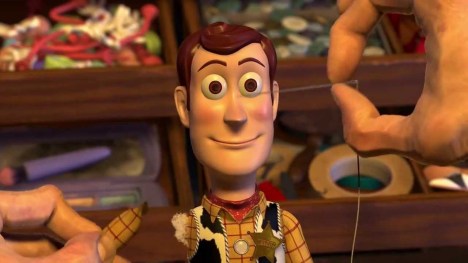
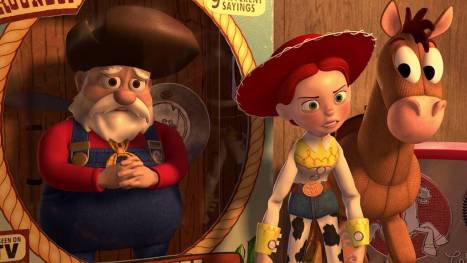
“For Infinity… and Beyond…”: In Praise of “Toy Story 2” as the Perfect Sequel…

Ranking films is often a fool’s errand.

I make this argument with no small amount of hypocrisy. Most obviously, I co-host a weekly podcast called The 250, which is dedicated to exploring the Internet Movie Database’s Top 250 Movies of All-Time. Even beyond that, I am guilty of participating in that periodic pleasure of pundits everywhere; the top ten… or forty… or fifty. At the end of every year, I produce a list of my favourite films of the year, whether on the Scannain podcast, on my personal Twitter, or even occasionally on this blog. In my defense, I rationalise that through a desire to draw attention to good films, and accept we can quibble on the order of said film.

At the same time, these lists can often be illuminating in terms of contextualising affection for a particular film, or for gauging the general mood. So when a film appears on a single list, it might be worth checking out if you trust the author. If it appears on multiple lists, it is probably a much stronger recommendation. (The Scannain annual top ten is an eclectic list, but it disparate viewpoints often settle on at least one consensus pick: You Were Never Really Here, Moonlight, Hell or High Water.) It helps to set a level of a particular film’s relative appeal and popularity.

By that measure, Toy Story 2 is generally considered the weakest film its franchise. At time of writing, Toy Story, Toy Story 3 and Toy Story 4 all feature on the Internet Movie Database’s Top 250 Movies of All-Time. Toy Story 2 is the lowest ranked entry in the franchise on lists compiled by Variety, Business Insider and The Ringer. It is the ranked as the weakest of the original trilogy on lists compiled by Slant Magazine, Collider and Polygon. None of this amounts to anything that can quantifiably be described as a “backlash.” After all, to be the worst Toy Story movie, a film still has to be pretty good.

However, there is a sense in which Toy Story 2 gets overlooked. There are any number of structural reasons for that. The middle part of a trilogy, picking up immediately after Toy Story but without offering the resolution expected of Toy Story 3, the film is neither a beginning nor an end. It is not an introduction to these characters, and it does not really function as a farewell either. More than that, the film may also be somewhat tarnished by its production history, originally mooted as a straight-to-video release before entering an insanely fast turnaround as a theatrical feature; it is partly why Disney owns Pixar.

Still, this tends to look past what makes Toy Story 2 such a delight. It is in many ways the perfect sequel.

Continue reading

New Podcast! Scannain Podcast (2019) #25!

It’s time for the Scannain podcast!

This week, I join Graham Day and Jay Coyle to discuss what we watched, the week in film news, the top ten and the new releases. Graham has rewatched The Shining. Jay has watched Cléo from 5 to 7: Remembrances and Anecdotes, Cabaret and Victor/Victoria. I have watched What We Left Behind. There is also a lively discussion of Batman vs. Superman: Dawn of Justice.

In terms of film news, the Galway Film Fleadh has announced its full line-up. The makers of the documentary Gaza have donated their prize money to the Gaza Red Carpet Festival Appeal. The Gaze LGBT film festival also unveiled its line-up. The SXSW hit Extra Ordinary was purchased by Cranked Up Films. Donal Foreman’s The Image You Missed is now available on Vimeo on Demand. Also, Hollywood is having (another) existential crisis this summer.

The top ten:

  1. Godzilla: King of the Monsters
  2. Child’s Play
  3. Diego Maradona
  4. X-Men: Dark Phoenix
  5. Brightburn
  6. Rocketman
  7. The Secret Lives of Pets II
  8. Men in Black International
  9. Aladdin
  10. Toy Story 4

New releases:

  • Yesterday
  • Drive
  • Support the Girls
  • Apollo 11
  • Metal Heart

You can listen to the podcast directly here.

136. Texas Chainsaw Massacre: The Next Generation – Independence Day 2019 (-#45)

Hosted by Andrew Quinn and Darren Mooney, and this week with special guests Jess Dunne and Luke Dunne, The 250 is a (mostly) weekly trip through some of the best (and worst) movies ever made, as voted for by Internet Movie Database Users. New episodes are released every Saturday at 6pm GMT.

This time, Kim Henkel’s Texas Chainsaw Massacre: The Next Generation.

Prom should be the best night of Jenny’s life. However, an unexpected detour winds up taking Jenny and three of her friends on an unexpected detour down the back roads of rural Texas. While exploring, the teens stumble upon a horror nestled snugly at the heart of the Lone Star State.

At time of recording, it was ranked 45th on the Internet Movie Database‘s list of the worst movies of all-time.

Continue reading

Non-Review Review: Spider-Man – Far From Home

Spider-Man: Far From Home cannot help but exist in the shadow of Avengers: Endgame.

Indeed, one of the problems marketing Far From Home was the manner in which the entire emotional premise of the film served as a spoiler for Endgame, which meant that the film had to wait quite late in the game to release its second trailer. This sets up an interesting tension with Far From Home, which finds itself in the the seemingly contradictory position of being both the last movie in the current “phase” of the Marvel Cinematic Universe and also a film actually being produced by a company other than Marvel Studios.

Masking his feelings.

This weird push-and-pull runs through Far From Home, which seems caught between existing as a coda and epilogue to Endgame and working as a Spider-Man movie in its own right. To a certain extent, this was always going to be a tension within Far From Home, even before Endgame set its sights on becoming the biggest movie of all time. Endgame was always going to exert a gravity on Far From Home, given its plot mechanics and its character decisions. Writers Chris McKenna and Erik Sommers, along with director Jon Watts, were always going to be reacting to narrative and character choices that they never made.

As such, the most interesting thing that Far From Home can do is to literalise that tension.

Night Monkey Moves.

Continue reading

Star Trek: Voyager – Friendship One (Review)

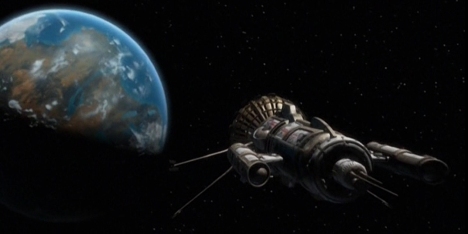
Friendship One finds Star Trek: Voyager trapped between its own past and the future of the larger Star Trek franchise.

Of course, there’s no small irony that that future would take the form of Star Trek: Enterprise, a prequel set almost a century before the original series and (to date) the television series set at the earliest point in the larger continuity. This gets at something very strange about the seventh season of Voyager, where it seems to be looking both back at and forwards to the past. In some ways, it is the ultimately literalisation of the “end of history” ambiance that pervades the series, articulated in stories like Future’s End, Part I and Future’s End, Part II. There is no future. There is just the past.

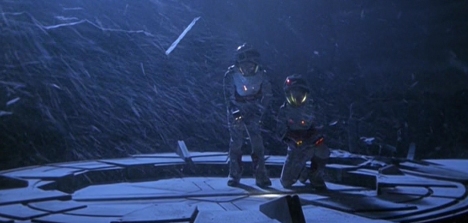
What ship can cause antimatter annihilation and has room for two people?
A friendship?

So Friendship One seems caught between two different versions of the past. In its most obvious sense, it is trapped in Voyager‘s own idea of the past. It is an atomic-era creature feature about the horrors of radiation, a pulpy fifties schlock-fest that feels of a piece with everything from Jetrel to The 37’s to Cathexis to Macrocosm to In the Flesh to Bride of Chaotica! This is the future as it looked in the fifties, the atomic (rather than “post-atomic”) horror. However, it also gestures very strongly towards Enterprise, even accidentally encapsulating some of the core anxieties of the fourth Star Trek spin-off in an eerily prescient manner.

The result is an episode that feels like it is suffocating in its own past, with no idea of how to chart a course forward.

Does anything really (anti)matter?

Continue reading