Posted on January 19, 2023 by Darren
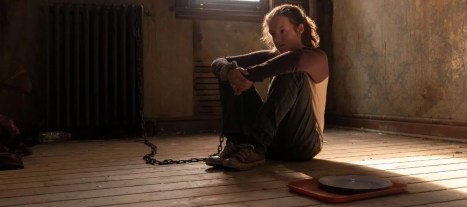
I published a new piece at The Irish Independent last week. With the release of The Last of Us, it seemed like a good opportunity to take a look at the history of video game adaptations.
There’s a lot riding on The Last of Us, and HBO have really gone all-out on the show. It stars Pedro Pascal of The Mandalorian and is written by Craig Mazin of Chernobyl. It’s an interesting approach, in large part because video games have frequently posed a challenge to studios longing to adapt them to other screens. Just based on Hollywood’s experience with the medium, The Last of Us poses a significant challenge to any production team hoping to translate it to another medium.
You can read the piece here, or click the picture below.
Filed under: Television | Tagged: adaptation, curse, game changer, irish independent, the independent, the last of us, video games | 1 Comment »
Posted on January 17, 2023 by Darren
I am doing weekly reviews of The Last of Us at The Escapist. They’ll be dropping every Sunday evening while the show is on, looking at the video game adaptation as the show progresses. To start with, though, a look at the season premiere.
The Last of Us is effectively a survival horror show. It’s very clearly riffing on archetypal zombie apocalypse narratives. The show’s opening scene evokes I Am Legend. Its depiction of the collapse of civilisation recalls everything from Night of the Living Dead to Shaun of the Dead. However, what makes this particular show interesting is the way that its central apocalyptic force, a infectuous fungus, ties into the show’s core themes of co-dependence and mutual support. The fungus at the heart of the show is a monstrous parasite, but The Last of Us argues that the only way human beings can survive is together.
You can read the piece here, or click the picture below.
Filed under: Television | Tagged: co-dependence, escapist, fungi, fungus, reliance, the escapist, the last of us, when you're lost in the darkness | Leave a comment »
Posted on January 16, 2023 by Darren
I published a new In the Frame piece at The Escapist this evening. With the release of The Last of Us, it seemed like a good opportunity to talk about the show. In particular, what it says about the challenges of adapting a video game to another medium.
Hollywood has spent decades trying to figure out how to translate video games into movies, resulting a somewhat embarrassing list of adaptations: Super Mario Bros., Double Dragon, Wing Commander, and so on. Adapting video games to another medium often means erasing the immersive quality that defines the medium. While it’s impossible to replicate the interactivity of a player steering the protagonist, there is a sense that film is not a medium that can faithfully emulate that level of worldbuilding and progression. The Last of Us suggests that television is much more perfectly suited to that task.
You can read the piece here, or click the picture below.

Filed under: Television | Leave a comment »
Posted on January 14, 2023 by Darren
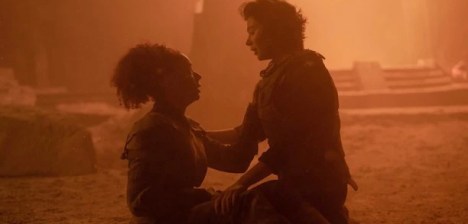
I am doing weekly reviews of Willow at The Escapist. They’ll be dropping every Wednesday evening while the show is on, looking at the legacy sequel as it progresses from one episode to the next.
With its season finale, Willow revealed that it was basically the statistical mean of Disney’s streaming shows built around existing intellectual property, even more than their Marvel of Star Wars shows. At various points in the season, Willow felt more like a checklist of familiar narrative beats than it did a cohesive story, and that was particularly true of the season finale, with its non-deaths ands its beams of multi-colour energy.
You can read the piece here, or click the picture below.
Filed under: Television | Tagged: disney, finale, Season finale, streaming, streaming shows, willow | Leave a comment »
Posted on January 13, 2023 by Darren
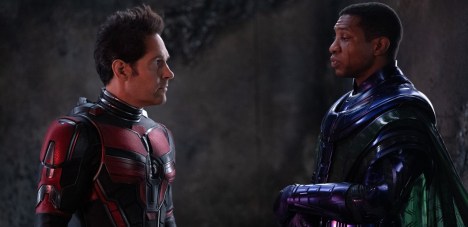
I published a new In the Frame piece at The Escapist this evening. This week saw the release of the final trailer for the upcoming Ant-Man and the Wasp: Quantumania. What was most interesting about the trailer was the extent to which it contained no surprises or teases. It was a very matter-of-fact “this is what the movie is” trailer.
It’s an interesting approach, particularly for a studio that takes pride in keeping secrets and teasing the audience. The trailer for Quantumania looks very much like a blueprint for the movie, mapping a lot of its character and narrative arcs very clearly, including a third act twist. It’s an approach that feels a little desperate, very much in keeping with the general sense of how Marvel Studios has been packaging and selling Phase Five. The past two years have seen some small erosion in the studio’s cachet, and the trailer for Quantumania feels like the studio trying to convince audiences that it still adheres to the old template.
You can read the piece here, or click the picture below.
Filed under: Television | Tagged: advertising, ant-man, comic books, in the frame, Marvel Studios, mcu, paul rudd, popularity, the escapist, trailer | Leave a comment »
Posted on January 12, 2023 by Darren
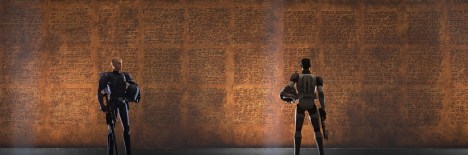
I published a new piece at The Escapist last week. With the release of the second season of The Bad Batch, it seemed like a good opportunity to talk about one of the more interesting facets of the series.
The Star Wars franchise has become synonymous with the idea of bloodlines, particularly the Skywalkers and the Palpatines. This can lead to a sense that the heroes of this massive saga have to be “insiders”, that they have to belong to a particular grouping, the membership of which is determined at birth. Part of what is interesting about The Bad Batch is that the show is an explicit rejection of that. It focuses on a group of people who are genetically identical to the armies of the First Galactic Empire, but who still find the strength of character to stand against it. Heroism is a choice, not a pre-determined genetic destiny.
You can read the piece here, or click the picture below.
Filed under: Television | Tagged: bloodlines, choice, destiny, identity, politics, star wars, the bad batch, the escapist, the solitary clone | Leave a comment »
Posted on January 11, 2023 by Darren
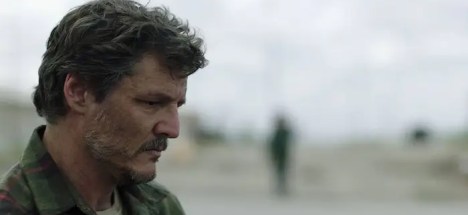
I am doing weekly reviews of The Last of Us at The Escapist. They’ll be dropping every Sunday evening while the show is on, looking at the video game adaptation as the show progresses. To start with, though, a look at the series as a whole.
Although it takes a little while to get going, with its first two episodes largely given over to exposition and worldbuilding, The Last of Us is an incredible accomplishment from HBO. The show is clearly the result of a great deal of care and attention, and a substantial investment from the service. It’s a show that benefits from the best possible talent and from the freedom afforded to that talent, to find a distinct angle on the end of the world. It’s a charming, emotional and deeply moving character study at the end of the world.
You can read the piece here, or click the picture below.
Filed under: Television | Tagged: adaptation, bella ramsay, escapist, hbo, last of us, pedro pascal, Television, the escapist, the last of us, Video game | Leave a comment »
Posted on January 8, 2023 by Darren
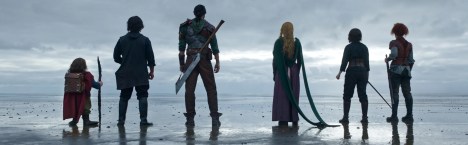
I am doing weekly reviews of Willow at The Escapist. They’ll be dropping every Wednesday evening while the show is on, looking at the legacy sequel as it progresses from one episode to the next.
One of the both interestign and frustrating aspects of Willow is the way in which the show feels very much like an archetypal streaming show. It hits all of the marks and rhythms of the emerging medium, particularly in how it structures its story. There are several points in the season where the larger mechanics of the season arc become transparent. Wildwood was one such example, and Beyond the Shattered Sea is another. The second-to-last episode of the season very quickly entangles itself if doing all the necessary set-up for the looming season finale.
You can read the piece here, or click the picture below.
Filed under: Television | Tagged: beyond the shattered sea, fantasy, penultimate episode, season, streaming, the escapist, willow | Leave a comment »
Posted on January 6, 2023 by Darren
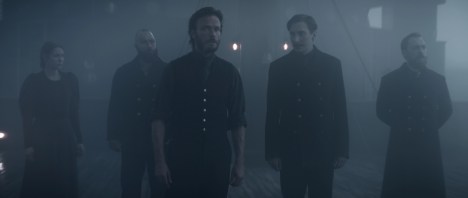
I published a new In the Frame piece at The Escapist this evening. This week, it was revealed that Netflix had cancelled 1899, their prestigious and high-profile mystery drama series. It’s especially notable because the announcement didn’t even come from Netflix, but fits a pattern for streaming services.
Streaming is not like regular television. It adheres to different rules and conventions. In particular, streaming shows don’t operate according the same real-time conveyor belt as conventional broadcast television, where it is possible for a network and a production team to react to audience response in real-time. As a result, the only space that these shows have to grow is in between seasons, and that becomes increasingly difficult in a climate where many streaming companies are cancelling these shows after just a single release.
You can read the piece here, or click the picture below.
Filed under: Television | Tagged: 1899, cancellations, in the frame, netflix, renewal, seasons, shows, streaming, the escapist | Leave a comment »
Posted on January 5, 2023 by Darren
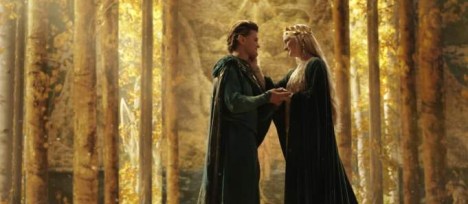
I published a new piece at The Escapist this week. With the recent release of The Witcher: Blood Origin on Netflix and the ongoing arguments about the perceived “faithfulness” around The Rings of Power, it seemed like a good time to explore how the quality of a work relates to its alleged faithfulness.
To put it simply, quality and fidelity are completely different metrics. It is entirely possible for a fiathful adaptation of source material to be terrible, for example the shot-for-shot remake of Psycho. It’s also possible for an adaptation that has nothing to do with even the tone and genre of the original property, such as 21 Jump Street, to be brilliant. Ultimately, The Witcher: Blood Origin and The Rings of Power are adaptations that fail on their own measure.
You can read the piece here, or click the picture below.
Filed under: Television | Tagged: comedy, escapist, faithfulness, fidelity, film, genre, new, Psycho, Television, the escapist, the lion king | Leave a comment »
















 the m0vie blog