• Following Us

  • Categories

  • Check out the Archives


  • Awards & Nominations

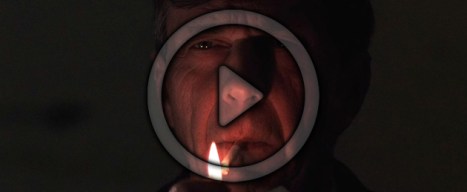
New Podcast! The X-Cast – Season 4, Episode 7 (“Musings of a Cigarette-Smoking Man”)

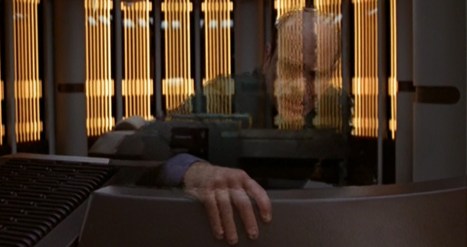
This was a surprise and a delight. Reteaming with Carl Sweeney, with whom I last discussed Unruhe, I’m back on The X-Cast this week covering Musings of a Cigarette-Smoking Man.

To tip my hand quite early, Musings of a Cigarette-Smoking Man is one of my favourite episodes of The X-Files. More than that, it’s one of my favourite pieces of nineties pop culture in general, the twisted evil twin of Forrest Gump and an exploration of the first half of the American Century through the lens of conspiracy theory. It’s a prime example of the sort of experimentation that made The X-Files such a great piece of nineties television, anchored in a playful and self-aware script from Glen Morgan and some great direction from James Wong.

So it was fantastic to get the chance to talk about it at length with Carl – even “Bad Carl” – on The X-Cast. You can listen to the episode here, or click the link below.

Continue reading

Star Trek: Voyager – Workforce, Part II (Review)

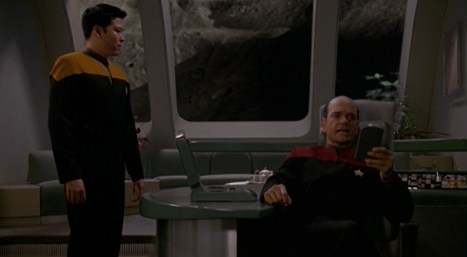
Workforce, Part I and Workforce, Part II form an interesting two-parter.

A large part of this is purely structural, and down to the role that they play within the larger arc of the seventh season of Star Trek: Voyager. One of the most common, and biggest, criticisms of Endgame is that the episode doesn’t actually offer any meaningful pay-off to the seven-year journey. The characters never actually get set foot on Earth, never get to come home. The final shot of the series is the ship itself approaching Earth, with no sense of what it was like for those characters to return to the home that they had sought for more than half a decade. To be fair to Endgame, the finale does open with a flash-forward that features a crew reunion decades after their return, but that timeline is erased by the events that follow.

Chakotay or the highway.

Season finales tend to offer some indication of what happens to the characters after the end of the television series, an assurance to the audience that their journey is over and that their lives will work out. On Star Trek: Deep Space Nine, What You Leave Behind resolved the Dominion War in its opening sixty minutes before spending thirty minutes wrapping up various plot threads. On Star Trek: The Next Generation, the future timeline in All Good Things… hinted at potential futures for the characters. Even on Star Trek: Enterprise, the much-maligned These Are the Voyages… featured the characters bringing the ship home to be decommissioned so that Archer could lay the groundwork for the Federation.

In contrast, Voyager just stops. There is no real consideration of what happens to the crew; Admiral Owen Paris never gets to meet his granddaughter, the Maquis never get their pardons, Janeway never reunites with Mollie. There is no sense of how they settle into life after their adventure, no question of what happens to them when they aren’t defined by their seventy-thousand-light-year journey across the galaxy. Oddly enough, this complete absence in Endgame makes Workforce, Part I and Workforce, Part II feel much more important in the larger context of the season.

Over the moon about it.

Continue reading

Star Trek: Voyager – Workforce, Part I (Review)

Workforce, Part I and Workforce, Part II form an interesting two-parter.

To a certain extent, Workforce, Part I and Workforce, Part II are overshadowed by the other “event” stories of the seventh season of Star Trek: Voyager. Notably, with the exception of the season premiere Unimatrix Zero, Part II, the late-season two-parter was the only multi-part seventh season story to air as a conventional two-part story, with the two halves broadcast one week apart. Flesh and Blood, Part I and Flesh and Blood, Part II had aired on the same night as a television movie, similar to how The Killing Game, Part I and The Killing Game, Part II had been broadcast during the fourth season. Endgame would air as a two-hour special episode, in the manner of other Star Trek series finales like All Good Things… or What You Leave Behind.

Labouring under false pretenses.

As such, there is something very traditional about Workforce, Part I and Workforce, Part II, a two-parter that feels more like old-fashioned two-part Star Trek stories than many of the episodes around it. It recalls some of the mid-season two-parters from Star Trek: The Next Generation, like Birthright, Part I and Birthright, Part II or Gambit, Part I and Gambit, Part II. Unlike episodes like Dark Frontier, Part I and Dark Frontier, Part II, it never feels like Workforce, Part I and Workforce, Part II were conceived as an “event” story. Instead, it feels like the story developed organically and that the production team realised that the story justified two separate episodes rather than being designed to provide a sense of scale or spectacle.

The seventh season of Voyager invests a lot of time and energy in chasing the sensibility of “classic” Star Trek storytelling with clumsy issue-driven narratives like Critical Care or Lineage or Repentance. Often this feels cynical and crass, particularly given how hard those episodes strain to avoid saying anything potentially controversial or divisive. As such, there is something refreshing in Workforce, Part I and Workforce, Part II, which feel very much like “old-fashioned” Star Trek storytelling in format as well as content.

Not all there.

Continue reading

New Podcast! The Pensky File – Star Trek: Deep Space Nine, Season 5, Episode 23 (“Blaze of Glory”)

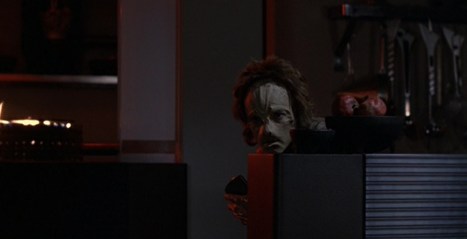
I was thrilled to be asked back to join The Pensky Podcast to discuss Star Trek: Deep Space Nine. I joined Wes as their coverage of the fifth season winds down, discussing the Maquis- and Michael-Eddington-centric Blaze of Glory.

I’ve talked before about how the fifth season of Deep Space Nine might be the best season of Star Trek ever produced. As a result, a lot of the really great episodes in the season tend to get a bit of a short shrift when we talk about them, overshadowed by the bigger and even better episodes around them. Blaze of Glory is one of those episodes that is often overlooked, wrapping up several recurring plot threads so the show can focus on its priorities going forward.

This was a fun discussion. Wes and I talk about the episode, about the Maquis, about Sisko’s arc, about tomatoes, about what Eddington really used the cloaking devices for, and about proper seasoning. All very important, totally relevant stuff.

You can find more from The Pensky Podcast here, and listen to the podcast by clicking the link or just listening below.

Continue reading

New Podcast! The X-Cast – Season 4, Episode 4 (“Unruhe”)

I’m back on The X-Cast this week, covering Unruhe with the incomparable Carl Sweeney.

Unruhe is an interesting episode. It is an episode of The X-Files focusing on a serial killer at the point in time when Chris Carter had just launched Millennium to deal specifically with that menace. In fact, it served as something of a trial run for writer Vince Gilligan, who would write another (more popular) episode focusing on a serial killer later in the fourth season with Paper Hearts.

Unruhe is often overlooked in discussions of the fourth season, and it is easy to understand why given the quality of the episodes around it. Nevertheless, it is a fascinating piece of work that speaks to a lot of the core interests of the series and also reflecting a lot of the work of writer Vince Gilligan. As such, it was a thrill to be asked to discuss the episode.

The truth is in here. You can listen to the episode here, or click the link below.

Continue reading

New Podcast! The Time is Now – Season 1, Episode 2 (“Gehenna”)

Thrilled to be asked back to join The Time is Now podcast to follow up on last week’s discussion of The Pilot.

This week, I’m joining Kurt North to discuss the second episode of Gehenna. It’s often tough to nail the early episodes of a new show, especially as the creative team slip into the demanding cycle of television production. It has been observed that many television series spend their first six (or even thirteen) episodes just remaking the pilot in order to get a feel for the texture of the show. As such, Gehenna has quite a lot to accomplish, mostly demonstrating that Millennium can work as a weekly television series.

It was a delight to be asked back, and I’m really looking forward to popping up once or twice more before the end of the first season. You can listen to the episode here, subscribe to the podcast here, or click the link below.

Continue reading

Star Trek: Voyager – The Void (Review)

The Void feels like a belated mea culpa on the part of Star Trek: Voyager.

It is unfair and an exaggeration to say that The Void finally delivers on the potential of Voyager. After all, there have been several earlier episodes that flirted with following the basic premise of the show to its logical conclusion; Alliances, Year of Hell, Part I and Year of Hell, Part II, Night, Counterpoint, Equinox, Part I and Equinox, Part II. Of course, many of those episodes ultimately ended with a repudiation of that premise, a retreat back to the safety of a familiar formula. Voyager has always been a television show terrified of the implications of its own starting point.

Conflict aVoidant.

Nevertheless, there is a strong sense that The Void looks and feels a lot more like Voyager should have looked and felt from the outset. It is the story of explorers trapped in a strange environment with limited resources, facing tough choices in order to survive, and desperate to forge alliance to keep them afloat. The eponymous “void” feels like a metaphor for the Delta Quadrant itself, the teaser playing like a truncated version of Caretaker. An intrepid crew plucked from familiarity and thrown into a hostile world of scavengers and pirates, stripped of their comforts.

Of course, The Void ultimately retreats from this premise. Much like the eponymous anomaly is just a pocket universe, this exploration of the show’s premise is just an episodic diversion. If it took Voyager six-and-a-half seasons to find a way to explore its core premise, it only takes forty-five minutes to wrap a bow around it and return to business as usual. The Void is a fluke and an aberration. Even ten episodes from away from the finale, Voyager can only briefly imagine how things ever might have been different.

In the Void, here’s a ‘noid…

Continue reading

New Podcast! The Time is Now – Season 1, Episode 1 (“Pilot”)

The wonderful folk responsible for The X-Cast have launched another podcast, covering another beloved Chris Carter property, and I’m thrilled to be a guest on it.

Millennium is a massively underrated (and largely underseen) show. It is one of the most striking television series of the late nineties, and a show with an impressive cultural footprint and reach. I’m on record as arguing that the second season of Millennium is one of the best twenty-odd-episode seasons of television ever produced, but the first season also has a lot to recommend it.

Tony has already recorded a primer or introduction to Millennium, but I’m honoured to be the guest invited on to discuss The Pilot. Indeed, The Pilot is a remarkable piece of television, and one of the most striking pieces of television that Carter ever produced. Millennium struggles a bit in the first half of the season to establish a sense of tone and to figure out how to tell the stories within this framework.

You can listen to the episode here, subscribe to the podcast here, or click the link below.

Continue reading

Star Trek: Voyager – Prophecy (Review)

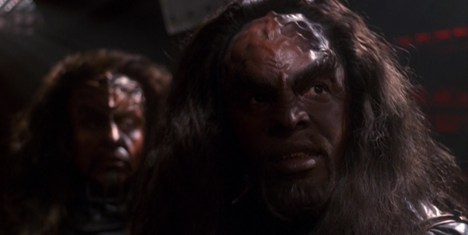
The big surprise with Prophecy is not that Star Trek: Voyager is doing a Klingon-centric story, despite being set on the other side of the galaxy. The big surprise with Prophecy is that it took the series so long to get around to it.

Of course, there are lots of very good reasons why Voyager should never have had to resort to a Klingon-centric story. After all, Voyager is a series about a ship stranded half-way across the galaxy. The whole premise of the series is to get away from the familiar and established Star Trek aliens, to take a break from the familiar and iconic races like the Romulans or the Klingons, and to introduce new aliens like the Kazon, the Vidiians, the Hirogen, the Malon. Caretaker threw the crew into the Delta Quadrant to give the show a clean break.
Klingon in there!

However, the pull of the familiar is strong. Voyager wasted little time in building episodes around familiar alien menaces; Eye of the Needle featured a Romulan, Death Wish featured Q, False Profits featured two Ferengi, Blood Fever reintroduced the Borg as a potential menace. Few Star Trek aliens are as iconic as the Klingons. Even the most casual of audience members knows the name “Klingon” and probably has an understanding of how the culture works. Next to Vulcans – and even then, arguably just Spock – Klingons are Star Trek to casual viewers.

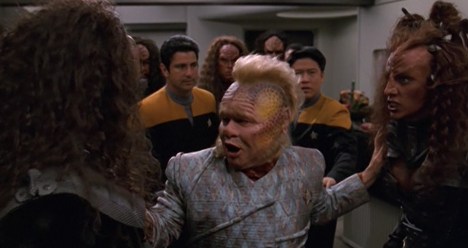
Indeed, Prophecy is far from the first time that Voyager has indulged its fascination with Klingon culture. Torres was split into human and Klingon halves in Faces. Holographic Klingons played significant roles in episodes like Day of Honour, The Killing Game, Part I and The Killing Game, Part II. Ronald D. Moore only worked on Voyager for a very short time, but – with the assistance of Bryan Fuller – helped to send Torres to the Klingon afterlife in Barge of the Dead. Indeed, even Endgame will feature recurring actor Vaughn Armstrong as a secondary Klingon character.
“You can’t make a mess in here, this is the mess hall!”

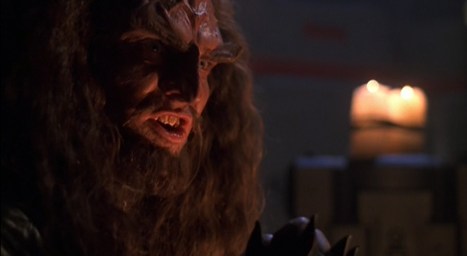
All of which is to say that while Voyager took its time to do an episode built around a major guest cast of new flesh-and-blood Klingon characters, the series had a long-standing interest in these most memorable and distinctive of Star Trek aliens. In its own weird way, the inclusion of such an overtly Klingon-centric episode plays into the seventh season’s weird fixation on the perceived “Star-Trek-ness” of Voyager, a strong desire to assert the aspects of Voyager that connected it to the larger Star Trek canon.

However, as with a lot of these recurring “Star-Trek-y” elements in the seventh season of Voyager, there is a strong sense with Prophecy that the production team have no greater understanding of the Klingons than their long-standing connection to Star Trek lore.
Today is a good day to try.

Continue reading

New Podcast! The X-Cast – Season 4, Episode 1 (“Herrenvolk”)

I’m back on The X-Cast this week, covering Herrenvolk with the one and only Tony Black, kicking off the podcast’s fourth season coverage.

Herrenvolk is an interesting episode, arriving at a pivotal time in the history of The X-Files. Chris Carter’s attention was divided over the fourth season, split between the first season of Millennium and the pre-production on what would become The X-Files: Fight the Future. As a result, the fourth season is a particularly disjointed and unfocused point in the show’s run, but one that contains no shortage of treasures.

It was, always, a delight to talk over the episode with Tony. I’m always honoured to be asked back. We also talk a little bit about the fourth season of the series as a whole, about its reputation and legacy and about where it would rank personally. I hope you enjoy it.

The truth is in here. You can listen to the episode here, or click the link below.

Continue reading