I’m thrilled to be launching 3-Minute Reviews on Escapist Movies. Over the coming weeks and months, I will be joining a set of contributors in adding these reviews to the channel. For the moment, I’ll be doing weekly reviews of The Mandalorian.
The review of the third episode of the second season, The Heiress, is available below.
I’m thrilled to be launching 3-Minute Reviews on Escapist Movies. Over the coming weeks and months, I will be joining a set of contributors in adding these reviews to the channel. For the moment, I’ll be doing weekly reviews of The Mandalorian.
The review of the second episode of the second season, The Passenger, is available below.
So, as I have mentioned before, I am launching a new video series as a companion piece to In the Frame at The Escapist. The video will typically launch with the Monday article, and be released on the magazine’s YouTube channel the following week. This is kinda cool, because we’re helping relaunch the magazine’s film channel – so if you can throw a subscription our way, it would mean a lot.
With that in mind, here is last week’s episode. To mark the season premiere of The Mandalorian, we took a look at the series’ exploration of a fallen world. In particular, the trope of the last survivors of a fallen world wandering through the ruins has become a common trope in contemporary mass media science-fiction like the third season of Star Trek: Discovery or the new series Raised by Wolves. So we thought it might be interesting to look at the trope, and how it differs from the conventional portrayal of the Star Wars universe.
I’m thrilled to be launching 3-Minute Reviews on Escapist Movies. Over the coming weeks and months, I will be joining a set of contributors in adding these reviews to the channel. For the moment, I’ll be doing weekly reviews of The Mandalorian.
The review of the second season premiere, The Marshall, is available below.
I published a new In the Frame piece at The Escapist this evening. With the season premiere of The Mandalorian on Friday, it seemed like a good opportunity to take a look at the show.
The Mandalorian is interesting, because it exists in a similar context to recent high-profile science-fiction shows like the third season of Star Trek: Discovery and the HBO Max flagship Raised by Wolves. These stories tend to focus on protagonists who are standard bearers for a fallen world, wandering through the ruins of a collapsing social order. It’s interesting that these franchises would push in that direction, perhaps filtering some contemporary anxieties.
You can read the piece here, or click the picture below.
I published a new piece at The Escapist today. With the third season premiere of Star Trek: Discovery last week, it seemed worth taking a look at the new season of the Star Trek spin-off.
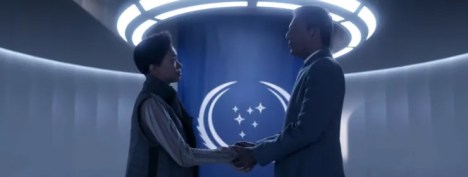
The third season of Discovery finds the characters thrown into the distant future, after the collapse of the Federation. This is interesting, because it represents both a clear extrapolation of the futures suggested by Star Trek: Voyager and Star Trek: Enterprise, and also a clear progression of the franchise status quo suggested by Star Trek: Picard. This is a franchise dealing with the decline and collapse of American exceptionalism. However, Picard and Discovery offer easy answers to hard questions, lacking the introspection that their premise deserves.
You can read the piece here, or click the picture below.
So, as I have mentioned before, I am launching a new video series as a companion piece to In the Frame at The Escapist. The video will typically launch with the Monday article, and be released on the magazine’s YouTube channel the following week. This month, it will be releasing on the Tuesday.
With that in mind, here is last week’s episode, covering the first season of Star Trek: Discovery and the way in which the show taps into the forgotten psychedelic history of the original Star Trektelevision series.
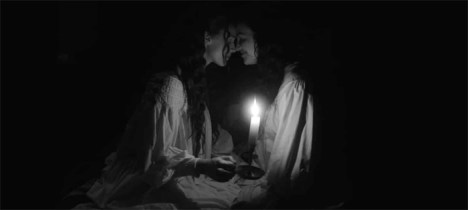
I published a new In the Frame piece at The Escapist this evening. With the release of The Haunting of Bly Manor last week, I figured it was worth a look at the season’s standout episode, The Romance of Certain Old Clothes.
Early in the season, the character of Peter Quint explains to young Miles Wingrave that people are like locked doors – in order to understand them, and get inside of them, one needs a key. That key serves as a detail that ties the whole together and makes sense of it all. The Romance of Certain Old Clothes, the penultimate episode of the season, serves that purpose – not only for The Haunting of Bly Manor itself, but arguably the bulk of showrunner Mike Flanagan’s output.
You can read the piece here, or click the picture below.
I published a new In the Frame piece at The Escapist this evening. With the third season of Star Trek: Discovery premiering later this week, I thought it was worth taking a look back at the first season of the Star Trek relaunch.
The first season of Discovery is fascinating, in large part because it genuinely feels like a completely different iteration of the Star Trek franchise. As befitting the mood of the moment, Discovery largely bypasses nostalgia for the Berman era and reconnects the franchise with the psychedelia and anxieties of the franchise’s original sixties television series. This is a show that exists in the same irrational and chaotic universe as episodes like The Man Trap, Charlie X, Dagger of the Mind, Catspaw, Mirror, Mirror, The Immunity Syndrome, The Tholian Web and many more.
You can read the piece here, or click the picture below.
The Best of Both Worlds, Part I is widely accepted as one of the best cliffhangers in television history. However, the episode is really the culmination of the growth and development of Star Trek: The Next Generation. The spin-off had a rocky first couple of seasons, but really came into its own during a much more ambitious and consistent third year. That third year built inexorably towards that cliffhanger, demonstrating the effectiveness of that approach to storytelling.
You can read the piece here, or click the picture below.

















 the m0vie blog