• Following Us

  • Categories

  • Check out the Archives


  • Awards & Nominations

Doctor Who: Asylum of the Daleks (Review)

You’re going to fire me at a planet? That’s your plan? I get fired at a planet and expected to fix it?

In fairness, that is slightly your M.O.

Don’t be fair to the Daleks when they’re firing me at a planet.

And more wacky structural hijinks ensue.

The sixth and seventh seasons of the revived Doctor Who are strange beasts, for a number of reasons. The decision to split the seasons stands out, but there is also a sense that they are structured in a counter-intuitive manner. The Impossible Astronaut and Day of the Moon served as a two-part season finalé, despite opening the sixth season. In contrast, Let’s Kill Hitler played like a frothy season premiere. (The Wedding of River Song is perhaps the most difficult to place; while certainly not a light run-around season opener, it was nevertheless a bit light for a finalé.)
Things are looking up...

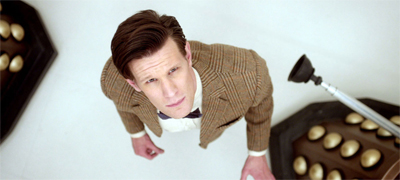
Things are looking up…

The seventh season arguably streamlines the structure a bit. The Name of the Doctor plays almost like a season premiere, revealing the origin story for “the Impossible Girl” and teasing ideas like the War Doctor and Trenzalore relentlessly. In contrast, Asylum of the Daleks feels like a season finalé, teasing a new companion as the existing companions struggle to get on with their real lives, featuring fleets of Dalek ships destroying planets and massive amounts of continuity.

Indeed, the biggest problem with Asylum of the Daleks is that it has not enough time to establish all its core elements. Plot points come out of nowhere. Character beats are established in the same scenes that resolve them. Asylum of the Daleks is a big episode in keeping with the “blockbuster” aesthetic of the anniversary season, but it also establishes the limitations of that approach.
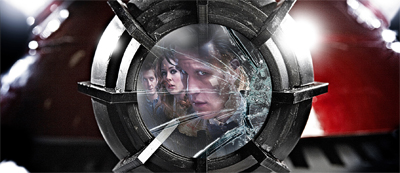
Moffat’s crack at writing a Dalek episode…

Continue reading

The Sopranos: Down Neck (Review)

I’ve said before (and many far smarter individuals have said it before me), but The Sopranos really feels like a novel for television. You can see that approach most distinctly in the first season, where David Chase cleverly structures the show that we spend more than half the season getting to know the cast, and getting comfortable with them, before things actually start happening in any truly meaningful sense. Of course, things have happened. The restaurant exploded, Junior and Tony nearly came to a head, but the approach has really been first and foremost about defining who these characters are, before we really get into what they do.

Down Neck, halfway through the first season, is really the perfect example. Not much really happens. Sure, plot threads advance. Livia discovers that her son is seeing a therapist. We hear that Junior is really settling into his new-found position of nominal authority. However, the most significant beats of Down Neck are concerned with character. A large portion of the episode is an extended flashback focusing on a dead character, and the rest sees the family dealing with the possible diagnosis of Anthony’s Attention Deficit Disorder. Hardly what one might have expected from the halfway point in the first season of a mob drama.

Family values…

Continue reading

Batman: The Animated Series – Two-Face, Parts I & II (Review)

To celebrate the release of The Dark Knight Rises, July is “Batman month” here at the m0vie blog. Check back daily for comics, movies and television reviews and discussion of the Caped Crusader.

Two-Face is probably the most tragic of Batman’s foes. Appropriately enough, there are really two reasons why the character works so well as a Batman villain. The first is that he’s a perfect reflection for Bruce: he is one man with a dual identity; one half upstanding pretty boy citizen, the other a monster. The other is an element touched on here: he’s a friend who Bruce failed in a pretty profound way, a character who underwent a massive tragedy, and whose every subsequent appearance is a grim reminder of that failure. Interestingly enough, I think it’s fair to argue that Two-Face has often had difficulty matching the potential he offers as a Batman villain. While I think that the Two-Face episode of Batman: The Animated Series does an effective job encapsulating a lot what makes the character great, it also misses a vital element as well.

Face-Two-Face…

Continue reading

Batman: The Animated Series – Feat of Clay, Parts I & II (Review)

To celebrate the release of The Dark Knight Rises, July is “Batman month” here at the m0vie blog. Check back daily for comics, movies and television reviews and discussion of the Caped Crusader.

One thing that always impressed me about Batman: The Animated Series was the way that it didn’t just restrict itself to the truly iconic members of Batman’s impressive pool of villains. Batman’s first-stringers are all iconic and brilliant characters in their own right. It would be easy enough to build a television how around characters like the Joker, Two-Face, the Penguin, Catwoman, Ra’s Al Ghul, the Scarecrow, Poison and the Riddler. However, the show didn’t do that. It didn’t restrict its airtime to those major-league bad guys. In fact, many second-tier villains actually received more compelling origins and development. Heart of Ice is regarded as one the show’s best episodes, despite featuring an almost forgotten nobody villain by the name of Mr. Freeze. So it shouldn’t be that much of a surprise that the creative crew were able to build a tragic and moving back story for Clayface.

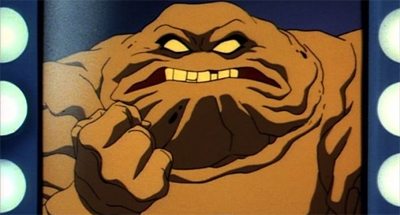
It’s Clayface’s time to shine!

Continue reading

The Adventures of Batman & Robin – Bane (Review)

To celebrate the release of The Dark Knight Rises, July is “Batman month” here at the m0vie blog. Check back daily for comics, movies and television reviews and discussion of the Caped Crusader.

I figured that, with The Dark Knight Rises being released this week, it was worth taking a look at another portrayal of the film’s villain, Bane. While the character appeared in the dire Batman & Robin, he also featured in an episode of The Adventures of Batman & Robin, the rebranded Batman: The Animated Series. While the portrayal of the villain is undoubtedly much better here than in that awful Joel Schumacher film, there’s still a lot of room for improvement, and a sense that the writers and producers weren’t entirely sure what to do with the character.

No Bane, no gain!

Continue reading

Game of Thrones: Season 2 (Review)

I’ve always found that it’s the second season that makes or breaks or a television show. After all, the first season of a new television series has an air of novelty around it that can mask any faults, and it’s interesting to watch both cast and crew settle into new roles. The world and characters are to be defined, everything is possible, the potential is truly limitless. It is only in the second season where you really see the show crystalise into the form it will most likely remain for the rest of its run. You get to see the television show “settle” into its particular groove or comfort zone, once the initial novelty or excitement has worn off. Arguably Games of Thrones faces an even bigger challenge. After all, the climax of the first season saw the death of the show’s one true marquee name, Sean Bean.

So, it is a massive relief that, in its sophomoric year, Game of Thrones remains one of the best constructed and most compelling dramas on television.

Burn, babies, burn!

Continue reading

The Final Cut (Review)

The third and final part of the House of Cards trilogy, The Final Cut exists to bring to a close the story of Francis Urquhart, the iconic and conniving fictional British Prime Minister. Portraying Urquhart during his twilight years, the series presents a man who has arguably faced and overcome all the challenges that the world has to offer. While The Final Cut lacks a clear focal point like House of Cards and To Play the King, it is a fitting conclusion to the epic saga, with a powerhouse central performance from Ian Richardson as the Machiavellian Tory Prime Minister.

Still in his Prime?

Continue reading

Alfred Hitchcock Presents: The Horse Player (Review)

As part of the “For the Love of Film” blogathon, I’ll be taking a look at Alfred Hitchcock’s contributions to his celebrated anthology series Alfred Hitchcock Presents. I’ll be looking at some of the episodes of the classic show that he directed. The “For the Love of Film” blogathon this year is raising money to keep one of Hitchcock’s earlier works, The White Shadow (which he wrote, edited, designed and assistant-directed), available on-line and streaming for free. It’s a very worthwhile cause and you can donate here.

The Horse Player actually makes for a nice conclusion to our run of Alfred Hitchcock Presents reviews. It aired in 1961, towards the end of the sixth season of the anthology show, a year before the show would be rebranded The Alfred Hitchcock Hour. It was the second last half-hour show that Hitchcock personally directed, but is generally agreed to be much stronger than his final effort, a morality play titled Bang! You’re Dead. Instead, The Horse Player is an enjoyable and engaging meditation on those cardinal virtues of faith, hope and charity.

Continue reading

Alfred Hitchcock Presents: Dip in the Pool (Review)

As part of the “For the Love of Film” blogathon, I’ll be taking a look at Alfred Hitchcock’s contributions to his celebrated anthology series Alfred Hitchcock Presents. I’ll be looking at some of the episodes of the classic show that he directed. The “For the Love of Film” blogathon this year is raising money to keep one of Hitchcock’s earlier works, The White Shadow (which he wrote, edited, designed and assistant-directed), available on-line and streaming for free. It’s a very worthwhile cause and you can donate here.

Hitchcock’s collaborations with Roald Dahl are always worth the time, and I have to admit I have a special fondness for A Dip in the Pool, which is a bitter little comedy about a bet that goes very far wrong. It’s a wonderfully cynical little story about a compulsive gambler who makes an impressive bet on a sure thing. Of course, this being Alfred Hitchcock Presents, there’s no such thing as a sure thing. Filled with Dahl and Hitchcock’s trademark bleak humour and a wonderful central performance from Keenan Wynn, A Dip in the Pool makes for an entertaining little drama.

Continue reading

Alfred Hitchcock Presents: Mr. Blanchard’s Secret (Review)

As part of the “For the Love of Film” blogathon, I’ll be taking a look at Alfred Hitchcock’s contributions to his celebrated anthology series Alfred Hitchcock Presents. I’ll be looking at some of the episodes of the classic show that he directed. The “For the Love of Film” blogathon this year is raising money to keep one of Hitchcock’s earlier works, The White Shadow (which he wrote, edited, designed and assistant-directed), available on-line and streaming for free. It’s a very worthwhile cause and you can donate here.

Mr. Blanchard’s Secret is a fun watch, if only for the joy of watching Hitchcock gleefully spoofing Hitchcock. Pitched by the director as “a tale of mystery and intrigue, played in middle-class suburbia” during his introduction, Mr. Blanchard’s Secret reads an affectionate parody of Rear Window, perhaps the Hitchcock film that lends itself so easily to comedic skewering. Mr. Blanchard’s Secret is hardly a groundbreaking or astonishing piece of television, but it is highly enjoyable and quite clever, proving that Hitchcock has a wonderful sense of humour about himself. (As if we needed proof.)

Continue reading