• Following Us

  • Categories

  • Check out the Archives


  • Awards & Nominations

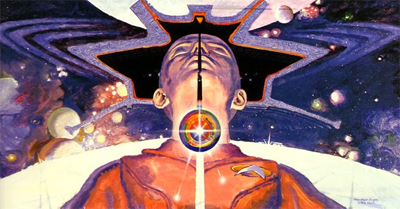
Star Trek: The Motion Picture by Gene Roddenberry (Review)

This June, we’re taking a look at some classic Star Trek movie tie-ins and other interesting objects. Check back daily for the latest reviews and retrospectives.

Star Trek: The Motion Picture is heavily influenced by Gene Roddenberry. It’s a piece of work that serves as an example of Roddenberry’s vision of the franchise – what he felt Star Trek should look like in the late seventies and beyond. Much like the first and second seasons of Star Trek: The Next Generation, there’s a sense that this is the perfect distillation of Roddenberry’s later-day version of Star Trek, distinct from the versions that existed before and afterwards.

Although Roddenberry doesn’t have a writing or story credit on The Motion Picture, his influence is keenly felt; right down to hiring a bona fides science-fiction writer (Alan Dean Foster) to provide the story. (After hearing pitches from other authors like Ray Bradbury, Harlan Ellison and Theodor Sturgeon.) This was in keeping with his work on the early seasons of the show, where he tried to convince published science-fiction authors to contribute to Star Trek.

While Roddenberry doesn’t have a writing credit on the film, he did write the novelisation of the screenplay, which serves as a direct insight into how Roddenberry approached the franchise and how he saw Star Trek in 1979.
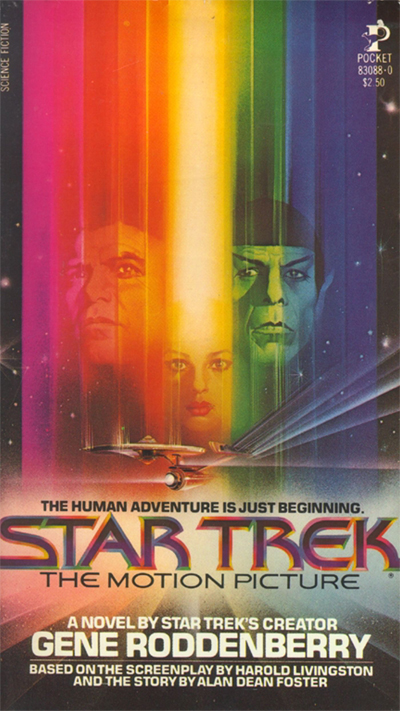
st-tmp-roddenberry

Continue reading

Star Trek: Phase II (1978) – In Thy Image (Review)

This June, we’re taking a look at some classic Star Trek movie tie-ins. Check back daily for the latest reviews and retrospectives.

It’s interesting to imagine what might have happened if Star Trek: Phase II had actually made it to television.

The aborted attempt to produce a sequel live-action television show in the late seventies was ultimately scuppered by the success of films like Star Wars and Close Encounters of the Third Kind. Prompted by the success of these big-screen science-fiction epics, Paramount pushed for the franchise to move to the big screen. Star Trek: Phase II was abandoned and the pilot – In Thy Image – was reimagined as the script for Star Trek: The Motion Picture.

Many, including Judith and Garfield Reeves-Stevens, have argued that this was for the best. They wonder whether Phase II could have competed in the saturated science-fiction market of the late seventies. After all, one of the factors that lead to the decline of the franchise in the late nineties was the abundance of similar material out there. Given that the plan was to use Phase II to launch a television network, the obvious point of comparison as Star Trek: Voyager, which is not a favourable comparison.

Still, despite all this, it’s hard not read In Thy Image and wonder at what might have been.

st-iti7

Continue reading

Star Trek: The Next Generation – Brothers (Review)

This January and February, we’ll be finishing up our look at the second season of Star Trek: The Next Generation and moving on to the third year of the show, both recently and lovingly remastered for high definition. Check back daily for the latest review.

Brothers is Star Trek: The Next Generation getting back to business at usual. Well, not quite usual, but close enough. Following the monumental season-bridging epic that was The Best of Both Worlds and the breathing space afforded by Family, Brothers is a good old-fashioned science-fiction adventure story revolving around one of the show’s most popular character and really written to satisfy a laundry list of Star Trek tropes and conventions.

Although its notable for maintaining a thematic consistency that is threaded through the fourth season, and also for affording Brent Spiner to play three different roles, the most striking aspect of Brothers from a production point of view is the fact that it is written by Rick Berman. Berman had been serving as producer on the show since Encounter at Farpoint, but this was his first scripting contribution. He’d only write one more episode of The Next Generation before the show went off the air.

Given Berman’s production style, it feels strangely appropriate that Brothers is so carefully and meticulously structured and constructed.

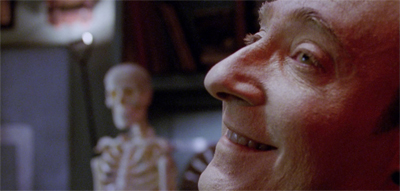
"Let's put a smile on that face..."

“Let’s put a smile on that face…”

Continue reading

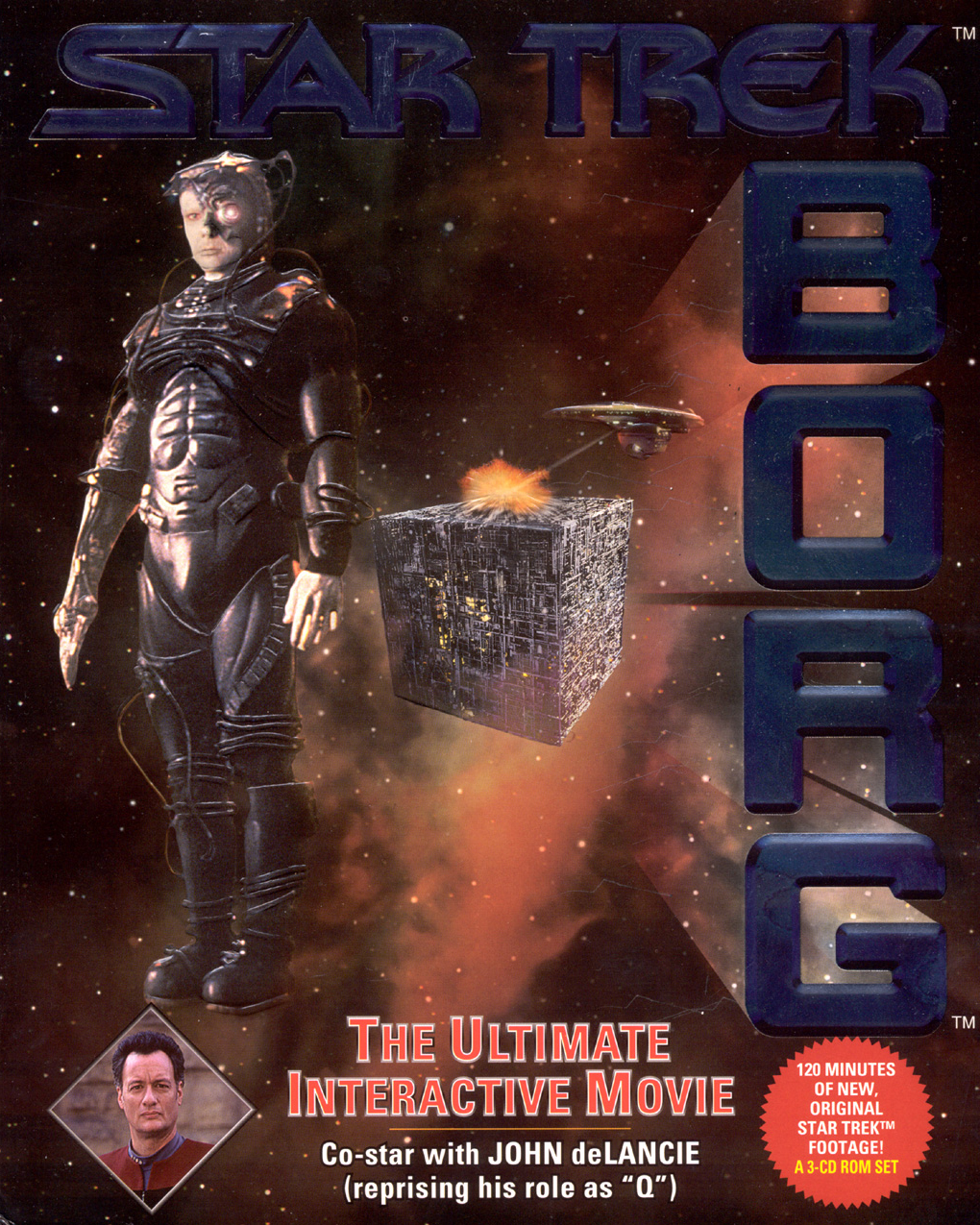
Star Trek: Borg (Review)

This January and February, we’ll be finishing up our look at the second season of Star Trek: The Next Generation and moving on to the third year of the show, both recently and lovingly remastered for high definition. Check back daily for the latest review.

We’ll be supplementing our coverage of the episodes with some additional materials – mainly novels and comics and films. This is one such entry.

The Borg were the breakout aliens of the era surrounding Star Trek: The Next Generation. They appeared in all the spin-offs following The Next Generation – providing a piece of back story for Star Trek: Deep Space Nine and a nice mid-run bump for Star Trek: Voyager. They are probably the only Star Trek alien created in the wake of the original television show that can be identified readily by casual television viewers and movie-goers; ranking with the Klingons or the Romulans.

As such, it’s a surprise that the franchise waited so long to capitalise on them so ruthlessly. Q Who? introduced the Borg, and they appeared in the following season’s cliffhanger finalé. The Best of Both Worlds became something of a minor television phenomenon, and the Borg reappeared a couple of times in the years following. That said, it wasn’t until 1996 and 1997 that the franchise really pushed the Borg to the fore.

With the release of Star Trek: First Contact into theatres, the Borg were everywhere. They got spin-off comic books, a build-up to a cliffhanger appearance in Voyager, and even Star Trek: Borg.

st-borg7

Continue reading

Star Trek: The Next Generation – Family (Review)

This January and February, we’ll be finishing up our look at the second season of Star Trek: The Next Generation and moving on to the third year of the show, both recently and lovingly remastered for high definition. Check back daily for the latest review.

He’s still out there. Dreaming about starships and adventures. It’s getting late.

Yes. But let him dream.

– Robert and Marie try to figure out what all this “Star Trek” milarky is about

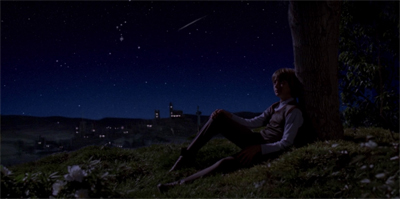
Starry, starry night...

Starry, starry night…

Continue reading

Star Trek: Myriad Universes – Shattered Light: The Embrace of Cold Architects by David R. George III (Review)

This January and February, we’ll be finishing up our look at the second season of Star Trek: The Next Generation and moving on to the third year of the show, both recently and lovingly remastered for high definition. Check back daily for the latest review.

We’ll be supplementing our coverage of the episodes with some additional materials – mainly novels and comics and films.

It’s amazing to think what happens if you shift events just a little to the left or a little to the right. Part of what’s most fascinating about David R. George III’s The Embrace of Cold Architects is that the alternate universe isn’t created by altering the outcome of any major event. Instead, the alternate universe is created by shifting a single date slightly forward in time. Moving one event out of its original context – in this case the conference from The Offspring – and transposing it later into the third season of the show has any number of radically unforeseen side effects.

Of course, this all feels like very clever meta-commentary by author David R. George III. As much as The Embrace of Cold Architects is about shifting around the order of events inside the narrative, it’s also about shifting around the framing structure itself. The Embrace of Cold Architects doesn’t just offer a glimpse of what might have happened had certain events within the framework of Star Trek: The Next Generation occurred out of their previously-established context, it is also about reimagining The Next Generation itself.

Quite a lot of The Embrace of Cold Architects feels like glimpse of an alternate version of The Next Generation, one where the show itself has been shifted so that it might be written in the context of the War on the Terror.

st-shatteredlight

Continue reading

Star Trek: The Next Generation – The Best of Both Worlds, Part II (Review)

This January and February, we’ll be finishing up our look at the second season of Star Trek: The Next Generation and moving on to the third year of the show, both recently and lovingly remastered for high definition. Check back daily for the latest review.

The Best of Both Worlds, Part II was always going to feel like a bit of an anti-climax. After all, the show had spent so much time building up the Borg as this implacable and undefeatable adversary. In Q Who?, it had taken the interference of a god-like entity to allow the Enterprise a chance to escape their unstoppable foe. In The Best of Both Worlds, Part I, the Enterprise had been able to run for a while – but the Borg eventually caught up with them and took what they wanted.

Since The Best of Both Worlds, Part II was never going to end with the Borg destroying Earth, and since Star Trek: The Next Generation was never going to be a show willing to exact a dramatic cost high enough to justify victory against such overwhelming odds, the resolution to the two-parter was never going to live up to the heightened drama and impossible stakes suggested by The Best of Both Worlds, Part I.

Still, the second part of the adventure is charming and exciting enough that it never completely falls apart. While the resolution to the crisis does seem a little trite and convenient, The Best of Both Worlds hangs together as the show’s best two-part adventure until at least Chain of Command in the sixth season.

A Number One fan?

A Number One fan?

Continue reading

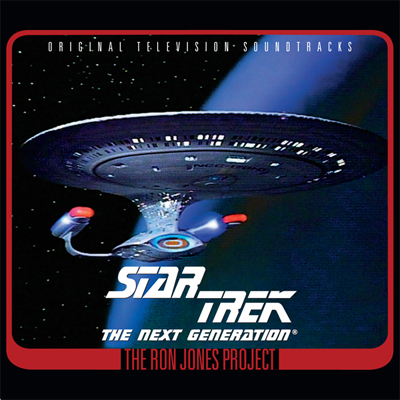
Star Trek: The Next Generation – The Ron Jones Project & The Best of Both Worlds OST (Review)

This January and February, we’ll be finishing up our look at the second season of Star Trek: The Next Generation and moving on to the third year of the show, both recently and lovingly remastered for high definition. Check back daily for the latest review.

We’ll be supplementing our coverage of the episodes with some additional materials – mainly novels and comics and films. This is one such entry.

In 1991, The Best of Both Worlds got a CD soundtrack release. It was incomplete, running just under forty-seven minutes. (Five minutes music would be included on The Ron Jones Project and 2013 would see a release of a more complete two CD set running fifty-five minutes.) However, this was the first soundtrack album released for Star Trek: The Next Generation since Dennis McCarthy’s score to Encounter at Farpoint in 1988.

The music for The Best of Both Worlds is iconic. In the Regeneration documentary included with the blu ray release of the episode, Seth McFarlane jokes about hiring Ron Jones on the strength of that closing sting. The impressive orchestral score to The Best of Both Worlds remains one of the most instantly recognisable soundtracks in the Star Trek canon. And yet it was written by a composer who was on his way out the door.

Of the twelve discs in The Ron Jones Project soundtrack collection covering the episodes scored by Jones, only three include scores for episodes that aired after the second part of The Best of Both Worlds. (And the third-to-last disc only features one episode from the fourth season.) So, what happened?

tng-ronjones12

Continue reading

Star Trek: The Next Generation – Season 3 (Review)

This January and February, we’ll be finishing up our look at the second season of Star Trek: The Next Generation and moving on to the third year of the show, both recently and lovingly remastered for high definition. Check back daily for the latest review.

The third season is on a very short list of contenders for “the best season of Star Trek ever produced.” Maybe one or two other Star Trek: The Next Generation seasons make the list, maybe the first two seasons of the original Star Trek and maybe two seasons of Star Trek: Deep Space Nine. From beginning to end, the third season of The Next Generation hangs together remarkably well, churning out consistently entertaining adventures and several runs of truly classic episodes.

There are two main stretches in the season where the show produces episodes that could legitimately be ranked as the best of The Next Generation. The first comes around the midpoint of the season, from Yesterday’s Enterprise through to Sins of the Father, all episodes that would not look out of place on a “top ten episodes of The Next Generation” list. The second runs from Tin Man through to Sarek. And that’s ignoring the wonderful gems scattered throughout the season, from The Defector and The Hunted through to The Best of Both Worlds.

Of course, one of the most impressive aspects of the third season is the fact that the consistent quality visible on the television screen belies the chaos unfolding behind the scenes. The third season was a deeply troubled year of television, with plenty of unfortunate conflicts and moments of sheer desperation from the creative team. Perhaps the most wonderful demonstration of how far the show has come is obvious in the consistent professional quality of the output.

tng-bestofbothworlds1n

Continue reading

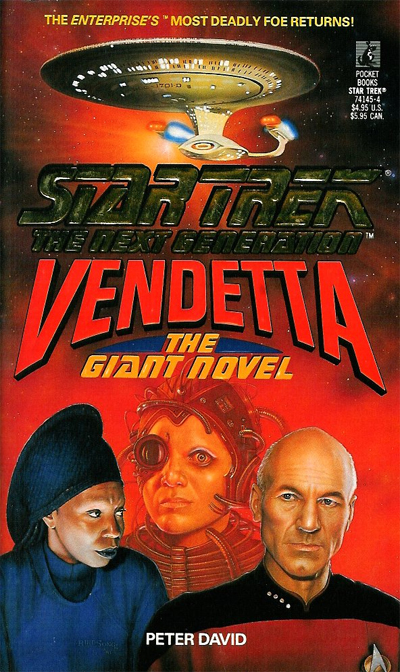
Star Trek: The Next Generation – Vendetta by Peter David (Review)

This January and February, we’ll be finishing up our look at the second season of Star Trek: The Next Generation and moving on to the third year of the show, both recently and lovingly remastered for high definition. Check back daily for the latest review.

We’ll be supplementing our coverage of the episodes with some additional materials – mainly novels and comics and films. This is one such entry.

Vendetta was published in May 1991, which is an astonishingly quick turnaround for a novel building on the events of The Best of Both Worlds, which was broadcast in 1990. Vendetta is billed as “the giant novel”, in the spirit of Jean Lorrah’s Metamorphosis – the March 1990 novel building off The Measure of a Man and advertised as “the first giant novel.”

It’s offers a suitably epic premise – the Enterprise caught between the Borg and the Doomsday Machine with the fate of the universe at stake.

tng-vendetta

Continue reading