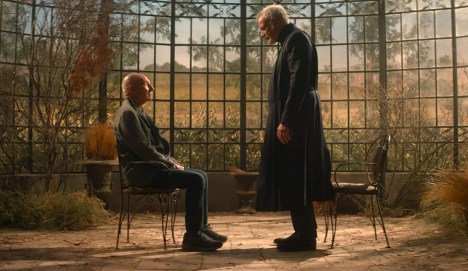
I published a new piece at The Escapist this evening. We’re doing a series of recaps and reviews of Star Trek: Picard, which is streaming weekly on Paramount+. The final episode of the second season released this week, and it seemed like a good opportunity to take a look at the series.
On paper, the second season finale of Picard cycles through a series of checkboxes regarding the show’s long-form arcs, dutifully ticking off each of its obligations in a manner that could theoretically be satisfying. However, this just demonstrates how clumsy Picard is when it comes to storytelling fundamentals. There are interesting and big ideas at play in the second season of Picard, but the show frequently fails at finding ways to develop these ideas organically or cohesively.
You can read the piece here, or click the picture below.
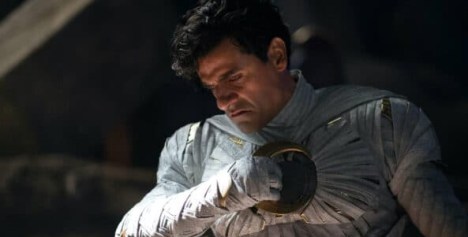
I published a new piece at The Escapist this evening. We’re doing a series of recaps and reviews of Moon Knight, which is streaming weekly on Disney+. The final episode of the show released this week, and it seemed like a good opportunity to take a look at the series.
As Moon Knight wraps up, the most surprising thing about the latest Disney+ streaming series is how completely lacking in surprise it was. The show didn’t pull any sharp last-minute twists or surprise cameos from the extended universe. Instead, it delivered exactly what it promised viewers. The result is interesting, a show that is more consistent than most of its streaming compatriots, but which ends up feeling particularly anonymous.
You can read the piece here, or click the picture below.
I published a new In the Frame piece at The Escapist this evening. With the sixth and final season of Better Call Saul in full swing, it seemed like an opportunity to take a look at one of the show’s more under-appreciated central figures.
Nacho Varga was introduced in the first season as a potential foil for Jimmy McGill, intended to serve as the antagonist of the show’s premiere year. However, when the writers stumbled upon the idea of Jimmy’s brother Chuck as the main character’s nemesis, Nacho was left somewhat listless. However, much like the character of Kim Wexler, this initial lack of a clear arc allowed the production team to figure out a compelling approach to Nacho, who has become one of the most tragic figures in the entire show, and a character whose attempts to assert agency tie into the show’s core themes as a prequel to Breaking Bad.
You can read the piece here, or click the picture below.
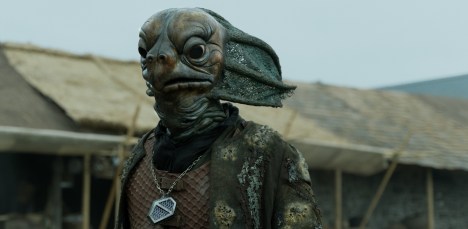
I published a new piece at The Escapist this evening. We’re doing a series of recaps and reviews of Star Trek: Picard, which is streaming weekly on Paramount+. The ninth episode of the second season released this week, and it seemed like a good opportunity to take a look at the series.
The second season of Picard has been a stew of nostalgia for nineties Star Trek, drawing particularly heavily from Star Trek: First Contact. This has inevitably seen the return of the Borg as a major threat. However, the second season of Picard falls into many of the familiar traps of the larger Star Trek franchise when it comes to handling probably the most iconic antagonists from the last thirty or forty years of the franchise. Picard knows the Borg are iconic and important, but has no idea what to do with them.
You can read the piece here, or click the picture below.
I published a new piece at The Escapist this evening. We’re doing a series of recaps and reviews of Moon Knight, which is streaming weekly on Disney+. The penultimate episode of the show released this week, and it seemed like a good opportunity to take a look at the series.
As Moon Knight enters its end game, the show demonstrates the limits of the ambition and experimentation of the Marvel Cinematic Universe, boiling an interesting and compelling premise down to a fairly simplistic and straightforward illustration of cause and effect. There’s something rather depressing in the show’s commitment to easy answers to its central character, and it is all the more frustrating because this is a major release from a company that holds such an important and influential place in the popular consciousness. There’s no excuse for this lack of ambition.
You can read the piece here, or click the picture below.
We’re thrilled to be launching a fortnightly video companion piece to In the Frame at The Escapist. The video will typically launch every second Monday, and be released on the magazine’s YouTube channel. And the video will be completely separate from the written content. This is kinda cool, because we’re helping relaunch the magazine’s film content – so if you can throw a subscription our way, it would mean a lot.
With the broadcast of the new season of Better Call Saul, it seemed like a good opportunity to take a look at the show’s visual storytelling – the way in which it uses images to communicate plot, character and theme.
I am recapping Star Trek: Picard for The Escapist, and so was thrilled to join the wonderful Kurt North on Make It So: A Star Trek Universe Podcast to discuss the eighth episode of the second season, Mercy.
I have somewhat complicated feelings about Picard. There are parts of it that I love, and parts of it that I am a bit more skeptical about. One of the joys of coming into the podcast to discuss the episode was getting the chance to talk about the season as a whole, given how its various arcs were set up and how they paid off. It seems particularly opportune, given that Mercy is a somewhat stronger episode than those surrounding it.
Anyway, it was a huge honour to be invited on, and I hope you enjoy. You can listen to the episode here, or click the link below.
I published a new piece at The Escapist this evening. We’re doing a series of recaps and reviews of Moon Knight, which is streaming weekly on Disney+. The fourth episode of the show released this week, and it seemed like a good opportunity to take a look at the series.
Last week, I discussed how the show’s homage to Raiders of the Lost Ark fell flat because it was too sterile and sexless, unwilling to let Oscar Isaac be Oscar Isaac. In contrast, this week there’s a sense in which the show’s archeology metaphor makes a great deal of sense. It’s a metaphor for Steven and Marc’s journey, constantly unearthing details of their selves and their identities, digging into mysteries and trying to reverse engineer logic or reason from the afterimage to which they wake. It’s a clever piece of thematic storytelling, getting into how characters are defined by their past, whether they know it or not.
You can read the piece here, or click the picture below.
The X-Cast is covering the eighth season of The X-Files. This is one of my favourite seasons of television ever, in large part because it’s a season that manages to build a convincing narrative and character arc around a very challenging production reality, and in doing so forced the show itself to evolve and change. I’m thrilled to join Sarah L. Blair for a discussion of the second half of the season premiere.
Without is a very meditative piece of television, which is a bold and interesting choice for the second half of a season premiere. It is essentially an episode about absences, about the lack of resolution or even meaningful linear progress. It’s an episode that is about confronting the reality that The X-Files no longer has one of its two leading characters available to it. What does that version of The X-Files look like? Without is essentially a story about wandering through the desert.
You can listen to the episode here, or click the link below.


















 the m0vie blog