• Following Us

  • Categories

  • Check out the Archives


  • Awards & Nominations

Star Trek – Who Mourns For Adonais? (Review)

The first Star Trek pilot, The Cage, was produced in 1964. To celebrate its fiftieth anniversary, this December we are reviewing the second season of the original Star Trek show. You can check out our first season reviews here. Check back daily for the latest review.

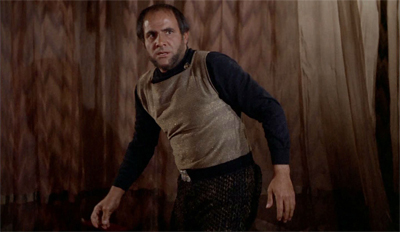
In many respects, Who Mourns for Adonais? is a formative episode for Star Trek as a franchise. It’s a show that really informs a lot of the franchise that would follow, even beyond the confines of the original television show. It’s an episode that represents the first clear articulation of a strand of thought that has been bubbling away through the first season of Star Trek and into the second, exploring the religious side of the Star Trek universe and mankind’s place in the cosmos.

The episode is iconic and memorable. It is packed with images that are familiar to even the most casual of fans. “Kirk confronts a Greek god in deep space!” is a catchy premise. “A giant hand grabs the Enterprise and threatens to crush the ship!” is the type of delightfully insane visual that ranks with “Captain Kirk as a Nazi!” or “space Lincoln!” when it comes to Star Trek visuals that stick with people outside the context of the show itself. Coupled with the distillation of those themes, this is a “big” episode.
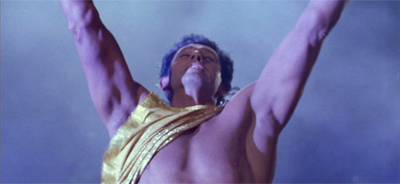
"Jack, I'm flying!"

“Jack, I’m flying!”

Unfortunately, Who Mourns for Adonais? is also a deeply troubling episode. It has problems heaped upon problems. Some of those problems are inherited from the general aesthetic of the show, and are not specific to this episode. However, some of those problems are explicitly articulated here. Who Mourns for Adonais? is an episode that embodies quite a few of the very serious problems that run through the original Star Trek and haunt the franchise for quite some time.

The fact that these problems come baked into an iconic and memorable episode is disappointing.

"Oh, your gods..."

“Oh, your gods…”

Continue reading

Space: Above and Beyond – Sugar Dirt (Review)

This November (and a little of December), we’re taking a trip back in time to review the third season of The X-Files and the first (and only) season of Space: Above and Beyond.

The end is nigh.

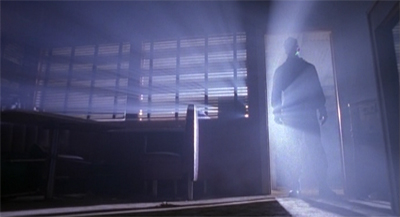
There is a generally funereal atmosphere to the last few episodes of Space: Above and Beyond, creating the sense that the show was well aware of – and had perhaps come to terms with – its own inevitable cancellation. Stardust had assured viewers (and the show itself) that the dead can be heroes too. Sugar Dirt seems a lot angrier about the series’ situation. It is the story of our heroes surrounded and outgunned on all sides; abandoned to their fate by those in authority.

Sadly, McQueen couldn't quite save the show...

Sadly, McQueen couldn’t quite save the show…

Continue reading

Space: Above and Beyond – Stardust (Review)

This November (and a little of December), we’re taking a trip back in time to review the third season of The X-Files and the first (and only) season of Space: Above and Beyond.

Stardust was the second episode of Space: Above and Beyond to air on a Friday, as had originally been planned.

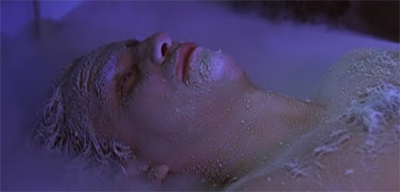
Of course, it was too late to help the show. By this point in its run, Space: Above and Beyond was a dead show walking. Stardust seems to wryly acknowledge as much. It opens with an inmate on death row, watching the clock tick down to midnight. The show is essentially about sacrifices made by the already-dead, and it’s hard not to get a sense that it captured the mood of the staff on the show as well. A wry wink at the audience, like all the introspective reflection in the earlier episodes.

Cold wars...

Cold wars…

It is also interesting how Stardust positions itself as a possible companion piece to The X-Files. The X-Files casts a pretty significant shadow over Space: Above and Beyond. It was very much an attempt by Fox to capitalise on the success of The X-Files as a genre show. It drafted in two of the most reliable executive producers working on The X-Files. The first two episodes were directed by a veteran of The X-Files. David Duchovny had popped by R & R as something of a goodwill ambassador.

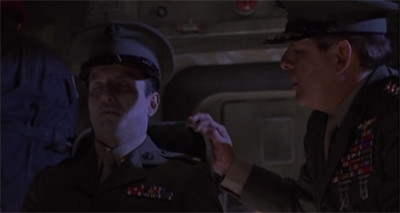
Space: Above and Beyond had played with these comparisons before. The Farthest Man From Home had teased a conspiracy narrative about alien and government cover-ups. Level of Necessity featured a riff on Mulder, with a tall dark-haired paranormal investigator wandering into the show. Stardust makes the connection more explicit, riffing on some of the themes that The X-Files had pushed to the fore at the end of its second season and into the third, exploring links between Native Americans and extraterrestrials.

The honoured dead...

The honoured dead…

Continue reading

Star Trek – Friday’s Child (Review)

The first Star Trek pilot, The Cage, was produced in 1964. To celebrate its fiftieth anniversary, this December we are reviewing the second season of the original Star Trek show. You can check out our first season reviews here. Check back daily for the latest review.

Errand of Mercy was a highlight of the first season. A wry script from producer Gene L. Coon introduced the Klingons as an antagonist for the Federation. Made up to look like space!Mongols, the Klingon Empire was presented as an imperial force hell-bent on expanding its sphere of influence. In case the parallels were a little too subtle, they were locked in a Cold War with the Federation. As such, they were the perfect stand-ins for Communist aggressors trying to undermine American foreign policy.

Of course, Errand of Mercy was brutally cynical in its depiction of the Federation. The episode suggested quite heavily that the Federation was just as imperialist and adversarial as the Klingons. They might couch their foreign policy in friendly language and polite overtures, but their end goals are quite similar. Smaller political entities are nothing but pieces shuffled around a board in a deadly game of chess. Errand of Mercy was not flattering in its portrayal of Kirk, presenting him as little more than a warmonger.

"Damn dirty Klingon!"

“Damn dirty Klingon!”

Errand of Mercy was a massive success. It remains a fan favourite to this day. In some respects, that is due to the introduction of the Klingons, but it is also an exceptional hour of scripted science fiction. So it makes sense that the show would return to the Klingons when it was renewed for a second season. Friday’s Child was the third episode produced during the second season, and returns to quite a few themes hit on by Errand of Mercy. Those themes would recur.

Friday’s Child demonstrates the obvious risks of an episode like Errand of Mercy. It’s an episode that essentially takes the “Klingons as space!Communists” seriously.

We come in peace...

We come in peace…

Continue reading

The X-Files (Topps) #14 – Falling (Review)

This November (and a little of December), we’re taking a trip back in time to review the third season of The X-Files and the first (and only) season of Space: Above and Beyond.

Falling is a delightfully nasty piece of work.

It is, to be fair, something that has been gestating for quite a while in Petrucha and Adlard’s extended run on The X-Files. If their first year on the title explored the loose boundary between reality and unreality, their final few issues shifted to more grounded and cynical themes. Most explicitly, the idea that humanity makes the best monsters. It is a gleefully subversive twist on one of the core elements of The X-Files: the idea that monsters are real.

Falling to pieces...

Falling to pieces…

Petrucha and Adlard had broached this before. This was the key point in Big Foot, Warm Heart, where the eponymous creature shows more humanity than the human antagonist of the story. One Player Only featured a delightful red herring when it suggested a murderous artificial intelligence had driven a developer to a killing spree at a software company, only to reveal that the developer’s actions were entirely his own. It will be taken to the logical extreme in Home of the Brave, essentially the duo’s grand finalé.

Blending together the Americana and nostalgia of Stand By Me with the brutal cynicism of Lord of the Flies, Falling is a compelling and unsettling read.

If a tree falls in the woods...

If a tree falls in the woods…

Continue reading

The X-Files – Jose Chung’s “From Outer Space” (Review)

This November (and a little of December), we’re taking a trip back in time to review the third season of The X-Files and the first (and only) season of Space: Above and Beyond.

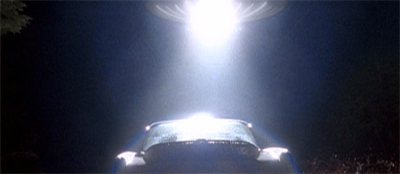
Then there are those who care not about extraterrestrials, searching for meaning in other human beings. Rare or lucky are those who find it. For although we may not be alone in the universe, in our own separate ways, on this planet, we are all alone.

– Darin Morgan takes his bow

It came from beyond the stars...

It came from beyond the stars…

Continue reading

Star Trek – Metamorphosis (Review)

The first Star Trek pilot, The Cage, was produced in 1964. To celebrate its fiftieth anniversary, this December we are reviewing the second season of the original Star Trek show. You can check out our first season reviews here. Check back daily for the latest review.

Gene L. Coon’s last solo script for Star Trek, Metamorphosis is an intriguing episode that seems trapped between two extremes.

A love story operating within the unique confines of the Star Trek universe, it is nominally a story about how love can take just about any form. Here, it’s a story between a lonely old man and sentient cloud of sparkles. However, at the same time, Metamorphosis is aggressively and actively heteronormative – suggesting that while it may be acceptable for a man to fall in love with a non-corporeal entity, that alien has to be female.

All your Cochranes are belong to us...

That “in love” glow…

Continue reading

Space: Above and Beyond – R & R (Review)

This November (and a little of December), we’re taking a trip back in time to review the third season of The X-Files and the first (and only) season of Space: Above and Beyond.

R & R is what might be described as a “monkey’s paw” situation.

Space: Above and Beyond finally gets to air on Friday nights. It had been promised a Friday night slot in early development, before Fox moved it to Sunday to make room for Strange Luck. Glen Morgan and James Wong had been promised the coveted Friday night slot again in January 1996, but it never materialised. Finally, late in the season, Fox manage to air an episode of Space: Above and Beyond on a Friday night. That episode would even air directly before The X-Files. And not just any episode of The X-Files. Jose Chung’s “From Outer Space”, a classic.

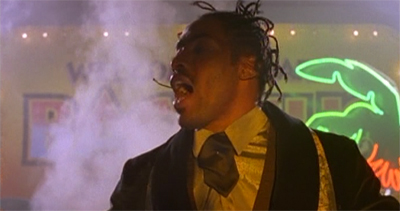
Everything is Coolio!

Everything is Coolio!

However, as the Host himself points out in R & R, everything has its price. Here, it seemed like Fox had chosen the most stereotypically network-friendly episode of Space: Above and Beyond to air in that Friday night slot. So there were hot young people at night clubs, celebrity cameos, romance, angst, melodrama, absurdity. It is one of the most grotesquely heightened episodes of Space: Above and Beyond ever produced, to the point that Hawkes picks up and drops a drug addiction as only one of the episode’s three primary plot threads.

R & R is not a good episode of television. It is the weakest that Space: Above and Beyond has been in quite some time, and the weakest it would be from this point onwards. It seems like a cruel irony that it finally managed to get that Friday night slot it so desperately wanted.

Chalk it up as a misfire...

Chalk it up as a misfire…

Continue reading

Star Trek (Marvel Comics, 1980) #4-5 – The Haunting of Thallus!/The Haunting of the Enterprise! (Review)

The first Star Trek pilot, The Cage, was produced in 1964. To celebrate its fiftieth anniversary, this December we are reviewing the second season of the original Star Trek show. You can check out our first season reviews here. Check back daily for the latest review.

Marvel certainly had an unconventional approach to publishing Star Trek.

The company had licensed the comic book rights following the release of Star Trek: The Motion Picture. They had released a successful adaptation of the film as part of their Marvel Super Special line and had re-package the three-part adaptation as the first three issues of an on-going Star Trek comic book. Written by Marv Wolfman and illustrated by Dave Cockrum, it was clear that Marvel had big plans for Star Trek. However, it also quickly became clear that they had no idea where they wanted to go with the comic.

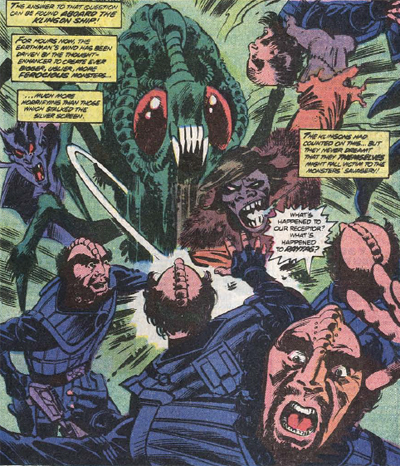
Here there be monsters...

Here there be monsters…

After all, they immediately followed up the big three-issue opening arc with a comic where the Enterprise discovered a haunted house floating in space. While it was certainly a catchy image, it wasn’t exactly a quintessential Star Trek premise. It seemed that Marvel had no idea what to do with the comic. Writer Marv Wolfman wrote the first of the two issues comprising the storyline, handing the second issue over to Mike W. Barr. He would only stick around for two issues before handing the comic over to Tom DeFalco. DeFalco wrote a single issue before moving on.

It is a rather disjointed comic book, one which lacks the strong narrative voices that DC would give to their late-eighties licensed Star Trek comics. Then again, it is probably easy enough to deduce all of this from the fact that the first original Star Trek storyline published by Marvel featured a haunted house floating in space.

In space, everyone can hear you scream...

In space, everyone can hear you scream…

Continue reading

The X-Files – Hell Money (Review)

This November (and a little of December), we’re taking a trip back in time to review the third season of The X-Files and the first (and only) season of Space: Above and Beyond.

Hell Money is an oft-overlooked episode of The X-Files.

The positioning in the third season probably doesn’t help. It comes directly after Teso Dos Bichos, probably the season’s weakest episode. It is also positioned in the gap between Pusher and Jose Chung’s “From Outer Space”, two broadly-loved episodes that serve as pitch-perfect examples of The X-Files both on- and off-format. In contrast, Hell Money is something a little stranger. It is not as conventional as Pusher, nor as radical as Jose Chung’s “From Outer Space.”

Seeing is believing...

Seeing is believing…

Instead, Hell Money is an episode of The X-Files that loosely fits the show’s format. Mulder and Scully investigate a bunch of macabre murders where sinister forces are at work. However, in keeping with the broad themes of the third season, the evil in Hell Money takes a particularly banal form. There are no monsters here; at least, not any supernatural monsters. The only ghosts that haunt the narrative are metaphorical. There is a culture alien to our leads, but one a bit more grounded than extraterrestrials.

Hell Money is a clever and thoughtful piece of television that feels subtly and harrowingly subversive.

The writing is on the wall...

The writing is on the wall…

Continue reading