• Following Us

  • Categories

  • Check out the Archives


  • Awards & Nominations

The X-Files – Terma (Review)

This February and March, we’re taking a trip back in time to review the fourth season of The X-Files and the first season of Millennium.

Tunguska and Terma borrows the structure that made the show’s early mythology episodes so effective. Tunguska is full of intriguing and compelling questions, implications that would seem to broaden or deepen the mythology. However, instead of resolving any of the major threads, Terma simply turns itself into a roller-coaster thrill ride. A cynical observer might compare the weaker mythology episodes to a shell-game: the potential of an interesting premise, lost in a shuffle designed to disorientate and catch the viewer off-guard.

It is an approach that has served the show well. Ascension avoided answering too many of the questions posed by Duane Barry, barrelling along with the momentum of a runaway freight train. Similarly, End Game did not dwell too heavily on the questions posed by Colony, instead serving as a series of high-momentum chase sequences with Mulder following the Alien Bounty Hunter to the ends of the Earth. Paper Clip moved so quickly that the viewers never wondered why the documents recovered in Anasazi were no longer earth-shattering, but merely macguffins.
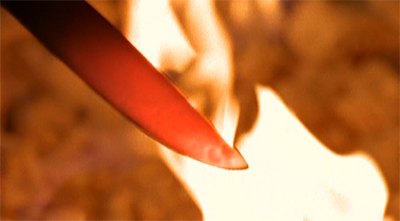
Things are really heating up...

Things are really heating up…

The X-Files is very good at this sort of dynamic mile-a-minute plotting. The production team are very good at what they do. There is a sleek professionalism to these episodes that makes them easy to watch. Although filmed in Vancouver, there were few shows in the nineties ambitious enough to send their character to a Russian gulag for human experimentation. However, the cracks are starting to show. Herrenvolk demonstrated how frustrating a lack of answers could become. Terma struggles to balance a number of potentially interesting plot threads.

There are a lot of elements of Terma that might have worked well, if they had been given more room to breath. Sadly, the episode spends most of its run time trying to build up momentum towards the inevitable scene where proof narrow slips through Mulder’s fingers one more time.
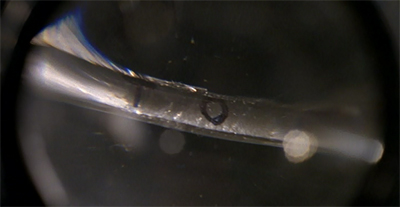
Evil oil...

Evil oil…

Continue reading

Millennium – Kingdom Come (Review)

This February and March, we’re taking a trip back in time to review the fourth season of The X-Files and the first season of Millennium.

Kingdom Come is a horrible misjudged episode of Millennium, and the show’s first truly spectacular misfire.

Kingdom Come was notably the first episode to air out of production order. It had been produced as the fourth episode following The Pilot, between Dead Letters and The Judge. However, the episode was broadcast as the sixth episode of the television season, after 5-2-2-6-6-6 and before Blood Relatives. The official reason given for this delay was the death of Cardinal Joseph Bernardin in mid-November 1996, following a long and public battle with cancer. It was suggested that an episode about a serial killer targeting religious figures would have been in poor taste at the time.

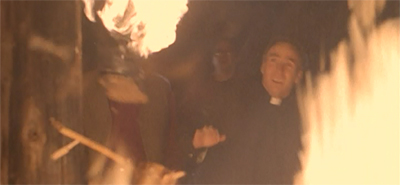
A light in the darkness...

A light in the darkness…

Still, whatever the official reason given, it cannot help but feel like the production staff were hoping to bury a stinker a little deeper into the season. Kingdom Come is an episode that does not work on any number of levels, offering a rather patronising and condescending view of religious faith as explained through stilted exposition and trite cliché. The show’s observations about faith and hope feel more like sentiments from Hallmark greeting cards than observations on the human condition.

The result is an episode that embodies the worst traits of Millennium, feeling just as crass and sensationalist as it does hollow and superficial.

The episode really bombed...

The episode really bombed…

Continue reading

The X-Files – Tunguska (Review)

This February and March, we’re taking a trip back in time to review the fourth season of The X-Files and the first season of Millennium.

The show’s conspiracy plot line is rapidly approaching critical mass.

It is quite clear at this point that while colonisation might have a schedule, Fox had just thrown Chris Carter’s out the window. The X-Files: Fight the Future looms large on the horizon. Indeed, Tunguska is credited to Chris Carter and Frank Spotnitz, who would end up writing the screenplay for the feature film over the Christmas break. However, while Carter had originally conceived the movie to put a cap on the television series, Fox wanted it to tie more aggressively into the series. It would not be the end of the journey, but a middle chapter.

Flagging the danger...

Flagging the danger…

As such, the larger conspiracy plotline that had been gathering momentum since the end of the second season spends two years largely spinning its wheels to keep the feature film relevant. The film was written midway through the fourth season and shot in the gap between the fourth and fifth seasons. So, there is a lot of stalling required. To use the “cancer” metaphor that is cleverly (and almost subconsciously) woven through the fourth season, the central conspiracy plotline seems to go into remission for a while.

This isn’t inherently a bad thing. Indeed, the stalling allows the show to take stock and to devote space in the mythology to more personal stories like Tempus Fugit and Max or Christmas Carol and Emily. However, it also means that episodes like Herrenvolk, Tunguska, Terma and The End felt like attempts to buy time – offering the illusion of dynamism and change while only inching the plot along.

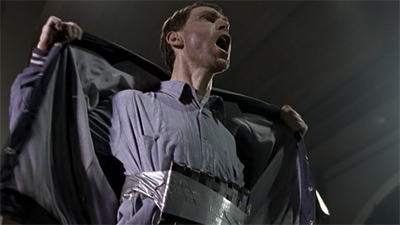
Wired up...

Wired up…

Continue reading

Millennium – 5-2-2-6-6-6 (Review)

This February and March, we’re taking a trip back in time to review the fourth season of The X-Files and the first season of Millennium.

It is interesting to compare and contrast the scripts that Morgan and Wong wrote for the fourth season of The X-Files with the scripts that they wrote for the first season of Millennium. The duo were writing for both shows at the same time – with episodes frequently airing within a week of each other. Morgan tended to focus more on the four X-Files scripts, while Wong worked primarily on the three Millennium episodes. While the seven scripts are all fascinating in their own way, there is a marked difference in how the duo approach the two shows.

Their four episodes of The X-Files are very bold and experimental – they look and feel utterly unlike anything that the show has done; before or after. These four scripts seem to needle at the show, pushing it further. Home seems designed to see how much unpleasantness the writers can get on to Fox prime time in the nineties. The Field Where I Died is a thoughtful and melancholy romance with no companion in the X-Files canon. Musings of a Cigarette-Smoking Man parodies the show’s central conspiracy. Never Again makes the Mulder/Scully dynamic toxic.

Having a blast...

Having a blast…

That makes a great deal of sense. After all, The X-Files was in its fourth season. It was approaching that impressive “one hundredth episode” landmark, the number of episodes necessary before the show would be secure in syndication. (At least in the television landscape of the nineties.) Although less than half-way through its eventual nine-season run, The X-Files was an old dog by this stage of its life cycle. As such, it made a great deal of sense for Morgan and Wong – two writers who had been there at the beginning – to shake things up.

In contrast, the three scripts that Morgan and Wong wrote for the first season of Millennium are a bit more conservative in scope and tone. They are fascinating pieces of television that help to establish the mood of the show, but they are not as experimental of the work that Morgan and Wong were doing on The X-Files. Again, this makes a great deal of sense. Millennium was still a very young show. It was still defining its own identity, figuring out what it wanted and needed to be. Morgan and Wong’s three scripts are essential in that development.

Taking a page from the Group...

Taking a page from the Group…

Continue reading

The X-Files (Topps) #23 – Donor (Review)

This February and March, we’re taking a trip back in time to review the fourth season of The X-Files and the first season of Millennium.

Donor is the strongest of John Rozum’s work on The X-Files to this point. It might be his best work overall.

It is a story that very clearly and very strongly plays off the classic horror vibe that has been running through this stretch of episodes, taking the idea of supernatural revenge and poetic justice to almost blackly comic extremes. In many respects, John Rozum has pushed the comics towards a very traditional sort of moralistic storytelling – with characters frequently facing ironic consequences of their actions.

Organ grinder...

Organ grinder…

In The Silent Blade, a mass murderer kills himself with the blade that compelled him to kill. In The Kanashibari, a bunch of college kids who terrified an asthmatic classmate to death by locking him in a closet are themselves scared to death by a suffocating spectre. In Silver Lining, a killer murders innocent people to reclaim his good looks, only to lose them almost immediately in a fire while fleeing the FBI.

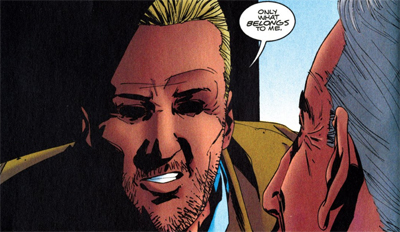
So Donor pushes this sort of storytelling to its logical extreme, as the resurrected body of Bruce Miller tries to reclaim the organs that his widow donated without his consent. Bruce Miller plans to take back what is rightfully his, harvesting various vital organs from recipients. Donor is a very dark little done-in-one story with a delightfully wry and cynical attitude that elevates it above many of its contemporaries.

"You have something that I need..."

“You have something that I need…”

Continue reading

The X-Files – Musings of a Cigarette-Smoking Man (Review)

This February and March, we’re taking a trip back in time to review the fourth season of The X-Files and the first season of Millennium.

“No great man lives in vain. The history of the world is but the biography of great men.”

– Thomas Carlyle, On Heroes, Hero-Worship, and the Heroic in History

Light 'em up...

Light ’em up…

Continue reading

Millennium – The Judge (Review)

This February and March, we’re taking a trip back in time to review the fourth season of The X-Files and the first season of Millennium.

The Judge feels very much like an episode that might have worked better later in the first season of Millennium. It deals with pretty big ideas and themes at the heart of the show, but in ways that feel almost clumsy and haphazard. Millennium is still a show that is finding its way, and The Judge pokes and prods at ideas close to the heart of the series as a whole. The episode feels rather clumsy, as though the show hasn’t reached a point where it really has a handle on itself, let alone the sorts of hefty existential questions suggested by The Judge.

At its core, The Judge is fascinated with issues of moral authority and justice – in particular, it asks questions about whether such authority can exist outside (or even inside) the mechanism of the state. Given that Millennium is the story about a man working with a private group to the potential collapse of civil order on the eve of the millennium, The Judge feels like it would be the perfect opportunity to broach questions about the Millennium Group and the work that they do. After all, the Millennium Group and the supporting cast have been haunting the narrative since The Pilot.

Judge not...

Judge not…

While these tough questions hover at the very edge of the episode, it never seems like The Judge addresses them. Then again, The Judge is the fourth episode of the first season of a new show. Millennium is still young. The Judge is written by Ted Mann; it is the first episode of Millennium that is not written by a veteran of The X-Files, by somebody who isn’t Chris Carter or hasn’t experience working within Chris Carter’s world. It is, perhaps, too much to expect it to have a handle on all of that. And The Judge deserves a great deal of credit for marking out areas that the show may want to explore as it grows and develops.

At the same time, while it has some interesting big ideas and a great cast, The Judge feels little clumsy and awkward in its execution. It avoids a lot of the interesting implications of what it says, and it features a rather convenient and contrived final act that seems to exist solely so Frank Black can move on to doing other stuff in the next installment. The Judge is a misfire, but it is an intriguing and interesting misfire. It is precisely the sort of episode that you might expect at this stage in the season.

You've got male (body parts)!

You’ve got male (body parts)!

Continue reading

The X-Files (Topps) #22 – The Kanashibari (Review)

This February and March, we’re taking a trip back in time to review the fourth season of The X-Files and the first season of Millennium.

The Kanashibari confirms what readers should expect from Topps’ licensed comics based on The X-Files. It is another atmospheric and episodic horror story, tightly plotted and written, with a grim sense of moral certainty underpinning it. The Kanashibari feels like something of a throwback, a modern-day take on those classic E.C. Comics horror stories – morality tales where the vengeance is exacted against those who have committed an injustice.

It is a throwback in other ways as well. The Kanashibari and Donor are both old-fashioned “supernatural revenge stories”, the kind of stories that would sit comfortably in the first season of The X-Files. Episodes like Shadows, Lazarus, Young at Heart, Born Again and Roland were all stories about characters seemingly returning from beyond the grave to wreak a terrible revenge against those had wronged them.

Who ya gonna call?

Who ya gonna call?

Continue reading

The X-Files – Sanguinarium (Review)

This February and March, we’re taking a trip back in time to review the fourth season of The X-Files and the first season of Millennium.

Appropriately enough, Sanguinarium is a bloody mess of an episode.

To be fair, it’s not a total write-off. There are some interesting ideas here, and the episode’s willingness to indulge in trashy horror is almost endearing… to a point. However, Sanguinarium often serves to illustrate just how much care and consideration is necessary to make an episode of The X-Files work. It is a very effective counter-example, an episode that demonstrates it takes more than just pulpy horror to make an episode work. Sanguinarium is almost as revolting and as graphic as Home, but it lack all the little elements that made the earlier episode work.

The doctor will see you now...

The doctor will see you now…

It’s cheesy instead of wry. It’s gratuitous instead of simply hyperactive. It’s blunt instead of subversive. Sanguinarium is not a misfire to the same extent as – say – Teso Dos Bichos or Excelsis Dei. It has a few ill-judged elements, but it’s more clumsy than offensive. It might be a bit much to suggest that there’s a classic episode buried just beneath the surface of Sanguinarium, but it seems fair to say that there is a much better episode somewhere in here. One suspects that pressure behind the scenes simply made it tougher to bring that episode to the fore.

Nevertheless, Sanguinarium is an interesting failure, if not quite a satisfying episode.

Blood work...

Blood work…

Continue reading

Millennium – Dead Letters (Review)

This February and March, we’re taking a trip back in time to review the fourth season of The X-Files and the first season of Millennium.

Dead Letters is the first Millennium episode credited to writers James Wong and Glen Morgan, and to director Thomas J. Wright. These are three creative forces that would come to be massively influential in the development of the show.

As with Gehenna, the obvious point of comparison in this early stage of development is with The X-Files. Chris Carter wrote the first two episodes of both shows, outlining the core themes and larger direction. However, the crucial third episode was handed to the team of James Wong and Glen Morgan. They would be the first writers other than Carter to write for Fox Mulder, Dana Scully and Frank Black. They were tasked with demonstrating that these concepts could work in the hands of writers other than Chris Carter.

A hair's breadth away from insanity...

A hair’s breadth away from insanity…

The first script that Wong and Morgan wrote for The X-Files was Squeeze. It was the show’s first stand-alone monster-of-the-week episode, and effectively codified a very flexible subgenre of The X-Files, while also creating a very popular and iconic monster. Dead Letters does something vaguely similar for Millennium, even if it is not quite as effective. Free from a lot of the millennial anxieties that drove The Pilot and Gehenna, Dead Letters offers an example of a fairly pure-blooded “serial-killer-of-the-week” story.

For better or for worse, Dead Letters sets the tone for the rest of the show’s first season.

Bits and pieces...

Bits and pieces…

Continue reading