• Following Us

  • Categories

  • Check out the Archives


  • Awards & Nominations

Millennium – Weeds (Review)

This February and March, we’re taking a trip back in time to review the fourth season of The X-Files and the first season of Millennium.

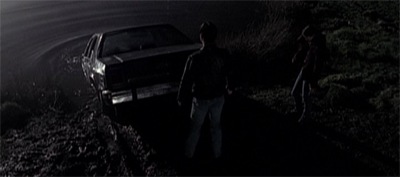
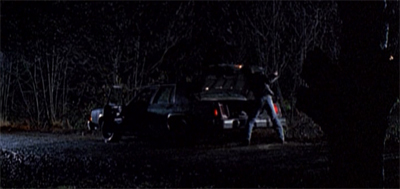
Weeds concludes the loose “suburban trilogy” running through the first season of Millennium. In fact, Weeds was filmed directly after Wide Open, but was pushed back in the broadcast schedule so as to air after The Wild and the Innocent. While this change in broadcast and production order is nowhere near as confusing as the scheduling hijinx happening with The X-Files at the same time, it does give an indication that the production team recognised the potential similarities between Weeds and Wide Open.

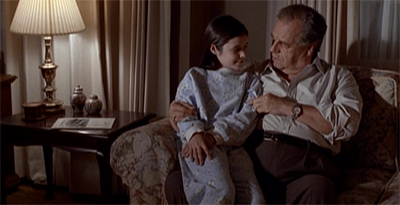
Both episodes are about the violation of a supposedly “safe” space, bypassing and subverting all the potential security put in place to keep the home secure. In Wide Open, the killer visits open houses and hides in wardrobes until the family go to sleep that night; in doing so, he avoids setting off any alarms. In Weeds, a secure and gated community discovers that they cannot keep their children safe; someone within the community is preying on the residents’ children. As with The Well-Worn Lock, there is a sense that families are not safe, even when they think that they are.

Community watch...

Community watch…

As with Wide Open, Weeds feels just a little bit sensationalist. It is the kind of episode that attracts criticisms about gratuitous violence or exploitation. Millennium was never quite as excessive or as sadomasochistic as its critics would suggest, but there are definite tendencies towards those extremes on display at certain points in the run. While Millennium is very clearly driven by a core moral philosophy, it can occasionally seem a little too comfortable with its brutality or depravity.

Indeed, Weeds hits on quite a few of the stock fears that run through the first season of Millennium: children are victimised by a person in a position of trust and authority; there is biblical quotation; there is sadistic (and disturbing) torture filmed in a heavily stylised manner. There is something almost cynical and calculated about how Weeds hits these familiar buttons; these impulses towards excess haunt the first season of Millennium, and are building to something of a catharsis in Loin Like a Hunting Flame.

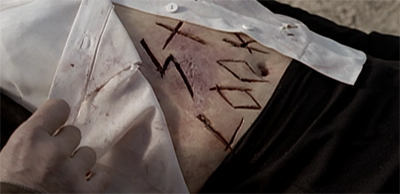
There will be blood...

There will be blood…

Continue reading

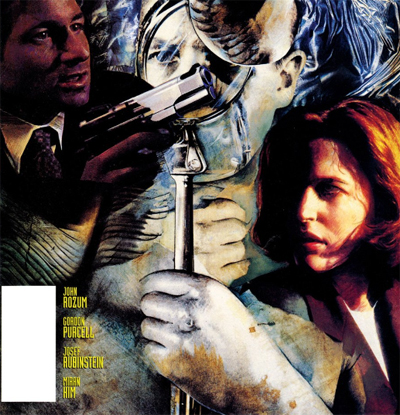
The X-Files (Topps) #25-26 – Be Prepared (Review)

This February and March, we’re taking a trip back in time to review the fourth season of The X-Files and the first season of Millennium.

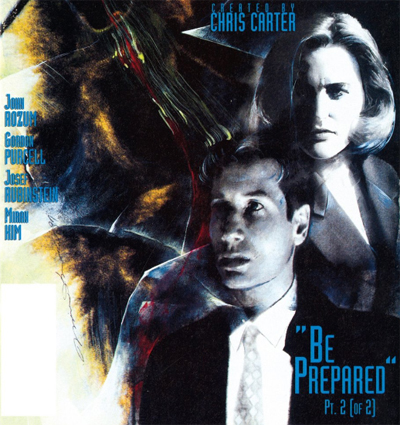
What’s interesting about Be Prepared is how much it feels like an episode of The X-Files.

A lot Rozum’s earlier scripts felt like Mulder and Scully had wandered into old E.C. horror stories, cautionary supernatural tales about vengeful ghosts and poetic justice. In contrast, Be Prepared feels very much in tune with the aesthetic of the show itself. Mulder and Scully investigate a uniquely American piece of folklore, finding themselves in an isolated location dealing with human monstrosity at least as much as any paranormal element.

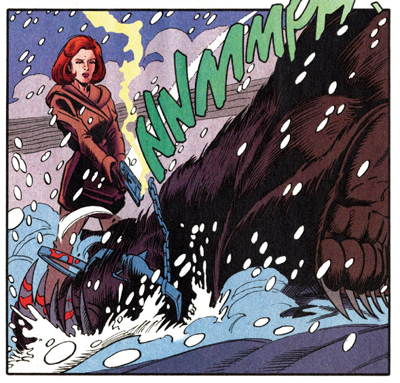
If you go down to the woods today...

If you go down to the woods today…

Indeed, Be Prepared feels very much like an episode from the first two seasons of the show, evoking stories like Ice or Darkness Falls or Firewalker. Indeed, Be Prepared arguably sits comfortably alongside Topps’ range of Season One comics – feeling like a lost episode from the show’s early years. Be Prepared feels like the first time that Rozum is constructing a story specifically from tropes associated with The X-Files, rather than from horror tropes in general.

The result is a fun little adventure that feels more like The X-Files than the comic has in quite a while.

The right to bear arms...

The right to bear arms…

Continue reading

The X-Files – El Mundo Gira (Review)

This February and March, we’re taking a trip back in time to review the fourth season of The X-Files and the first season of Millennium.

The X-Files is a show that sometimes has difficulties when it comes to portraying minorities.

There are lots of episodes that offer insightful and thoughtful explorations of isolated subcultures, without veering into offensive stereotypes or awkward cliché. Fresh Bones and Hell Money are two examples of the kinds of stories that do offer those sorts of interesting and respectful depictions of minorities. In contrast, the show can sometimes seem a little close-minded and xenophobic. Excelsis Dei, Teso Dos Bichos and Teliko are episodes with somewhat questionable depictions of other cultures.

Illegal aliens.

Illegal aliens.

Writer John Shiban likes his horror tropes. He adores the classic horror movie trappings, and revels in a very old-school approach to scary stories. Unfortunately, the horror genre has an unfortunate history of exploitation and racism when it comes to the portrayal of “the other.” The easiest way to make something scary and unknown is to make it foreign, suggesting that the outside world is filled with horrors and monstrosities. Shiban would hit on this trashy exploitation vibe repeatedly during his tenure on The X-Files.

El Mundo Gira is very much a companion piece to Shiban’s other stories about foreign monsters – the indigenous cat-people of Teso Dos Bichos and the butt-dwelling Indian fakir of Badlaa. It is a not a story set in the world of Mexican-American immigrants; it is a story set in a clumsy stereotypical depiction of the world of Mexican-American immigrants, as channelled through unfortunate racial stereotypes.

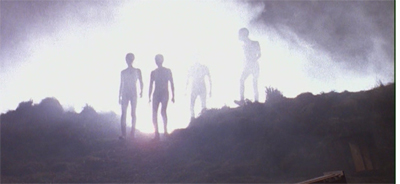
Green haze...

Green haze…

Continue reading

Leonard Nimoy

Leonard Nimoy passed away today.

Nimoy is an interesting figure. He is an actor and director with a long a prolific career, who seldom wanted for steady work. He did a lot of quality work in front of (and behind) the camera. Nimoy was a series regular on the sixties version of Mission: Impossible, taking over from Martin Landau. He played a major role in the 1978 remake of Invasion of the Body Snatchers with Donald Sutherland. He also directed both Three Men and a Baby. He worked quite regularly and quite frequently. His body stretches over half a century.

leonardnimoy1

However, all of this work (and it is great work) is inevitably overshadowed by a single role. To an entire generation of people – not just fans, not even just casual television viewers – Leonard Nimoy was Spock. With his pointed ears, memorable catchphrases and iconic Vulcan salute, Nimoy was enigmatic half-human half-Vulcan who served as the first officer of the USS Enterprise. His work spans the franchise, from the unbroadcast original pilot (The Cage) to the most recent JJ Abrams feature (Star Trek Into Darkness).

This was the conflict at the heart of Nimoy, the extremely professional performer who worked pretty consistently throughout his life and the one role that he turned into a screen icon across television and film. Nimoy was a complex character. He famously published an autobiography declaring I Am Not Spock, only to follow it up with I Am Spock. It is a credit to the actor’s complexity and nuance that both could seem to be true in the same instant.

tos-amoktime12

Continue reading

The Simpsons – The Springfield Files (Review)

This February and March, we’re taking a trip back in time to review the fourth season of The X-Files and the first season of Millennium.

A young network hungry to find its place in the American television market, Fox managed to produce two of the television shows that defined the nineties. Both The X-Files and The Simpsons were bold and innovative television shows that captured the zietgeist perfectly. Both shows offered an insightful, innovative and occasionally subversive look at American pop culture in the last decade of the twentieth century. Both have endured quite well, speaking to a generation that came of age in the nineties.

While The X-Files wound itself up in 2002, The Simpsons endures. The show has been running for almost a quarter-of-a-century at this point, and there is no sense that it will ever let up. While there are stock criticisms to be made about how The Simpsons is not as funny as it once was, the series has continually and perpetually reinvented itself. The success of these various iterations has varied. The Simpsons was a different show in 1989 than it was in 1992 or 1996 or 2000.

"Mulder and Scully. FBI."

“Agents Mulder and Scully. FBI.”

However, the show was in the middle of an incredible hot streak in January 1997. The show was in its eighth season, and on the cusp of overtaking The Flintstones as the longest-running prime-time animated series in the United States. This was a phenomenal accomplishment, and there was no indication that the show was in decline. Although fans will argue about exactly how long the so-called “golden age” of the Simpsons actually lasted, the series was still in the middle of it by January 1997.

So The Springfield Files makes a lot of sense as an obvious overlap between the two most important weekly shows airing on Fox at this moment in time. The Springfield Files was treated as a big deal at the time. It aired two weeks before Superbowl XXI, which would help give The X-Files its highest-ever ratings with Leonard Betts. It was sent to the press for review before it aired, to help generate word of mouth. The result is a delightfully satisfying intersection of two massively successful and influential shows.

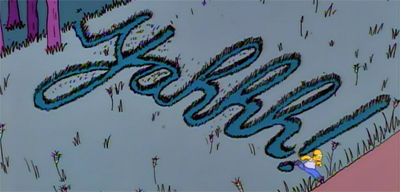
Reading the scene...

Reading the scene…

Continue reading

Millennium – The Wild and the Innocent (Review)

This February and March, we’re taking a trip back in time to review the fourth season of The X-Files and the first season of Millennium.

The Wild and the Innocent is an ambitious piece of television.

It is not a piece of television that works as well as it might, the execution of the central ideas leaving a little to be desired, but it is an episode that commits whole heartedly to something unique. In I Want to Believe, Robert Shearman refers to The Wild and the Innocent as “a plot more suited to Cormac McCarthy than Chris Carter.” He’s not wrong. The Wild and the Innocent is a story about cycles of violence and abuse in the American south, a grim road movie with some very harsh conclusions about the way that the world works.

That sinking feeling...

That sinking feeling…

It still fits within the milieu of Millennium. After all the classic “serial killer road movie” is still a serial killer story, and Millennium has already carved out that niche for itself. However, the image of Frank Black and Peter Watts following a trail of bodies from Missouri down through Arkansas suggests a different show than the one that has been airing since The Pilot. In many respects – with its heavy philosophical voice-over, its country-tinged soundtrack, its fixation on the outlaw couple – The Wild and the Innocent feels almost like some old American folk tale.

There’s something decidedly old-fashioned here, with the episode playing more like a western than a police procedural. In the documentary Order in Chaos, Carter described Frank Black as character from a story “like Shane, like any cowboy, any good movie, Western movie.” As such, he fits in quite comfortably with this new type of story.

Road warrior...

Road warrior…

Continue reading

Millennium – The Well-Worn Lock (Review)

This February and March, we’re taking a trip back in time to review the fourth season of The X-Files and the first season of Millennium.

The Well-Worn Lock is trying to say something important.

As easy as it is to mock Chris Carter for being a little heavy-handed in his writing, he tends to wear his heart on his sleeve. There is an honesty and an earnestness to his writing that is quite endearing – a sense that he has some things that he wants to say, and that he will say them. The Well-Worn Lock is a tough and grueling episode, with some pretty harrowing things to say. It confronts the types of issues that are often overlooked or ignored, because they are so uncomfortable to examine head-on. There is a lot to admire here.

Happy families...

Happy families…

However, The Well-Worn Lock is also clumsy and ham-fisted. It is so committed to saying what it wants to say that it occasionally gets caught up in itself. It has been argued that Carter constructed Millennium as a vehicle to examine the nature of evil in the modern world, and there are points where the series feels more like a pulpet that a television show. The Well-Worn Lock is an episode about an insidious and oft-ignored evil, but there are points where it has the depth and complexity of a life-action cartoon.

The problem is not that the episode’s antagonist is a monster – after all, it is hard to describe anybody who commits this sort of abuse as anything but a “monster” – but that he seems a grotesquely exaggerated and one-dimensional caricature. Tackling a subject that requires considerable tact and grace, The Well-Worn Lock often has the emotional nuance of a sledgehammer.

The world according to Catherine Black...

The world according to Catherine Black…

Continue reading

The X-Files – Paper Hearts (Review)

This February and March, we’re taking a trip back in time to review the fourth season of The X-Files and the first season of Millennium.

Paper Hearts is one of the best scripts that Vince Gilligan would write for The X-Files, and one of the best episodes of the fourth season. This is enough to put it in the frontrunners of any possible “best episode ever” ranking.

The episode is spectacular. It works on just about every conceivable level. It has a great script from a great young staff writer. It has a great guest star in Tom Noonan. It features a great performance from David Duchovny. Rob Bowman does a spectacular job directing. Mark Snow is one of the most consistent composers working in nineties television, and his score for Paper Hearts manages to be simple, effective and memorable. It is thoughtful, atmospheric, emotional and compelling. It is the perfect storm.

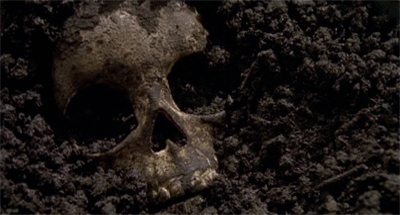
The truth is buried...

The truth is buried…

However, the real cherry on Paper Hearts is just how easy it would be to mess up an episode like this. On paper, Paper Hearts seems like a disaster waiting to happen. It is an episode that teases the audience with a potentially massive reversal of one of the show’s core truths. It posits an alternative theory for the abduction of Samantha Mulder that would shake the show to its very core. If Paper Hearts followed through on that basic premise, everything would change. Much like Never Again, this is an episode with the potential to poison the show.

Which makes it inevitable that Paper Hearts will back away from its potentially game-changing premise, which brings its own challenges. It is one thing to up-end the apple cart; it is another to pretend to up-end the apple cart only to restore the status quo at the end of the hour. On paper, and from any synopsis, Paper Hearts seems like the biggest cheat imaginable. “Everything is different!” it seems to yell. “And then it’s not!” The real beauty of Paper Hearts is the way that the episode works almost perfectly even with these huge hurdles to clear.

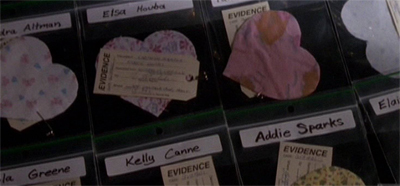
The heart of the matter...

The heart of the matter…

Continue reading

Millennium – Blood Relatives (Review)

This February and March, we’re taking a trip back in time to review the fourth season of The X-Files and the first season of Millennium.

Blood Relatives is the best episode of Millennium to air within the first half of the first season. It is an episode that seems to recognise the potential of a show like Millennium to be more than just a formulaic procedural, acknowledging that the show needs to find its own unique narratives in the same way that The X-Files did during its first season. Blood Relatives adheres rather loosely to the serial-killer-of-the-week format, but is rather more interested in the stories of the characters around the murders than in the murders themselves.

Blood Relatives is also notable as the first Millennium script written by Chip Johannessen. Johannessen would go on to become one of the defining voices of the show’s run, writing some of the best episodes of the first two seasons and steering the show through its troubled two years. Johannessen was good to Millennium, and Millennium was good to Johannessen. It transitioned the writer from shows like Married… With Children, Beverly Hills 90210 and The Monroes towards 24, Dexter and Homeland.

Not cut out for all this...

Not cut out for all this…

As with his next script, Force Majeure, Johannesson hones in quite beautifully on the potential of Millennium. Blood Relatives is an episode of television that is almost perfectly tailored for Millennium. While it retains the elements of a procedural, it is hard to image the episode working on something like Law & Order or CSI, more rigidly-structured television shows with clearer boundaries. Indeed, it seems like Johannessen recognised Millennium as a show spun out of Irresistible, and chose to play Blood Relatives on the same sort of themes about loss and dysfunction.

Blood Relatives is a superbly constructed piece of television, one that marks Johannessen as a talent to watch going forward.

Wading in...

Wading in…

Continue reading

The X-Files (Topps) #24 – Silver Lining (Review)

This February and March, we’re taking a trip back in time to review the fourth season of The X-Files and the first season of Millennium.

After the wacky and delightful excess of Donor, John Rozum steers the comic back into much more traditional fare.

There is little in Silver Lining that the comic hasn’t touched on quite recently. Guest writer Kevin J. Anderson already wrote a “vampiric object” story about a killer camera the two-part Family Portrait story only a few months earlier. John Rozum had already drafted a “haunted object drives a man to kill, but the voices are only in his head” story for The Silent Blade, a short story written specifically for The X-Files Magazine. As a result, Silver Lining feels a little overly familiar. There is nothing here that the reader hasn’t seen before; and recently, too.

Fashioning a story...

Fashioning a story…

Silver Lining reinforces the sense that Topps and Ten Thirteen are making a conscious effort to frame The X-Files as a classic horror comic book. Certainly, Silver Lining adopts the same basic storytelling elements associated with those pulpy adventures from the fifties; there is a scientist who unwittingly unleashes a horror upon the world, a physically deformed villain, a moral about how beauty is only skin deep and that vanity is called a “deadly” sin for a reason. There’s even a poetic justice to the story, where the guest villain finds themselves tormented in an ironic fashion.

There’s nothing particularly objectionable about Silver Lining, beyond how repetitive it feels. It feels like The X-Files has taken something of a step backwards since Topps and Ten Thirteen decided to part ways with writer Stefan Petrucha. The first sixteen issues of The X-Files felt like something of a Vertigo comic book, an ambitious horror anthology with no shortage of big ideas. Now the comic feels very much like an old E.C. comic without the nostalgia factor. The decline is quite striking, but no less disheartening for it.

Moral decay...

Moral decay…

Continue reading