• Following Us

  • Categories

  • Check out the Archives


  • Awards & Nominations

Daredevil – Into the Ring (Review)

To celebrate the launch of Marvel’s Daredevil and the release of Avengers: Age of Ultron, we are reviewing all thirteen episodes of the first season of Marvel and Netflix’s Daredevil. Check back daily for the latest review.

Daredevil is an ambitious piece of work.

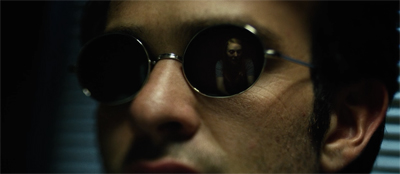
It represents an astonishing commitment from both Marvel and Netflix to realise a thirteen-episode run on a superhero character that will be produced and released in one big chunk. One of the unsung features of Netflix’s “full season” model is the fact that there is minimal room for course correction or reevaluation; there is no time for audience feedback or retooling. The model is all or nothing. Before the first episode has been released to the public, the last episode has already been cut and gone through post-production.
daredevil-intothering12

That is an impressive gamble, even in this day and age when Marvel has demonstrated that it can pull off almost anything that it wants to accomplish. Daredevil is part of the tapestry of interconnected continuity that forms the Marvel Cinematic Universe, a single unfolding narrative space that dates back to Jon Favreau’s Iron Man back in 2008. In the seven years once, one of the resounding (and effective) criticisms of Marvel’s creative model has been the sense that their projects are drowned in a “house style”, as if the individual works feel obligated to fit together.

These criticisms date back to the sense that Jon Favreau’s Iron Man 2 was smothered by its obligations to a shared universe, and was only fuelled by the high-profile departure of respected film-makers like Edgar Wright and Patty Jenkins from Marvel projects, citing a irreconcilable differences. To be fair, recent efforts like Iron Man 3, Captain America: The Winter Soldier and Guardians of the Galaxy have helped to add a great deal of diversity to the tapestry of the shared Marvel universe.
daredevil-intothering16

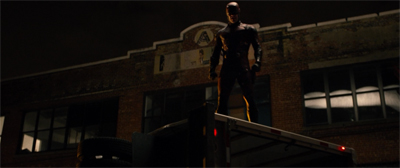
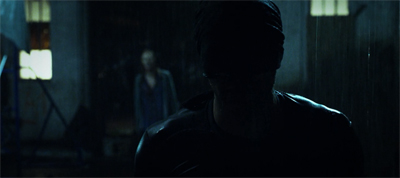
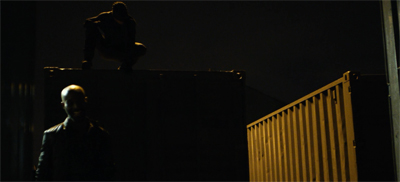
Into the Ring works hard to establish a clear and distinct mood for its own hero. Released on Netflix, it is not bound by the same set of constraints that hem in Agents of S.H.I.E.L.D. or Peggy Carter. The brutality on display in the teaser and at the climax is utterly unlike anything else produced under the banner of this shared universe; the montage at the end of the episode makes it clear that Matt Murdock exists in very different corner of the same universe. Child abductions and drug rings and white collar crime aren’t quite covered by Tony Stark or Steve Rogers.

Although there are a few bumps along the way, Into the Ring does a good job at setting the tone for what is to come.
daredevil-intothering6

Continue reading

Netflix and Marvel’s Daredevil – Season 1 (Review)

Marvel and Netflix’s Daredevil owes as much to the work of Christopher Nolan as it does to the larger Marvel Cinematic Universe. Taking advantage of the change in platform and format, the thirteen-episode season is a bit rougher and meaner than most of Marvel’s recent output. The show never reaches the excesses of The Punisher or Punisher: War Zone, but the show has a much rougher edge to it than many of its contemporaries. It is very much grounded in an urban noir storytelling style.

With thirteen episodes released to stream simultaneously, Daredevil is a unique venture for a studio that has been experiment in different media and different delivery methods. Daredevil is much more cohesive than either Agents of S.H.I.E.L.D. and Peggy Carter, feeling much more like its own thing. While each of the thirteen episodes is structured as an episode in its own right, the whole season amounts to a single long-form story. Distilled to its essence, Daredevil is the story of the conflict between an emergent vigilante and an ascendant crime lord.

daredevil-daredevil14

The series is not flawless; there are some pacing and structural issues that do haunt the series. However, it is a bold piece of work that stands unique among the prolific output from Marvel Studios. It is hard to imagine that either Avengers: Age of Ultron or Ant-Man will feel anything like this more grounded adventure, giving Daredevil a distinctive texture and demonstrating that Marvel is willing to experiment with the tone and style of some of its product. Given the volume of the studio’s output, this is inherently a good thing.

Daredevil is anchored in a set of terrific central performances and a clear sense of purpose. It might lose focus at points, or stumble into some plotting or pacing issues, but it marks a high point in Marvel’s television output.

daredevil-theonesweleavebehind8

Continue reading

Star Trek: Enterprise – The Communicator (Review)

Next year, Star Trek is fifty years old. We have some special stuff planned for that, but – in the meantime – we’re reviewing all of Star Trek: Enterprise this year as something of a prequel to that anniversary. This April, we’re doing the second season. Check back daily for the latest review.

One of the biggest problems with positioning Star Trek: Enterprise as a prequel is that the original Star Trek was very much a product of its time. It is very difficult to line-up a television show broadcast in the early years of the twenty-first century with a series that was produced towards the end of the sixties. It is a completely different world, and so the show itself must inevitably be completely different.

This reflects itself in the production design of Enterprise. One of the more frequent fan complaints about the series concerns the design of the new ship. After all, it doesn’t look like anything Matt Jefferies would design. If anything, it looks like the missing link between a modern submarine and the Defiant from Star Trek: Deep Space Nine. All the pastels and mood lighting have been replaced with functional grey and buttresses. Kirk’s Enterprise and Archer’s Enterprise speak to two different aesthetics.

"What we've got here is failure to communicate..."

“What we’ve got here is failure to communicate…”

Of course, it is possible to land a little closer to the classic design as Scott Chambliss demonstrated with his work on JJ Abrams’ reboot. Then again, this only reinforces the point. The general mood and tone of design when Star Trek hit cinema screens in 2009 was markedly different from the mood and tone of design when Broken Bow first aired in 2001. It just so happened that one was more compatible with Jefferies’ original vision than the other. (And even then, Chambliss’ update is markedly different.)

However, while the design of the ship itself is a handy indicator of just how difficult it is to line up a show produced in the first decade of a new millennium to a show produced before man walked on the moon, there are more substantial cultural and social differences at play. The Communicator is another second season Star Trek mash-up, this time taking the ending of A Piece of the Action and offering a perfect example of how Enterprise could never be an entirely comfortable companion to classic Star Trek.

"Westmore's not gonna like this..."

“Westmore’s not gonna like this…”

Continue reading

Star Trek: Enterprise – The Seventh (Review)

Next year, Star Trek is fifty years old. We have some special stuff planned for that, but – in the meantime – we’re reviewing all of Star Trek: Enterprise this year as something of a prequel to that anniversary. This April, we’re doing the second season. Check back daily for the latest review.

The Seventh broadcast in early November 2002.

However, production had wrapped on the episode on the 11th of September, the anniversary of the 9/11 attacks. After the crew finished working on the shoot, they paused to observe a moment of silence in honour of all the lives lost in that attack. That same evening, President George W. Bush would speak about those tragic events in the shadow of the Statue of Liberty. It was a very tense and very delicate political and social climate. There was no distance from the atrocity yet.

Public enemy number one...

Public enemy number one…

In January 2002, the United States public still supported intervention in Afghanistan by an overwhelming majority. In October 2002, a survey by the Pew Research Centre would reveal that most Americans supported the idea of war with Iraq, a war that would launch in March 2003. Patriotism surged. In October 2001, the Patriot Act was enacted. In February 2002, the International Olympic Committee asked the Salt Lake Organising Committee to tone down the patriotism at the opening of the winter games.

This was the climate in which The Seventh was produced, an episode about a rogue Vulcan operative who must be tracked down and apprehended for the greater good.

Snow down!

Snow down!

Continue reading

Star Trek: Enterprise – Marauders (Review)

Next year, Star Trek is fifty years old. We have some special stuff planned for that, but – in the meantime – we’re reviewing all of Star Trek: Enterprise this year as something of a prequel to that anniversary. This April, we’re doing the second season. Check back daily for the latest review.

Well, it looks like Star Trek: Enterprise used up most (if not all) of its ambition for the second season.

The second season of Enterprise got off to a fairly decent start, Shockwave, Part II notwithstanding. Minefield and Dead Stop weren’t perfect, but they were taking the show in a direction that seemed promising. A Night in Sickbay may have been a pretty serious misfire, but it was still a very ambitious instalment of the series. However, it seemed like that ambition was not to last. The second season of Enterprise becomes fairly conventional from this point out – fairly relaxed and fairly generic.

"We don't like your kind around here..."

“We don’t like your kind around here…”

This is the type of approach that producers will frequently describe as “back to basics.” More cynical commentators might use the phrase “back to the well.” The goal seems to be to offer the audience more of what they’ve had before, to repeat what had worked in earlier episodes in earlier seasons in earlier shows. There’s a creeping sense of familiarity to the whole exercise, as if the writing staff are merely filing the numbers (and character names) off old scripts so that they can be recycled. It is very environmentally friendly.

Marauders starts the trend, offering viewers what amounts to The Magnificent Seven… in space, with Klingons!” It works quite well as a diversion or change of pace. It is significantly less satisfying as a direction for the rest of the season.

"Settlement this!"

“Settlement this!”

Continue reading

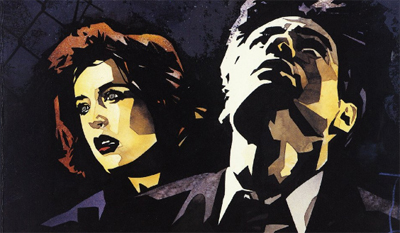
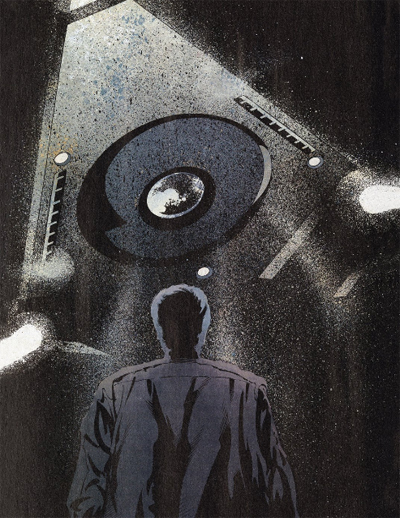
The X-Files: Season One (Topps) #2 – Deep Throat (Review)

This February and March, we’re taking a trip back in time to review the fourth season of The X-Files and the first season of Millennium.

Season One feels like a very odd way to franchise The X-Files.

Topps had enjoyed tremendous success with their licensed tie-in comic book, so it made a certain amount of sense to try to milk the franchise as much as possible. After all, they had already tried a number of other promotions, like releasing “digests” to supplement that monthly series and releasing tie-in comics to appear with magazines like Wizard. So offering another series that would publish on a regular basis starring Mulder and Scully made perfectly logical sense.

The truth is up there...

The truth is up there…

About a year after the release of their adaptation of The Pilot, Topps decided to push ahead with a series of regular adaptations of first season episodes of The X-Files. They reissued their adaptation of The Pilot as the first comic in the series, and then began publishing new adaptations of those early episodes written by Roy Thomas and illustrated by a rotating team of artists. The comics would be about twice as long as the issues of the monthly series, but would only publish once every two months. The monthly series was priced a $2.50, with Season One priced at $4.95.

It is hard not to feel quite cynical about Season One, particularly in an era where these classic episodes of The X-Files stream of Netflix and entire seasons are available to purchase at very low prices.

The shape of things to come...

The shape of things to come…

Continue reading

The X-Files – Season 4 (Review)

This February and March, we’re taking a trip back in time to review the fourth season of The X-Files and the first season of Millennium.

The fourth season of The X-Files is a work of chaotic genius.

While the third season of The X-Files is one of the most consistently well-made seasons of television ever produced, the fourth season is a lot more uneven. There are a lot of reasons for this. Chris Carter was busy launching Millennium. Fox had decided to press ahead with The X-Files: Fight the Future. Behind the scenes, it was chaotic. Glen Morgan and James Wong hung around for half the season before leaving to work on their own pilot, a planned script from Darin Morgan fell through, Chris Carter’s attention was divided.

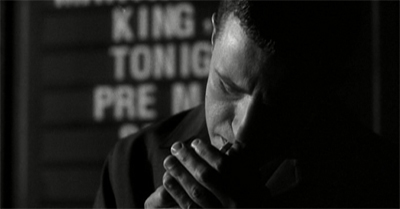
xfiles-musingsofacigarettesmokingman17

However, the fourth season represents something of a changing of the guard on the writing staff, a transition between two generations. The fourth season sees the permanent departure of writers Glen Morgan, James Wong and Howard Gordon. These were all writers who worked hard to give The X-Files its unique flavour and identity in the show’s earliest years. The X-Files would not be the same show without the input of those three writers. It is a shame to see them depart, although four years is a long time in the industry.

In contrast, the fourth season also sees younger talent rising up. It sees the first collaboration of Vince Gilligan, John Shiban and Frank Spotnitz. The trio would become one of the most consistent (and productive) writing ensembles on the series. The fourth season also saw the rapid ascent of Vince Gilligan, who had only contributed one script to the third season; Gilligan’s three solo scripts for the third season are iconic and influential in their own right. These are the voices that will steer The X-Files through to the end of its nine-year run.

xfiles-paperhearts22

As such, the fourth season feels transitional. It is a season that lacks the finely-honed efficiency that defined the third season, in favour of a more ambitious and even experimental style. The result is a season that feels wildly creative, a joyous cacophony rather than a harmonious symphony. The fourth season may not always hit the notes, but it is doing something very fresh and exciting. There is an energy and enthusiasm to the season that carries even some of the weaker episodes.

The fourth season is not consistently brilliant, but it is more than occasionally transcendental.

xfiles-max15

Continue reading

Star Trek: Enterprise – A Night in Sickbay (Review)

Next year, Star Trek is fifty years old. We have some special stuff planned for that, but – in the meantime – we’re reviewing all of Star Trek: Enterprise this year as something of a prequel to that anniversary. This April, we’re doing the second season. Check back daily for the latest review.

A Night in Sickbay may be the most divisive episode of Star Trek: Enterprise ever broadcast.

On the one had, it seems like fans hated the episode with an incredibly passion. The Agony Booth described A Night in Sickbay as “the worst episode of one of the most cringe-worthy shows of the last ten years.” The episode is frequently included in those very popular “worst episodes ever!” polls that the internet loves so much. The only episode that seems more certain to provoke fan vitriol is These Are the Voyages…, the series finalé which has little to say about the actual series.

"I am THIS sorry..."

“I am THIS sorry…”

However, the hatred for A Night in Sickbay is not universal. It was one of two Enterprise episodes to make the shortlist for the 2003 Hugo Award for Best Dramatic Presentation in the “short form” category. More than that, A Night in Sickbay actually polled ahead of the other nominated episode of Enterprise, Carbon Creek. Even in commercial terms, A Night in Sickbay was a success, earning the highest ratings (and share) of the show’s second season.

It seems that A Night in Sickbay exists in a rather strange grey area. It enjoys the support and appreciation of members of the cast and even those outside Star Trek fandom, while it provokes nothing but hatred from hardcore fans. This immediately makes A Night in Sickbay a fascinating watch; any show that can provoke such a polarising response must have some interesting aspects.

Smile!

Smile!

Continue reading

Millennium – Season 1 (Review)

This February and March, we’re taking a trip back in time to review the fourth season of The X-Files and the first season of Millennium.

Millennium is a strange television show.

It is quite clear that Chris Carter and Fox both had a very different understanding about how best to follow on from the success of The X-Files. Fox clearly wanted another popular hit, a television show that it could plug comfortably into its 9pm Friday slot and grow into a multimedia franchise. The network spent a phenomenal amount of money promoting Millennium, with advertising and screenings and other publicity attempts. This approach paid off; The Pilot broke all sorts of records for Fox.

millennium-lamentation11

However, Millennium could not sustain those viewing figures. Over the first season, it haemorrhaged viewers. Chris Carter was not trying to present an accessible and popular pop hit; instead, Carter was taking advantage of the success of The X-Files to construct something decidedly more esoteric. Millennium is a tough show to watch. It is grim, unrelenting and oppressive. It is a show about darkness in the world that tends to roll up its sleeves and jump right in. Millennium has a clear idea of what it wants to be, but what it wants to be is alienating and uncomfortable.

On just about any level, the first season of Millennium is more accomplished than the first season of The X-Files. The production is more confident, the ideas are much bolder, the themes are much clearer. In fact, the first season of Millennium even holds up well when stacked against the fourth season of The X-Files on an episode-by-episode basis. But that’s not the problem. By definition, “Lance Henriksen fights serial killers and the concept of evil in America” will never be as popular as “David Duchovny and Gillian Anderson fight aliens and monsters and weird stuff!”

millennium-pilot11

The first season of Millennium is a show that offers a distinctive and uncompromising auteur vision which cares little for what the audience might want or expect. For better or worse, that approach would prevent Millennium from ever approaching the critical or popular support that The X-Files had already begun to accrue at the end of its own first season. The result is a television show that was never going to rival The X-Files as a pop culture phenomenon , but which serves as a bold philosophical statement from its creator.

“This is who we are,” the opening credits state, unapologetically. They seem to be speaking for the show as much for society.

millennium-bloodrelatives13 Continue reading

Star Trek: Enterprise – Dead Stop (Review)

Next year, Star Trek is fifty years old. We have some special stuff planned for that, but – in the meantime – we’re reviewing all of Star Trek: Enterprise this year as something of a prequel to that anniversary. This April, we’re doing the second season. Check back daily for the latest review.

Dead Stop is an interesting beast.

One of the stronger episodes from the second season of Star Trek: Enterprise, Dead Stop follows on directly from the events of the previous episode without serving as a direct continuation. It is very rare to see this approach taken on Star Trek, and it’s the perfect example of the sort of episode-to-episode connections that were lacking during the show’s first two seasons. Dead Stop is not a direct follow-on to Minefield, but it is fascinated with the fallout from that episode.

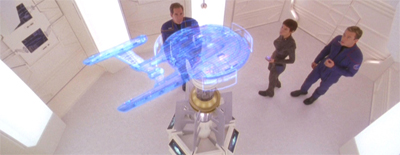
A model ship...

A model ship…

And yet, despite this, Dead Stop is also based around one of the most generic premises imaginable – a sentient space station with a sinister agenda. With a few choice edits, the premise could easily be adapted for Star Trek: The Next Generation or Star Trek: Voyager. Indeed, it’s not too difficult to imagine Kirk and Spock dealing with the rogue space station at some point during their five year mission. It is a story that could – in broad strokes – even work for a television anthology series.

The beauty of Dead Stop is the way that it blends these two conflicting elements together, to construct a show that feels like it showcases the best parts of Enterprise while working from a core story that could be told across the franchise.

Piecing it together...

Piecing it together…

Continue reading