• Following Us

  • Categories

  • Check out the Archives


  • Awards & Nominations

The X-Files – One Son (Review)

This July, we’re taking a trip back in time to review the sixth season of The X-Files and the third (and final) season of Millennium.

Two Fathers and One Son are a mixed bag.

They are very messy and convoluted episodes of television, attempting to resolve a long-running plot without committing to a resolution. They swing wildly between clichéd ambiguity and b-movie exposition. They strain to stitch together half-a-decade of storytelling into a ninety-minute finalé, while trying to avoid drawing attention to any of the countless elements that might contradict or undermine the story that they are telling. They are both ambitious and efficient, energised and noncommittal.
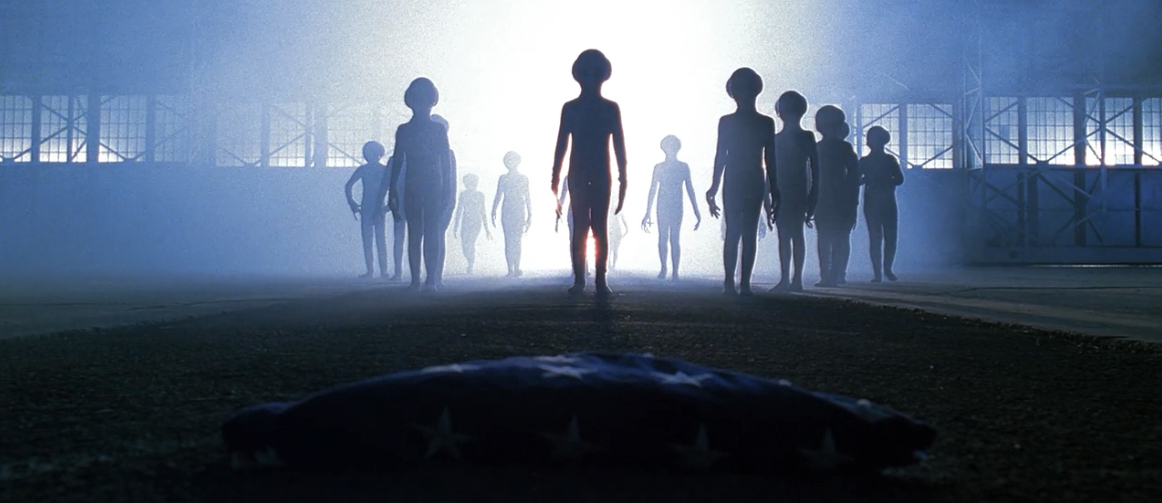
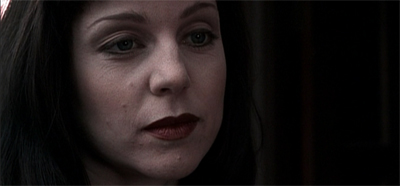
They're here.

They’re here.

At the same time, Two Fathers and One Son make a valiant effort to bring the vast sprawling global conspiracy down to a more manageable level. Over the years, the conspiracy has evolved from a few alien abductions to a vast plot against the majority of mankind. Although they doesn’t always succeed, Two Fathers and One Son try to ground this crazy story about faceless rebels and looming colonisation in the trauma of a single family unit. The fate of mankind plays out against the backdrop of a family collapsing under its own weight.

While it doesn’t work as well as it might, it does help to draw attention to the larger themes that have played out across The X-Files as they relate to power and control, legacy and guilty, abuse and exploitation. It seems appropriate that Two Fathers and One Son should push these ideas to the fore as it attempts to close off the show’s long-running conspiracy thread, reminding viewers of what it was actually talking about.
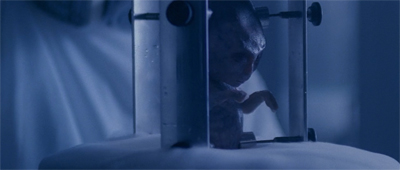
Baby steps...

Baby steps…

Continue reading

Millennium – Antipas (Review)

This July, we’re taking a trip back in time to review the sixth season of The X-Files and the third (and final) season of Millennium.

Antipas is the second of three scripts written by Chris Carter and Frank Spotnitz over the third season of Millennium. It is also the first of Lucy Butler’s two appearances during the third season, although she has little more than a cameo in Saturn Dreaming of Mercury. This is actually the second time that Chris Carter has written for the character of Lucy Butler, having scripted her début back in Lamentation towards the end of the first season. Antipas feels like a conscious effort to connect back to that first appearance.

To be fair, Lucy Butler has been radically different in each appearance. It is difficult to get a read on the character or to suggest a “definitive” take. Finding the “real” Lucy Butler is as difficult as identifying the “real” Millennium Group or as arbitrary as naming the “real” version of Millennium. That said, there are thematic throughlines. Four of her five appearances are tied into children, for example; the show fairly consistently portrays Lucy as a demonic mother figure in contrast to Frank as a loving father.

Here's Lucy!

Here’s Lucy!

While the idea of Lucy as a creepy mother ties Antipas into A Room With No View just as much as Lamentation, the script seems to hark more firmly back to Lucy’s character motivation in Lamentation than to her scheming in A Room With No View. In Antipas, Lucy is once again obsessed with biological motherhood, trying desperately to conceive – and even to claim another child as her own. In Lamentation, she sought to mother a child with Doctor Ephraim Fabricant; in Antipas, she seems to aspire towards Frank Black.

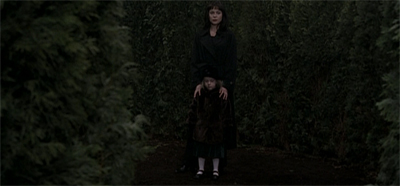
Along the way, Antipas is packed with fevered dream imagery and uncanny visuals. As with a lot of the episodes around it, Antipas feels like a very odd piece of television. When Carter wrote Lamentation, this oddness was enough of a break from the norm to power an entire episode. Antipas lacks the sort of strong centre that a piece of television like this needs to ground it. The result is an intriguing and unsettling, if not quite compelling and engrossing, episode of television.

A-mazing nanny...

A-mazing nanny…

Continue reading

Torchwood: Miracle Day – The New World (Review)

In a way, Torchwood: Miracle Day is a miracle itself. It’s a sign of just how far Russell T. Davies has brought Doctor Who, to the point where one of the franchise’s spin-offs could be an international co-production between America and the United Kingdom. Sure, Starz is hardly the best and brightest of American networks, but it’s no small accomplishment on the part of Davies.

America has been something of a promised land for the franchise since the eighties, when John Nathan Turner would spend considerable time and money visiting American fan conventions or casting multinational companions or even arranging international co-financing or to air The Five Doctors first in international territories. None of those examples really took, and most of America only really knew the franchise through PBS airings of the Tom Baker era.

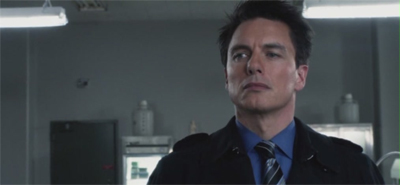
Jack's back...

Jack’s back…

Davies did a lot of work to bring Doctor Who to America. That work really came to fruition during the Steven Moffat era, with a massive opening two-parter set in 1970’s America and the use of Utah as a crucial location. Massive visits to Comic Con became an annual ritual for the show, its producers and performers. The Day of the Doctor will be broadcast live around the world at the same time, no small accomplishment.

While it’s undoubtedly on a much smaller scale, it is nice that Miracle Day affords Davies a chance to be part of this expansion – spearheading his own project that directly intersects with American television. Starz is hardly Fox, the network that Davies originally pitched to, but it is a significant achievement, and a lot of Miracle Day is best understood as an opportunity for the franchise “to go American.”

Defying classification...

Defying classification…

Continue reading

The X-Files – Two Fathers (Review)

This July, we’re taking a trip back in time to review the sixth season of The X-Files and the third (and final) season of Millennium.

This is the end. I never thought I’d hear myself say those words after all these years. You put your life into something… build it, protect it… The end is as unimaginable as your own death or the death of your children. I could never have scripted the events that led us to this. None of us could. All the brilliant men… the secret that we kept so well. It happened simply, like this.

– the Cigarette-Smoking Man channels his inner Chris Carter

In case you were wondering about the title...

In case you were wondering about the title…

Continue reading

Millennium – The Sound of Snow (Review)

This July, we’re taking a trip back in time to review the sixth season of The X-Files and the third (and final) season of Millennium.

“Our pasts are what we are,” Alice Severin explains to Emma Hollis and Bob Giebelhouse towards the climax of The Sound of Snow. It seems as if she might be talking for Millennium itself.

The Sound of Snow is a literal homecoming for Frank Black and Millennium as a television show. It is the last time that a number of crucial elements of Millennium appear in the show. It is the last appearance of Detective Bob Giebelhouse, the Seattle police officer who has been around since The Pilot. It is the last appearance of the yellow house, although it has since been painted a less striking white. It is also the last appearance of Catherine Black, who was a regular character for the show’s first two seasons.

...............

……………

The Sound of Snow features Frank Black returning to Seattle. This is not a big deal of itself. After all, Frank visited Seattle during TEOTWAWKI. However, The Sound of Snow sees Frank wading through memories. He flashes back to the events of The Fourth Horseman and The Time is Now, and visits the yellow house. He even takes a trip out to visit the cabin where he tried to wait out the end of the world with his wife and daughter. The Sound of Snow is about reconciliation, allowing Frank one last conversation with his beloved.

The Sound of Snow is also about reconciliation for the show itself. Since Omertà, the show has been trying to deal with the legacy of a second season that the first eight episodes of the year had tried minimise or ignore. The Sound of Snow is the culmination of that approach, with the third season finally picking up from where the second season let off.

...............

……………

Continue reading

The X-Files – Tithonus (Review)

This July, we’re taking a trip back in time to review the sixth season of The X-Files and the third (and final) season of Millennium.

Alas! for this gray shadow, once a man—
So glorious in his beauty and thy choice,
Who madest him thy chosen, that he seem’d
To his great heart none other than a God!
I ask’d thee, ‘Give me immortality.’
Then didst thou grant mine asking with a smile,
Like wealthy men, who care not how they give.
But thy strong Hours indignant work’d their wills,
And beat me down and marr’d and wasted me,
And tho’ they could not end me, left me maim’d
To dwell in presence of immortal youth,
Immortal age beside immortal youth,
And all I was, in ashes. Can thy love,
Thy beauty, make amends, tho’ even now,
Close over us, the silver star, thy guide,
Shines in those tremulous eyes that fill with tears
To hear me? Let me go: take back thy gift:
Why should a man desire in any way
To vary from the kindly race of men
Or pass beyond the goal of ordinance
Where all should pause, as is most meet for all?

– Alfred, Lord Tennyson, Tithonus

Shades of grey...

Shades of grey…

Continue reading

Millennium – Collateral Damage (Review)

This July, we’re taking a trip back in time to review the sixth season of The X-Files and the third (and final) season of Millennium.

Collateral Damage continues the weird healing process at work in the third season.

After spending so much time pretending that the second season never actually happened, the third season has finally accepted that there were story developments flowing from that season that the show needs to deal with. In some respects, Collateral Damage can be seen as a process of healing and integration for the third season of Millennium, constructing a story that manages to tie together all three seasons of Millennium together into something resembling a cohesive whole.

"A bloody fine mess you've gotten me into!"

“A bloody fine mess you’ve gotten me into!”

From the first season, Collateral Damage takes its introduction and basic premise. Collateral Damage begins in a manner similar to many early Millennium episodes. A sinister attacker stalks their victim and brutally strikes. We are then treated to a few extended suspense-filled sequences as the attacker’s designs become increasingly uncomfortable and nefarious. It is not too hard to imagine Collateral Damage as the kind of “serial killer of the week” episode that populated the early first season.

For the second season, Collateral Damage inherits its fascination with the Millennium Group and its depiction of Peter Watts. Collateral Damage marks the first point in the third season where Peter Watts feels like the character that we watched grow and evolve over the second season. This is a version of Peter who has so repressed his doubts and uncertainties that they threaten to explode if they are even acknowledged. It is a much more compelling character than the knock-off conspirator featured in episodes like Exegesis and Skull and Bones.

"Don't be afraid."

“Don’t be afraid.”

From the third season, Collateral Damage takes its fixation on the link between the Millennium Group and conspiracies involving the American government. Collateral Damage suggests that the Millennium Group is responsible for Gulf War Syndrome. It feels like a plot point from an episode of The X-Files – and arguably makes it an ideal third season element. The result is perhaps the most all-encompassing episode of the show ever produced. Collateral Damage is not the best episode of Millennium ever produced, but it is perhaps the broadest representation of the show itself.

If you were to pull back and examine Millennium from a distance, it might look a lot like Collateral Damage.

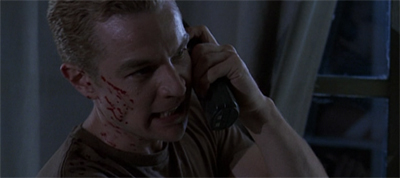
"Surgical strike."

“Surgical strike.”

Continue reading

The X-Files – S.R. 819 (Review)

This July, we’re taking a trip back in time to review the sixth season of The X-Files and the third (and final) season of Millennium.

And we’re back on familiar ground.

The first half of sixth season of The X-Files is perhaps the weirdest that the show ever really became. It seemed like the series transformed into a goofy workplace romantic comedy, as Mulder and Scully worked at boring desk jobs during the day before investigating paranormal activity together in their spare time. It was utterly unlike anything that the show had done before or anything that it would do after. It is very strange to see so many oddities packed together so tightly.

He survived by the Skin(ner) of his teeth...

He survived by the Skin(ner) of his teeth…

Triangle, Dreamland I, Dreamland II, How the Ghosts Stole Christmas and The Rain King have enough surreal content to sustain two or three seasons of The X-Files. Broadcasting them almost back-to-back left some fans a little shell-shocked. At the time, it must have seemed like The X-Files had become a completely different television show than it had been only five or six months earlier. However, with the benefit of hindsight, it becomes clear that those episodes were just a very strange blip in the larger context of the series.

S.R. 819 is the episode that marks the clear return to the classic “tried and tested” model of The X-Files. It has everything from ambiguous conspiracies to body horror to car park confrontations. It is very much business as usual. Which is both the best and worst thing about it.

Do the Mathes, son...

Do the Mathes, son…

Continue reading

Millennium – Borrowed Time (Review)

This July, we’re taking a trip back in time to review the sixth season of The X-Files and the third (and final) season of Millennium.

The third season of Millennium is all over the map.

Due to a variety of factors, the show veers wildly in just about every direction. The transition from the second season to the third season was tough on everybody involved, but even the third season itself went through considerable issues. Michael Duggan was brought in to steady the ship, but his approach didn’t really work out. He departed the show a third of the way through the season. As a result of all of this, the third season can often seem disjointed and uneven. It is hard to tie it all together.

Angel of mercy?

Angel of mercy?

At the same time, there are certain recurring motifs and ideas that recur through the twenty-two episode season. A lot of these can be traced back to writer Chip Johannessen (with a great deal of help from Ken Horton). Johannessen was the consistent voice across all three seasons of Millennium, and an executive producer for the entirety of the third season. Although given a seemingly impossible task, Johannessen did work really hard to impose something resembling order upon the chaotic third season.

Borrowed Time hits on a lot of the ideas running through the third season. It is a story that suggests Millennium is about the fragile balance between life and death, and that death is not as much of an absolute as earlier seasons might have suggested. Borrowed Time is a little uneven and messy in places, but it is underscored by a host of bold and interesting ideas. It finds Johannessen engaging with the religious and mystical themes that informed early scripts like Force Majeure and Maranatha.

Countdown...

Countdown…

Continue reading

The X-Files – The Rain King (Review)

This July, we’re taking a trip back in time to review the sixth season of The X-Files and the third (and final) season of Millennium.

I do not “gaze” at Scully.

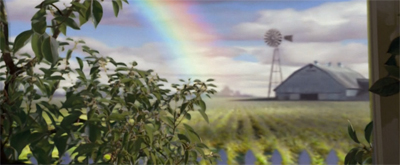
Somewhere over the rainbow...

Somewhere over the rainbow…

Continue reading