• Following Us

  • Categories

  • Check out the Archives


  • Awards & Nominations

The X-Files – Vienen (Review)

This October/November, we’re taking a trip back in time to review the eighth season of The X-Files and the first (and only) season of The Lone Gunmen.

It feels strange to see the black oil after such a long time.

Technically, the last time that the black oil was brought up was in Two Fathers and One Son, where it was retroactively confirmed to be the “Purity” alluded to in The Erlenmeyer Flask. However, the last time it was an active plot element was really The X-Files: Fight the Future. After that, it lost amid plot developments involving gestating aliens and faceless rebels. So, in a way, putting the black oil at the centre of Vienen feels just a little surreal against the backdrop of “super soldiers” and other more immediate concerns.

Explosive action!

Explosive action!

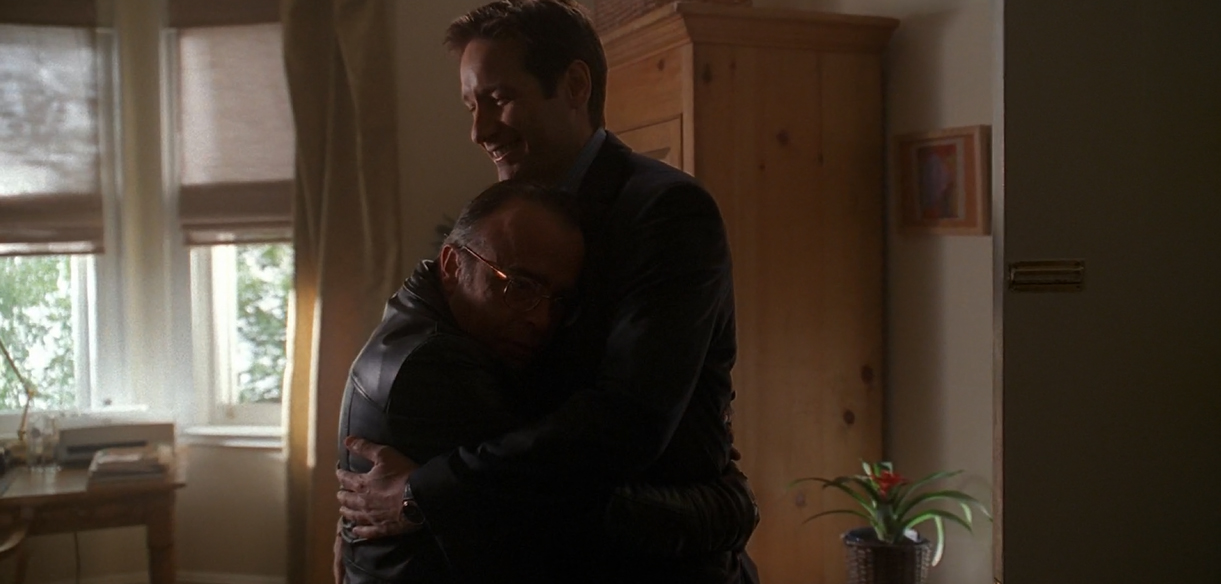
Vienen feels very old-fashioned. Even the structure of the episode harks back to the first season mythology episodes, when the show was allowed to use aliens and conspiracies without the burden of tying them to a larger narrative. It features the black oil, but Vienen feels closer to Fallen Angel or E.B.E. than Tunguska or Terma. Trying to tie it into the larger plot of the mythology is an exercise in futility, but that is not the point here. Vienen is no more or less a mythology episode than Empedocles, despite its inclusion in the “mythology” DVD collections.

It is an excuse to bring back an iconic baddie for one last run-around with Mulder, continuing the orderly transition of power from the what the show was to what it might be in the future.

You should really use a dipstick for that...

You should really use a dipstick for that…

Continue reading

Jessica Jones – AKA Crush Syndrome (Review)

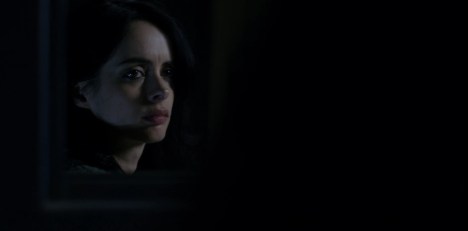
The biggest problems with the first season of Jessica Jones are structural in nature.

Writing a season of television is tough. It is particularly tough when the season is heavily serialised, requiring the production team to break the story down into a distinct number of easily digestible chunks. It is especially tough when the season is going to be released all at once for public consumption, allowing the audience to watch as many episodes as they want as frequently as they want. Is a thirteen-episode drama released all at once effectively just a twelve-hour movie with conveniently timed bathroom breaks? Or is it the same as any other drama?

jessicajones-akacrushsyndromea

Jessica Jones struggles with this. It begins struggling with it quite early and continues struggling with it until the final couple of episodes. There is a sense that the production team are not entirely sure what the ideal mode of consumption is for Jessica Jones. Is the show supposed to gulped down in three or four marathon sessions, or is it meant to be savoured over a longer period of time? Do the episodes need to stand on their own or should they flow together? Do the team have to worry about repeating certain story beats (“capture and escape”) too close together?

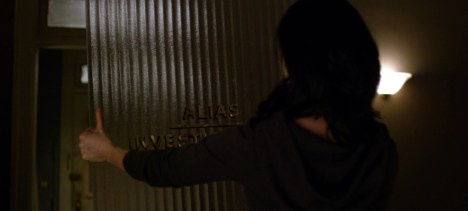
Jessica Jones never quite answers this. The show has a strong enough cast of actors playing an interesting enough selection of characters that it is easy enough to forgive these problems. The world feels well-formed and the immediate story beats are generally interesting enough that the show never drags or feels repetitive. However, it does occasionally wander down certain storytelling dead ends. AKA Crush Syndrome and AKA It’s Called Whiskey take the show down its first such narrative cul de sac.

jessicajones-akacrushsyndrome20a

Continue reading

The Lone Gunmen – Tango de los Pistoleros (Review)

This October/November, we’re taking a trip back in time to review the eighth season of The X-Files and the first (and only) season of The Lone Gunmen.

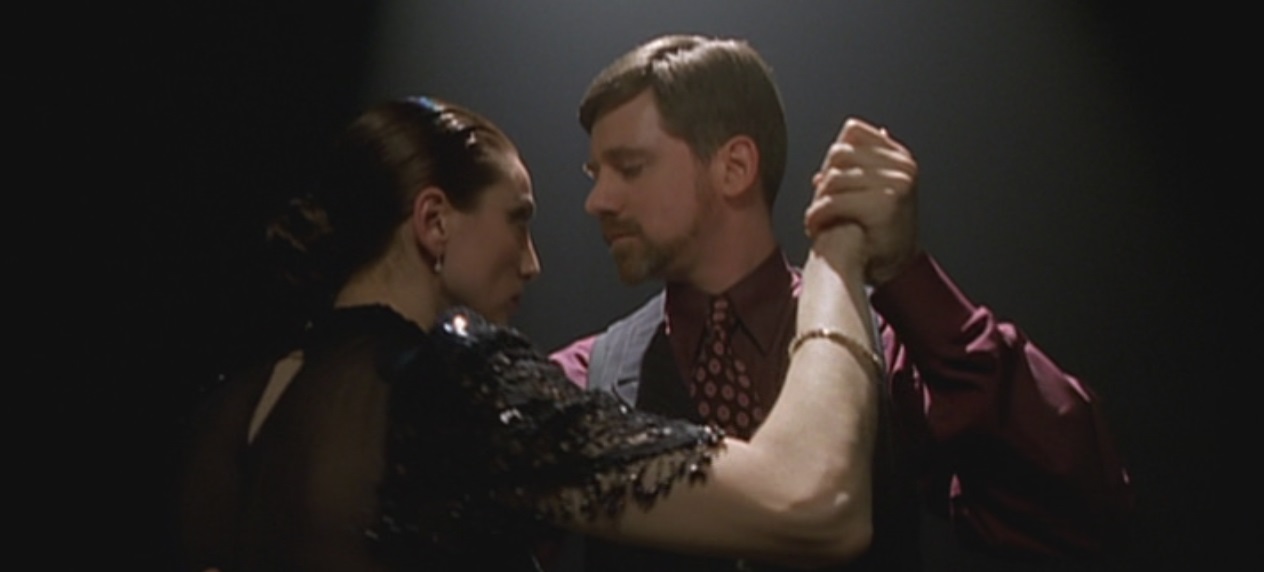
In the late nineteenth century, tango reigned not only in brothels and dance halls, where it served as both simulation and stimulation to entertain the men waiting their turn for commercial sex, but also in dance academies, vacant lots, and barrio streets where improvised dances were performed to the tune of the hurdy-gurdy. It was also played in men-only cafés. In these original settings, tango lyrics were very simple and mainly focused on the joys and pains of the arrabales, where the cult of courage and the skilful use of knives were combined with the workings of local political bosses and the police. The main characters were guapos, or tough guys; prostitutes; pimps; and compadritos, men who imitated the tough style of pimps and guapos yet most of the time worked for a living.

Tango was danced by men and women in pairs but also by men alone as they waited their turn in the brothels. It was, above all, a dance of the margins.

– Diego Armus, The Ailing City

lonegunmen-tangodelospistoleros1

Continue reading

Doctor Who: Face the Raven (Review)

“She enjoyed that way too much.”

“Tell me about it.”

– Clara Oswald, RIP (for now)

Of course a season of two-parters would end with a three-parter.

That said, it seems quite clear that Face the Raven is the first part of a three-parter in the same way that Utopia was the first part of a three-parter; it is largely a standalone story that exists to manoeuvre the various characters to the point where the season finalé can actually begin. In a way, Face the Raven even marks its own “return of a classic series element”, albeit in a much more subdued manner than Utopia. It seems quite clear exactly who Ashidlr is dealing with, and it seems to be a pretty big deal.

Quoth the raven...

Quoth the raven…

There is quite a lot of narrative shuffling taking place here, to the point that Face the Raven feels very much like a premise rather than a self-contained story. The episode was allegedly cobbled together at reasonably short notice when Mark Gatiss could not extend Sleep No More into a two-parter keeping with the rest of the season. Given all the demands imposed on the script, it seems perfectly reasonable to suggest that Sarah Dollard was handed what is traditionally known as a “nightmare brief.”

In light of all of the obligations imposed on it, it is surprising that Face the Raven works at all. It is even more impressive that it works downright splendidly.

... nevermore...

… nevermore…

Continue reading

Netflix and Marvel’s Jessica Jones (Review)

Jessica Jones is a bold and ambitious piece of work.

In many ways, it takes what worked about Daredevil, and improves upon a lot of it. It offers a grounded take on the shared Marvel universe, one even further disconnected from the world of The Avengers. It offers a likable cast of actors playing a bunch of nuanced and well-developed characters, avoiding some of the stock comic relief that bogged down Daredevil at certain points in the series. It is smart and provocative in a way that many of Marvel’s more mainstream offerings are not, taking advantage of the relatively smaller platform to tell a more niche story.

jessicajones-sinbin28a

There are issues, of course. The biggest problem with Jessica Jones is that the series feels about four episodes too long for the format that it has adopted. While each of the episodes work as a distinct unit of story, Jessica Jones is much more of a single story than Daredevil was. The problem is that the story occasionally feels like it goes through narrative loops and down narrative cul de sacs to stretch out to the thirteen-episode order. While the more episodic structure of the first half of Daredevil was not ideal, it allowed for a smoother twelve-hour storytelling experience.

Still, this is a rather small problem. The world and characters of Jessica Jones are interesting enough to sustain interest even when it feels like the plot is stalling. Jessica Jones is clever, exciting and engaging.

jessicajones-ladiesnight7

Continue reading

Jessica Jones – AKA Ladies’ Night (Review)

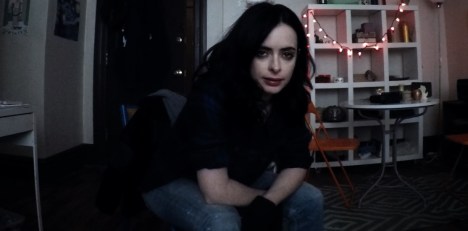
“New York may be the city that never sleeps, but it sure does sleep around,” explains grizzled private detective Jessica Jones, the first line of Jessica Jones.

The line establishes two key themes going forward, running through the first season of the show. The more subtle theme is that of New York itself. Like Daredevil before it, Jessica Jones is rooted in a particular vision of New York; in its imagery and iconography. While Daredevil was arguably rooted in a version of Hell’s Kitchen that no longer existed, Jessica Jones seems at least a little more modern and more relevant. In AKA Ladies’ Night, and across the season, street names serve as an emotional anchor to the eponymous private eye. They are real and tangible places.

jessicajones-ladiesnight7

The second theme is more immediately pronounced. Jessica Jones might just be the most sex-positive aspect of the shared Marvel Universe. Although the usual limitations on nudity are in effect, Jessica Jones seems far more comfortable with human sexuality and sexual dynamics than any of the studio’s earlier output. AKA Ladies’ Night sets the tone for the season, opening with an awkward sequence of quick and grotty sex in (and around) a parked car. The show starts as it means to go on, embracing sex as a part of the human condition.

AKA Ladies’ Night does an effective job of setting the tone for what will follow. It is an effective introduction to the world of Jessica Jones.

jessicajones-ladiesnight12 Continue reading

The X-Files – Empedocles (Review)

This October/November, we’re taking a trip back in time to review the eighth season of The X-Files and the first (and only) season of The Lone Gunmen.

Empedocles returns to one of the most enduring Ten Thirteen themes: the idea of evil as contagion.

Both The X-Files and Millennium have touched upon this theme. On The X-Files, episodes like Aubrey and Grotesque suggested that evil was something that could be passed from person to person. Despite the fact that Millennium was based around a forensic profiler, Chris Carter described it as a show about “the limits of psychology”; it seemed like evil could often be traced to sinister forces at work in the world. Looking at Ten Thirteen’s output as a whole, it seems that Carter believes wholeheartedly in the idea of evil as an external force.

Man on fire...

Man on fire…

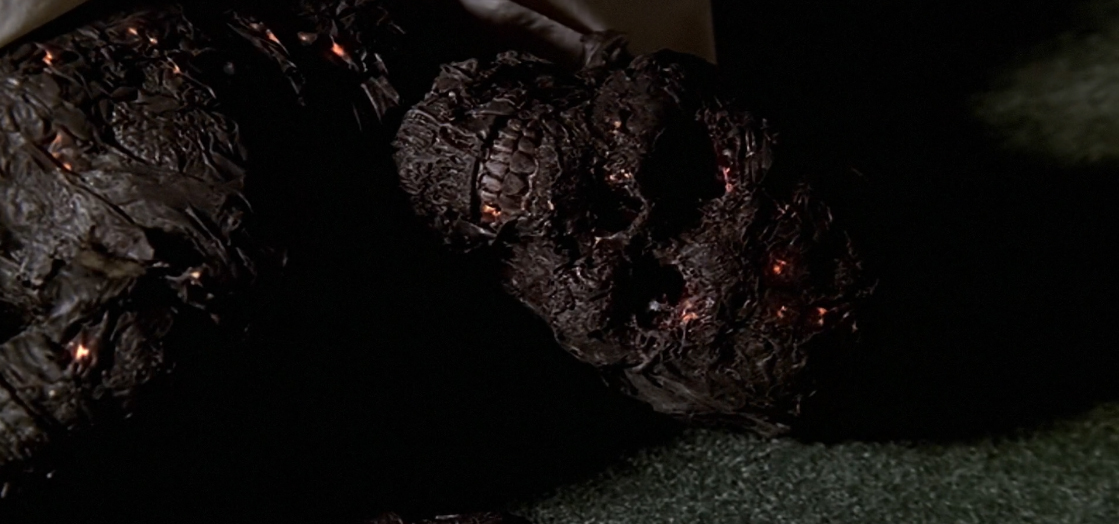
Empedocles offers perhaps the most straightforward example of this recurring theme. Reyes describes the case as “a thread of evil… connecting through time, through men, through opportunity.” It is a narrative thread that connects from the murder of Luke Doggett in New York to a workplace shooting in New Orleans. Evil is at work in the world, in a way that is palpable and discernible. Empedocles is not a subtle episode of television, linking this contagion of evil images of hellfire and burning.

There is undoubtedly something just a little simplistic about all of this. One of the luxuries of conspiracy theory, as The X-Files has repeatedly suggested, is the way that it serves to impose a logical and linear narrative on trauma; to make sense of acts and events that would otherwise suggest a brutally random universe. The mythology running through the first six seasons of the show suggested a conspiracy of powerful men might provide such a nexus of causation, but Empedocles offers something a bit broader.

It burns...

Burn with me.

As with a lot of the eighth season mythology, Empedocles cuts out the middle-man. The eighth season largely eschews the blending of “self” and “other” that run through first seven seasons of the show, largely rejecting the narrative of collaboration and complicity implied by the Syndicate. The eighth season of The X-Files repeatedly suggests that evil is inhuman, presenting its antagonists as distinctly “other” forms that infiltrate and pervert the body in perhaps the purest distillation of the show’s many viral metaphors.

In its own way, Empedocles is just as much a mythology or conspiracy episode as Three Words or Vienen. Like those episodes, Empedocles posits a conspiracy theory based upon the subversion of human identity by something alien and external. Empedocles posits a conspiracy of evil.

Crispy...

Crispy…

Continue reading

The Lone Gunmen – Diagnosis: Jimmy (Review)

This October/November, we’re taking a trip back in time to review the eighth season of The X-Files and the first (and only) season of The Lone Gunmen.

Diagnosis: Jimmy is another formulaic piece of episodic television.

To be entirely fair, this is a logical part of any first season. While the production team is trying to figure out the identity of a young show, it makes sense to apply templates that have worked in the past. It was an approach that The X-Files adopted in its early seasons, with episodes drawing from popular and successful films. This worked out quite well in some cases, with Ice offering a skilled take on The Thing while Beyond the Sea played with The Silence of the Lambs to great effect.

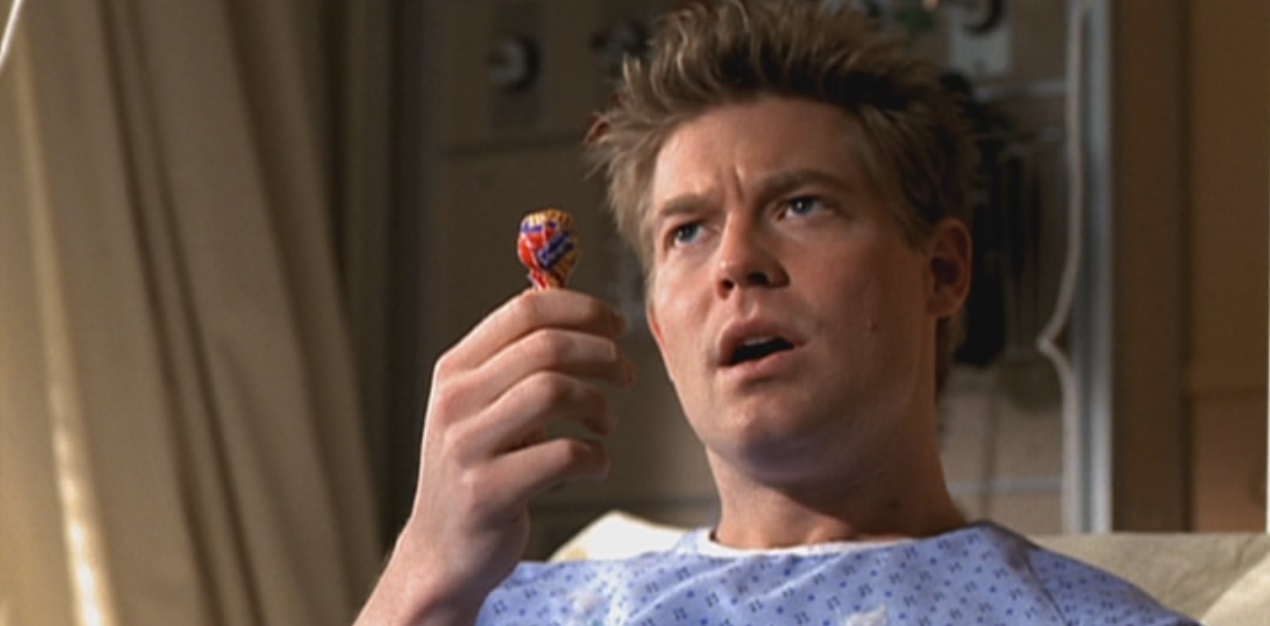
A lotta lolly...

A lotta lolly…

With that in mind, it seems perfectly reasonable for The Lone Gunmen to attempt something similar. Writer John Shiban compared Eine Kleine Frohike to The Ladykillers. The characters within Maximum Byers all but acknowledged that it was the obligatory “prison episode.” If the writers don’t have to worry about the basic story ideas and beats, there is more room to develop character and flavour. With that in mind, Diagnosis: Jimmy positions itself as a twofer. It is both the standard “hospital” episode and a gigantic homage to Rear Window.

Unfortunately, it’s not a particularly inspired piece of television.

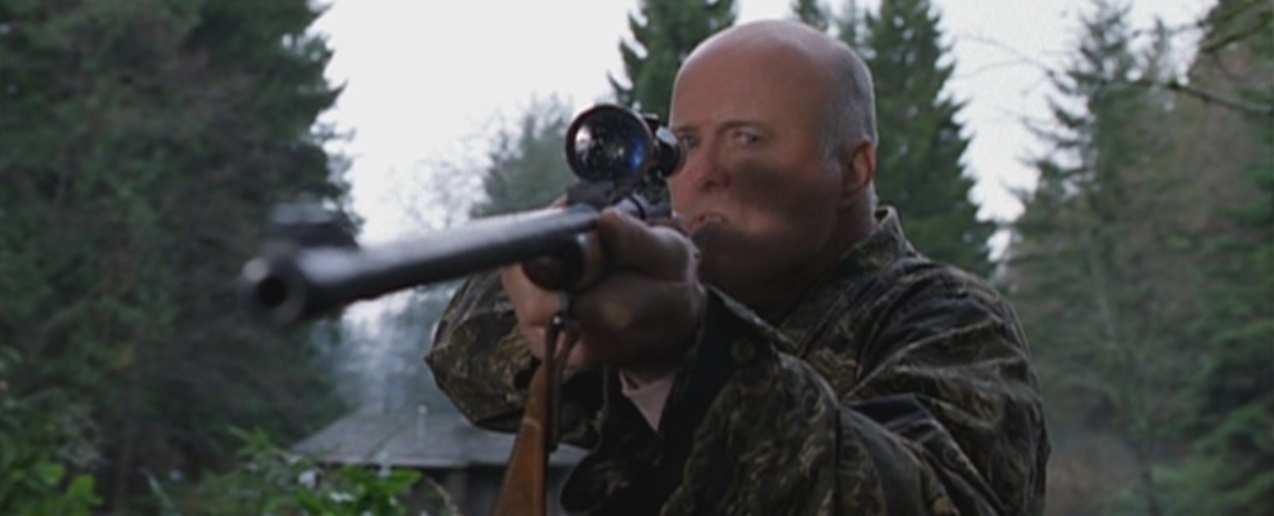
Fox has got the show in their sights...

Fox has got the show in their sights…

Continue reading

The Lone Gunmen – Maximum Byers (Review)

This October/November, we’re taking a trip back in time to review the eighth season of The X-Files and the first (and only) season of The Lone Gunmen.

With Maximum Byers, it seems like The Lone Gunmen has wandered back into the wilderness.

Madam, I’m Adam and Planet of the Frohikes suggested a show that had found its own voice and figured out how best to tell stories featuring theses characters. Those two episodes worked by eschewing the caper-driven hijinks of episodes like Like Water for Octane and Three Men and a Smoking Diaper in favour of character-driven melancholy. Planet of the Frohikes might be the single funniest episode of the show’s short run, but it mostly works because it is underpinned by a sense of genuine tragi-comedy. Its characters felt real; even the talking monkey.

"Thank you very much..."

“Thank you very much…”

Maximum Byers seems to set the clock back to the early first season, sending the Lone Gunmen on a wacky self-aware adventure designed to evoke classic episodic television. It is a model very similar to that employed by scripts like Eine Kleine Frohike or Diagnosis: Jimmy, where the objective is to drop a major character into an unlikely situation and hope that the plot (and the laughs) take care of themselves. After all, “Byers undercover in prison!” seems as compelling as “Frohike undercover as a woman’s long lost son!” or “Jimmy in hospital!”

For most of its runtime, Maximum Byers is fairly bland and inoffensive. It is not particularly memorable or hilarious, but it is not close to the worst episode of the show. Unfortunately, then the ending happens. One of the more frequent criticisms of The Lone Gunmen is that the show had difficulty balancing its tone. While there is an element of truth to this observation, it is never quite as clear as in the final act of Maximum Byers. Then again, it is probably quite tough to do a comedy set on death row.

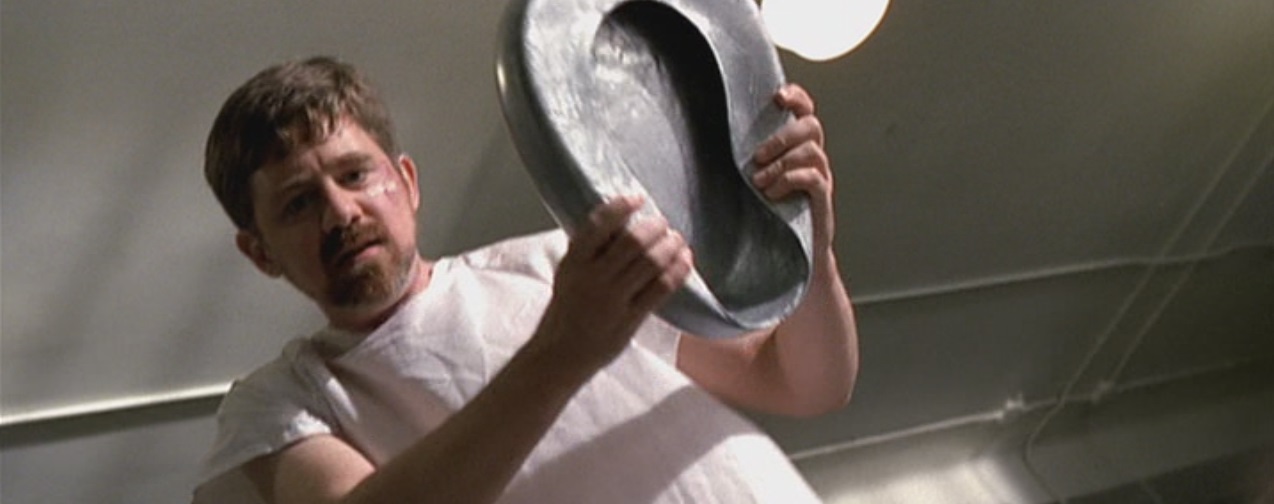
Critics couldn't wait to (bed)pan the episode...

Critics couldn’t wait to (bed)pan the episode…

Continue reading

The X-Files – Three Words (Review)

This October/November, we’re taking a trip back in time to review the eighth season of The X-Files and the first (and only) season of The Lone Gunmen.

There is no “to be continued…” explicitly linking DeadAlive to Three Words, but there doesn’t have to be.

In this final stretch of the eighth season, The X-Files adapts a somewhat serialised narrative model. Although stories like Empedocles and Vienen technically serve as “monster of the week” stories that stand alone, they feel very particular to this moment in the show’s history. Mulder’s return to the land of the living in DeadAlive does not mark a return to the status quo, despite his best efforts. Instead, it creates a highly volatile (and, by its nature, transitory) set-up that cannot be maintained over an extended period.

Howard Salt was willing to go to any lengths to return the President's copy of The X-Files film.

Howard Salt was willing to go to any lengths to return the President’s copy of The X-Files film.

This is not a sustainable status quo. This is not “business as usual.” This is not what the ninth season will look like. This is not like those other changes to the status quo that occurred at the start of the second and sixth seasons, when Mulder and Scully were taken off the X-files but continued to investigate cases that were X-files in all but name. Episodes like Blood or How the Ghosts Stole Christmas could be transitioned into a regular season order with a minimum of changes, but these episodes all feel uniquely tailored to this point in the show’s history.

As such, the end of the eighth season takes on a loosely serialised quality, and not just in the story of the new mythology or the so-called “super soldiers.” The character dynamics evolve and grow, with the individual episodes seeding character development leading the season finalé. Episodes like Three Words and Vienen make it increasingly clear that Mulder is not back in an permanent sense by first pushing him away from the X-files and then firing him from the FBI. Scully’s pregnancy is actually allowed to progress at this point in the season.

He's back!

He’s back!

This serialisation is apparent in the discrepancies between the production and broadcast order. As with extended sections of the fourth season, the final stretch of the eighth season was produced in a different order than it was broadcast. Unlike the fourth season, however, this shift does not create any dissonance as significant as the conflict between the version of Never Again that was filmed and the one that was broadcast. Despite being produced in a different order, these stories could not work in any order other than the broadcast order.

Although The X-Files frequently gets credit for pioneering and popularising (or, at the very least, re-popularising) serialised narratives on prime-time television, the final stretch of the eighth season is perhaps the serialised stretch of the entire nine-year run.

A touching reunion...

A touching reunion…

Continue reading