• Following Us

  • Categories

  • Check out the Archives


  • Awards & Nominations

Non-Review Review: The Curse of La Llorona

The Curse of La Llorona is fairly solid as contemporary studio horrors go.

Although the arrival of Avengers: Endgame has a lot of attention focused on the largest and most successful shared cinematic universe of the twenty-first century, there is a lot to be said for the strange horror universe that has been built outwards from The Conjuring. Although this trend is most overt in The Conjuring 2, the rare horror movie to also feature a car chase sequence, there is something fascinating in how these films have transformed studio horror into a blockbuster concern.

Mother have mercy.

There is a reason that these films are released during the summer months, as counter-intuitive as that might seem. Again, discussing The Curse of La Llorona in such terms might seem cynical, but it is genuinely striking. It takes a lot of work to satisfy the competing demands of the two genres; the shock of horror with the familiarity of blockbuster storytelling. The challenge with The Curse of La Llorona lies in offering audiences something that satisfies all their expectations of a film like this, while still offering a few shocks and starts along the way. It is a remarkable accomplishment.

The Curse of La Llorona strikes that balance relatively well. The film knows the formats and rhythms of a horror film, and director Michael Chaves knows both what the audience expects and how to work within that format to build a genuine and compelling sense of dread. The Curse of La Llorona is well-made, efficient, and delivers what the audience anticipates from a Conjuring spin-off. There’s something endearing in the reliability, in the care with which the film strikes these sorts of balances.

Scream queen.

Continue reading

Non-Review Review: A Dog’s Journey

A Dog’s Journey is incredibly earnest.

To be fair, it kind of goes with the territory. A sequel to A Dog’s Purpose, the film fits comfortably in the same “narrating baby or animal observes the adult world” subgenre as the Look Who’s Talking films. The basic premise of the film finds a beloved family pet reincarnating over and over again in order to serve as a spiritual companion to a family across three generations. Voiced by Josh Gad across a wealth of breeds, genders and personas, this “boss dog” finds themselves drawn towards a family struggling to hold itself together amid incredible internal tension.

Hardly a crowning accomplishment.

The premise and execution are admittedly very hokey. The characterisation is threadbare. The actors vary wildly in terms of skill. The jokes are often hackneyed and overly familiar. The script is full of strange narrative cul de sacs and tangents that occasionally stall the forward momentum of the film. A Dog’s Journey is an exceptionally tightly (or even well-) constructed film. However, the almost aching levels of sincerity almost hold it together despite these sheering forces.

At the heart of A Dog’s Journey is an incredibly simple-yet-heartfelt idea of the relationship that exists between a dog an it’s owner. Late in the film, one character concedes to another, “It must be nice to have something that loves you unconditionally.” For all the film’s flaws, it never doubts the idea that the love of a dog for its owner (and perhaps vice versa) is truly unconditional and uncompromising, no matter how complicated the world around that relationship might become.

Fields of gold.

Continue reading

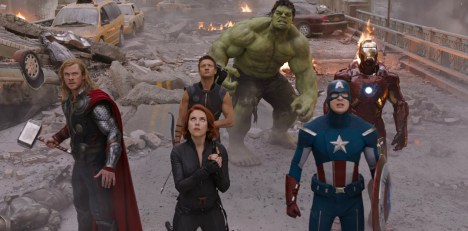
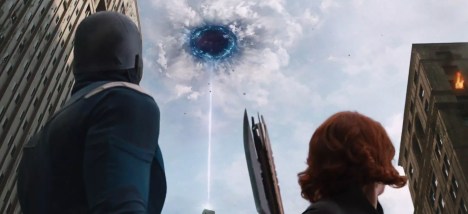
“We’re Not Soldiers”: The Cautious Superhero Optimism of “The Avengers”…

Before it was a Bomb, the Bomb was an Idea. Superman, however, was a Faster, Stronger, Better Idea. It’s not that I needed Superman to be “real,” I just needed him to be more real than the Idea of the Bomb that ravaged my dreams. I needn’t have worried; Superman is so indefatigable a product of the human imagination, such a perfectly designed emblem of our highest, kindest, wisest, toughest selves, that my Idea of the Bomb had no defense against him.

– Grant Morrison, Supergods

There was an idea, Stark knows this, called the Avengers Initiative. The idea was to bring together a group of remarkable people, see if they could become something more. See if they could work together when we needed them to to fight the battles we never could.

– Nick Fury, The Avengers

In hindsight, The Avengers looks like a sure bet; a bunch of recognisable characters from successful properties bound together to create a blockbuster.

It is a testament to how profoundly The Avengers has reshaped the media landscape in its image that this appears almost a given. In a world that has seen the release of Avengers: Infinity War and Avengers: Endgame, the original film in the franchise seems almost quaint. Only six heroes? Only one primary villain, and one who was previously defeated by Thor in Thor? Sure, Thor is “the strongest Avenger”, but that seems almost quaint in this era of universe-spanning crossovers that fold on the expansive casts of films like Ant Man or Black Panther or Guardians of the Galaxy. Perhaps it is an ode to the power of  the idea that The Avengers feels so small in hindsight.

At the same time, there’s a maturity and reflection in the original Avengers that is largely lacking from Infinity War and Endgame. One of the most frustrating aspects of Infinity War and Endgame is the way in which the films devolve into unquestioning power fantasies; stories about great men who wield the power of gods for their own benefit with little regard for the obligations or responsibilities that come with that power. The characters of Infinity War and Endgame never question the use of their power for their own benefit, never contemplate their right to hold the fate of four different universes in their hands. Banner never questions the appeal of living as the Hulk forever, just as Thor insists on abandoning his people to have wack adventures with the Guardians of the Galaxy cast.

In hindsight, what is most striking about The Avengers is how fascinated it is with the question of what superheroes are, and what function they serve. Perhaps in keeping with the general enthusiasm of the Marvel Cinematic Universe, or perhaps reflecting his own affection for the genre, Joss Whedon keeps coming back to the suggestion that superheros represent an idea and an ideal. They represent an idealised manifestation of American power and identity, quite literally contrasted at the end of the film with the horror and majesty of the atomic bomb.

Continue reading

New Podcast! Scannain Podcast (2019) #16!

It’s time for the Scannain podcast!

This week, I join Jay Coyle and Grace Duffy to discuss the week in film. There’s a lot to discuss. As one might expect given the big release of the week, there’s a lot of Marvel Cinematic Universe talk; The Incredible Hulk, Avengers: Infinity War, Thor: Ragnarok and Guardians of the Galaxy. There’s also time to discuss Tropic Thunder, Catch Me If You Can and The Shallows. In terms of film news, Lorcan Finnegan’s Vivarium is screening at Cannes and the IFI is hosting a Trish McAdam season in May.

The top ten:

  1. Hellboy
  2. Five Feet Apart
  3. Little
  4. Pet Sematary
  5. Captain Marvel
  6. Wonder Park
  7. Greta
  8. Wild Rose
  9. Shazam!
  10. Dumbo

New releases:

You can listen to the podcast directly here.

“… Because That’s What Heroes Do”: The Curious Definition of Heroism and the Politics of Power in “Infinity War” and “Endgame”…

Note: Obviously don’t read this if you haven’t seen both Avengers: Infinity War and Avengers: Endgame.

Superhero films are the most ubiquitous form of twenty-first century blockbuster.

The summer season is increasingly crowded by blockbuster superhero releases. This year is actually a fairly tempered year for Marvel Studios. Only Captain Marvel and Avengers: Endgame are on the docket from the company, with Sony handling the release of Spider-Man: Far From Home later in the summer. However, the space between the two Marvel Studios releases included films like Shazam! and Hellboy. Later in the year, X-Men: Dark Phoenix will effectively close off Twentieth-Century Fox’s superhero blockbuster slate before it is folded into the Disney machine. Indeed, even the non-brand superheroes look to have had a fairly decent year; other releases this year include Glass and Brightburn, both movies with original characters playing with genre tropes.

There are lots of discussions about why the genre has become such a dominant feature of the pop cultural landscape. Perhaps it is simply down to technology, with advances in computer-generated animation allowing for more convincing depictions of the scale and drama expected in these sorts of stories. Guardians of the Galaxy would have been very difficult to make even a decade earlier, when it would have been next-to-impossible to animate Rocket Racoon on a workable budget. However, it may also be cultural. The rise of the modern superhero blockbuster film roughly coincided with the War on Terror, a connection rendered explicit in films like Batman Begins, The Dark Knight and Iron Man. Old-fashioned heroism was undoubtedly appealing at a time of political crisis.

This is interesting in the context of Endgame. In many ways, Endgame looks to be an event of biblical proportions. There is a reasonable chance that Endgame could become the most successful movie of all-time. There is a good chance that Endgame could have a one billion dollar opening weekend. Within hours of opening, the film film had already placed (highly) on the Internet Movie Database‘s list of the top 250 movies of all-time. Endgame is a bona fides pop cultural phenomenon. It is a film that shakes the world underneath its feet. It is the culmination of a twenty-odd film journey, but it is also something of a conclusive statement on (at the very least) the modern iteration of the Marvel Cinematic Universe, the most high-profile example of the superhero in modern cinema.

What is that statement? What is the film actually saying? To be fair, this was an issue with Avengers: Infinity War. It was very difficult to distill a singular thematic point or moral thesis from Infinity War, largely because the film was structured in such a way as to deny its central characters any agency or autonomy within the narrative. Infinity War was a breathtakingly cynical piece of corporate logistics, occasionally veering into downright nihilism. After all, the climax of the film unfolds in the way that it does simply because Stephen Strange sees that it is supposed happen that way. No choice that the characters make has any impact on what happens, because there is only ever one way that it could happen.

Endgame is interesting in how it builds on this. In particular, how Endgame chooses to define its central characters. If Endgame is to be the defining superhero story of the modern era, its definition of “heroism” is very esoteric.

Continue reading

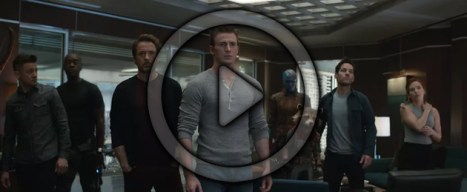
Non-Review Review: Avengers – Endgame

It says a lot about the state of contemporary pop culture that the biggest movie of the year is essentially a clip episode.

Pop culture has always been vaguely nostalgic, evoking an idealised past and reminding audiences of times when the future seemed brighter. After all, much of the New Hollywood canon is explicitly nostalgic, sixties and seventies films that pay loving homage to the thirties and the forties, often explicitly; The Sting, The Godfather, Paper Moon, Chinatown, Bonnie and Clyde. The past has always had a certain allure for cinema, perhaps because that’s what pictures have always been; individual moments captured on film and frozen in time, removed from their original context. Film is simply those frozen images run together to create the illusion of movement and life. Every film is a time machine, some are just more explicit than others.

Assembly line.

However, there is something fascinating about the modern wave of nostalgia, the speed at which pop culture is consuming itself. Recent waves of seventies, eighties and nineties nostalgia are still cresting. Earlier this summer, Captain Marvel channeled some of this nineties nostalgia into blockbuster (and Blockbuster) form. However, it also feels like nostalgia is getting closer and closer to the present, brushing up against the current moment. In some respects, the success of Lady Bird is indicative here. After all, Lady Bird is a film that is explicitly nostalgic about the post-9/11 era, evoked through footage of the Iraq War and the sounds of Justin Timberlake playing at a teen house party.

Avengers: Endgame is a strangely nostalgic beast. It is not strange that the film is nostalgic; after all, this is something of a coda to a decade of superhero films. However, it is strange how that nostalgia brushes up against the present, the climax of the film feeling very much like a loving homage to Avengers: Infinity War, a film that only premiered one year ago.

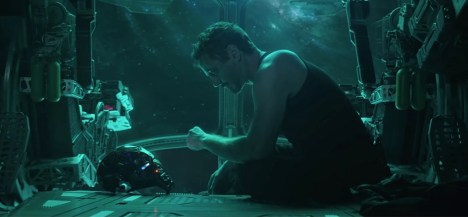
Stark raving mad…

Continue reading

New Podcast! Scannain Podcast (2019) #15!

It’s time for the Scannain podcast!

This week, I join Jay Coyle and Grace Duffy to discuss the week in film.  As usual, we talk about what we watched this week, including another in-depth discussion of Brie Larson’s directorial debut Unicorn Store, the cynicism of Netflix’s The Silence, the enduring appeal of Road House, the insanity of Jupiter Ascending, and the strange nostalgia of Hotel Artemis. In film news, there is a lot happening. Close to home, the IFI is hosting a season dedicated to memory on screen and has added The Loopline Connection to the online IFI Player. In international news, the latest Star Wars movie has a name and a trailer, Avengers: Endgame spoilers sweep across the internet, and the Cannes film festival announced its line-up.

All of this plus the top ten and the new releases.

The top ten:

  1. Missing Link
  2. Captain Marvel
  3. Peppa Pig: Festival of Fun
  4. Hellboy
  5. Little
  6. Pet Sematary
  7. Wild Rose
  8. Wonder Park
  9. Shazam!
  10. Dumbo

New releases:

An August Tribute: “The Avengers” and Deconstructing Bond…

This Saturday, I’ll be discussing The Avengers on The 250, the weekly podcast that I co-host discussing the IMDb’s Top 250 Movies of All-Time. However, I had some thoughts on the film that I wanted to jot down first.

This is not a defense of The Avengers.

There is no defending The Avengers. The film is legendary and spectacular failure. There is no belated reclamation project under way, no attempt to salvage its reputation twenty-odd years after it landed in a smoking crater. The film’s production history is storied, and disastrous. The film was subject to internal power struggles within Warner Brothers, falling between a changing of the guard and sabotaged at a test screening with a hostile audience. Twenty-five minutes of the film were unceremoniously cut out, and the score was radically rewritten. The result is monstrous.

More than that, there is little to indicate that The Avengers could ever have been a good film, even its pristine and uncut state. The flaws with the movie run deeper than those definable absences. The two leads share no chemistry, despite the fact that the film hinges on their dynamic. The plot is complete nonsense, haunted by the shadow of countless rewrites rather than simply lost in the edit. The film’s surrealism is halfhearted rather than committed, flirting with deranged brilliance but always landing somewhere on the uncomfortable side of mere camp. The Avengers is bad.

And, yet, in spite of all that, something interesting beats at the heart of The Avengers. Part of this is a result of the movie’s intrinsic late-nineties-ness, the way that it captures the mood of that moment. It is very much a post-Cold War story, its stakes framed in environmental terms that reflect the anxieties of the cultural moment. (Remember when mankind healed the hole in the ozone layer?) Similarly, the movie’s flirtation with the surreal and the notion of collapsing reality echoes (better) films like The Truman Show or The Matrix or Dark City or eXistenz or Fight Club.

However, the most interesting aspect of the film remains its central performance from Sean Connery. At the time, Connery had just successfully reinvented himself as a box office draw in the late nineties, building off the success of his collaboration with Michael Bay and Nicolas Cage in The Rock. The late nineties were were busy time for Connery, with projects including Entrapment, Playing by Heart and Finding Forrester. The actor was undergoing what might be characterised today as a “Conneraissance.”

In the middle of that “Conneraissance”, there is something rather strange about The Avengers, in large part because it’s a performance that exists in dialogue with his most iconic role. Of course, there’s no getting around Connery’s time as James Bond. The Rock rather heavily implies that Connery’s character was a version of James Bond arrested around the time of Diamonds are Forever. However, The Avengers goes one step further. The Avengers doesn’t just cast Sean Connery as a Bond villain. The Avengers casts Sean Connery as James Bond as a Bond villain.

Continue reading

Spoiling for a Fight: Thoughts on Contemporary Spoiler Culture…

It’s happening again.

Last year, to mark the release of Avengers: Infinity War, Thanos demanded your silence. This year, to mark the release of Avengers: Endgame, audiences are being told not to spoil the endgame. These campaigns are indicative of how a lot of modern pop cultural discourse works; for example, discussions around Game of Thrones or Star Wars: Episode IX – The Rise of Skywalker. There’s a strong push in modern pop culture towards the concealing plot details from these big monumental works, these pop cultural events. There is a strong push to preserve surprise and to avoid direct discussion of the material in any real detail, for fear that such discussions might possibly reach the eyes of somebody who would rather remain uninformed of any details about these phenomena.

To be fair, it is possible to sympathise with such a position. People want to enjoy media on their own terms. People do not want to have their responses to media shaped by outside factors like the opinions of others or the details of the plot. While one can readily cite studies suggesting that spoilers can actively improve enjoyment of a film, it is also entirely possible to find studies that argue the exact opposite. More than that, it is increasingly difficult for a person to avoid coming into contact with media talking about these pop cultural phenomenon; social media is built on the concept of immediacy and relevance, and so anybody connected in anyway to the internet is bound to have some contact with Star Wars, Game of Thrones or Endgame.

At the same time, there is something slightly suffocating in all of this. There has always been mass culture. There have always been people writing about mass culture. There has always been media that could be spoiled. There have always been press screenings. There was a seven month gap between the premiere of The Usual Suspects at Sundance and its release to the American public, and its twist remained a surprise to the general public. Generally speaking “just use your common sense” has always been good advice when talking about a particular film or television show. As such, the modern panic over “spoilers” seems unnecessary and counterproductive.

Note: This article contains a variety of spoilers, most heavily for Avengers: Infinity War and Captain Marvel. Put proceed at your peril.

Continue reading

Not So Super, Hero: What Modern Superhero Blockbusters Could Learn From “Akira”…

This Saturday, as part of the annual “Anime April”, I’ll be discussing Akira on The 250, the weekly podcast that I co-host discussing the IMDb’s Top 250 Movies of All-Time. However, I had some thoughts on the film that I wanted to jot down first. You can listen to last week’s episode on Nausicaa of the Valley of the Wind here. You can listen to our episode on Akira here.

Akira is a startlingly influential film.

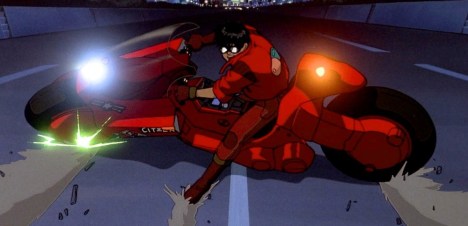
Even if a person hasn’t seen Katsuhiro Otomo’s animated masterpiece, they have undoubtedly felt its influence rippling through popular culture in various media. In music, Kanye West cites it as his “biggest creative inspiration”, to the point that his video for Stronger is almost a shot-for-shot remake. Rian Johnson has cited Akira as a major influence on his own Looper. Josh Trank and Max Landis’ Chronicle has a number of obvious similarities to Akira. Even outside of these direct references, individual elements of the film continue to have an outsized influence on American popular culture. The iconic red bike pops up in Ready Player One. Even individual shots have been mimicked and imitated, such as the fantastic “Akira bike slide” from early in the film.

Inevitably, there has been much talk of a potential Americanised remake of Akira. After all, there have been other big-budget live action adaptations of cult Japanese projects like Ghost in the Shell or Alita: Battle Angel, and so it is surprising it has taken so long. There were rumours of an adaptation by Albert Hughes that might star Morgan Freeman. (James Franco might have headlined.) More recently, Jordan Peele declined the invitation to direct the adaptation, despite his affection for the source material. The most recent rumours suggested that Leonardo DiCaprio might be producing a version directed by Taika Waititi, which would shift the action from Neo-Tokyo to Neo-Manhattan. There were other significant changes made to the source story.

There are a variety of reasons why Akira has been so difficult to adapt. Most optimistically, it may simply be a case that so much of what made the original film iconic has already been filtered through to audiences in the movies indebted to it, like Looper or Chronicle; this is the challenge adapting John Carter of Mars following the success of films like Star Wars or Flash Gordon. More pragmatically, Akira is a story rooted in a very specific cultural context. It is not an American story, it is a story anchored very specifically in eighties Japan. Of course, this is not necessarily a problem; samurai films like Shichinin no Samurai or Yojimbo could be reworked for American audiences as cowboy films, their cultural context shifted in the journey across the Pacific. Still, it is a challenge.

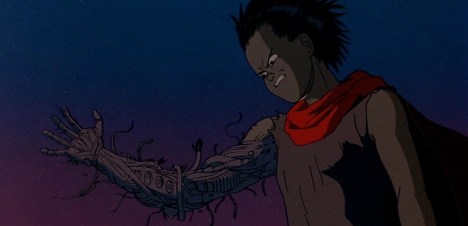
However, this challenge of cultural translation suggests one of the fundamental issues with adapting Akira for American audiences. It is hard to define Akira in terms of a single genre; it is a coming of age science-fiction deconstruction of masculinity infused with a psychedelic sensibility. However, in terms of visual style and narrative flow, the movie’s closest relatives in contemporary American cinema are superhero films. Superheroes are, after all, the dominant American cinematic mode of the twenty-first-century to date. Indeed, a modern audience approaching Akira might be tempted to read it in the context of that genre. If Chronicle is to be considered “the American Akira”, it is notable that it uses the language of the superhero genre to translate the story.

However, there is something fundamentally different about the way in which Akira approaches the idea of the superhero figure as compared to mainstream superhero films, and this difference might demonstrate why an adaptation of Akira for American cinema might pose such a challenge.

Continue reading