• Following Us

  • Categories

  • Check out the Archives


  • Awards & Nominations

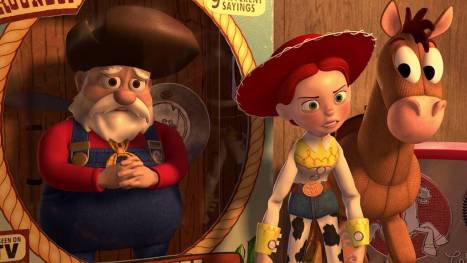
“For Infinity… and Beyond…”: In Praise of “Toy Story 2” as the Perfect Sequel…

Ranking films is often a fool’s errand.

I make this argument with no small amount of hypocrisy. Most obviously, I co-host a weekly podcast called The 250, which is dedicated to exploring the Internet Movie Database’s Top 250 Movies of All-Time. Even beyond that, I am guilty of participating in that periodic pleasure of pundits everywhere; the top ten… or forty… or fifty. At the end of every year, I produce a list of my favourite films of the year, whether on the Scannain podcast, on my personal Twitter, or even occasionally on this blog. In my defense, I rationalise that through a desire to draw attention to good films, and accept we can quibble on the order of said film.

At the same time, these lists can often be illuminating in terms of contextualising affection for a particular film, or for gauging the general mood. So when a film appears on a single list, it might be worth checking out if you trust the author. If it appears on multiple lists, it is probably a much stronger recommendation. (The Scannain annual top ten is an eclectic list, but it disparate viewpoints often settle on at least one consensus pick: You Were Never Really Here, Moonlight, Hell or High Water.) It helps to set a level of a particular film’s relative appeal and popularity.

By that measure, Toy Story 2 is generally considered the weakest film its franchise. At time of writing, Toy Story, Toy Story 3 and Toy Story 4 all feature on the Internet Movie Database’s Top 250 Movies of All-Time. Toy Story 2 is the lowest ranked entry in the franchise on lists compiled by Variety, Business Insider and The Ringer. It is the ranked as the weakest of the original trilogy on lists compiled by Slant Magazine, Collider and Polygon. None of this amounts to anything that can quantifiably be described as a “backlash.” After all, to be the worst Toy Story movie, a film still has to be pretty good.
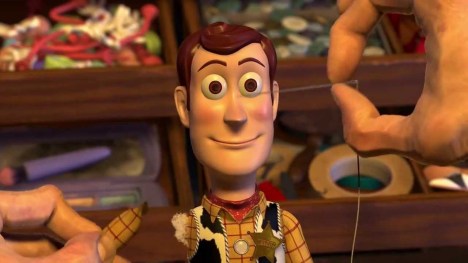
However, there is a sense in which Toy Story 2 gets overlooked. There are any number of structural reasons for that. The middle part of a trilogy, picking up immediately after Toy Story but without offering the resolution expected of Toy Story 3, the film is neither a beginning nor an end. It is not an introduction to these characters, and it does not really function as a farewell either. More than that, the film may also be somewhat tarnished by its production history, originally mooted as a straight-to-video release before entering an insanely fast turnaround as a theatrical feature; it is partly why Disney owns Pixar.

Still, this tends to look past what makes Toy Story 2 such a delight. It is in many ways the perfect sequel.
Continue reading

New Podcast! Scannain Podcast (2019) #25!

It’s time for the Scannain podcast!

This week, I join Graham Day and Jay Coyle to discuss what we watched, the week in film news, the top ten and the new releases. Graham has rewatched The Shining. Jay has watched Cléo from 5 to 7: Remembrances and Anecdotes, Cabaret and Victor/Victoria. I have watched What We Left Behind. There is also a lively discussion of Batman vs. Superman: Dawn of Justice.

In terms of film news, the Galway Film Fleadh has announced its full line-up. The makers of the documentary Gaza have donated their prize money to the Gaza Red Carpet Festival Appeal. The Gaze LGBT film festival also unveiled its line-up. The SXSW hit Extra Ordinary was purchased by Cranked Up Films. Donal Foreman’s The Image You Missed is now available on Vimeo on Demand. Also, Hollywood is having (another) existential crisis this summer.

The top ten:

  1. Godzilla: King of the Monsters
  2. Child’s Play
  3. Diego Maradona
  4. X-Men: Dark Phoenix
  5. Brightburn
  6. Rocketman
  7. The Secret Lives of Pets II
  8. Men in Black International
  9. Aladdin
  10. Toy Story 4

New releases:

  • Yesterday
  • Drive
  • Support the Girls
  • Apollo 11
  • Metal Heart

You can listen to the podcast directly here.

Non-Review Review: Spider-Man – Far From Home

Spider-Man: Far From Home cannot help but exist in the shadow of Avengers: Endgame.

Indeed, one of the problems marketing Far From Home was the manner in which the entire emotional premise of the film served as a spoiler for Endgame, which meant that the film had to wait quite late in the game to release its second trailer. This sets up an interesting tension with Far From Home, which finds itself in the the seemingly contradictory position of being both the last movie in the current “phase” of the Marvel Cinematic Universe and also a film actually being produced by a company other than Marvel Studios.

Masking his feelings.

This weird push-and-pull runs through Far From Home, which seems caught between existing as a coda and epilogue to Endgame and working as a Spider-Man movie in its own right. To a certain extent, this was always going to be a tension within Far From Home, even before Endgame set its sights on becoming the biggest movie of all time. Endgame was always going to exert a gravity on Far From Home, given its plot mechanics and its character decisions. Writers Chris McKenna and Erik Sommers, along with director Jon Watts, were always going to be reacting to narrative and character choices that they never made.

As such, the most interesting thing that Far From Home can do is to literalise that tension.

Night Monkey Moves.

Continue reading

Non-Review Review: What We Left Behind

Part of what is so remarkable about What We Left Behind is the way in which it feels more like a testament (and love letter) to how series producer and documentary co-directory Ira Steven Behr saw the Star Trek: Deep Space Nine than an exploration of the show itself.

This is not a surprise. Indeed, the poster for the documentary notably features Behr holding the eponymous space station in the palms of his hand, as much trying to figure it out for himself as offer it to the audience watching. Behr jokes that the documentary began production in 2012, but spent three years trying to figure out its identity and its angle. With its release in 2019, this puts Behr in the paradoxical position of having lived with What We Left Behind for almost as long as he lived with Deep Space Nine itself.

There isn’t too much in What We Left Behind that a dedicated fan won’t already know about the show’s production and history, but that’s not the point. An early sequence in the documentary exists largely in order to caution the viewer against interpreting the accounts offered in the documentary too literally. Repeatedly, actors and writers contradict themselves and each other. At one point, Robert Hewitt Wolfe casually recalls the finer details of Shadows and Symbols better than Hans Beimler, who actually wrote the episode. “I wasn’t even on the show at that point!” Wolfe jokes.

However, the documentary comes back time and again to the second season episode The Wire in order to explain these competing accounts and contradictory stories. They all hint at some greater truth.

Continue reading

Non-Review Review: Metal Heart

Metal Heart is a charming and zesty coming age tale.

Written by Paul Murray and directed by Hugh O’Conor, Metal Heart owes a lot to the subgenre of female-focused teen dramedies like Angus, Thongs and Perfect Snogging. It’s the story of Emma, a teenager awaiting her Leaving Cert results and trying to navigate the path to young adulthood, unaware of the various obstacles that stand in her path – including her own preconceptions. The (metal) heart of the film lies in the dynamic between Emma and her fraternal twin Chantal, but there are a host of other complicated dynamics for the young woman to navigate along the way.

A large part of the charm of Metal Heart comes down to the strong central cast. O’Conor has drawn together an impressive ensemble for his debut theatrical feature. The adult players include Irish film veterans Moe Dunford, Dylan Moran and Jason O’Mara. However, the best performances in Metal Heart often come from its teen performers. Jordanne Jones is remarkable in the central role of Emma. Leah McNamara does good work as Chantal. Aaron Heffernan is surprisingly affecting in the role of obligatory comic relief as Chantal’s sweet-but-dumb-as-a-bag-of-rocks boyfriend Alan.

Metal Heart has a genuine sweetness to it, which infuses and informs the film. It’s a lovely piece of Irish cinema.

Continue reading

“This Was Supposed to Be a Spiritual Experience”: The Mid-Nineties Ennui of “Texas Chainsaw Massacre: The Next Generation”…

This Saturday, I’ll be discussing Texas Chainsaw Massacre: The Next Generation on The 250, the weekly podcast that I co-host discussing the IMDb’s Top 250 Movies of All-Time. However, I had some thoughts on the film that I wanted to jot down first.

I’ve never been able to watch it with any kind of perspective. To me it just looks like some crude backyard movie a bunch of kids slapped together. There seems to me to be, on one hand, a group of people who were strictly horror fans who venerated it. Only over time has it come to occupy a very peculiar position, and I still don’t have any concept of what that is. I think we just wanted to hang a bunch of people on meat hooks, chop ’em up, and sell tickets at the theatre.

– Kim Henkel discusses The Texas Chain Saw Massacre

Texas Chainsaw Massacre: The Next Generation is a very nineties film, speaking to a very unique set of nineties anxieties.

There is something very revealing and candid about certain kinds of bad movies. Of course, many bad movies are just bad, hacky executions of well-worn concepts without any insight or skill to anchor them. However, there are some bad movies that seem driven by a strange source of passion and energy, which makes them bizarre snapshots of a particular time and place. It is almost a sort of candour, an unguarded bluntness, that allows them to articulate their perspective without any of the consideration or care of a better film.

The Next Generation is one of those films. It is, to be entirely clear, a terrible film. It is sloppily constructed. It is terribly framed. It is incoherently plotted. Its characters are drawn in the crudest of terms. Most damningly, it combines two particularly awful subgenres of the “bad movie” archetype. It is both a horror movie that is not scary and a black comedy that is not funny. It is, by all accounts, a disaster. Watching the film, the question isn’t how the release was delayed for three years. Instead, the question becomes how the film was ever released at all.

However, whether in spite of because of all of this, The Next Generation feels like a weird snapshot of a particular mid-nineties mood. Somehow, while groping around in the darkness, it accidentally puts its finger on the pulse.

Continue reading

New Podcast! Scannain Podcast (2019) #24!

It’s time for the Scannain podcast!

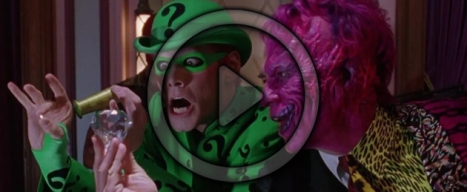
This week, I join Jay Coyle and Grace Duffy to discuss what we watched, the week in film news, the top ten and the new releases. Grace has watched ThievesMissing and My Own Private Idaho. Jay has watched A Day in the Country, Without Name, Craig’s Wife, The Loved Ones and One Sings, The Other Doesn’t. I have watched The Dark Knight Rises, Sanjuro and Lone Wolf and Cub in Sword of Vengeance. There is also an extended discussion on the merits (or lack thereof) of Batman Forever.

In terms of film news, the Galway Film Fleadh continues to roll out announcements – including its slate of masterclasses and an unexpected Cagney and Lacey celebration with Tyne Daly. The IFI is hosting a number of seasons in July – one celebrating the work of Robert Bresson and also the annual Family Festival. Meanwhile, the Lighthouse and Palais Galway are hosting a season of coming of age favourites.

The top ten:

  1. Late Night
  2. John Wick: Chapter III – Parabellum
  3. Detective Pikachu
  4. Diego Maradona
  5. Godzilla: King of the Monsters
  6. X-Men: Dark Phoenix
  7. Rocketman
  8. The Secret Lives of Pets II
  9. Men in Black International
  10. Aladdin

New releases:

You can listen to the podcast directly here.


Non-Review Review: Brightburn

Brightburn is effectively an elevator pitch movie. It’s a heady cocktail combining Man of Steel, The Omen and We Need to Talk About Kevin into a single ninety-minute movie.

Brightburn often feels more like a sketch extended to feature length rather than a movie of itself. Its characterisation is light, its worldbuilding is shallow, its premise is not so much developed as directly stated. With the notable exception of Elizabeth Banks, who largely anchors the film in emotional terms, the performances are largely blank and generic. This is especially true of Jackson A. Dunn, who is cast in the title role. There is something very threadbare about Brightburn, as if the film is operating on nothing more than its fairly simple premise.

Red eyes at night…

Oddly enough, this all serves to make Brightburn more effective than it might otherwise be. Brightburn is a single-minded film, arguably powered entirely by its own high concept. That high concept is ingenious, and enough to sustain the film across the entirety of its ninety-minute runtime. Brightburn feels relatively light, but that is almost by design. There is little ambiguity about what it is doing, and why it is doing it. There is no clutter, no distraction, no wondering attention. Brightburn is little more than its central narrative engine, but that engine is a powerful and compelling force.

Brightburn is not a subtle film. It has all the nuance of its title character, smashing through wood as though it were wet cardboard. Somehow, that lack of subtlety makes it all the more effective.

Holy Moses.

Continue reading

New Podcast! Scannain Podcast (2019) #23!

It’s time for the Scannain podcast!

This week, I join Grace Duffy and Alex Towers from When Irish Eyes Are Watching to discuss what we watched, the week in film news, the top ten and the new releases. Grace has recently watched The Bling Ring, Alex has seen I Am Cuba, and I have watched the entire Three Colours trilogy.

In terms of film news, the Virgin Media International Film Festival is taking five Irish films to the Shanghai International Film Festival, the Irish Film Institute has launched a fundraising initiative to pay for upgrades to its facilities, and a late-breaking Emmy voting scandal is in the news.

The top ten:

  1. Avengers: Endgame
  2. John Wick: Chapter III – Parabellum
  3. Ma
  4. Detective Pikachu
  5. Take That: Greatest Hits Live
  6. Godzilla: King of the Monsters
  7. Rocketman
  8. X-Men: Dark Phoenix
  9. The Secret Lives of Pets II
  10. Aladdin

New releases:

  • Balloon
  • Diego Maradona
  • The Hummingbird Project
  • We the Animals
  • Men in Black International

You can listen to the podcast directly here.

Non-Review Review: Toy Story 4

Toy Story 4 is a lovely grace note.

Understandably, the largest tension that exists within Toy Story 4 is the question of whether the movie is “necessary”, as much as crowd-pleasing feel-good film must be “necessary.” Rather, it’s the question of whether its presence enhances or diminishes the immediately previous film in the franchise. Toy Story 3 was in many ways a pitch-perfect franchise closer, the perfect place in which to leave these characters and this world. It was bittersweet and deeply moving, striking a perfect balance between providing closure and suggesting that the adventure continues.

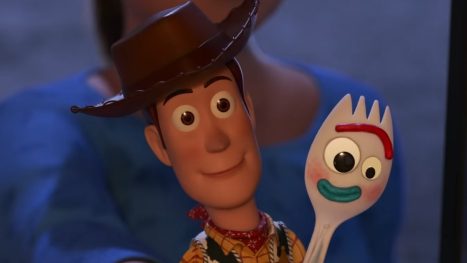
The real Toy Story is the toys we made along the way.

This creates an interesting challenge for Toy Story 4. Because Toy Story 3 provided such a fitting ending, it is not enough for Toy Story 4 to simple be amusing or engaging. To quote another popular Tom Hanks vehicle from the nineties, it has to “earn this.” To a certain extent, Toy Story 4 exists in conversation with Toy Story 3, and with the notable handicap of being unable to play many of the same emotional beats as strongly. “This is the epic last go-round” is a card that is difficult to play in two consecutive movies. So, quite apart from how funny and how thrilling and how clever Toy Story 4 is, it faces an uphill struggle.

It is to the credit of Toy Story 4 that it justifies itself so effectively. A lot of this is down to canny structuring; Toy Story 4 is much less of an ensemble piece than any of the two previous films in the series, focused very tightly on Woody as its focal character. This provides a nice change of pace, even compared to the fun “toys mount a rescue” template of Toy Story 2. To a certain extent, Toy Story 4 feels – in terms of tone, plot and character – much closer to the original Toy Story than any of the intermediate films in the franchise. This allows it a certain freshness and lightness on its feet.

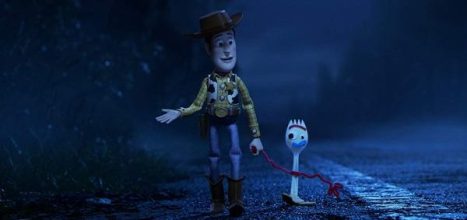
A forkin’ delight.

However, the smartest thing about Toy Story 4 is that it understands its position. Toy Story 4 is shrewd enough to understand that it can neither ignore nor repeat Toy Story 3. Indeed, Toy Story 4 is cognisant of the fact that it must be an ending of a sort, but also a different kind of ending than Toy Story 3. The film has to both justify and distinguish itself, fitting with what came before while finding something unique to say. This is a delicate balance to strike, and it is to the credit of Toy Story 4 that it succeeds as thoroughly as it does.

Toy Story 4 exists in the shadow of Toy Story 2 and Toy Story 3, but most animated films do; they are both among the very best films that Pixar has produced, making them among the very best animated films ever produced. Toy Story 4 works well as an epilogue or a coda. It’s charming, smart, funny and very moving in the places where it needs to be. Toy Story 3 existed at the full stop at the end of the story, but Toy Story 4 draws a line under it.

Home on the range.

Continue reading