• Following Us

  • Categories

  • Check out the Archives


  • Awards & Nominations

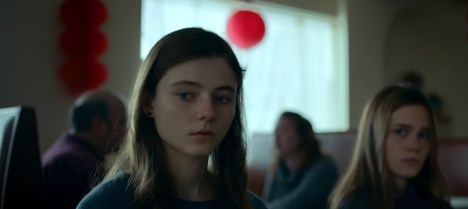
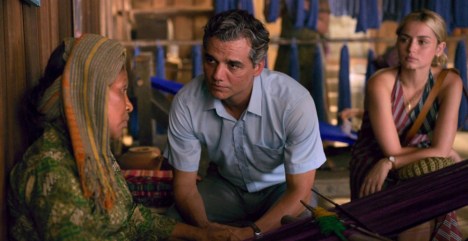
Non-Review Review: Vivarium

This film was seen as part of the Virgin Media Dublin International Film Festival 2020. Given the high volumes of films being shown and the number of reviews to be written, these may end up being a bit shorter than usual reviews.

Vivarium is an abrasive and aggressive work of surrealism.

It is very much of a piece with director Lorcan Finnegan’s earlier work, feeling like a clear descendant of his “ghost estate” short Foxes and his “land will swallow you whole” horror of Without Name. Indeed, Vivarium taps into many of those same fears, essentially beginning as a horror story about a young couple going house hunting and ending up lost in a monstrous and seemingly unending estate. It morphs from that into an exploration of a broader set of anxieties about the very idea of “adulthood”, of what young people expect from their adult life and what it in turn it expects from them.

Vivarium often feels like an extended episode of The Twilight Zone. It features a small core cast. Although shot on an actual housing estate, Finnegan pushes the production design into the realm of the uncanny so that it looks like a gigantic creepy sound stage. The script consciously pushes its narrative into the realm of the absurd. However, throughout it all, the film remains keenly focused on a simple and strong central metaphor. Although Vivarium operates at an unsettlingly heightened level of reality, and although its populated by a mess of signifiers it never entirely explains, it remains firmly anchored in relatable ideas.

Vivarium is perhaps a little over-extended and little heavy-handed in articulating its central themes and ideas, but it is consistently interesting and ambitious. It’s well worth the time.

Continue reading

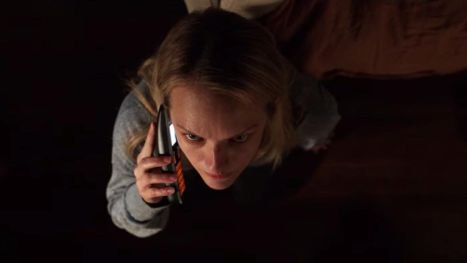
Non-Review Review: The Invisible Man (2020)

The Invisible Man makes his victims visible.

Freed from the confines of the ill-fated blockbuster “Dark Universe”, writer and director Leigh Whannell is able to craft a version of the iconic H.G. Wells story that speaks to the modern moment and which taps into a set of fears that are a lot easier to acknowledge these days. Horror stories have always worked best as allegories for the things that unsettle a society – even back to the sexual anxieties of Dracula and the monstrous procreation of Frankenstein – as so Whannell reconfigures The Invisible Man to speak to a terror that was largely invisible until recently.

Ringing true.

The central protagonist of The Invisible Man is not the eponymous translucent figure. Appropriately enough, the man who turns himself invisible is largely marginalised by the narrative. In the opening ten minutes, he’s glimpsed lying in bed and then through a car window, but his face is consciously obscured. Through the rest of the film, he is largely present in a few photographs and acting through his brother as a proxy. His absence is both clever and effective, underscoring the extent to which he dominates and haunts the film even when he is off-screen.

Instead, The Invisible Man is built around Cecilia Kass. It remains tightly focused on her efforts to escape her abusive ex-boyfriend, even after his apparent suicide. The Invisible Man suggests that such trauma cannot easily be evaded and eluded. “Adrian will haunt you, if you let him,” one of Cecilia’s friends warns her. The Invisible Man argues that he’ll haunt her either way.

Interrogating assumptions.

Continue reading

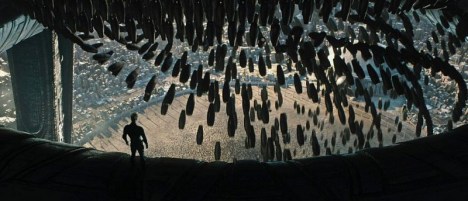
New Escapist Column! On the Fascinating Paradox at the Heart of “Alien: Covenant”…

I published a new In the Frame piece at Escapist Magazine yesterday. Because it was a light week for geek culture, I actually got to write a little bit about something I’ve thought far too much about; Ridley Scott’s Alien: Covenant.

Covenant is not a great film. It’s not even a particularly good film. However, it is a fascinating film. A large part of that is because it emerged in the middle of a wave of compromised big budget blockbusters like Suicide Squad, Justice League and Solo: A Star Wars Story, films that often felt like watching a wrestling match between the director and the studio. Covenant feels the same way, trying to reconcile Fox’s desire for an Alien prequel with Scott’s desire for a Prometheus sequel. However, what’s most interesting about Covenant is how that conversation seems to play out within the movie itself.

You can read the piece here, or click the picture below.

New Escapist Column! On the “Necessity” of the R-Rating for “Birds of Prey”…

I published an In the Frame piece at Escapist Magazine last Friday, looking at the debate around the “R-rating” that Birds of Prey earned.

Following the film’s release, there’s been a lot of a debate around Birds of Prey, particularly in light of its box office performance. One of the more interesting arguments has been around the film’s age rating, with several pundits arguing that the film did not “need” to be rated R, that it could have been cut to a PG-13 movie without losing anything of value. This is an interesting argument, one that deserves a little interrogation. After all, the scenes which likely earned Birds of Prey its R-rating – certainly the scenes singled out as unnecessary by such critics – are essential to its identity. They make the film unique and distinct.

You can read the piece here, or click the picture below.

New Escapist Column! On the Narrativisation of the “Birds of Prey” Box Office…

I published an In the Frame piece at Escapist Magazine last Friday, discussing the inevitable armchair quarterbacking of the Birds of Prey box office.

The film under-performed at the box office in its opening weekend, particularly relative to some of the more bullish predictions. It pulled in an opening weekend box office closer to similarly budgeted films like Kingsman: The Secret Service and Ford v. Ferrari than breakout smashes like Deadpool or 300. As a result, there’s a been a rush to account for those results, which often boils down to an attempt to narrativise the film’s failure – to argue that the causes for that result are easily discerned by outside observers. Of course, those analyses often handily fit various pre-determined narratives.

You can read the piece here, or click the picture below.

Non-Review Review: Lost Girls

Lost Girls is a solid and unfussy true crime drama, anchored in a strong central performance from Amy Ryan.

There are interesting ideas simmering in the background of Lost Girls. Director Liz Garbus is best known as a documentarian, and there are certainly aspects of Lost Girls that feel like they belong more comfortably in a documentary than a narrative feature. Michael Werwie’s script is adapted from Robert Kolker’s book of the same name, looking at the case of the Long Island Serial Killer. The killer was never caught, with some speculation as to whether his last documented murder occurred in 2010 or 2013. The investigation is currently ongoing, which gives the film a certain edge and rawness.

However, Garbus works hard to keep things tasteful and restrained. In actual narrative terms, Lost Girls is fairly conventional. It often feels assembled from a list of scenes that audiences expect to see in a drama like this. There are plenty of scenes of concerned mother Mari Gilbert yelling at impotent authority figures, countless scenes dictating the indifference or ineptitude of the authority figures tasked with protecting these young women, lots of emotional scenes in which Mari comes to terms with her own imperfections as a mother following her daughter’s disappearance.

However, the most interesting aspects of this “unsolved American mystery” lurk at the edge of the frame, recalling the quiet tweaks that Just Mercy made to the death penalty drama this past awards season. Lost Girls is a serial killer film that is much more interested in systemic injustice than it is in the sensationalist actions of a single monstrous villain. Lost Girls never quite manages to convincingly restructure the serial killer investigation movie template to the extent of something like Zodiac, but perhaps it doesn’t have to. It is more interesting for subtle shifts in emphasis within a familiar formula.

Continue reading

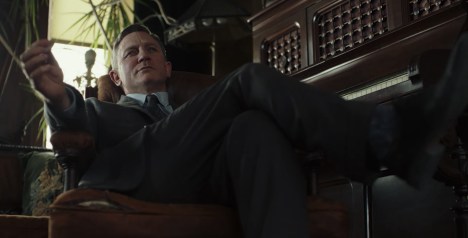
New Escapist Column! On the Inevitability of a “Knives Out” Sequel…

I published an In the Frame piece at Escapist Magazine on Monday, to mark the news that Knives Out would officially be getting a sequel.

To be fair, this news was hardly a surprise given the box office success of the film. With a tiny budget, Knives Out managed to gross over three hundred million dollars worldwide. Even before the sequel was officially announced, it seemed inevitable. And it will most likely be another great time at the cinema. At the same time, though, it’s hard not to feel like the proper way to celebrate the success of Knives Out might not be to start producing Knives Out sequels en masse, but instead to simply make more movies like Knives Out.

You can read the piece here, or click the picture below.

Non-Review Review: Sergio

Sergio belongs to the same school of earnest, overwrought, tonally misjudged, narratively unfocused, clumsily paced biopics that includes Noble, The Price of Desire and A Girl from Mogadishu.

This films offer heartwarming stories about truly exceptional individuals. There is undoubtedly value in that. However, the genre often confuses subject for substance. These biographies assume that the story they are telling is so compelling and so engaging that the actual art of storytelling doesn’t matter, that the basic mechanics of constructing a satisfying narrative or balancing a consistent tone or finding an interesting hooks are fundamentally less important than the simple fact that they are about something that makes them inherently “worthy.” Worthy of attention, worthy of praise, worthy of time.

“You can’t spell U.N. with U.”

Sergio certainly tells a story that is worth telling. It is an adaptation of the life of Sérgio Vieira de Mello, the United Nations diplomat. By all accounts, de Mello was a genuinely exceptional person who made a very real and very tangible difference to the world. There is a compelling story to be told here, a life that is worthy of study and discussion. Indeed, director Greg Barker seems to think so. Sergio is Barker’s first narrative feature, and it serves as a companion piece to his 2009 documentary of the same title. It’s easy to understand why Barker was so drawn to the subject.

Unfortunately, Sergio is a complete misfire. It is a disaster. It is a clumsily constructed film with no strong sense of identity or purpose, with little to say about its central character or his circumstances beyond “this was a remarkable person.” However, even that is communicated through exposition and information dumps rather than through actual storytelling.

“You wanna live like common people.
You wanna see whatever common people see.”

Continue reading

New Escapist Column! On “Birds of Prey” and Marginalised Characters…

I published an In the Frame piece at Escapist Magazine last week, to mark the release of Birds of Prey.

One of the interesting aspects of Birds of Prey is the way in which it’s essentially a story about marginalised characters, characters who have historically been pushed to the edge of comic book narratives – erased and reinvented by the demands of universe-wide reboots, defined primarily in relationship to more popular male characters, and just generally subject to the whims of the shared universe. Part of what makes Birds of Prey so interesting is the way in which it builds that into the narrative, creating a story for its characters where the absence of Batman and the Joker is the entire point of the exercise.

It’s a very clever approach to the source material, and one which suggests a more fundamental understanding of the source material than many critics credit it. In some ways, it is a more faithful adaptation of the Suicide Squad concept than Suicide Squad, building itself around the flotsam and jetsam of DC continuity. It helps that Birds of Prey finds an emotional hook into this story and uses it to offer a feminist perspective on this familiar trope. After all, its notable that so many of these marginalised and erased characters are women.

You can read the piece here, or click the picture below.

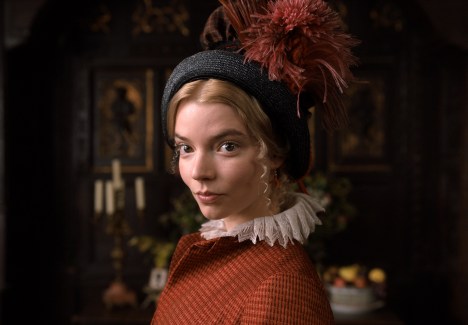
Non-Review Review: Emma.

Emma. is gorgeous to look at.

Autumn de Wilde’s adaptation of Jane Austen’s classic novel is immensely stylised in a way that suits the material. Austen’s Emma has always been a story about characters who exist ensconced in a world without any material wants or desires, without any existential threats or simmering tensions. The story’s stakes derive within the context of the comforts and luxuries in which Emma Woodhouse has lived her life. When the film opens, Emma’s biggest concern is the departure of her beloved governess, who is simply moving a kilometre and a half down the road and will remain part of her social circle.

Indeed, de Wilde even opens with an intertitle quoting the novel’s opening setnence, “Emma Woodhouse, handsome, clever, and rich, with a comfortable home and happy disposition, seemed to unite some of the best blessings of existence; and had lived nearly twenty-one years in the world with very little to distress or vex her.” The film is built around this idea, creating a stylish cocoon for Emma, a world that looks like it might have been entirely constructed from those brightly coloured confections that its characters serve at afternoon tea.

The result is a beautiful and charming film that captures a lot of the low-stakes charm of the source material, offering a richly designed world in which the novel’s romantic comedy trappings might unfold.

Continue reading