• Following Us

  • Categories

  • Check out the Archives


  • Awards & Nominations

Non-Review Review: Radioactive

This film was seen as part of the Virgin Media Dublin International Film Festival 2020. Given the high volumes of films being shown and the number of reviews to be written, these may end up being a bit shorter than usual reviews.

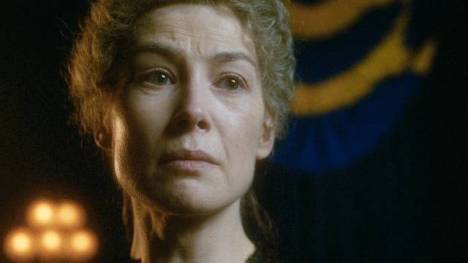
The life of Marie Curie is fascinating. Radioactive is not.

Curie is easily one of the great figures of the twentieth century, a scientist who changed the way in which mankind fundamentally understood the workings of the universe. That is no small accomplishment, and there is plenty of dramatic fodder to be found in her personal life; the manner in which she was marginalised by the scientific community because of her gender, her complicated relationship with Pierre Curie, even the tabloid scandal that defined so much of her later life. There are any number of interesting angles through which a biopic might approach Curie.
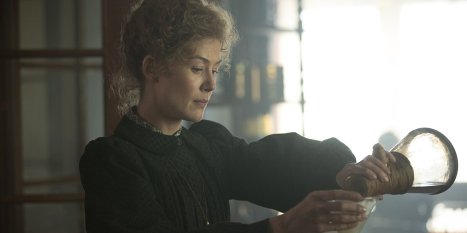
Unfortunately, Radioactive is greedy. Jack Thorne’s screenplay doesn’t just want to encompass the totality of Curie itself, the script hopes to offer something close to a cinematic biography of radiation itself. There is no doubt that Radioactive is ambitious, with director Marjane Satrapi even trying to break up scenes of exposition with helpful cinematic illustrations of the concepts under discussion. However, there is simply too much to cover. Radioactive struggles to maintain a consistent throughline, often feeling like a bullet point summary of Curie’s Wikipedia page rather than a compelling narrative of itself.

Radioactive could use some refining.
Continue reading

Non-Review Review: It Must Be Heaven

This film was seen as part of the Virgin Media Dublin International Film Festival 2020. Given the high volumes of films being shown and the number of reviews to be written, these may end up being a bit shorter than usual reviews.

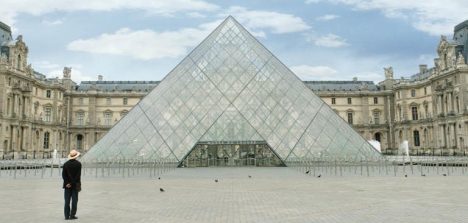
It Must Be Heaven offers a Chaplin-esque meditation on what it means to be “a citizen of the world,”, albeit filtered through a Palestinian lens.

Writer and director Elia Suleiman neatly divides his comedy into three acts. Playing himself, the veteran Palestian director journeys from Palestine in a bid to finance his latest movie. First, he visits Paris. Then, he visits New York. Along the way, he acts a silent and deadpan observers of the chaos of the world around him. Over the course of the film Suleiman only talks on a handful of occasions. Indeed, it would be handy enough to exorcise those sequences and reduce him to a classic silent film protagonist. However, the world buzzes around him.

So much of It Must Be Heaven is a purely observational film. Suleiman drifts idly from one scene to the next, always watching with mild bemusement as he steps into another story that is already in progress, often without any larger context: a father and son squabble across the balconies of their shared home, two brothers threaten a restaurant owner for serving wine in their sister’s food, a woman marches slowly and certainly from a well carrying two containers of water in a rather relaxed relay. Sometimes narratives reveal themselves through the act of looking, and sometimes they don’t. Such is life.

It Must Be Heaven seems more like a resigned sigh than a profound statement, a candid acknowledgement of how people are strange all over, even if some places offer their own unique brands of eccentricity.

Continue reading

Non-Review Review: True History of the Kelly Gang

This film was seen as part of the Virgin Media Dublin International Film Festival 2020. Given the high volumes of films being shown and the number of reviews to be written, these may end up being a bit shorter than usual reviews.

It’s very lucid,” notes a supporting character of the eponymous text.

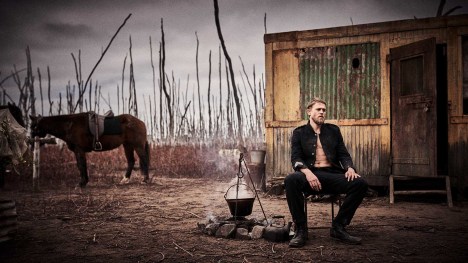
The young teacher has just read the introductory paragraph of a letter that outlaw Ned Kelly has prepared for his son, a way of sharing the truth of events with his heir. Kelly will subsequently bind the paper to himself, wrapping it to his midsection beneath plates of metal armour. That same teacher will later ruminate on the blood-stained documents, dismissing Kelly’s story as nothing more than “the ravings of a madman.” Perhaps both statements are true. Perhaps the letter is more true for the fact that it is incoherent and existential poetry.

True History of the Kelly Gang prefaces its title with a warning to the audience that “nothing you’re about to see is true.” The word “true” then serves as a bridge from that preamble into the movie itself, lingering on the screen long enough to be incorporated into the no-frills titlecard for True History of the Kelly Gang. Truth and fiction linger and intersect, contradictions rippling through the finished film. Watching True History of the Kelly Gang, one gets a sense of how these contradictory statements can each be accurate in their own way.

True History of the Kelly Gang is both a vivid waking dream and a complete narrative mess, simultaneously.

Continue reading

Non-Review Review: Military Wives

This film was seen as part of the Virgin Media Dublin International Film Festival 2020. Given the high volumes of films being shown and the number of reviews to be written, these may end up being a bit shorter than usual reviews.

Military Wives is illustrates the appeal in hitting the right notes off the sheet music.

Military Wives is the latest entry in a particularly popular subgenre of midbudget film, the type of movie about a quirky hobby against the backdrop of everyday British life. There are any number of examples, from Swimming With Men to Finding Your Feet to Calendar Girls, arguably extending out to more class-conscious examples like Billy Elliot and Brassed Off. Perhaps the most iconic and successful example, the film which proved the international viability of the format, remains The Full Monty. These are films that largely hinge on an appealing juxtaposition between perceived British stoicism and enjoyable eccentricity.

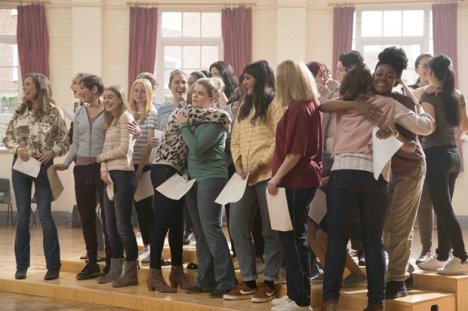
Military Wives is loosely based on a true story of the military wives choir that became a minor national sensation when it played the Festival of Remembrance in 2011. Indeed, they went on to have a Christmas number one with their song Wherever You Are. However, Military Wives hews very closely to the established template. Once again, there is a conflict between stoicism and whimsy. The stoicism is of the most sombre sort, with the story focusing on the wives of soldiers deployed to Afghanistan, waiting to hear word home. The whimsy arises from the juxtaposition of having those wives sing Yazoo and Tears For Fears.

Military Wives never deviates too far from the template, but it doesn’t have to. Rachel Tunnard and Rosanne Flynn’s script understands why this sort of story works, and director Peter Cattaneo (a veteran of The Full Monty) is smart enough to trust actors Kristin Scott Thomas and Sharon Horgan to carry the film. There is occasionally a sense that Military Waves is working from a rough sketch rather than a finished plan, but it is mostly built to specifications.

Continue reading

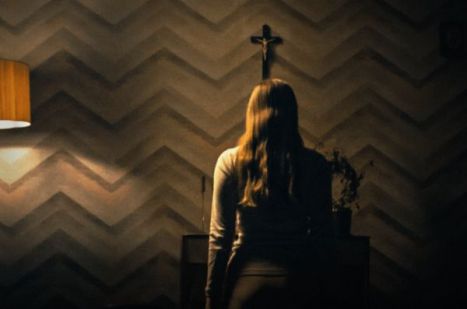
Non-Review Review: Saint Maud

This film was seen as part of the Virgin Media Dublin International Film Festival 2020. Given the high volumes of films being shown and the number of reviews to be written, these may end up being a bit shorter than usual reviews.

“Pain is precious,” intones the title character towards the third act of Saint Maud. “You shouldn’t waste it.”

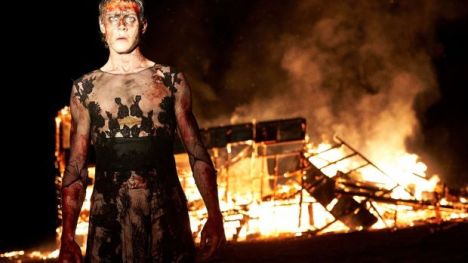
Rose Glass’ debut feature is a delightfully weird genre hybrid, existing at some strange intersection of Whatever Happened to Baby Jane? and The Exorcist that just happens to unfold in Scarborough. It is hard to summarise exactly what Saint Maud is, in terms of genre. At times, it plays like that most maligned of genres, the “elevated horror” that favours slow-mounted dread over cheap thrills. At other points, it is an intensely intimate psychological thriller and character study. Occasionally, it pivots sharply into surreal black comedy. It is never one or the other, and the film’s deft balance is a credit to Glass as writer and director.

Still, at its core, Saint Maud is ultimately a tale of repression and rapture, religious devotion wrestling with carnal desire. It is a film in which the contortions of the flesh associated with divine position are juxtaposed with the use of the body as an instrument by dancers. Over the course of Saint Maud, bodies writhe in pleasure that emanates from sources both spiritual and physical. Indeed, the spiritual and physical often collapse into one another over the course of the film, inviting the audience to try to draw a clean line of separation between two ideas that are so closely intertwined.

Saint Maud is an unsettling, warped and clever little film that is worth seeking out. It is also worth seeing blind, in so much as that might be possible.

Continue reading

New Escapist Column! On the “Altered Carbon” and the Ghosts of Futures Past…

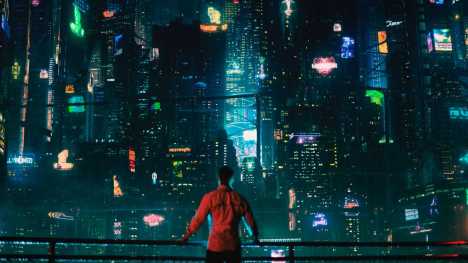
I published a new In the Frame piece at Escapist Magazine this evening. With the release of the second season of Altered Carbon, I thought it was worth taking a look at the recent trend towards retro-futurism, how modern pop culture is haunted by the ghosts of futures past.

Altered Carbon works best as a celebration of the cyberpunk genre, drawing from a wealth of sources like Ghost in the Shell and Blade Runner, steeped in nostalgia for a particular kind of future that was very popular during the eighties. It is not alone; after all, the first season was released after the Ghost in the Shell remake and Blade Runner 2049. However, it isn’t just cyberpunk that informs such nostalgia. Franchises like Star Wars and Star Trek have taken to looking backwards, while it’s hard to think of a modern piece of science-fiction that suggests a novel vision of the future.

It’s an interesting and unsettling trend, as if pop culture has given up on the idea of the future being different. Instead of imagining bold new worlds, pop culture seems instead to be recycling early generations’ hopes and dreams. You can read the piece here, or click the picture below.

Non-Review Review: Onward

This film was seen as part of the Virgin Media Dublin International Film Festival 2020. Given the high volumes of films being shown and the number of reviews to be written, these may end up being a bit shorter than usual reviews.

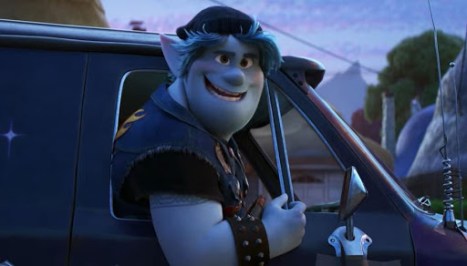
Onward fits comfortably in the upper middle range of the Pixar canon.

To be fair, at least part of this is structural. Onward is transparently a road trip adventure. There have been a couple of truly great Pixar movies built around that rough template – Toy Story 2, Up and Inside Out all come to mind. However, Onward does little to disguise its genre elements. Onward is transparently a story about two teenagers who embark on a long journey with a tight schedule that takes them through a series of episodic adventures featuring a host of memorable side characters. There is something very standard about the premise, even against the film’s fantastical backdrop.

To be fair, at least some of that mundanity is intentional. After all, the central hook of Onward is that it unfolds in a magic kingdom (“Mushroomton”) that has eschewed the art of wizardry for the utility of science. So much of Onward derives from the juxtaposition of the mundane and the sublime that it makes sense that the film should be a fairly standard genre template that just happens to follow two magical creatures driving a van with a rock-album-artwork unicorn on the side on a mission to reunite with their resurrected father. However, the plotting is a little too haphazard and too episodic to completely elevate the film.

That said, Onward is consistently charming throughout. Its world and characters always feel well-drawn. More than that, the film coheres marvellously in its third act, when it pushes past that familiar road movie template into the more emotionally astute and mature sort of storytelling that audiences have come to expect from the studio. While Onward doesn’t rank among the studio’s very best, it is well worth seeking out.

Continue reading

New Escapist Column! On the Hubristic Tragedy of the Dark Universe…

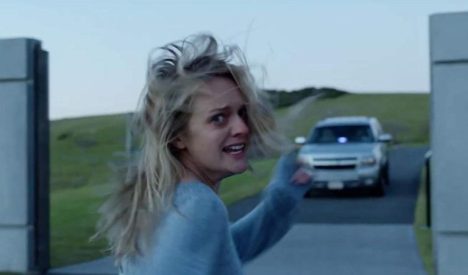
I published a new In the Frame piece at Escapist Magazine this evening. With the release of The Invisible Man this week, which is quite good, I took a look back to Universal Studios’ abandoned and cursed Dark Universe.

Frankly, there is no way to talk about the Dark Universe without acknowledging it as one of the greatest acts of cinematic hubris in the twenty-first century. The whole misbegotten experiment was transparently a result of Universal looking at the success of The Avengers, and deciding to built its own imitation using whatever properties it found lying down the back of the couch. The result was Dracula Untold and The Mummy (along with one of the most hilariously ambitious pieces of marketing ambition in living memory), two of the worst-reviewed blockbusters of the decade.

Luckily, The Invisible Man is a fantastic piece of work, a shrewd and sophisticated horror that is more interested in telling its own story than existing as a piece of “content” for a larger shared universe. You can read the piece here, or click the picture below.

Non-Review Review: Mickey and the Bear

This film was seen as part of the Virgin Media Dublin International Film Festival 2020. Given the high volumes of films being shown and the number of reviews to be written, these may end up being a bit shorter than usual reviews.

Mickey and the Bear marks a confident theatrical debut from director Annabella Attanasio.

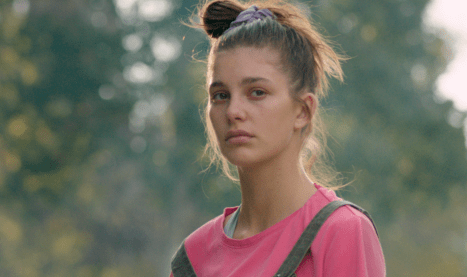
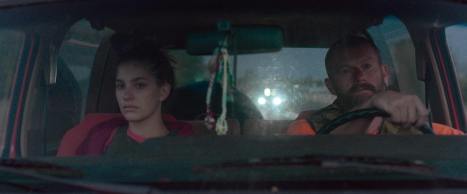
Mickey and the Bear is a study of poverty in the Pacific Northwest, unfolding against the backdrop of a small Montana town. The opening scenes establish this quite effectively, introducing Mickey as a young woman living in a trailer that is literally falling apart with her father Hank. Hank is a veteran of the Iraq War, and the scars clearly linger. He has an opiod prescription to help with his leg wound, but adamantly refuses the psychological help that he clearly needs to come to terms with the trauma. The film is essentially a ticking time bomb in the form of a character study, a countdown to the point where Mickey’s world implodes.

Mickey and the Bear is bolstered by a set of strong performances. Mickey is played by relative newcomer Camila Morrone, who offers a complex and nuanced take on a character who has largely given up any real hope of outside intervention and so has retreated into herself. Hank is played by veteran James Badge Dale, with Hank’s dysfunction feeling of a piece with the psychological damage felt by Badge Dale’s characters in films like Flight or Echoes of War. The two play off one another well, layering their relationship with myriad emotions which suggest the full range of their complicated dynamic.

As writer and director, Attanasio infuses Mickey and the Bear with a palpable sense of quiet desperation. Dread and anxiety hang over the film, but even they are pressed beneath the weight of grim inevitability.

Continue reading

Non-Review Review: Toni Morrison – The Pieces I Am

This film was seen as part of the Virgin Media Dublin International Film Festival 2020. Given the high volumes of films being shown and the number of reviews to be written, these may end up being a bit shorter than usual reviews.

Toni Morrison – The Pieces I Am feels like a really pleasant dinner party with very engaging guests, which is both high praise and faint criticism.

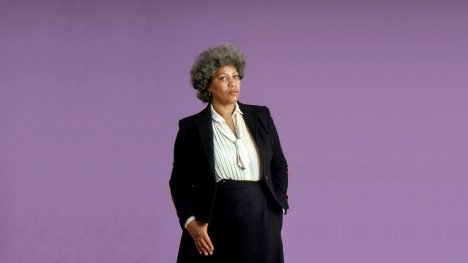
Timothy Greenfield-Sanders’ documentary is a decidedly unfussy affair. Although it uses stock footage and inserts to provide a sense of context for its conversations, The Pieces I Am largely focuses on direct interviews with its subjects. People like Toni Morrison, Oprah Winfrey, Fran Lebowitz and Walter Mosley  directly address the camera and the audience. There’s an endearing sense of camaraderie and friendship in all of this. There’s a wonderful warmth to the documentary, most of which radiates from Morrison herself.

The Pieces I Am is never especially incisive or combative, even when discussing thorny issues around systemic injustice and a longstanding history of cultural violence. These elements are never ignored or brushed aside, but they are never allowed to lower the tone of the discussion or shift the mood of the debate. Instead, The Pieces I Am remains focused on providing a space where artists can talk at length – and very much in their own distinctive way – about what Toni Morrison means to them.

The result is an immensely charming and affectionate study of one of the great American writers, which only occasionally feels little over-indulgent.

Continue reading