• Following Us

  • Categories

  • Check out the Archives


  • Awards & Nominations

New Escapist Column! In Praise of Michael Keaton’s Batman…

I published a new In the Frame piece at Escapist Magazine this evening. The big news this week was that Michael Keaton might be reprising his role as Batman from Batman and Batman Returns, so it felt like the right time to celebrate his contribution to the role.

Michael Keaton was a controversial choice for the role of Batman. Indeed, he’s arguably been underrated and underappreciated since he donned the cowl, with stock criticisms describing his interpretation of the Caped Crusader as bland or boring, especially in comparison to his villains. However, Keaton offered a fascinating and compelling portrayal of the Dark Knight, one worthy of celebration and praise. Keaton offered a version of Batman who felt more vulnerable and more insecure than other iterations, a child playing dress-up. It has aged remarkably well.

You can read the piece here, or click the picture below.

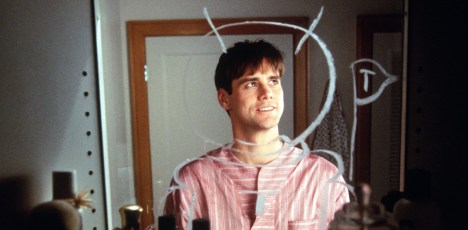
“The Truman Show” Didn’t Just Predict Our Future, But Also the Future of How Movies Would Be Sold…

More than twenty years after its release, it feels like everything that might be said about The Truman Show has already been said.

The Truman Show is that rare Hollywood blockbuster that feels somehow simultaneously timeless, timely and prescient. It speaks to anxieties that resonate throughout history, fears that were very particular to the cusp of the millennium, and to nightmares that were yet to come. It belongs at once to that age-old anxiety that the world is an illusion and human comprehension is insufficient, to the difficult-to-articulate existential uncertainty of the so-called “end of history”, to a future in which everybody would willingly become the star of their own Truman Show.

Indeed, The Truman Show seems to say so much about the world outside itself and the human condition that it’s possible to miss the film itself. Peter Weir’s late nineties blockbuster is a surreal slice of history itself, a relatively big budget mainstream release starring one of the most famous people on the planet, built around a rather abstract high concept. Not only was the film a massive critical success, it also managed to survive and prosper against a heated summer season.

While its actual themes and contents might be dystopian, The Truman Show itself offers an optimistic glimpse of a kind of blockbuster that seems increasingly unlikely.

Continue reading

Non-Review Review: Eurovision Song Contest – The Story of Fire Saga

Eurovision Song Contest: The Story of Fire Saga is a limp misfire.

There’s no doubt that the film comes from a place of affection and sincerity, reportedly inspired by writer and star Will Ferrell’s delight on discovering the camp weirdness of the Eurovision Song Contest. Indeed, The Story of Fire Saga has clearly been produced with the enthusiastic participation of the contest itself; the film uses a lot of branding associated with the event, features cameos from commentators like Graham Norton, and even ropes in a couple of past participants for its most endearing tribute to the surreality of the competition.

Marching on.

However, whether because it constrained by the official branding or simply by the limitations of Ferrell as an outsider looking in, The Story of Fire Saga doesn’t work. On a basic level of comedy mechanics, there are not enough jokes to sustain the indulgent two-hour runtime. On a more fundamental level, The Story of Fire Saga often fails to grasp what makes the Eurovision Song Contest such a beloved cultural institution. There’s a sense in which The Story of Fire Saga could be about almost anything else, and would be functionally the same movie.

This is a disappointment, particularly given that The Story of Fire Saga is being released in a year without the Eurovision.

A pretty weak ‘Vision.

Continue reading

Non-Review Review: Irresistible

Irresistible is a movie that largely exists to demonstrate that nobody hates the political left like the political left.

Jon Stewart’s second feature as writer and director essentially positions itself as a post-2016 political satire. Stewart’s former correspondent Steve Carell is cast as Democratic campaign manager Gary Zimmer, who is still nursing the wounds of the 2016 election. The film features two short table-setting prologues, the second of which finds Zimmer lying in bed on November 9th, 2016 as the news media plays back his unearned confidence in the face of the earth-shattering Donald Trump victory. There’s a sense in which Zimmer needs to be humbled.

Window into a broken system.

A couple of years later, both Zimmer and the party clearly still smarting from that humiliating defeat, a video comes across Zimmer’s desk. Recorded at a town hall in Deerlaken, Wisonsin, it shows a military veteran standing up for the rights of immigrants and minorities to a town administration desperate to lock them out of welfare. Colonel Jack Hastings appears to be the complete package, a white rural farmer with genuinely progressive politics. “He’s a Democrat,” Zimmer insists. “He just doesn’t know it yet.”

Stewart tries to position Irresistible as a biting social commentary on the state of the modern Democratic party and its awkward relationship with the white rural voters who are undergoing incredible political hardship as a result of a series of global recessions, and who feel increasingly disconnected from the political establishment. It’s an old theme that belongs to a rich cinematic tradition including films like Mister Smith Goes to Washington, and it should still resonate these days.

Making Hastings while the sun shines.

Unfortunately, Stewart’s satire is unfocused and tonally unbalanced. It’s never clear exactly what the film is saying, beyond expressing an understandable frustration with the establishment of the political left. However, the film’s anger is clearest when it is singularly focused as to imply a vacuum that simply doesn’t exist. More than that, Stewart occasionally seems to invest in the some sort of nostalgic and romantic fetishisation of the rural community that he so scathing ridicules in the political establishment.

This issue reflects a broader problem with the movie. Irresistible is tonally erratic at the best of times, alternating between a biting satire set in a world that is at least meant to be recognisable and a more cartoonish comedy populated by outlandish science-fiction elements. Stewart can’t seem to hone in on what Irresistible is trying to say about the political system, beyond the simple fact that political types are the absolute worst.

Dems the breaks.

Continue reading

New Escapist Column! On How Pixar Reinvented American Theatrical Animation…

I published a new In the Frame piece at Escapist Magazine this evening. This weekend marked the tenth anniversary of the release of Toy Story 3 and the planned release date of Soul, so I thought it was a good time to take a look back at what made Pixar special.

Everybody talks about how emotive Pixar films are, how much they resonate with audiences on that level. However, what’s most striking and impressive – and perhaps most influential – about Pixar’s output is the way in which the studio draws consciously from a wide variety of influences to tell a wide variety of stories. There’s a lot of variety in the Pixar canon, they films playing with a large number of genres in interesting ways, repurposing classic formulae for a much younger audience than would have been the intended audience for the original films in question.

You can read the piece here, or click the picture below.

New Escapist Column! On “Batman Begins” as the Perfect Superhero Origin Story…

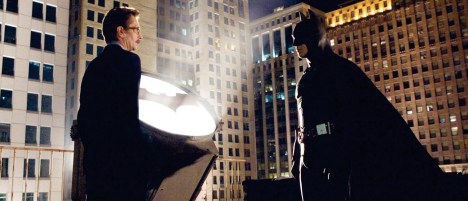
I published a new In the Frame piece at Escapist Magazine this evening. It’s the fifteenth anniversary of the release of Batman Begins, so it felt appropriate to look back on the film as the perfect superhero origin story.

Christopher Nolan dedicates Batman Begins to getting inside the head of Bruce Wayne, to the point that the villainous Ra’s Al Ghul and Scarecrow are defined almost entirely as counterpoints to the Caped Crusader. Nolan builds the character from the ground up, explaining everything about the character’s perspective and psychology – why he says what he says, why he acts like he does, why he thinks what he thinks. Most impressively, Nolan provides a meaningful answer to a question the character’s mythology long glossed over. “Why bats, Master Wayne?”

You can read the piece here, or click the picture below.

“… is Ra’s Al Ghul immortal?” Denny O’Neil, and Reflecting on a Bronze Age Batman Villain…

Denny O’Neil passed away last week, at the age of 81.

Many more informed and articulate individuals have written at length about the writer and editor’s contribution to comic books as a medium. In practical terms, Denny O’Neil was a crucial figure in the evolution of Batman, one of the medium’s most enduring characters. During the seventies, he served as a stepping stone between the bright and chirpy “New Look” of the sixties and Frank Miller’s gritty reinvention of the eighties. He also served as editor of the line during the nineties, overseeing beloved events like Knightfall and No Man’s Land.

This is to say nothing of O’Neil’s larger contributions to comic books. During the seventies, he served as the conscience of mainstream comics, reinjecting the sort of politics that had been largely missing since the earliest days of Action Comics and Superman. With runs on Justice League and Green Lantern/Green Arrow, O’Neil sought to engage the iconic DC superheroes with contemporary America. It was often clumsy, but it was always powerful. This is without getting into O’Neil’s hugely influential runs on books like Iron Man or The Question.

However, this week was also the fifteenth anniversary of the release of Batman Begins. This was a hugely influential superhero film, kicking off what might be considered the genre’s crowning accomplishment. Christopher Nolan’s film is heavily indebted to O’Neil, with O’Neil’s comic The Man Who Falls serving as a touchstone for the film’s approach to Bruce Wayne. However, the film was also notable for offering the first live action interpretation of one of O’Neil’s most sizable additions to the Batman mythos: Ra’s Al Ghul.

Batman has one of the most crowded and iconic rogues’ galleries in comics, packed to the brim with recognisable faces: the Joker, the Penguin, the Riddler, Catwoman, Two-Face, Poison Ivy, the Mad Hatter, the Scarecrow, Mister Freeze, Clayface. It’s a crowded field. Writers and artists are constantly trying to add to that, to add their own new characters to the mix. Very few actually catch on, with arguably only Bane and Harley Quinn managing to reach the top tier within the last thirty years. This makes Ra’s Al Ghul all the more impressive.

In the past few years, Ra’s Al Ghul has been cemented as an essential part of the Batman mythos. Both Arrow and Gotham featured the character as a major antagonist, anchoring season-long arcs, played by Mathew Nable and Alexander Siddig. (Liam Neeson reportedly even considered reprising the role for Arrow, even if he couldn’t make the schedule work.) The character has also been a staple of animated adaptations, going back to Batman: The Animated Series and continuing through Batman: The Brave and the Bold, Young Justice and Beware the Batman.

Ra’s Al Ghul has become such a fundamental part of the larger Batman universe that it is hard to imagine it ever existed without him. Nevertheless, he stands as one of the enduring creative legacies of writer Denny O’Neil and artist Neal Adams, who first introduced him to the Caped Crusader in the early seventies. In hindsight, as with Bane, it’s easy to see why Ra’s Al Ghul has endured in the way that he has. He fills an important gap in the larger Batman mythos. However, it was the genius of O’Neil and Adams to recognise that gap in the first place.

That’s what makes the character so fantastic. Despite being a relatively late addition to the Dark Knight’s collection of foes, he seems like he always belonged there.

Continue reading

New Escapist Column! On Jennifer Kent’s “The Nightingale” and the Frontier as a Prison…

I published a new In the Frame piece at Escapist Magazine this evening. This week, we’re trying something a little outside the usual remit of the column, with a huge thanks to editor Nick Calandra for encouraging it.

Jennifer Kent’s The Nightingale remains one of the most harrowing and uncomfortable films that I ever seen. It’s brutal and horrifying, but in a way that is very deliberate and very pointed. Kent is effectively playing off the tropes and conventions of the western, but playing with the way in which these stories are told. Kent imagines the frontier not as the embodiment of freedom or potential, but instead as a prison in which all of its characters are trapped.

You can read the piece here, or click the picture below.

New Escapist Column! On Spike Lee’s Cinema of Empathy and Allyship in “BlacKkKlansman” and “Da 5 Bloods”…

I published a new In the Frame piece at Escapist Magazine this evening. There’s actually a glut of new releases this week, but the one that felt most deserving of attention was Spike Lee’s Da 5 Bloods, which is premiering on Netflix.

Early in his career, Lee developed a reputation as a filmmaker defined by his frustration with the way that things were, his films tapping into a real sense of righteous anger about the status quo. However, Lee’s films have always been defined by a strong sense of  understanding and compassion. This is true of both BlacKkKlansman and Da 5 Bloods, which are films that are largely about the need to come together and build coalitions in order to move forward. At their core, they are films about empathy and allyship. More than that, they are films about the power of cinema.

You can read the piece here, or click the picture below.

Non-Review Review: Artemis Fowl

Artemis Fowl is only ninety-three minutes long, but it feels much longer. In more ways than one.

As with Scoob! or Trolls World Tour, there’s something slightly cynical in releasing Artemis Fowl direct to streaming. The film feels like it might have wallowed in a theatrical release, with little to distinguish it from other young adult adaptations like The Maze Runner or The Mortal Engines. Although derived from a series of beloved children’s books, the cinematic adaptation of Artemis Fowl was never going to be this generation’s answer to Harry Potter and the Philosopher’s Stone or The Hunger Games – despite the belaboured sequel hooks.

Fowl play.

The most interesting question that occurs when watching Artemis Fowl is at what point this became clear to the production team. Artemis Fowl has the look and feel of a movie that has been fed through a meat grinder. It is appreciably shorter than most would-be tentpoles, even though there is a seemingly continuous voice-over delivering reams of exposition. The plotting is haphazard. The character arcs are broad. There is a palpable sense that something happened in getting from page to screen, and the real mystery is where in the process things went so wrong.

Watching Artemis Fowl becomes almost an interactive mystery of itself. Was the project always this disjointed and chaotic, or was that something that happened in postproduction? More than that, was that process something that happened before or after Artemis Fowl was earmarked for a streaming release? When exactly on the creative process did everybody working on Artemis Fowl just give up completely?

A flying finish.

Continue reading